


Regional identity and the untapped power of foods
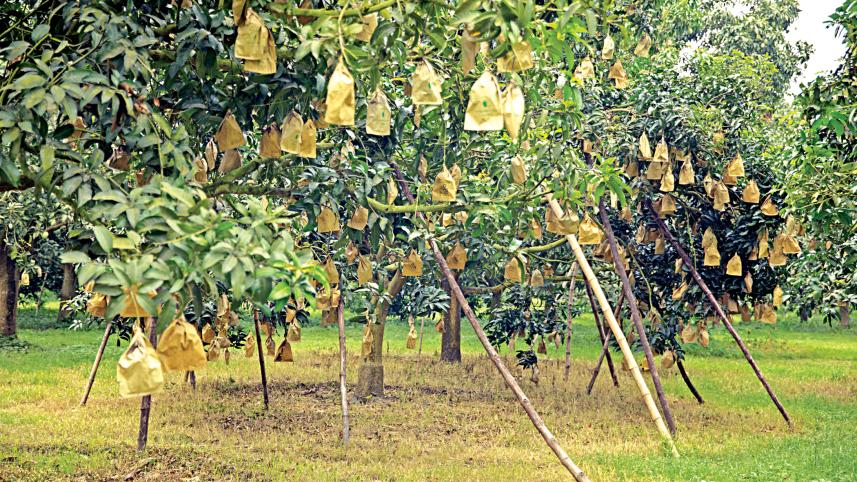
When food carries the name of the land it comes from, it tells a story of soil, water, people, climate, history, and culture. In Bangladesh, this tale is beginning to take shape through the growing recognition of Geographical Indication (GI) foods, which legally certify the uniqueness of products tied to specific regions or districts. This offers new hope for farmers, fishermen, artisans, moiras (sweet makers), and local businesses. Yet, the hope is still fragile, slowly shaping itself into a brighter future.
Bangladesh’s GI products cover a wide range of food traditions, reflecting the cultural pride of each district. From fruits like Chapainawabganj’s khirsapat mangoes, Rangpur’s haribhanga mangoes or Narsingdi’s lotkon, to field treasures such as Dinajpur’s kataribhog rice or Sherpur’s tulshimala rice, every item carries the story of local farmers and our seasons.

The rivers and coast add their own signature through hilsa and bagda prawn, while sweetmeats such as Bogura’s curd, Tangail’s Porabari chamcham, or Natore’s kachagolla continue to define regional identity. Together, these products show how deeply food is tied to place and our identity.
However, the question arises as to how much of the potential has Bangladesh managed to unlock with these GI tags? What does GI recognition actually mean for the farmers, the fishermen, or the moiras? And how much of that spotlight truly reaches them?
Dr Md Salauddin Palash, Professor, Department of Agribusiness and Marketing at Bangladesh Agricultural University, offered perhaps the most direct assessment: the market has not changed in any noticeable way.

“In theory, a GI product should transform a product’s economic fate. It should guarantee authenticity, raise value, draw new buyers, and most importantly, open doors to the export market. In practice, the change is slower, quieter, and more complicated,” Dr Palash explained.
He pointed to the example of Jashore’s date molasses, a beloved winter delicacy. Demand for this product is extremely high because of the country’s large population, but production cannot keep up. As a result, adulteration sets in. Inferior products reach consumers, harming both public trust and producer reputation. In this chaos, the GI status loses the weight it should carry.
His worry is not about the quality of the real producers, most of whom are still guarding their tradition with responsibility, but about the systems surrounding them.

“Without strong monitoring, quality control, and consumer awareness, the GI products sit beside a market full of impure products, whereas GI status is meant to ensure purity,” he shared.
Dr Palash highlighted that good-quality GI products certainly exist, but the people buying them are still a small group, mainly consumers with higher purchasing power who already know what to look for.
“Awareness is too low,” he added. “If general shoppers do not understand what makes a product special, they cannot be expected to value it differently. A GI product does not automatically increase income or reputation. It must be supported by strong systems, effective marketing, and public awareness.”
Dr Md Parvez Anwar, Professor, Department of Agronomy at Bangladesh Agricultural University, believes that the core power of GI lies in branding.
“Branding,” he explained, “does not generate overnight transformation. But it creates curiosity. And curiosity is what pulls a local speciality into national or even global conversation. Once people start asking about a food, searching for it online, or carrying it as a gift, its journey expands beyond its regional borders.”
According to him, GI products are gradually reaching the middle class, and that alone is a positive sign. Marketing efforts within media are improving slowly, and people from nearby districts are beginning to travel to source regions to taste or buy the products.

For Dr Anwar, the future depends on two practical factors: awareness and availability. Many GI foods, like mangoes, curds, sweets, and fish, are highly perishable. Even if interest grows, buyers from distant districts cannot access the products without reliable cold storage, packaging, and distribution networks. He suggested establishing dedicated GI product chain shops across the country, where every item would come with verified quality and origin: an initiative he believes should be led by the government.
“Imagine walking into a single store where monda from Muktagacha, Sherpur’s tulshimala rice or mangoes from Rajshahi division are available under proper branding and authentication. The value would increase instantly,” he shared.
He also shared another important perspective about the international market.
 For all latest news, follow The Daily Star's Google News channel.
 “Gaining international popularity is challenging, but far from impossible. Bengali communities live all over the world, creating a natural market for these products if they are promoted properly.”
Dr Anwar believes embassies can play a vital role by introducing GI items abroad through cultural events and food festivals that showcase the country’s culinary heritage. With the right push, he feels these products can find recognition well beyond Bangladesh’s borders.
However, he also acknowledges the gaps, particularly in public understanding.
“A large portion of the population still does not know what GI means. Without TV, radio, or social media campaigns at the national level, the concept will remain misunderstood,” he explained.
To understand the human side of all this, Babul Chandra Mudok, proprietor of 120-year-old Goyanath Mistanno Bhandar in Netrokona, talked us through the emotions, struggles, and pride tied to their work. His family is the keeper of the district’s iconic balish mishti, which recently received GI recognition.
When asked how he felt the day balish mishti was granted GI status, Babul’s answer was immediate: “Akolponiyo (unimaginable).” The entire district shared the joy. Wherever people from the district live, the news sparked a sense of pride. “It’s not just for our shop, it’s a recognition for the whole district,” he expressed.
Yet, sales have not changed significantly. Babul admitted that customers still buy based on habit, taste, and occasion. He estimates that perhaps only 10 per cent of buyers actually understand GI. Still, he is proud of the legacy and proud of the recognition itself.
According to him, there has been no structured monitoring, no financial support, and no follow-up guidance from authorities. This makes one thing clear: GI brings pride immediately, but economic benefits only come when systems follow.
Stories of experts envisioning systems and producers holding on to tradition paint a clear picture of what GI foods could become for Bangladesh. The potential is enormous. A GI label creates exclusivity, and exclusivity can elevate price, demand, and export opportunities.
Countries like India, Thailand, or Vietnam have successfully used GI branding as a national economic strategy. Bangladesh can follow a similar path, especially for mangoes, rice varieties, and fish.
Dr Palash mentioned the possibility of canned fruits and fish that would preserve freshness and increase export shelf life, allowing Bangladeshi products to reach global supermarket shelves more effectively.
Beyond economics, GI status safeguards cultural heritage. In a world shifting rapidly toward industrial food production, traditional methods and recipes often fade away. GI provides a protective shield for craftsmanship and regional pride. Without GI recognition, original recipes risk being overshadowed by commercial imitations; with GI recognition, the authenticity of a food becomes legally secured.
GI foods also carry the potential to strengthen rural branding. Every GI product is essentially a story about a district: its people, landscapes, climate, history, and identity. A district known globally for its mangoes, sweets, or rice becomes more than a geographic location; it becomes a brand. This potential can attract tourists, stimulate local business, and deepen community pride.
From discussions with agricultural experts and the sweet shop proprietor, one message was clear: for GI products to progress, awareness, credibility, and access must improve. Public understanding of GI needs to grow through media, campaigns, and education, while strict quality checks are essential to maintain public trust. Improved storage and distribution, along with dedicated GI retail spaces, can ensure verified products reach buyers. International promotion through embassies, trade fairs, and cultural events can open new markets. And, above all, producers require financial and technical support to preserve authenticity while expanding production.
The journey of GI foods in Bangladesh is still in its early chapters. However, something profound has already begun. People are talking about origin, tradition, and authenticity, concepts that were rarely part of mainstream food discussions before. From scholars envisioning structured systems to artisans carrying century-old legacies, every voice signals the same belief: GI foods are not merely products. They embody the taste of the land. The journey is long, but the roots are strong. And in the intersection of land and culture, Bangladesh’s GI foods hold a future waiting to be shaped.
Photo: Sazzad Ibne Sayed
Comments