


Student entrepreneurs balance studies and business, inspire young generation
While traditionally working part-time as a teaching assistant, intern, magazine writer, or home tutor has been quite common, the era of student entrepreneurs has begun. From baking cakes to running jewellery stalls and owning software companies, they have opened a new world of opportunities for themselves. We have gathered stories from three inspirational student entrepreneurs, who are the torchbearers of future entrepreneurship.
Prioritising business over academics

During the university admission phase, Md Tahsan Farzeen, a student from the University of Liberal Arts Bangladesh, decided to start selling photographs on his Instagram page, “Moments of Memories.”
What started with an initial investment of Tk 700 has now generated revenue of Tk 35 lakh in almost three years.

Tahsan recalls, “I did not take much pressure during university admissions, so I decided to start something on an experimental basis with my savings.”
Before switching his academic route to BBA, he initially enrolled in the CSE department. However, handling the business alongside studying a subject with such rigorous coursework was tough, especially due to the limitations in time management.
Tahsan adds, “It was an advantage to study BBA alongside doing business. I have already experienced practically much of what is taught during the lectures.”
Besides, the BBA course helped him acquire theoretical knowledge, which he thinks is essential to manage his business when it expands in the future.
“Given that I belong to a middle-class family, without this business, I might have had to drop out of university, as private university tuition fees are quite high,” he says.
Tahsan proudly mentions, “Since the very first day I got into university, I had not taken a single penny from my parents. Starting from the tuition fee to any miscellaneous spending, everything has been covered by me.”
When inquired about his incentive to keep going, he shared his story of falling into a loophole, “As I was spending more time in business, my CGPA fell, which reduced the waiver I used to get, and that made me work even harder in my business to cover up for the extra finances.”
Now, the real question is how he manages his studies despite working an average of 8 hours daily. He replies, “I try to make the most out of my classes in university and make sure to revise well before the exams.”
The amount that he earns without even completing his graduation is higher than what most business graduates earn in Bangladesh. So, to him, it was worth sacrificing his academic performance for the sake of business.
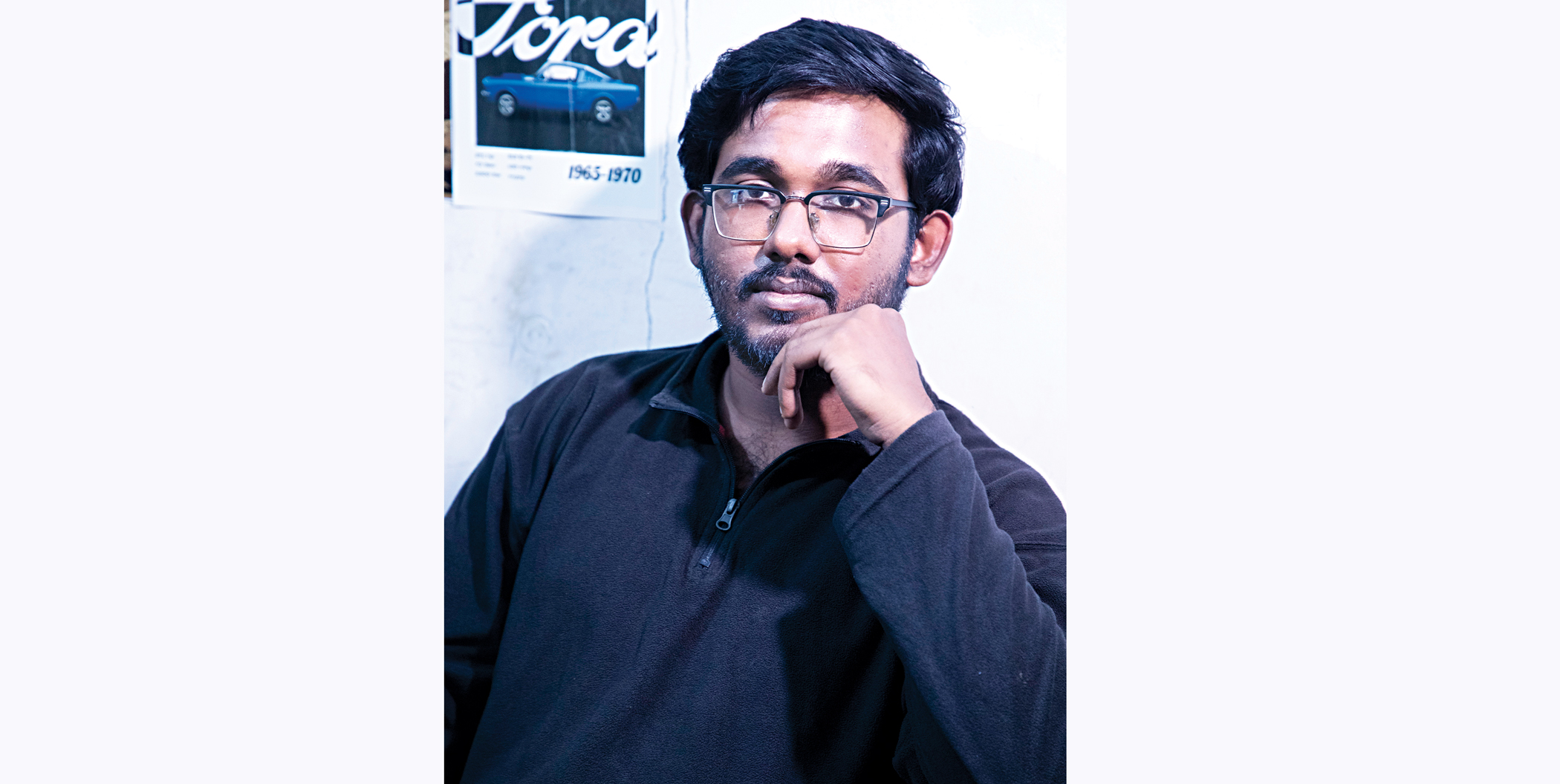
Md Tahsan Farzeen, Moments of Memories.
So, sacrificing his CGPA did pay off, given that he already earns so much to compensate for it. Yet, he had to maintain a decent CGPA. After all, he needs a backup to get a job in case of any emergencies.
While emphasising the current status of job sectors in Bangladesh, he mentions, “Many students nowadays do not even have the realisation that they need financial stability, and after graduation, it’s often too late to start.”
He thinks that being a student was crucial to gain customers’ trust. When it comes to ordering gifts, his customers, the majority of whom are around his age, are likely to trust him more than an elderly person.
Sometimes he did question himself whether living a stressful life and spending so much time on business was worth it. “There were days when I worked from 12 AM to 6 AM, and then attended the class at 8 in the morning,” he adds.
“When I saw reactions on the happy faces of customers, of how surprised their loved ones were upon receiving the gifts, all the efforts became meaningful,” he reflects.
It was not a smooth journey, though.
 For all latest news, follow The Daily Star's Google News channel.
 In 2024, his sales dropped rapidly, and he fell into depression. But he never gave up; he even came back stronger, and now in 2025, his sales quadrupled.
He emphasises the role of his friends: Saif Hossain, Sakib Hossain Prince, and Rafeen Chowdhury, without whom reaching such a large-scale production in his business would have been impossible.
Tahsan gives the advice, “When you are starting something, there is always the chance of failing, even for me; it was a one per cent chance of success.”
According to him, the most important step is to start, and the rest of the ups and downs will be automatically dealt with over time.
The passion for exploration
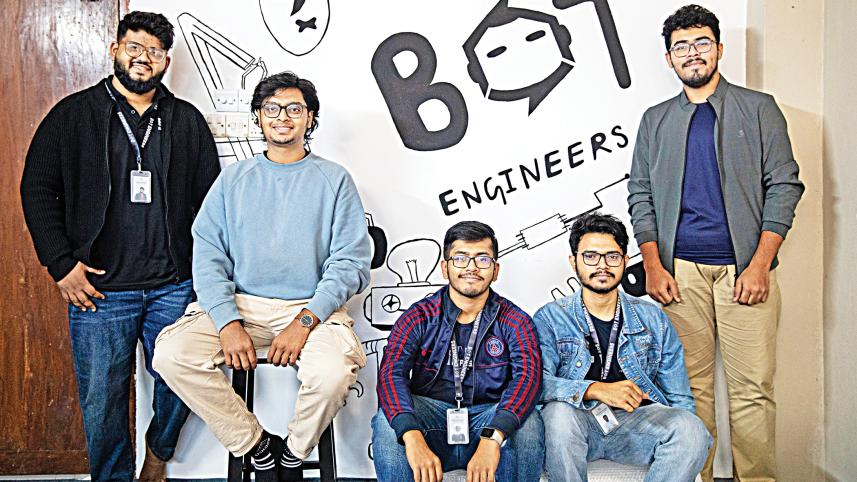
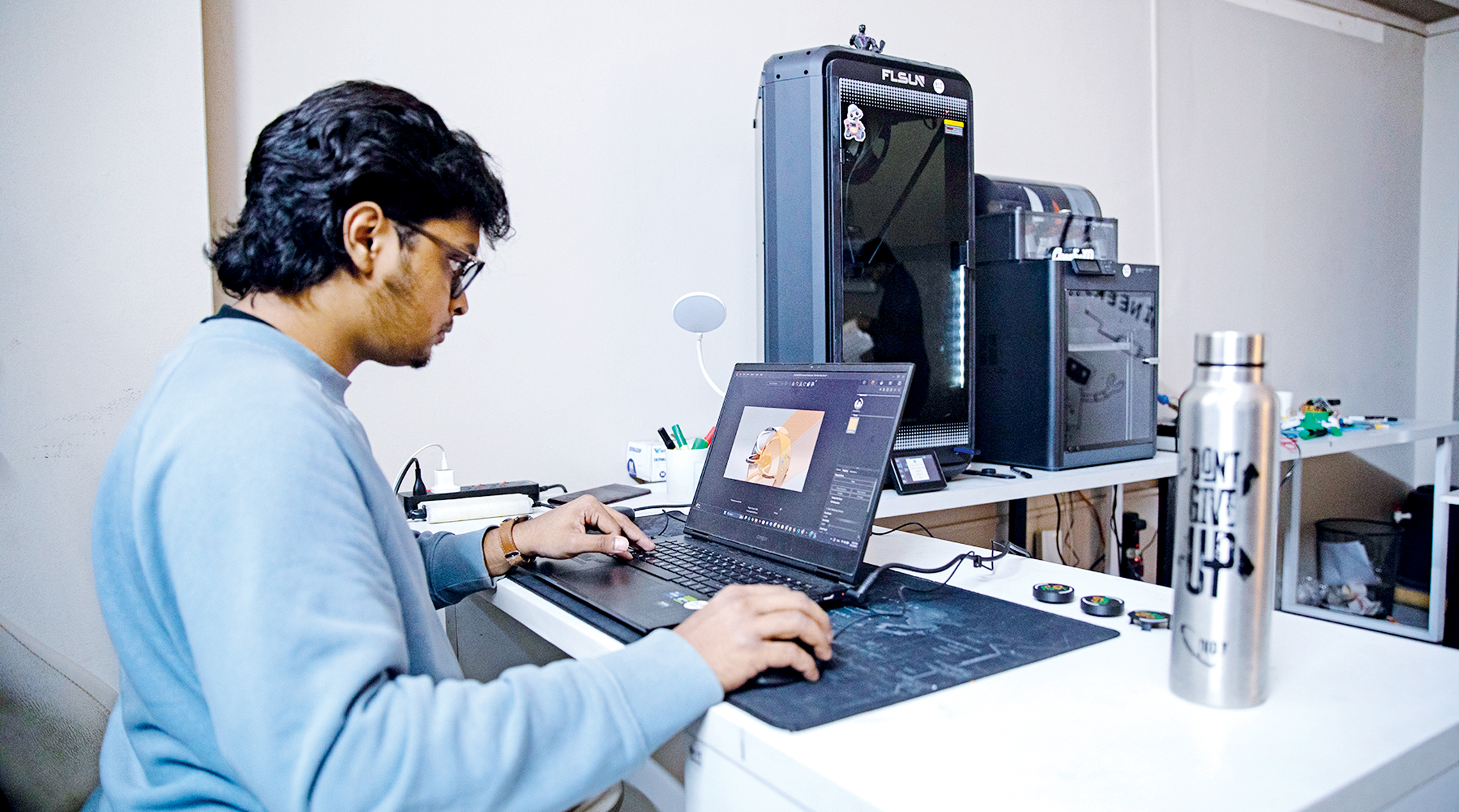
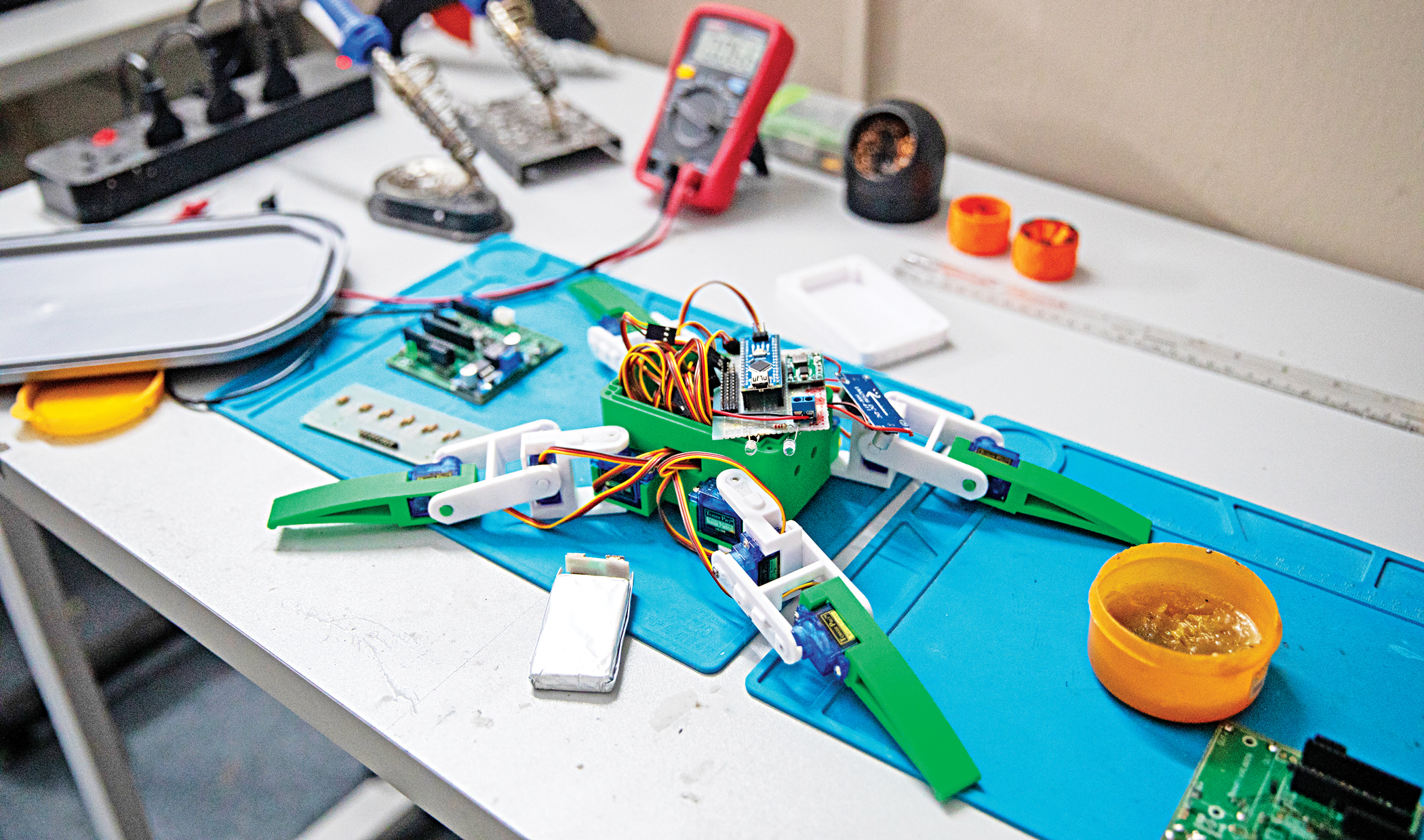
Md Ali Razin, a student of the CSE department at Brac University, opened his company, Bot Engineers, along with his co-founder Sanzim Rahman Khan in April 2025.
For Razin, it was not his first business. Previously, he had run a t-shirt shop after the SSC exams. In his first year at university, he even had a food cart in front of Brac University.
Now, their Bot company, which initially began with an investment of Tk 5000, earns an average of Tk 1.5 lakh per month.
Other than selling components and providing 3D printing functionalities, they also provide lab facilities and training services to bring robotics to every school.
Razin mentions the struggle between academics and maintaining a company. He says, “It did feel overwhelming at times when my CGPA was falling.”
However, the positive reactions from customers are what fuelled their commitment, and he adds, “Sometimes it felt like maybe it would have been better to start the company after finishing studies.”
There is always that concern from parents who prioritise academics over anything else. However, according to Razin, “When you are a student, you have the freedom to fail.”
Earning money was not his prior concern as a student; rather, it was the passion to do something new, to explore. It felt like he was blindly following the same conventional track, from passing board exams with flying colours to fighting for public university admissions.
Razin recalls, “During my admission phase, I was quite lost. I was applying for medical school, but it was for my father, not for myself. I couldn’t express to my father that I had a passion because I myself didn’t know what I wanted to do.”
However, that is when it struck him; all his life, he had not had that chance to explore or find out what he actually wanted to do. And this company was the product of the urge to explore something new and create such opportunities for others as well.
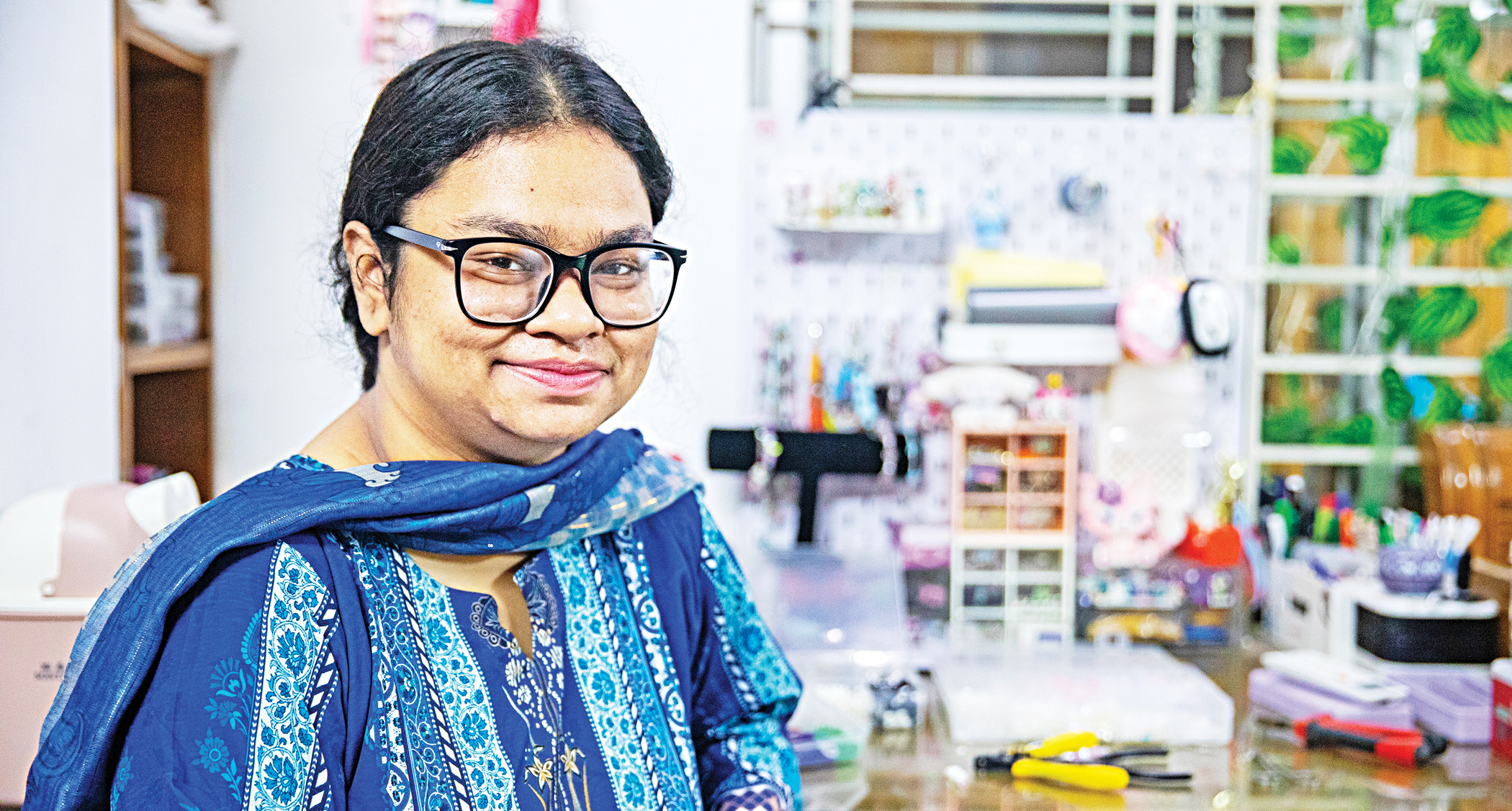
Lutfun Nahar Rodela, Riri Charms.
Razin believes that every student has the right to be something other than only doctors and engineers. He emphasises, “Most students are in a rat race to go for a job, to settle as soon as possible. People are more used to following certain orders in a job rather than critically thinking and taking risks on their own.”
He believes student entrepreneurs need to start with a strong mindset to effectively deal with problems. As Razin says, “Entrepreneurship sounds very fancy, but for a business like ours, which is focused on innovation, it comes with both big dreams and big risks.”
In the future, their company aims to turn Bangladesh into a manufacturing hub, to make robotics and innovation learning accessible to all districts.
What began as a hobby
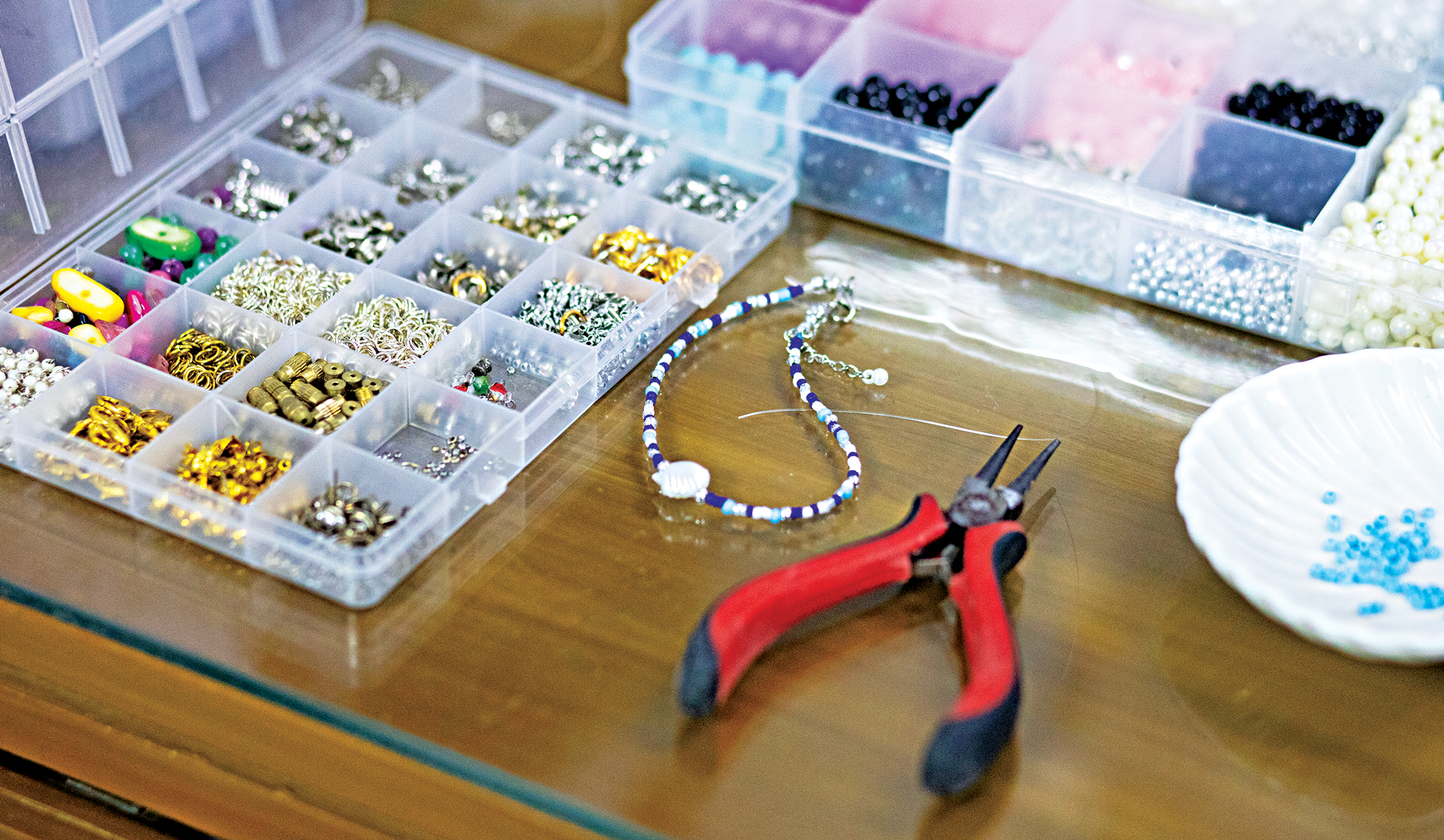
Lutfun Nahar Rodela, a student in the 11th grade at Mohammadpur Preparatory School and College, opened her accessory business, Riri Charms, during the pandemic. She started picking up random hobbies during the COVID pandemic, and even if the pandemic left, some of the hobbies, like making beaded jewellery, stayed with her.
“At the very beginning, I would make a few necklaces, bracelets, and earrings in my free time and upload pictures on WhatsApp stories,” as she recounts on her initial journey.
It went all the way from uploading pictures of two to three pieces of jewellery on WhatsApp stories to delivering to customers outside Dhaka in Chattogram, Mymensingh, etc.
Speaking of the challenges, Rodela mentions, “Firstly, time management was an issue during the exam time, and secondly, consistency.” Especially during SSC exams, it was quite tough for her since making jewellery requires time.
“Even if my father was a bit concerned that I might fumble in SSC due to my business, overall, everyone was quite happy because at least I was doing something productive instead of doomscrolling,” Rodela states, referring to her family’s reactions.
Speaking of her subject choice, she mentions, “You don’t need a business degree to start something. Life itself teaches you, even if you are a science student like me.”
Her business schedule is quite simple. She takes orders the whole week, and then from Thursday night her real work begins. On Friday, she dispatches the orders.
Rodela agrees that during vacations, there is better consistency as she can focus on working more. She recalls, “Sometimes I stayed up making jewellery and shooting pictures after everyone in the house was asleep.”
She thinks that starting the business as a student gave her many benefits. The young entrepreneur adds, “If I were not a high school student, I probably couldn’t have dedicated much time to setting up a business.”
Among the other advantages, she points out, “Since my age is similar to that of my customers and as I am a girl, I can understand their demands well.”
Despite her business success, Rodela aspires to study abroad. “I want to expand my business there. I hope there will be even more customers abroad.”
However, it mostly depends on her academic pressures. “Initially, I started it to have pocket money; I didn’t think it would become this successful,” she remembers. “If students want to start a business, they shouldn’t merely do it expecting really high profits initially.”
From giving stalls in school events to getting compliments from teachers who became fans of her jewellery, Rodela is glad to be a part of people’s special moments.
With options for customisation and jewellery that specifically cater to the needs of customers, she has been successful in earning revenue three times her investment, this too in just two years as a high school student.
That is how three students from three different perspectives on life, with different backgrounds, share one purpose in common — the same motive to become successful entrepreneurs in their fields and pursue their dreams.
Photo: Orchid Chakma & Sheikh Mehedi Morshed
Comments