


Over 500,000 galaxies and 50,000 stars captured in a single image
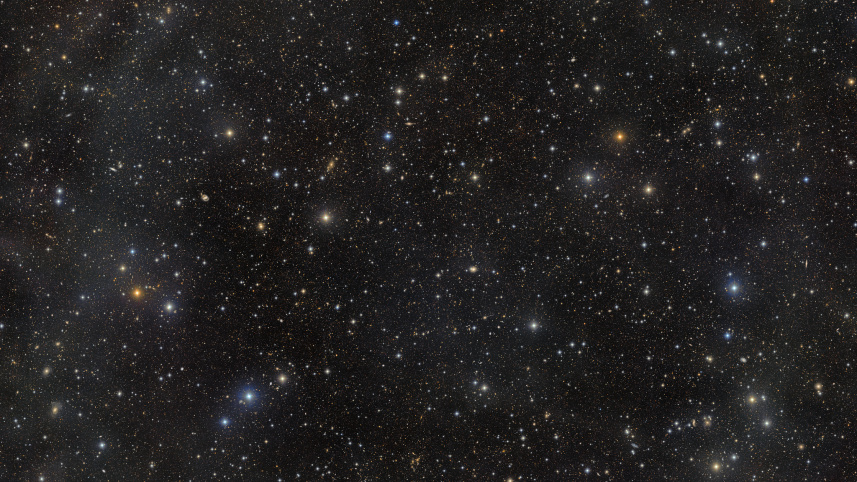
The NSF–DOE Vera C. Rubin Observatory in Chile has released an image captured with its 3.2-gigapixel LSST Camera, the largest digital camera in the world. The picture, made public on July 31, 2026, features the COSMOS field, a well-studied patch of sky in the constellation Sextans, and contains more than half a million galaxies and over 50,000 stars.
The image was created by stacking hundreds of individual observations, according to an official press release by the Vera C. Rubin Observatory. Because the COSMOS field lies away from the crowded plane of the Milky Way, relatively few bright foreground stars obstruct the view, allowing the telescope to see enormous numbers of distant galaxies whose light has travelled for billions of years to reach Earth, explains the press release.

The COSMOS field has been studied extensively since 2003, when the Hubble Space Telescope first pointed at it. Since then, observatories around the world have observed it in wavelengths ranging from radio waves to X-rays. Rubin's contribution combines depth, wide-field coverage, and the ability to revisit the same area repeatedly, which will help astronomers study how the sky changes over time.
The image marks Rubin's Early Data Preview 2, the first data release based on observations from the LSST Camera. It combines science validation observations taken between April 2025 and January 2026 and provides researchers with a deep stacked image covering 3,000 square degrees of the southern sky, roughly one-sixth of the visible Southern Hemisphere.
"The COSMOS deep image is just the beginning for Rubin in this region," said Bob Blum, Director of the Rubin Observatory at NSF NOIRLab, as per the official post. "Repeated visits to the field over the next few years will demonstrate the power of our survey design for discovery."
The COSMOS field is among the regions that will be observed more frequently during the Legacy Survey of Space and Time, Rubin's ten-year project to create the most comprehensive cinematic record of the Universe, states the official source. The full survey has only recently begun. Data is currently available to researchers in the US and Chile, as well as authorised international partners, and will be released publicly after a two-year proprietary period.
You can view the full image here.
 For all latest news, follow The Daily Star's Google News channel.
Comments