


Fuel scarcity, unequal cuts deepen power crisis
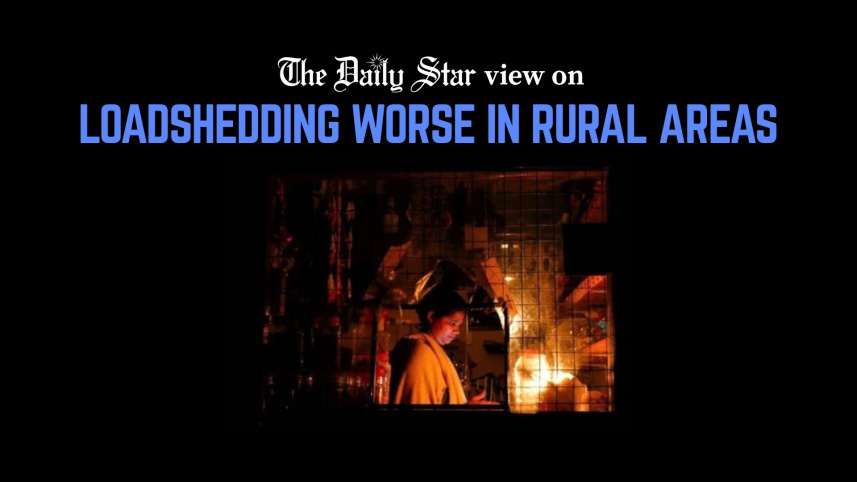
Bangladesh is in the grip of a severe power crisis that is leaving millions of people without electricity for hours, especially in rural areas. Shortfalls are widening rapidly. On Tuesday evening, the gap between generation and demand stood at 1,923MW—already punishing. By Wednesday evening, this gap widened to 2,180MW. The government itself now concedes the shortfall could hit 3,000MW.
The power crisis is, in equal measure, a fuel problem. Currently, 71 of the country's 143 power plants are either completely idle or operating well below capacity, constrained by shortages of gas, coal, and furnace oil. To meet peak summer demand, the Bangladesh Power Development Board requires 1,200 million cubic feet of gas daily, yet it is receiving only about 870 million. However, domestic fuel scarcity only explains part of the problem. Internal data from April 22 reveals that India’s Adani Power, our largest single source of imported electricity, shut down the second unit of its cross-border plant for maintenance. This slashed Adani’s supply by half, down to 748MW. Because Bangladesh relies on these twin units for roughly 10 percent of its daily electricity, the reduction has been a major blow to an already strained grid. The Power Division confirmed yesterday that the offline unit is expected to resume operations by April 26.

Beyond the generation deficit, the distribution of available electricity is highly unequal. Current data shows rural communities are enduring five to six hours of blackouts daily, while major cities remain largely unaffected. Loadshedding is actively managed to protect high-demand commercial and metropolitan areas, forcing rural grids to absorb the brunt of the outages. This inequity is compounded by a lack of transparent reporting. The national grid’s official shortfall figures contradict the data shared by the Bangladesh Rural Electrification Board. Officials have admitted that national statistics often measure how much electricity can be generated in a given hour, rather than actual consumer demand. Such reporting is a statistical sleight of hand that effectively masks the true scale of power outages outside city limits.
When authorities fail to acknowledge the reality on the ground, formulating an effective response becomes impossible. While the government recently formed a committee to examine these discrepancies, the fact that basic measurement flaws persist in 2026 is a major institutional failure. Over the past decade, Bangladesh has invested heavily in expanding its grid. But infrastructure reaching every village means little if it leaves rural residents in the dark for half the day.
To stabilise the grid and ensure fairness, three systemic issues must be addressed. First, the government must implement an honest and accurate reporting system that tracks where electricity is actually distributed and records the true duration of outages across all regions. Second, authorities need a revised load management protocol that fairly shares the burden of power cuts between urban and rural consumers. Finally, Bangladesh must develop a robust, long-term fuel supply strategy that reduces dependence on volatile global LNG markets and mitigates the risks of relying heavily on cross-border energy imports.
 For all latest news, follow The Daily Star's Google News channel.
Comments