


Protect food items from hazardous chemicals
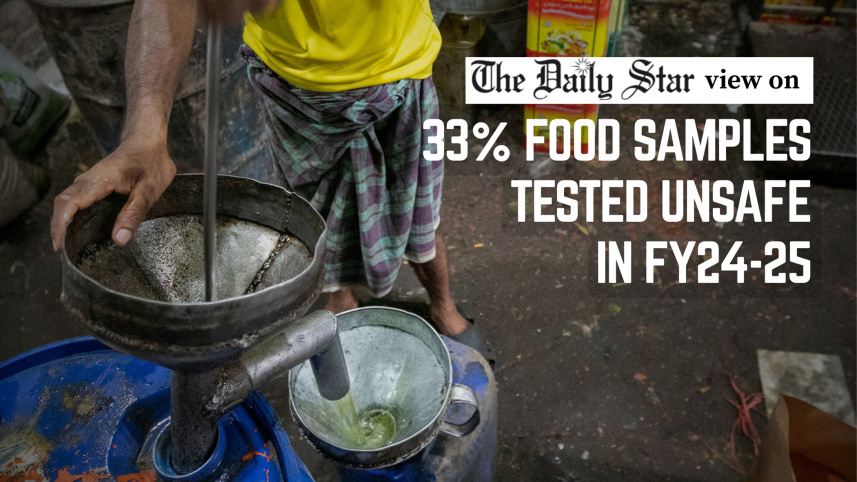
Food safety has long been a major public health concern in Bangladesh, and the latest findings of the Bangladesh Food Safety Authority (BFSA) underscore how far we still are from ensuring food safety. According to BFSA data for FY2024-25, 33.3 percent of tested food samples—571 out of 1,713—were found to be adulterated, contaminated, or nutritionally substandard. That such a high proportion of commonly consumed food items fail basic safety and quality checks should be a matter of grave concern for both policymakers and the public.
According to the study, pickles, sauces, chips, puffed rice, fruit drinks, edible oils, dalda, and honey were among the everyday items found to be unsafe. That many of these products are widely consumed by children is particularly worrying. Some 65 percent of chips tested contained acrylamide, a chemical linked to serious health risks, in amounts often exceeding internationally accepted limits. Edible oils lacking the required Vitamin A content and mustard oil adulterated with soybean oil further expose how consumers are being cheated and put at risk. According to BFSA data, the proportion of unsafe food samples has risen sharply, from 8.5 percent in FY2022-23 to 15.4 percent in FY2023-24, and now more than doubling to over 33 percent.

Excessive use of fertilisers and pesticides in crops, hormones in livestock, and production methods that prioritise yield over safety reveal deep-rooted problems in the food system. Late last year, a study revealed the widespread use of highly hazardous pesticides in crops and vegetables. It identified at least 17 pesticides classified as dangerous by the FAO and WHO, several of which are linked to cancer, neurological disorders, and long-term organ damage. That such chemicals, banned in dozens of countries, remain available in Bangladesh exposes the glaring regulatory gaps and weak enforcement that ultimately compromise public health.
While technological interventions to boost production are necessary, they must not come at the cost of people’s health. The government therefore must take strict measures to ensure that all food items are safe for consumption. This includes strengthening inspections, enforcing penalties against violators without exception, and ensuring that safety standards are rigorously applied in practice. It is encouraging that the BFSA plans to create a database compiling test results and making them public. Greater transparency can empower consumers and put pressure on producers to comply with standards, but to achieve real results, all relevant authorities must coordinate their efforts effectively.
 For all latest news, follow The Daily Star's Google News channel.
Comments