


Vaccination drive mustn’t falter
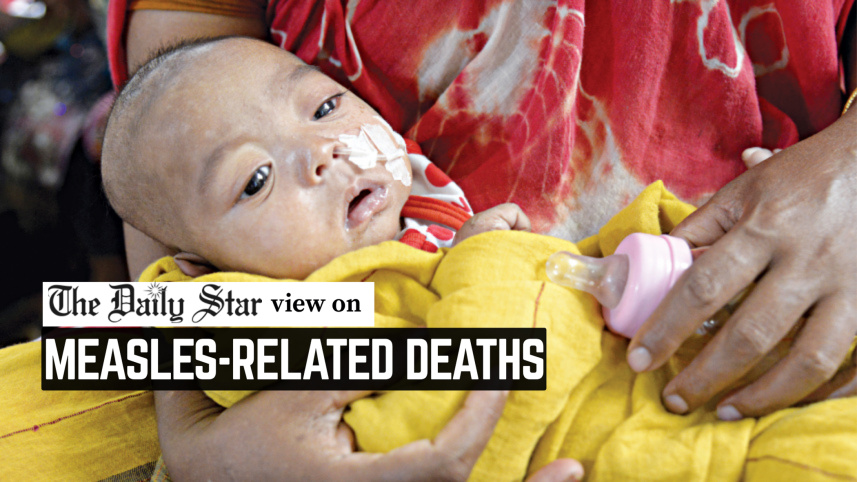
Between March 15 and April 3, the government reported 94 suspected measles deaths among 5,792 suspected cases across the country. Most of those dead are children. To put this into perspective, the total number of measles cases last year was reported to be 125. While the highest number of suspected cases have been reported in Dhaka, the figures are considerable in other divisions as well. What’s exasperating is that this outbreak is largely due to entirely avoidable reasons, and especially the previous interim government’s attempt to reform a system that was not broken in the first place.
Through continuous and planned efforts over the last few decades under the Expanded Programme on Immunization (EPI), measles had practically become a disease of the past in Bangladesh. While there were reportedly discussions in 2017 of shifting the costs of the vaccination programmes away from Gavi, the global vaccine alliance, and Unicef, and to the country’s budget, this gained no momentum. The last special vaccination campaign (meant to cover those missed during the EPI’s regular campaigns) was held in 2020, with the 2024 one being disrupted by the political changeover. Meanwhile, routine vaccinations were disrupted at least three times last year due to strikes by health sector assistants in rural areas. And to put the nail in the coffin of Bangladesh’s measles prevention, the interim government scrapped the proposed fifth Health, Population, and Nutrition Sector Programme (HPNSP) in March 2025 and decided to procure only half the vaccines via the longtime arrangement with Unicef, and the other half via tender. This decision, and the consequent, characteristic bureaucratic indecision, is now manifested in the current deadly outbreak.

It is, of course, reassuring that the current government is taking prompt action: an emergency measles vaccination campaign will begin today across 30 high-burden upazilas in 18 districts. Reportedly, Gavi has provided two crore doses of the measles vaccine, while central stocks were exhausted. We urge that this vaccination campaign be conducted with care and efficiency at all levels and that the government do its utmost to reach as many unvaccinated babies and children as possible. Simultaneously, efforts must be made to inform families of young children of symptoms and prevention techniques. Most crucially, ICU capacity and accessibility must be bolstered across the country, especially in rural areas. Also, those responsible for this outbreak should be held accountable accordingly. Each of the confirmed measles deaths so far was preventable. What we desperately need now is a return to a time when measles could not turn fatal for any child.
 For all latest news, follow The Daily Star's Google News channel.
Comments