


Energy, ports, and logistics: Rethinking Bangladesh’s supply chain

Persistent tensions in the Middle East, the resultant disruptions in key shipping routes, and the volatility in fuel access and prices are once again reminding the world of a hard truth: that energy security is no longer just about supply but also about having durable systems and structures in place. For Bangladesh, this reality is becoming increasingly visible. Fuel shortages, load-shedding, and the emergency conservation measures being rolled out by the government are all symptoms of a deeper structural vulnerability.
At first glance, Bangladesh’s situation may appear similar to that of many large economies that are also facing energy pressures. China, for instance, has experienced periodic power shortages and supply disruptions in recent years. But the similarities end there. While China manages energy stress as part of a complex system, Bangladesh experiences it as a crisis. The difference really lies in preparedness for such a situation as well as energy structure.

China’s energy challenge is fundamentally one of scale. Temporary shortages arise when industrial demand spikes, hydropower is affected by drought, or price controls distort supply incentives. But these disruptions rarely escalate into systemic crises. China has built layers of resilience: strategic petroleum reserves, diversified import sources, strong domestic production, and rapidly expanding renewable capacity.
Most importantly, it treats energy as an integrated national system. Coal, gas, renewables—both domestic and imports—are managed within a coordinated framework. The state retains the capacity to redirect supply and intervene quickly when imbalances emerge. Its investments in solar and wind power, battery storage, and electric mobility are aimed at sustainability and reducing vulnerability.
Closer to home, India has strengthened energy security through strategic petroleum reserves, diversified sourcing, and rapid renewable expansion. It has invested in solar power and LNG infrastructure, supported by improved port capacity. Although the Middle East crisis created a localised supply disruption of LPG in India—used largely for cooking—the country has been successfully aligning its energy planning with logistics and infrastructure development. In contrast, Pakistan offers a cautionary example. Its heavy reliance on imported fuels, coupled with foreign exchange constraints and limited domestic production, has periodically forced emergency measures.
Bangladesh, too, imports around 95 percent of its fuel needs—oil, LNG, and coal. This means global disruptions translate almost immediately into domestic pressure. When prices rise or shipping routes become uncertain, the country has limited capacity to absorb the shock. This explains why government responses often appear reactive. Cutting office hours, closing markets early, rationing fuel, and a potential shift to online classes are necessary in the short term, but they do not address the structural issue. They are demand-control measures in a system that lacks supply-side resilience.
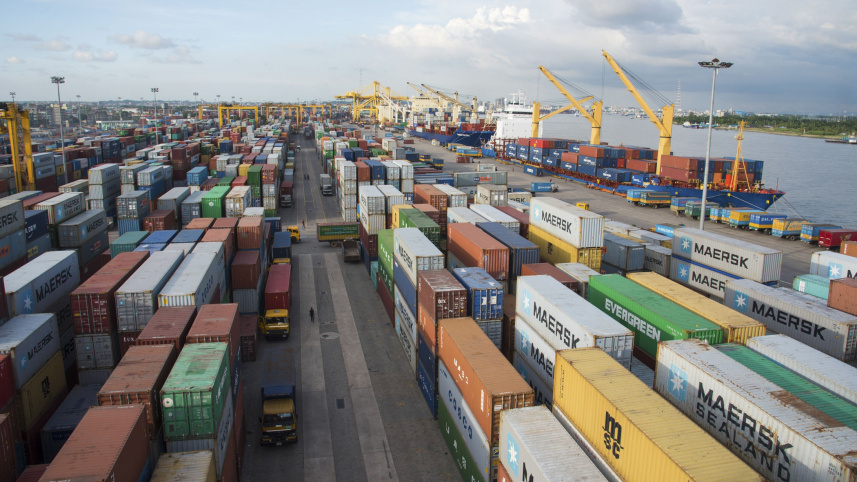
At the heart of this vulnerability lies a dimension often overlooked: logistics. Energy does not simply exist in reserves or contracts; it moves through supply chains. For Bangladesh, those supply chains begin and end at its ports. More than 90 percent of the country’s trade, including energy imports, is transported by sea. Every shipment of oil, LNG or coal must pass through maritime gateways before it can power the economy. Yet, our energy planning has historically remained largely disconnected from logistics and port infrastructure.
This has real consequences. Congestion at terminals, draft limitations, and coordination gaps between port operations and downstream distribution can delay the clearance of energy cargo. During global disruptions, even minor inefficiencies can escalate into supply delays. For a country without strategic reserves, such delays quickly translate into shortages.
China again provides a contrast here. Its energy security strategy extends beyond procurement or production to logistics integration. Investments in ports, shipping capacity, and overland corridors reduce exposure to disruption. Energy is secured not just at the source but across the entire supply chain.
Bangladesh has yet to adopt such an integrated perspective. Investments have focused largely on power generation capacity, while supply chain resilience has received less attention. In stable times, this gap remains hidden. During crises, it becomes critical.
There is also a financial dimension. Rising fuel import costs place immediate pressure on foreign exchange reserves. Bangladesh operates under tighter constraints. This increases sensitivity to both price volatility and supply disruptions.
Going forward, we must rethink energy security as a system-level issue. It must be embedded within logistics and supply chain strategy. First, port infrastructure must be strengthened. Improving handling efficiency, expanding storage capacity, and reducing vessel turnaround time are essential to energy security. Second, supply routes must be diversified. Overreliance on limited maritime corridors increases exposure to geopolitical risk. Expanding routing options and improving regional connectivity can provide flexibility. Third, Bangladesh should develop strategic reserves. Even modest storage capacity can buffer short-term disruptions and reduce immediate vulnerability.
Fourth, our renewable energy transition must be accelerated as a strategic necessity. In this regard, the rooftop spaces of industrial and logistics infrastructure can be used for solar power generation. Ports, inland container depots, off-dock facilities, and large warehouse clusters already possess vast, contiguous rooftop spaces that remain largely unused. A targeted rooftop solar programme based on on-grid systems with net metering can allow these facilities to generate power for internal use while feeding surplus into the grid.
Fourth, our renewable energy transition must be accelerated as a strategic necessity. In this regard, Bangladesh’s most immediate opportunity lies not in residential rooftops—often constrained by ownership complexities—but in industrial and logistics infrastructure. Ports, inland container depots, off-dock facilities, and large warehouse clusters already possess vast, contiguous rooftop spaces that remain largely unused. A targeted rooftop solar programme based on on-grid systems with net metering can allow these facilities to generate power for internal use while feeding surplus into the grid.
To accelerate adoption, the government could introduce structured incentives, such as linking solar investments with future electricity bill adjustments or targeted subsidies, thereby turning major energy consumers into distributed producers. In a land-scarce country, this industrial rooftop model offers one of the most practical pathways to reducing import dependence while strengthening energy resilience.
Finally, institutional coordination must improve. Energy, ports, and logistics remain fragmented across multiple agencies; a unified framework aligned with national logistics reform can bridge these gaps. Bangladesh does not need to replicate other countries’ models, but it can draw key lessons from them. Energy security is achieved through systems that integrate infrastructure, logistics, finance, and policy, not just supply contracts. The ongoing crisis, despite being challenging, also offers the opportunity to prepare well for disruptions.
Ahamedul Karim Chowdhury, adjunct faculty at Bangladesh Maritime University, is a maritime, logistics, and supply chain policy analyst.
Views expressed in this article are the author's own.
Follow The Daily Star Opinion on Facebook for the latest opinions, commentaries, and analyses by experts and professionals. To contribute your article or letter to The Daily Star Opinion, see our guidelines for submission.
 For all latest news, follow The Daily Star's Google News channel.
Comments