


Lead-battery recycling must be regulated
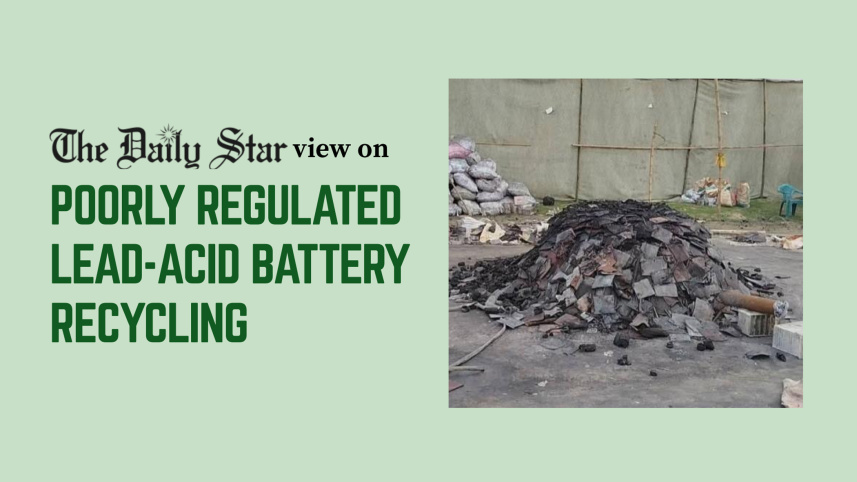
Bangladesh generates nearly 4,80,000 tonnes of lead-acid battery waste annually, and the fact that around 80 percent of such batteries are processed at informal and illegal facilities is a grave concern, given the well-documented dangers of lead exposure. This raises the question: why an industry, which poses such a great risk to our environment, public health, and economy, is allowed to operate with so little oversight?
Lead is a highly toxic metal, and even very low levels can adversely affect nearly every organ in the body. Given that nearly two-thirds of children in Dhaka have high levels of lead in their blood, reining in this industry is essential to avoid a looming public health disaster. It is also important to consider the economic consequences of lead exposure, with estimates indicating that Bangladesh loses around $29 billion annually due to its associated costs.
 For all latest news, follow The Daily Star's Google News channel.
 Lead exposure and unregulated battery recycling also impact other communities. For instance, workers in such factories often lack protective gear and are regularly exposed to lead dust and fumes. The uncontrolled establishment of such facilities near residential areas also contaminates the air, soil, and water. Besides, according to a report in this daily, an illegal battery recycling plant in Jamalpur polluted the surrounding croplands and waterbodies, claiming several cattle’s lives last year. Yet, the government has not taken a coordinated approach to address the situation.
While regulating a rapidly growing industry, operating millions of battery-powered rickshaws nationwide, may be challenging, the government must build a system in which every battery manufactured is accounted for, safely recycled, and managed within a responsible circular economy. This requires identifying what makes informal recycling a desirable option for businesses and customers and bridging the information gap in the market. Many consumers reportedly lack knowledge of battery durability and performance, which retailers often exploit. Authorities can help increase consumer understanding of batteries and make environmental and regulatory compliance easy for businesses involved.
Ultimately, what we require is an all-hands-on-deck approach to combat the crisis posed by the lead-acid battery industry. It serves no one to continue treating this issue as a peripheral environmental crisis, because it also concerns public health and labour rights. So, we call upon the government to address the governance failures surrounding this industry so that no living being is forced to bear the cost of this toxic industry any longer.


Comments