


Will disability rights be finally delivered?
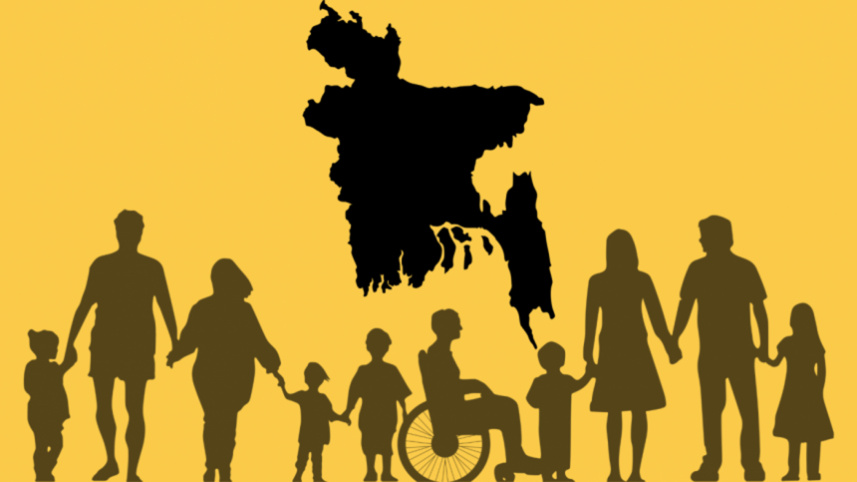
According to the World Health Organization (WHO) Health Equity Report 2023, some 16 percent of the global population experiences a disability. As per this calculation, the number of Bangladeshis living with disabilities should be around 2.7 crore, which is around 15 percent of the total population of the country and is almost the same as Australia’s total population.
Given Bangladesh’s recent political transition, it is a critical moment to place the rights, inclusion, and dignity of this significant portion of our population at the centre of the country’s reform and development agenda. BNP’s election manifesto—specifically pledging to advance disability rights and the existing legislation about disability—signals hope.

Bangladesh ratified the UN Convention on the Rights of Persons with Disabilities (CRPD) in 2007 as one of the first countries in the world and enacted the Rights and Protection of Persons with Disabilities (RPPD) Act in 2013. Implementation mechanisms, including a National Action Plan, were later introduced in 2018. However, due to the lack of a sound implementation strategy, most of the country’s disability-inclusive initiatives remain trapped in charity models.
BNP’s manifesto states that the current disability laws and the National Policy on Disability (1995) will be updated to ensure effective implementation of rights-related laws. This is indeed a positive development. However, Bangladesh has already enacted a comprehensive RPPD Act in 2013 and ratified the UN CRPD, and both uphold the rights of people with all types of disabilities. So, BNP does not necessarily need to update the 1995 national policy for a rights-based implementation; it should first prioritise the effective implementation of the National Action Plan 2018 under the RPPD Act. This work can be done by activating the central and local disability committees and establishing inter-ministerial coordination.
BNP’s manifesto also pledges disability-friendly citizen services, including accessible travel infrastructure. It is easier said than done, especially as most of the existing infrastructure in the country was not planned to be inclusive. In terms of public transport, the metro rail is the only mode of transportation that accommodates people with disabilities. So, the government must build infrastructure following the global accessibility guidelines. Similarly, all newly procured public transport must meet the universal accessibility standards.
What BNP should rather focus on is strengthening the Jatiyo Protibondhi Unnayan Foundation (JPUF), as it is already a specialised agency for persons with disabilities and functions as a foundation under the Ministry of Social Welfare, where more persons with disabilities can be recruited. Without ensuring that persons with disabilities are making decisions about their own future, positive changes will be difficult to bring about.
As prominent disability rights activist and author James Charlton famously wrote in his book “nothing about us without us”, lived experiences and a deep understanding of people with disabilities are a must-have to remove the entrenched social barriers that provide little space for disabled people to participate, especially in the decision-making domain. The government should also prioritise persons with disabilities as recipients of the proposed family cards, as many of them live in deeper economic vulnerability compared to other marginalised groups.
There are a few representational factors that BNP would do well to respond to. For example, BNP’s manifesto uses the term “people with special needs,” which is considered inappropriate under both the UN’s CRPD and Bangladesh’s RPPD Act 2013. The phrase “special needs” is misleading because it suggests that only persons with disabilities require additional or unique support. However, in reality, the fundamental needs of persons with disabilities are no different from those of persons without disabilities. Like everyone else, they require food, oxygen, education, healthcare, work opportunities, and a chance to participate in society to live with dignity.
Disability, therefore, is not solely an attribute of an individual; it emerges through interaction with societal barriers. It is often the state or society that creates conditions in which disability is experienced. For example, if a voter with a disability cannot cast their ballot because polling centres are inaccessible or election procedures are not adapted, the problem lies not with the individual but with the system that has failed to ensure accessibility. Yet, when exclusion occurs, we often focus solely on a person’s impairment instead of recognising the structural obstacles that prevent inclusion. This misplaced focus obscures the real issue: the need to transform institutions, environments, and attitudes so that everyone can participate equally.
To conclude, it is worth recalling the concept of the “surplus population,” described by political economist James O’Connor. Historically, persons with disabilities in Bangladesh have often been treated as part of this “surplus population”—individuals perceived as economically unproductive and therefore positioned primarily as recipients of charity rather than as equal participants in economic and social life. However, if the commitments outlined in the BNP manifesto are translated into effective policy and practice, this cycle could very well begin to change.
Ayon Debnath is campaign adviser at Royal Commonwealth Society for the Blind-Sightsavers.
Views expressed in this article are the author's own.
Follow The Daily Star Opinion on Facebook for the latest opinions, commentaries, and analyses by experts and professionals. To contribute your article or letter to The Daily Star Opinion, see our guidelines for submission.
 For all latest news, follow The Daily Star's Google News channel.
Comments