


Will the Iran war create a new world order?

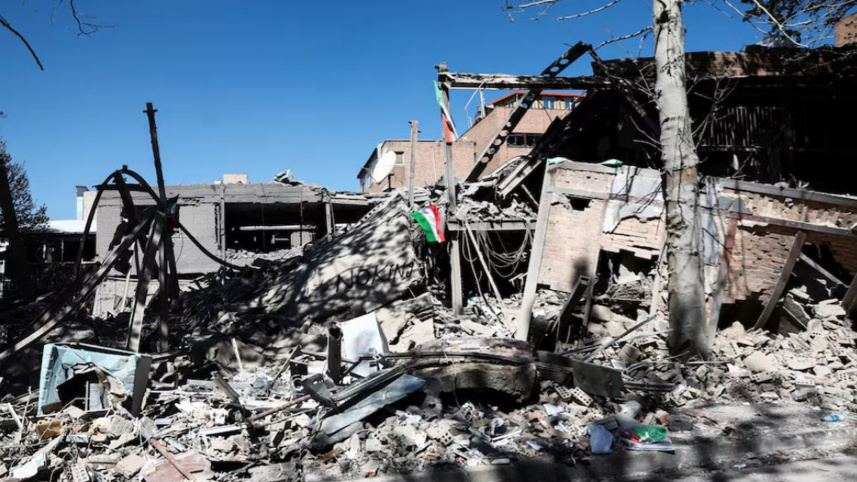
Operation Epic Fury launched on February 28, 2026, and struck at a moment when the post‑Cold War international order was already trembling, leading the world to sense that something irreversible had begun. What we are witnessing today is not merely a regional conflict; it may well be the stress test that exposes which ideas, alliances, and institutions built over 70 years can still hold and which collapse under their own contradictions.
Let us be honest, what the Iran crisis has done is accelerate a transformation already underway, compressing decades of gradual shift into months of raw consequence.

For most of the post-World War II era, deterrence was a relatively tidy concept: two superpowers, two arsenals, and a shared understanding that destruction was too costly to contemplate. Kenneth Waltz, in Theory of International Politics, described the stability of bipolarity in terms that made strategic sense in 1979. But the world of 2026 is structurally different—multipolar, technologically complex, and populated by actors who have learned that asymmetric strategies can embarrass conventional power.
Iran’s deterrence calculus was never purely nuclear. For years, Tehran wielded influence through proxies—Hezbollah, the Houthis, allied militias across Iraq and Syria—as a distributed deterrent architecture. That architecture did not prevent the February strikes, and its existence now raises the question of whether deterrence in a multipolar world must be reconceptualised entirely. Nuclear deterrence worked because both parties had something to lose symmetrically. What happens when one party disperses its deterrent into non-state networks, ideology, and geography?
The Maduro case sharpens this anxiety. When US forces captured Venezuela’s president under a domestic criminal indictment, bypassing the International Criminal Court (ICC) framework, it sent a message that power, when sufficiently concentrated, can rewrite the rules of legal jurisdiction in real time. The ICC, already under sanctions pressure from Washington, found itself caught in a Catch-22: would prosecuting Maduro legitimise what may have been an unlawful capture? This is not merely a legal puzzle. It is a signal that the normative infrastructure of international law is being stress-tested not just by rogue actors but also by the very states that once championed it.
Henry Kissinger once argued that international order requires both legitimacy and power, and that legitimacy depends on shared frameworks among sovereign states. What the Iran war has exposed is that those frameworks are now contested at their very foundation. The US and Israel coordinated military action in a way that bypassed conventional multilateral consultation. Nato was not formally invoked. The UN Security Council remained paralysed. Regional bodies issued statements that satisfied no one.
On the other side, Russia and China, while not intervening militarily, have moved with unusual directness in the form of warnings. This shift from strategic ambiguity to deterrence through clarity matters. It means the emerging bloc architecture is not based on formal treaties or elaborate security guarantees, but on shared scepticism of US-led order and increasingly on credible threat-making. This aligns with Mearsheimer’s view that states are perpetual security competitors and that liberal internationalism was always an illusion maintained by American hegemony. The emerging configuration—US-Israel-Gulf on one side, China-Russia-Iran on the other, with everyone else navigating anxiously in between—resembles a system of spheres of influence more than a rules-based order.
International law has never been perfect, but it carried weight because even states that violated it felt compelled to justify themselves within its language. The Maduro capture, the Iran strikes conducted without UN authorisation, Venezuela’s move to withdraw from the Rome Statute of the ICC, are not isolated anomalies. They form a pattern suggesting that states are not abandoning international law openly but are selectively citing it when convenient and bypassing it when not. This is more dangerous than simple non-compliance, as it means instrumentalising legality.
Hugo Grotius wrote in The Rights of War and Peace (1625) that even war had rules deriving from natural reason shared across humanity. Today, the dispute is not over principles, but over who gets to interpret and enforce them. When the ICC drops an investigation into US sanctions against Venezuela under political pressure, and simultaneously prepares potential warrants for Maduro, the institution’s neutrality becomes difficult to defend. This asymmetry, real or perceived, is precisely what pushes states towards the exit.
My own reading is this: international law is not dying, but it is entering a period of profound renegotiation. The rules that emerge from this transition may be more regional, more conditional, and more explicitly adjusted by power than the post-1945 frameworks. That may not be catastrophic; it may simply be more honest.
Also, something is revealing in the fact that the ceasefire following the June 2025 Israel-Iran conflict was announced on social media by the US president, not through a formal communiqué or the UN. This reflects a structural shift in how diplomacy is being conducted and legitimised. The traditional grammar of diplomacy—careful ambiguity, deniability, third-party mediation—is being replaced by something rawer and more immediate. China and Russia’s rejection of Trump’s “Peace Board” initiative was similarly conducted through public declarations. The language of deterrence is bleeding into the language of diplomacy.
The Gulf states offer perhaps the most interesting case study. Their response to the Iran war has been strategically ambiguous—neither enthusiastically aligned with Washington nor openly sympathetic to Tehran. This calculated silence is itself a diplomatic posture, which we will see more of. Middle powers are learning that in a contested multipolar system, strategic ambiguity is not weakness. It is leverage.
Chatham House analysts noted early in 2026 that even a prolonged Iran war would have “limited consequences for global GDP” but warned that some emerging economies remain acutely vulnerable to persistent high energy prices. That is a carefully calibrated assessment that perhaps understates a longer-term transformation. The Iran war has accelerated de-dollarisation trends already visible for years. Local currency settlements, alternative payment infrastructures, and gold-linked mechanisms have been gathering momentum since Russia’s 2022 exclusion from SWIFT. The Iran conflict adds urgency to those trends, as states watching the weaponisation of financial systems quietly diversify their exposure. And interestingly, the usage of blockchain for financial transactions is getting bigger.
Bangladesh, like most developing nations, sits at the intersection of these pressures—energy import dependence, currency vulnerability, and supply chain exposure to Middle East conflict. The economic status quo is not collapsing; it is reconfiguring. The dollar will remain dominant for years. But the unconditional dominance of the dollar—the uncontested centrality of Western financial architecture—is being negotiated downwards.
This is also, and I say this with genuine conviction, a transitional moment for academia. The theoretical frameworks we have relied upon—Waltzian neorealism, Nye’s liberalism, Wendt’s constructivism, even Mearsheimer’s offensive realism—were built to explain a world with cleaner categories: states, alliances, institutions, norms. The world of 2026 scrambles those categories. Non-state actors shape deterrence. Social media replaces communiqués. A domestic criminal indictment bypasses international arrest warrant procedures. A ceasefire is declared unilaterally on a social media platform.
Alexander Wendt, in Social Theory of International Politics, argued that “anarchy is what states make of it.” Scholars today need to ask: what happens when states are no longer the only relevant architects of that anarchy? When proxy networks, technology companies, and domestic legal instruments all become tools of international power? The discipline of international relations is not broken, but it is overdue for a serious revision, not just an addendum.
What this moment demands, from governments, institutions, and scholars alike, is intellectual honesty about what has changed and what still holds. The world is not witnessing the end of order. It is watching one order negotiate its succession with another. That negotiation will be messy, sometimes violent, and deeply consequential, and the choices made in the coming months will define its terms for a generation.
Syed Raiyan Amir is senior research associate at the KRF Center for Bangladesh and Global Affairs (CBGA). He can be reached at raiyancbga@gmail.com.
Views expressed in this article are the author's own.
Follow The Daily Star Opinion on Facebook for the latest opinions, commentaries, and analyses by experts and professionals. To contribute your article or letter to The Daily Star Opinion, see our guidelines for submission.
 For all latest news, follow The Daily Star's Google News channel.
Comments