


‘Modern-day slavery’ threatening our women migrants

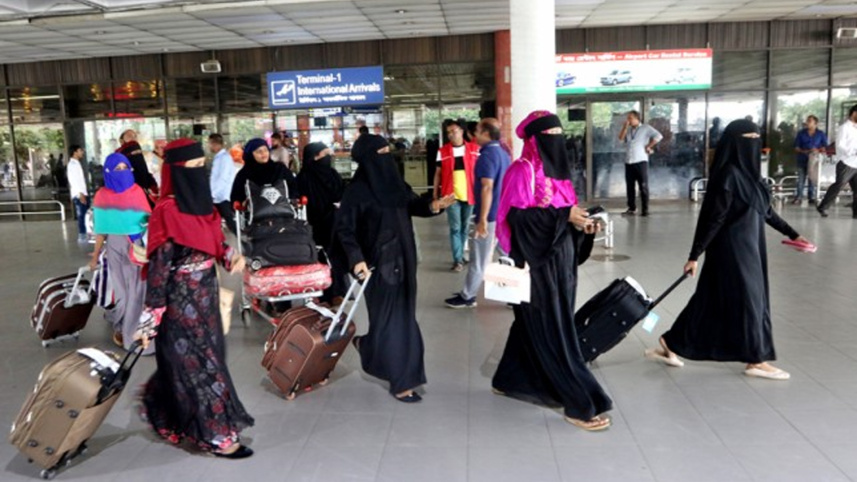
The recent return of a 32‑year‑old Bangladeshi domestic worker from Saudi Arabia—six months pregnant after alleged rape, torture, and imprisonment—is not an isolated tragedy. It is a stark reflection of the structural vulnerabilities that many Bangladeshi women face when they migrate to the Middle East for domestic work. From Bangladesh’s perspective, this is not only a human rights issue abroad but also a question of national responsibility which should begin at home and extend across borders.
Bangladesh sends hundreds of thousands of workers overseas each year. According to Brac Migration Programme data from 2025, more than 470,000 Bangladeshi migrant workers had returned home over the previous six years after facing abuse, exploitation or hardship, including at least 67,199 women who reported physical or sexual violence. Many returned injured, traumatised, or psychologically distressed, struggling to reintegrate into society due to stigma and a lack of support.

Remittances from migrant workers act as a lifeline for Bangladesh’s economy, contributing over $31 billion last year, and a large portion of this came from Gulf countries such as Saudi Arabia. However, behind these figures are Bangladeshi women who migrate there with limited education, minimal bargaining power, and deep economic or social vulnerabilities.
The International Labour Organization (ILO) estimates there are over 11 million migrant domestic workers worldwide, many concentrated in the Middle East. ILO research with the Walk Free Foundation also estimates that nearly 50 million people globally live in conditions of modern slavery, including forced labour. Domestic work in private households is consistently identified as a high‑risk sector due to isolation and lack of labour oversight. For Bangladeshi women, the journey often begins with promises of secure jobs, fixed hours, and decent salaries arranged through recruiters or local brokers. But in reality, many end up placed in private homes under the kafala (or “sponsorship”) system, which ties their legal status to a single employer. Although some Gulf states have introduced limited reforms, domestic workers remain largely excluded from meaningful protection and full labour law coverage.
Human Rights Watch and Amnesty International have documented patterns that mirror many testimonies from Bangladeshi migrant workers: employers routinely confiscate passports, withhold wages, confine workers to homes, and demand excessive hours without rest. Despite laws against passport confiscation in some Gulf states, the practice remains widespread. Without their passports, workers cannot leave the country, change employers or even safely approach authorities.
Many Bangladeshi domestic workers also report having their mobile phones taken away or being denied access to contact with family members. Isolation inside private households in a foreign country means having no co‑workers, no visible workplace, and often no independent witnesses. Abuse can continue for months without detection. Between 2020 and 2024, an estimated 63 percent of returning female domestic workers reported experiencing at least one form of abuse, with 30 percent reporting sexual violence and 15 percent returning pregnant from assault.
International law outlines clear standards for what constitutes decent working conditions. The ILO Convention No. 189 on Domestic Workers, for instance, calls for equal labour protections, weekly rest, fair wages, and protection from violence. The Forced Labour Convention and its protocol prohibit coercion and exploitative conditions, and the Convention on the Elimination of All Forms of Discrimination Against Women (CEDAW) obliges states to protect women from gender‑based violence. However, ratification gaps, limited labour law coverage for domestic workers, and weak enforcement mean that these protections are often theoretical rather than practical.
From the workers’ perspective, the consequences do not end at the homecoming stage as many return traumatised, injured, or even pregnant due to sexual assault. Some face social stigma in conservative communities. Others return without savings or with unpaid wages. Returnee women report high levels of physical abuse, psychological trauma, and restricted access to necessities abroad. Several studies by the Refugee and Migratory Movements Research Unit (RMMRU) and the Ovibashi Karmi Unnayan Program (OKUP) also found that returning women experienced conditions such as denied medical care, excessive work hours, and severe abuse.
Without structured reintegration programmes, survivors often struggle to find work or receive proper medical and psychological care. Mental health support is limited and legal redress against abusive employers abroad is rare, especially when cases are quietly resolved through repatriation without prosecution. With crimes going unpunished, the impunity of abusive and exploitative employers is reinforced.
Bangladesh must confront its own responsibilities when it comes to protecting its citizens working abroad. For one, recruitment practices need tighter regulation as sub‑agents operating informally at village or neighbourhood levels often escape scrutiny. Transparent contracts in Bangla, verified job descriptions, and clear complaint channels should be made mandatory. Recruitment agencies involved in deception or trafficking should also face criminal consequences.
Pre‑departure training should be strengthened not only to provide practical skills but also to inform workers about their rights, embassy contacts, and emergency procedures. Additionally, digital registration systems could track contracts and reduce substitution fraud. Bangladesh’s hotlines must be responsive and accessible from abroad.
At the same time, the Bangladesh government must take a more assertive diplomatic stance when it comes to ensuring protection for workers abroad. Embassies in destination countries need to be equipped with adequate resources to operate safe houses, provide legal assistance, and actively pursue complaints with host authorities. Simply issuing travel documents for return without seeking investigation undermines deterrence. Bilateral agreements with Gulf states should include enforceable labour protection, joint monitoring, and mechanisms to blacklist abusive employers.
Destination countries must also realise their responsibility and carry out structural reforms accordingly. Reforms to the kafala system must be meaningful and practically implemented. Domestic workers should be fully covered under labour laws. Passport confiscation and other coercive tactics should be prosecuted. Independent complaint mechanisms must be accessible to workers without threats of retaliation..
The experiences of workers from Nepal, the Philippines, Ethiopia, and Sri Lanka show that this is a regional problem affecting migrant women from many developing countries. Some governments have imposed temporary bans on sending domestic workers to certain Gulf states following high‑profile abuse cases. While such bans may offer short‑term political signals, they neither satisfy the underlying demand for migrant domestic labour nor lessen the systemic vulnerabilities that enable exploitation.
Ultimately, this is about redefining how we value migrant labour. Bangladeshi women who travel abroad as domestic workers are not disposable labour units. They are citizens whose dignity and rights must be protected across borders. Remittances should not come at the cost of their bodily integrity and basic freedom. Calling these patterns modern-day slavery is not rhetorical excess. When deception, coercion, confinement, violence and exploitation intersect, the elements of forced labour are present. When women are isolated, abused and denied autonomy, fundamental human rights are violated.
If Bangladesh is to continue sending workers abroad, it must ensure that migration is safe, informed, and rights-based. Protection must follow the worker to her place of employment and extend throughout her return and reintegration. Each abused migrant worker represents a systemic failure. Accountability must involve recruiters, employers, and officials where negligence or complicity exists.
For Bangladesh, the challenge is clear: protect the women who sustain the nation’s economy through their labour abroad, or continue being complicit in a system that trades vulnerability for remittance.
Md Abbas is a journalist at The Daily Star. He can be reached at abdulla180395@gmail.com.
Views expressed in this article are the author's own.
Follow The Daily Star Opinion on Facebook for the latest opinions, commentaries, and analyses by experts and professionals. To contribute your article or letter to The Daily Star Opinion, see our guidelines for submission.
 For all latest news, follow The Daily Star's Google News channel.
Comments