


Quality must become healthcare's first line of defence in Bangladesh

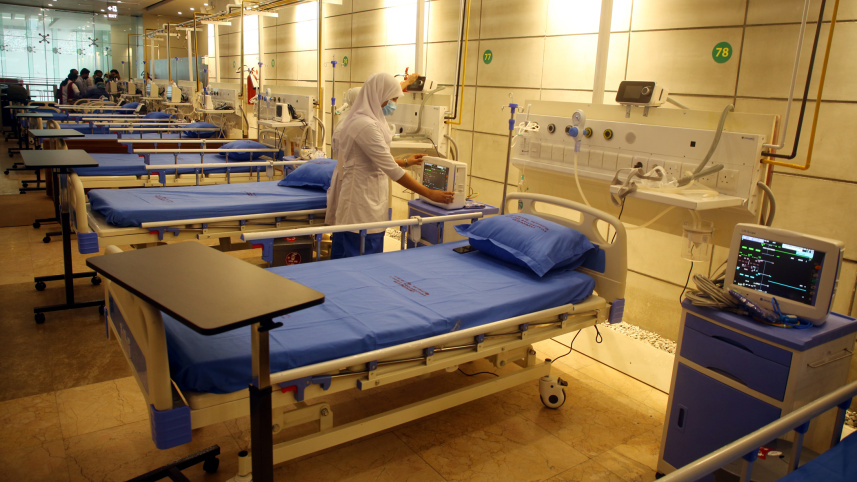
After every major healthcare tragedy in Bangladesh, the pattern of public response follows a sequence of shock, grief, investigations, suspensions, legal proceedings, and promises of reform. When the public attention moves away, the systemic weaknesses often remain unaddressed. Investigations and legal action are essential for ensuring accountability, but they cannot prevent the next disaster unless quality practices are followed.
The deaths of six newborns at Ad-Din Medical College and Hospital on May 27 this year have shaken the morality of the nation. The families who came to the hospital with hope left in unspeakable grief. In recent years, the country has seen several hospital incidents involving fires, oxygen supply disruptions, electrical failures, infrastructure deficiencies, and medical equipment-related errors. Though the circumstances differ, each event teaches a common lesson: healthcare safety has to go far beyond clinical treatment. Infrastructure, biomedical equipment performance, environmental monitoring, infection prevention, management practices, and regulatory oversight directly impact patient outcomes.

Quality practice in the healthcare sector should not be seen as an administrative task. It is a systematic culture that ensures that each patient receives timely, safe, efficient, equitable and patient-centred care. The WHO Global Patient Safety Action Plan 2021-2030 requires countries to establish robust systems to minimise avoidable harm through workforce competence, leadership, risk management, incident reporting, and continuous quality improvement. Similarly, universal standards such as ISO 9001 for Quality Management Systems (QMS), ISO 15189 for ensuring quality and competence in medical laboratories, and Joint Commission International’s (JCI) Accreditation Standards for Hospitals provide comprehensive guidelines for improving patient safety and healthcare quality.
One of the most neglected aspects in Bangladesh’s healthcare facilities is biomedical instrument calibration, that is the process of comparing a medical device’s measurements against a known, traceable standard to ensure accuracy and patient safety. Hospitals are increasingly turning to sophisticated medical technologies to diagnose, monitor and treat patients. But even the most advanced equipment could be dangerous if it’s not properly calibrated, maintained, and verified. Periodic calibration is required for critical equipment such as ventilators, infusion pumps, patient monitors, defibrillators, oxygen analysers, incubators, anaesthesia machines, temperature sensors, and medical gas monitoring systems. Inaccurate tidal volumes from a ventilator, incorrect medication dosages from an infusion pump, or erroneous readings from an oxygen analyser can directly impact patient safety. Therefore, medical laboratories and hospitals need to ensure the metrological traceability of the measuring equipment.
Another lesson from recent healthcare incidents is the urgent need for continuous environmental monitoring. The ICU, NICU, surgical room, laboratory, and oxygen delivery system have to be operated under strict environmental controls. The manual monitoring method cannot pick up on any changes in time to avert a disaster. AI-based environmental monitoring systems could provide a revolutionary way out of this problem. Smart sensors that operate on the Internet of Things (IoT) network can continuously monitor oxygen content, CO2 content, temperature, humidity, air pressure, air particles, efficiency of ventilation, medical gas supply, and occupancy. An AI-driven environment monitoring device can detect abnormal behaviour, predict equipment malfunction, diagnose ventilation issues, and automatically alert the healthcare personnel. These predictive systems are already being integrated into modern hospitals worldwide and represent an important investment in patient safety.
However, applying quality systems in the health sector can still be challenging due to limited finances, resources, inadequate biomedical calibration support, insufficient quality professionals, inconsistent maintenance practices, and lack of regulatory enforcement. To overcome these difficulties, the sector needs a more robust legislative framework that demands regular regulatory inspections, biomedical equipment calibration, hospital certification, quality management practice, and environmental monitoring. The minimum safety standards for biomedical equipment calibration and environmental monitoring systems at ICU, NICU, and CCU in all public and private healthcare facilities should be clearly stated in this law. Some preparatory measures for countrywide application could be training quality managers, biomedical engineering, and the creation of regional calibration labs traceable to national reference laboratory and international standards, digital QMS, hospital accreditation programmes, and AI-based national monitoring systems for critical healthcare infrastructure.
In order to achieve the Sustainable Development Goals (SDGs) related to healthy lives and well-being for all, Bangladesh should maximise its institutional capacity and internal resources independently rather than relying on external assistance. The country already has in place the major prerequisites for a solid healthcare quality system. Under the Ministry of Health and Family Welfare, the Directorate General of Health Services (DGHS) can lead policy implementation and regulation. The Bangladesh Accreditation Board (BAB) can establish accreditation frameworks. The Bangladesh Reference Institute for Chemical Measurements (BRiCM), under the Ministry of Science and Technology, can provide technical services such as metrological traceability, biomedical equipment calibration, and designing a professional training course with the Ministry of Education. Additionally, the Ministry of Environment can strengthen hospital environmental monitoring systems, while academic institutions, scientists, and private institutes can support research, innovation, and gradual improvement.
For a better future of Bangladesh’s healthcare system, it is not enough to increase its capacity but also vital to ensure that services are consistently safe, reliable, and accountable. Investigations and legal actions will always remain necessary following adverse events. But ultimately, success can only be measured where quality practice can prevent tragedies before they occur, because that will ensure both sustainable protection for human life and institutional reputation.
Mamudul Hasan Razu is scientific officer at Bangladesh Reference Institute for Chemical Measurements (BRiCM). He can be reached at razu_ss86@yahoo.com.
Views expressed in this article are the author's own.
Follow The Daily Star Opinion on Facebook for the latest opinions, commentaries, and analyses by experts and professionals. To contribute your article or letter to The Daily Star Opinion, see our guidelines for submission.
 For all latest news, follow The Daily Star's Google News channel.
Comments