


The quiet abandonment of potato farmers

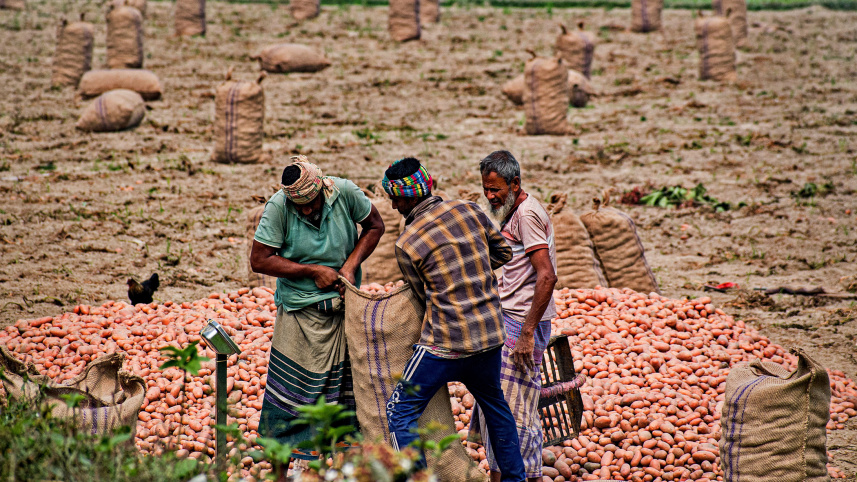
When the interim government announced a plan in August 2025 to procure 50,000 tonnes of potatoes, it signalled an apparent concern for farmers facing a devastating price crash. Three months later, the plan was withdrawn. Instead, the government decided to provide cash incentives to the farmers to offset their losses. But that incentive has yet to come, even though harvesting of early varieties has begun.
This raises a fundamental question: does the government’s handling of the potato crisis reveal systematic neglect of the farmers who produce one of the country’s staple crops?

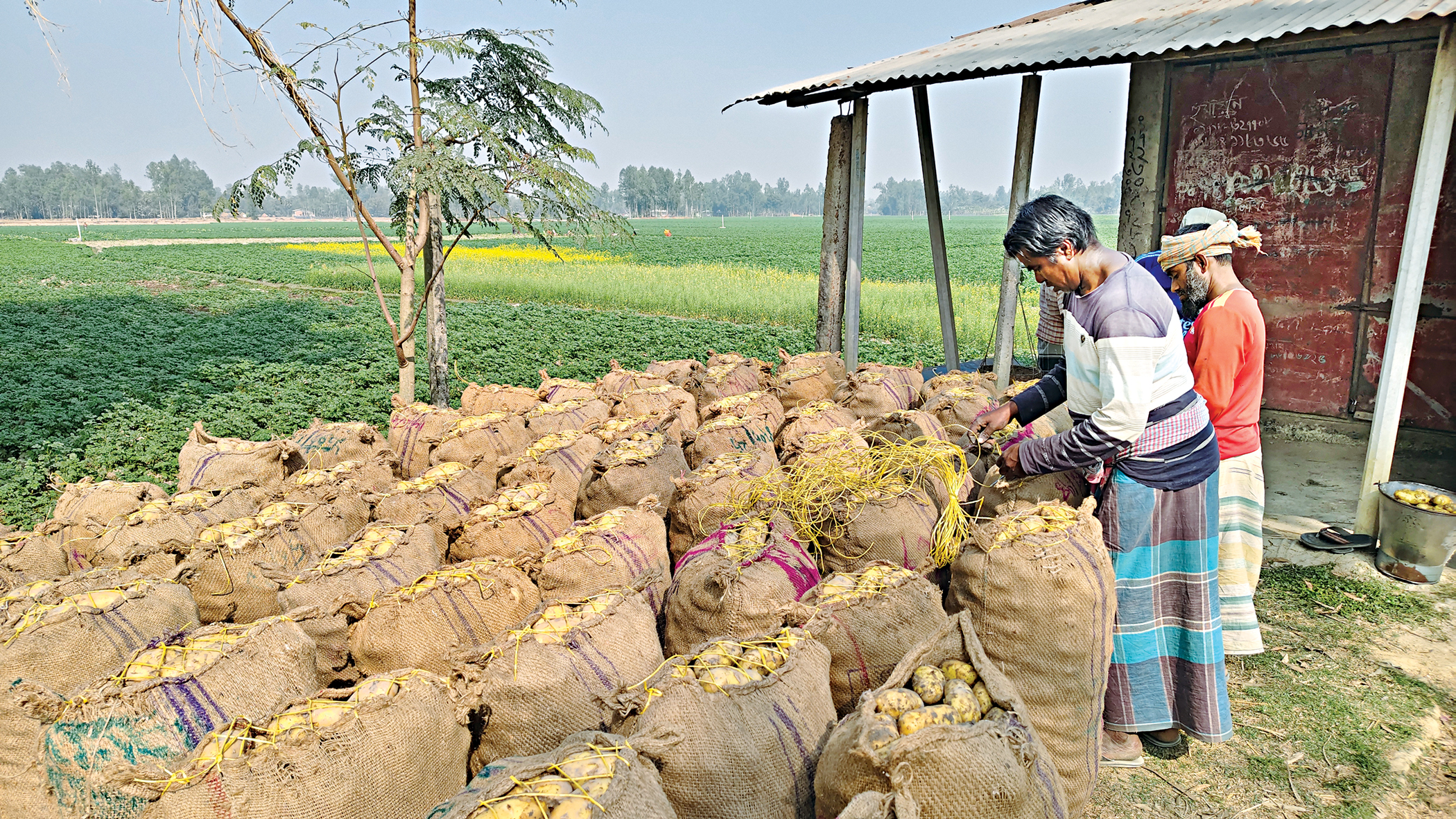
Bangladesh produced a record 1.15 crore tonnes of potatoes in the 2024-25 season, according to the Bangladesh Bureau of Statistics, much higher than the annual demand of 90 lakh tonnes. When surplus production triggered a price collapse, farmers were left to absorb the losses. Many sold potatoes for Tk 11 per kg at the field level, well below the Department of Agricultural Extension’s estimated production cost of Tk 14 per kg, and far below the Tk 20 per kg costs in the northern regions. Some farmers lost everything they had invested.
The government’s response came late. Only after months of losses did the chief adviser form a review committee to examine the falling potato prices. On August 27, 2025, the agriculture ministry announced plans to purchase 50,000 tonnes of potatoes for cold storage and later sale, setting a minimum price of Tk 22 per kg at storage gates. By then, much of the damage had been done.
By November 20 last year, even this belated intervention was withdrawn. The reasons given for withdrawal reveal how disconnected policymakers are from the farmers’ reality. A senior commerce ministry official, speaking anonymously, said direct procurement would primarily benefit cold storage owners and middlemen rather than farmers. Agriculture Secretary Mohammad Emdad Ullah Mian told The Daily Star at the time that potato prices had recovered to Tk 20-25 per kg. But this reasoning ignores the losses already incurred. Farmers who had sold potatoes at Tk 11 per kg could not reclaim that money even though prices recovered later. The minimum price policy of Tk 22 per kg, announced with such fanfare, was never enforced. For farmers, it became another empty promise.
The pattern extends beyond this single crisis. State procurement and storage are recognised tools for price stabilisation in agricultural markets worldwide. Yet, Bangladesh appears to lack the institutional commitment to use these tools effectively for potato farmers. The government reacts only after crises fully unfold, then withdraws support before it can make a difference.
The cash incentive programme tells a similar story. In early December, the agriculture ministry decided to provide more than Tk 110 crore in cash incentives to potato farmers, in addition to the Tk 150 crore already allocated for subsidies this fiscal year. These incentives were meant to compensate farmers for losses incurred in the 2024-25 season. Yet, as the harvesting of early varieties has begun, the money has not reached farmers till date.
The delay raises troubling questions. If the government recognised potato farmers’ losses to be severe enough to warrant Tk 110 crore in compensation, why has the disbursement been so slow? Farmers who sold potatoes at Tk 11 per kg last season needed this support months ago, when they were struggling to pay off debts and prepare for the next planting season. Incentives that arrive after a new harvest has begun do little to address the financial distress they were meant to relieve.
A disparity in treatment also arises when considering how different sectors receive government support. Speaking at a workshop in Dhaka on January 28, Agriculture Adviser Lt Gen (retd) Md Jahangir Alam Chowdhury highlighted this imbalance directly, saying, “There are no barriers when incentives are given to big businessmen. But when it comes to providing incentives to farmers, many obstacles arise.”
He pointed out that industry owners take loans from banks but often fail to repay them, while farmers struggle to access credit. At the same time, industrialists receive bank loans at an interest rate of only two percent and are granted waivers, along with various other incentives.
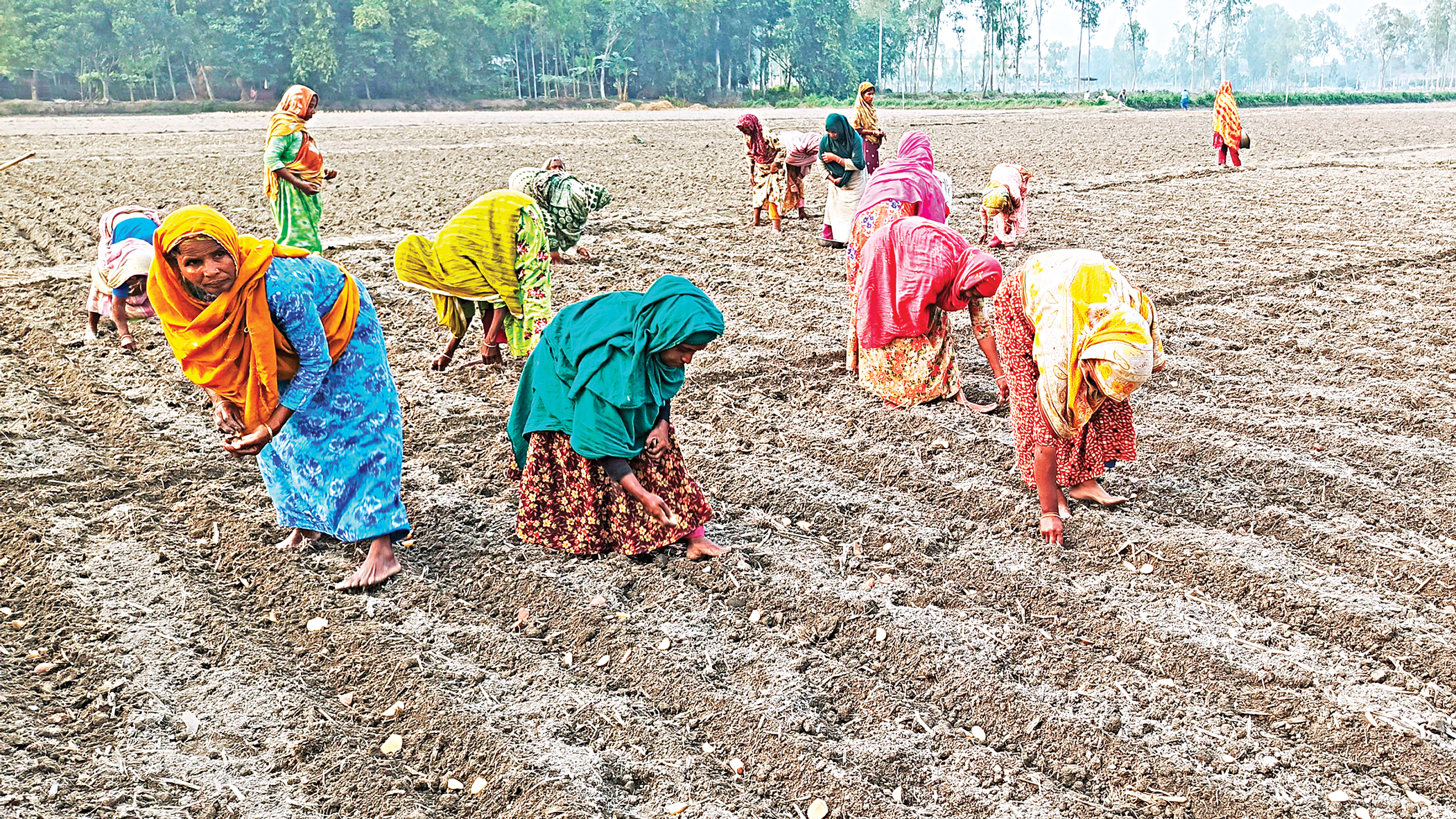
“These farmers are the backbone of the nation; we say this verbally, but it is not reflected in practice. Farmers do not receive fair prices for their produce,” the adviser said, adding that when farmers fail to get fair prices, they are often forced to discard their crops. “We express sympathy for a few days, and journalists publish one or two reports. But when it comes to compensating farmers for their losses by providing incentives, we face obstacles.”
The adviser’s remarks capture precisely what the potato crisis demonstrates: a systematic pattern of obstacles that farmers face when other sectors receive swift, substantial support. Together, the withdrawn procurement plan and delayed incentives reveal a troubling pattern of initiatives that look promising on paper but fail in execution. Whether through reversal or delay, the result is the same: farmers left without the support they were promised.
Compare this to the government’s treatment of rice farmers. Rice procurement programmes, though imperfect, operate with greater consistency and predictability, while potato farmers remain caught in an uncertain loop of announcements and reversals. The disparity suggests a hierarchy of agricultural priorities in which potato cultivation ranks lower, despite potatoes being a staple crop that millions depend on.
Are potato farmers being neglected? The evidence suggests they are. But neglect does not always mean deliberate indifference. It can manifest through delayed responses, withdrawn commitments, unenforced policies, and a lack of institutional mechanisms to protect farmers from predictable market volatility. By these measures, potato farmers have not received adequate attention from policymakers.
As a result, they lose money they cannot afford to lose. Some abandon potato cultivation entirely. Trust in government commitments erodes, making future interventions less effective. Agricultural markets require predictability, and farmers need to know the state will support them when crises occur and keep their word.
Procurement systems must be guided by clear production forecasts and price thresholds. Minimum price mechanisms must be enforced, not just declared. Incentives should be disbursed promptly and linked to documented losses. Most importantly, policymakers must treat potato farmers with the same seriousness they afford to other agricultural sectors.
Sukanta Halder is staff correspondent at The Daily Star, covering insurance, agriculture, commodity markets, the private sector and consumers. He can be reached at sukanta.halder@thedailystar.net.
Views expressed in this article are the author's own.
 For all latest news, follow The Daily Star's Google News channel.
 Follow The Daily Star Opinion on Facebook for the latest opinions, commentaries, and analyses by experts and professionals. To contribute your article or letter to The Daily Star Opinion, see our guidelines for submission.
Comments