


Why Bangladesh needs its own media freedom index

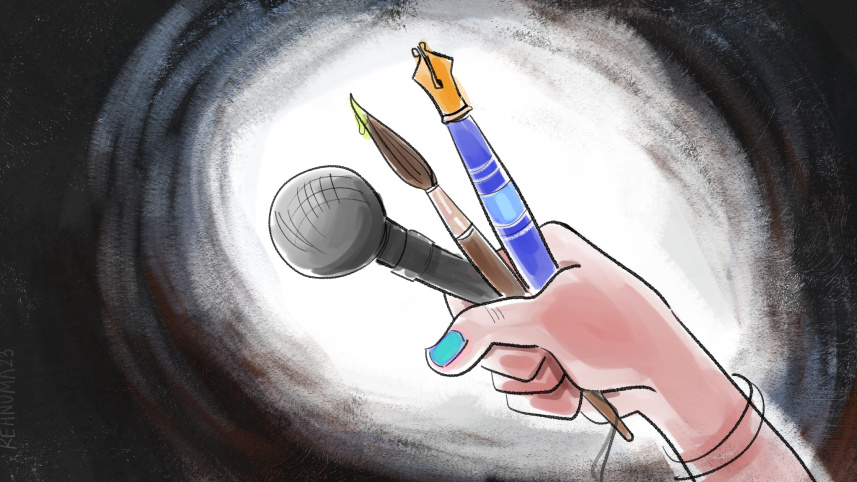
Concerns over freedom of the media are not new in Bangladesh. There has been debate, criticism, and international assessment for many years. Bangladesh’s position in various global indices has also come up repeatedly, with the latest World Press Freedom Index putting it at 152th place out of 180 countries. These indicators are important. They often shape a country’s image on the international stage and may influence diplomatic negotiations. But the problem is that external indicators do not always fully capture the reality inside a country. The same is true for Bangladesh. That is why now might be the time for Bangladesh to create a national media freedom index, keeping in mind its realities, crises, institutions, and people.
It’s worth recalling that the 2025 report of the Media Reform Commission had highlighted some important realities facing the press in Bangladesh. The report said that a single factor has not caused the crisis of media freedom here, and it cannot be explained by censorship or abuse of law alone. It’s not just the government. This crisis has been created by the relationship between three powerful entities: the government, the media, and the citizens.

We generally see freedom of the media as a link between the state and journalism. But the reality is more complex than that. If the government does not provide an independent environment, the media is curtailed. If the media fails to uphold ethics, professionalism, and public interest, its credibility is compromised, even in a free society. And if citizens do not verify information but instead spread rumours, become distrustful, and refuse to participate in democratic discussions, then the public sphere is weakened. So, to sustain media freedom in a country, the government, media, and citizens must all work together.
First, the government. The state must be clear in distinguishing between whether it is protecting or controlling the media. Constitutional safeguards must be in place and there should be remedial laws, practical application of the Right to Information Act (RTIA), transparency in licensing and accreditation process, and fairness in government advertising distribution. Most importantly, safety of the journalists must be guaranteed. Government must also ensure that state-owned media is indeed acting as a true public service institution. In Bangladesh, control over media does not always come from direct censorship, sometimes it can be seen in licensing restrictions, advertisements, lawsuits, informal directives, or through administrative complications.
Second, the media itself. Freedom of the media is not just freedom from the government. The media also has to be free from the influence of the owner, the advertiser, business interests, party loyalties, and the culture of internalised fear. The number of media outlets has increased in Bangladesh, but pluralism has not been expanded as a result. In many cases, ownership has been concentrated in the hands of a few groups. The same groups have exerted influence across multiple platforms, financial interests have influenced editing policy, and political proximity has affected news presentation. Without addressing the media’s own role in the question of its freedom, a truly independent media climate might always stay a dream.
Third, the citizens. This part is the most neglected, but perhaps the most important. Because freedom of the media is not only a matter for journalists but also for civic life. In today's Bangladesh, citizens not only read the news but also circulate it. They not only receive information, but become part of the information itself. What is being shared on social media, what news is being trusted, how rumours are being spread, how much dissent is being tolerated, how the RTIA is being used—all this now affects the public sphere.
There might be positive and negative indicators for citizens as well. Positives might include media awareness, use of the RTIA, participation in policy discussions, standing up for independent journalism, and responsible citizen journalism. Negatives might include the spread of rumours and false information, the inability to verify information, intolerance of dissent, a shift away from democratic participation, and an overall distrust of both the state and the media.
Finally, a Bangladesh-specific media freedom index has at least three major advantages.
First, it will give a more accurate picture of reality. Global indicators may indicate whether the situation is good or bad, but a national indicator can show where the problem is most dire. Whether it is the law, security, or perhaps the centralisation of ownership, there will be a higher degree of clarity. Second, it will make way for accountability. If this index is based on legal documents, court data, journalist safety reports, content analysis, and public opinion polls, freedom of media will no longer be a mere euphemism. It will become part of measurable governance and policymaking. Third, the index will bring the existing reforms into a framework. When freedom of media is discussed, some only talk about the law, the safety of journalists, or perhaps the opaqueness of ownership. But in reality, they are all interconnected. A national indicator can analyse these relationships, bring legal reforms and pave the way for regulatory independence.
Bangladesh is passing a time when just uttering words such as “freedom of expression” or “media freedom” is not enough. There needs to be a deeper, more honest, more principled discussion about how media freedom is built, curtailed, and sustained. Creating a Bangladesh media freedom index based on the reality of Bangladesh while respecting international policy can take that discussion to a new height.
Dr. S. M. Rezwan-Ul-Alam is associate professor and chair of Media, Communication, and Journalism at North South University.
Views expressed in this article are the author's own.
Follow The Daily Star Opinion on Facebook for the latest opinions, commentaries, and analyses by experts and professionals. To contribute your article or letter to The Daily Star Opinion, see our guidelines for submission.
 For all latest news, follow The Daily Star's Google News channel.
Comments