


Why reading books matters
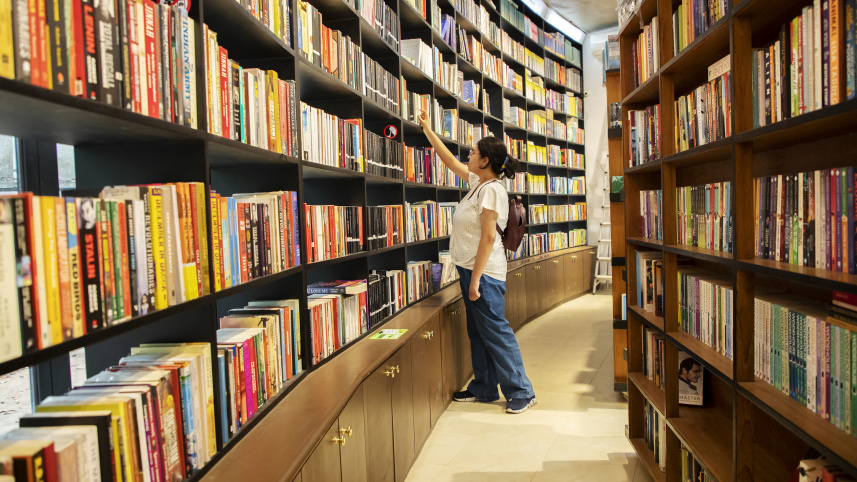
For many of us, some books leave a lasting impression—like footprints on wet cement. For my father, it was All Quiet on the Western Front by Erich Maria Remarque; for my mother, Shei Shomoy by Sunil Gangopadhyay. In the case of my kindergarten tablemate, it was a book regarding facts about the great white shark, which was the main topic of our one-sided conversation before morning assemblies. Though I didn’t appreciate it at the time, there was something to admire about his vast knowledge of great white sharks at the age of seven, an enthusiasm that feels increasingly rare among children today.
The memory left me wondering: are children reading anymore? Of course, they’re reading at school, but are they reading books with the passion and curiosity that older generations once did?

There’s a pattern among children nowadays with their familiarity with technology in their formative years. Initially, it begins when parents and toddlers make “peace treaties” involving iPads for a single bite of food during mealtimes. By the time they start school, most tasks require the use of devices, making it nearly impossible to keep them away from a world that depends heavily on modern tech.
“I tried my very best to keep my daughter away from screens, but ultimately I had no choice, as her school uses numerous software programmes for assignments,” says Faria Jahan, parent of a class five student in the IB curriculum.
Teachers, too, notice these shifts in reading habits. When asked whether children today are reading less, Maliha Tasnim Amin, a teacher at Siddiqui’s International School, explains, “I believe children today are reading differently rather than less. They are still learning, but in new ways. Many are more drawn to cartoon-style educational videos, songs, and interactive content. They enjoy visual and activity-based learning, though they sometimes struggle to focus on traditional reading for longer periods. Some also feel shy or uncomfortable reading aloud in front of the class.”
She adds that it often depends on the student: “Some are genuinely interested, especially those who watch English documentaries and are naturally curious. They tend to be more fluent in English, already have strong background knowledge, and enjoy learning more. However, others are less motivated and need constant encouragement and reminders to participate, and at times they are reluctant or unresponsive during reading activities.”
This also made me reflect back on my childhood, which wasn’t very long ago. I had the same access to technology, maybe not in the same abundance and variety, yet life wasn’t centred around it. My earliest recollection of books was the Ladybird Classics, and despite my inability to read fluently at that age, I vividly remember the illustrations that used to transport me into the stories themselves. Many remember the sadness felt when “The Ugly Duckling” gets separated from its family, the panic of “Hansel and Gretel” when the witch pushes them into the burning oven, and even the amazement after “The Enormous Turnip” grows into an impossible size. Strangely, along with those books, young readers immersed in reading have also become a rare sight nowadays.
Dr Irfana Samia, an educational and counselling psychologist, explains the importance of reading in a child’s development. “Reading serves as a cornerstone for both emotional and cognitive development in children. It can be considered a source of superpower for a child’s mind. By engaging with diverse characters and narratives, children gain exposure to new perspectives, fostering a deeper understanding of others' emotions—and their own. This process is vital for building empathy and emotional intelligence.”
She also highlights the effects on the brain: “Reading triggers significant structural changes in the developing brain. As a complex task, it integrates visual, auditory, and linguistic processing, expands vocabulary, and sparks the imagination. Regular reading sharpens essential executive functions, including memory, sustained attention, and problem-solving skills.”
Books, particularly fiction books, allow the imagination to run free. That’s something technology, an invention that provides the visual, the problem, and the solution in an instant, cannot do. There’s a reason why the cognitive habit of reading is so emphasised by elders: it’s the glimpse into a mind that’s not your own; the chance to experience perspectives that at times transport your mind into somewhere entirely new. In my case, it wasn’t great white sharks that charmed me, but The Room on the Roof by Ruskin Bond that left me feeling moved at the age of 11.
The Indian author portrays the streets of India with raw, intricate detail, and it made me see beauty even in the cracks of Dhaka, a city I had spent years watching reduced to negative headlines in the media. In the book, Bond wrote:
“Rusty moved along with the crowd, fascinated by the sight of beggars lying on the roadside: naked and emaciated half-humans, some skeletons, some covered with sores; old men dying, children dying, mothers with sucking babies, living and dying. But, strangely enough, the boy could feel nothing for these people; perhaps it was because they were no longer recognisable as humans or because he could not see himself in the same circumstances. And no one else in the bazaar seemed to feel for them.”
The novel was the first of many that showed me how literature can make a reader confront realities that they otherwise may overlook. There are many writers like Bond who, in very subtle ways, paint vivid images without trying to dictate a reader’s emotions.
Writers like Khaled Hosseini educate readers about history while weaving in impactful lessons about friendship, femininity, and resilience. Bangladeshi authors like Zahir Raihan, with novels such as Shesh Bikeler Meye, capture the nuances of human emotion and cultural realities of everyday life, inviting readers to reflect on their own experiences long after the story ends.
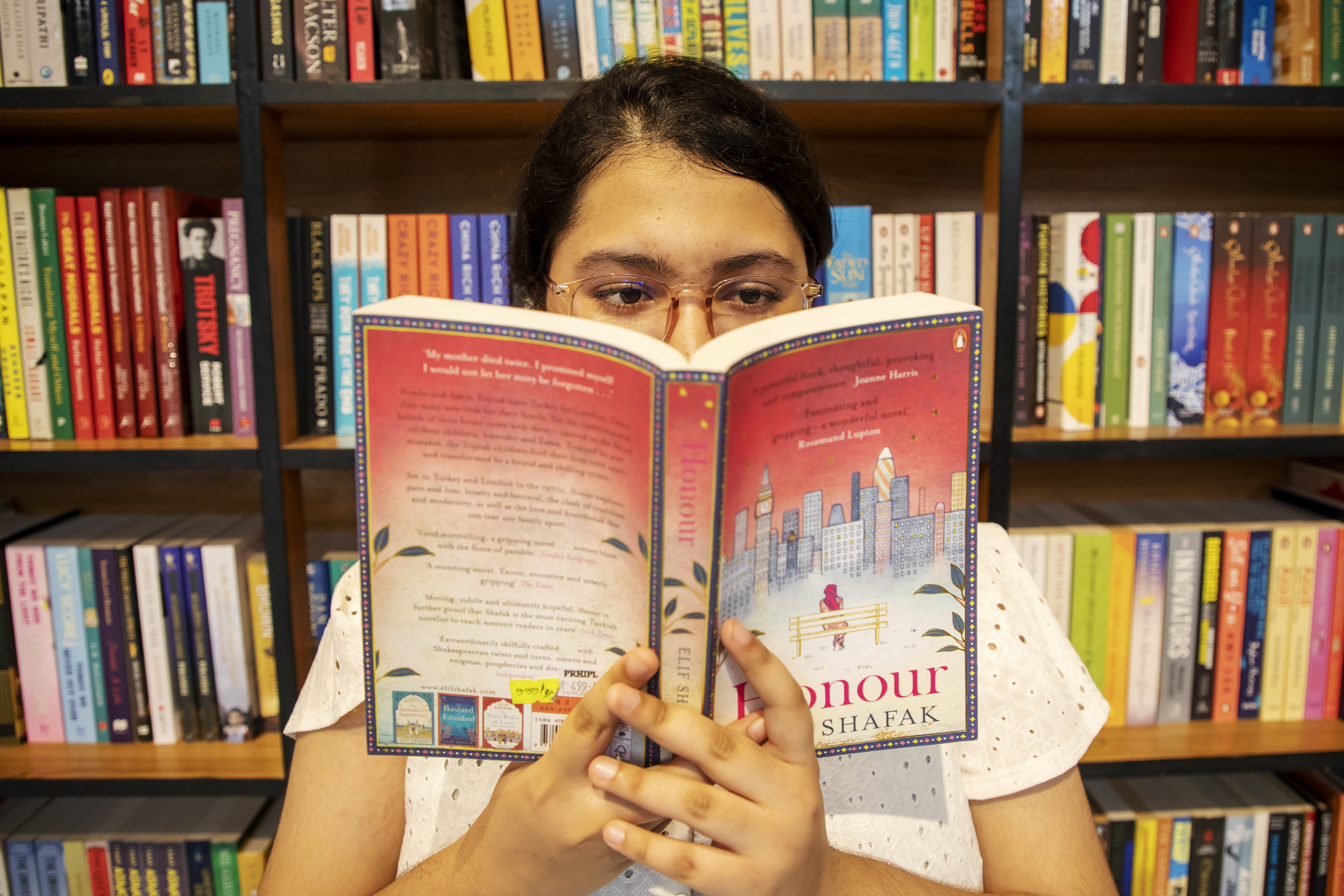
Beyond the stories themselves, the habit of reading shapes not just what we know, but how we think, speak, and make sense of the world. A rather ancient practice used to be to read the dictionary to improve vocabulary and increase word stock. With Google and artificial intelligence at our beck and call now, the concept would seem laughable to the younger generation today, but the idea of having a refined vocabulary still holds timeless importance. It plays a significant role in self-expression and clarity of thought. However, it’s not a habit that can easily be built in a short time span; it should be encouraged from early days in school.
“My father used to give me vocabulary lessons every Friday morning throughout primary school,” says Amira Rahman, who is a student of class seven. “Each week, he would give me a new list of words from the dictionary and encourage me to keep up with both Bangla and English newspapers. I was often impatient and sometimes even pretended to read by cleverly shuffling the pages. But looking back, that constant practice is why the habit of reading stayed with me.”
Children often tend to mirror the habits of their parents, and at times, a shared interest is far more appealing than one imposed upon them. Being told to complete a task naturally takes the fun out of it, transforming “reading for pleasure” into “reading to please".
“I was a shy kid at school,” begins Adiba, a student of Class 10. “For my 10th birthday, my mother gifted me Rabindranath Tagore’s Gitabitan—specifically for the words of 'Sankocher Bihobolota'. Over time, I began to understand why. It was her way of telling me to let go of my hesitance and shyness. There was always a love for books and poetry at home, which definitely still has an influence on me.”
As important as reading books is, so too is the discussion that surrounds them. Analysing characters, interpreting metaphors, or even debating a writer's message can spark curiosity in even the most reluctant readers.
Although many schools try to encourage reading habits by assigning storybooks during vacations, the effort often gets blurred as students are tested on the books to verify if they’ve actually read them. This immediately turns reading books into a chore. It’s also impractical to strip the younger generation of devices in this day and age. So, reading for pleasure can also be encouraged in ways that fit their world—such as through e-books, interactive apps, or other digital formats that make stories accessible and engaging.
 For all latest news, follow The Daily Star's Google News channel.
 When asked about effective strategies, Dr Irfana Samia also shared, “By creating reading clubs where children have the opportunity to share their thoughts and feelings about the books or stories they have read, schools can instil a positive attitude towards reading.”
The bottom line is: read books. Read whatever you get your hands on—fantasy, fiction, romance, or even a healthy dose of non-fiction and self-help books. Discover authors with whom you agree and those you don’t. Read about history, and if it bores you, there are war-centric thrillers and romances. Research about where feminism actually came from and what it means to be a feminist, and find your stance in it. Read about sexism and racism, and learn how differently they occur in different parts of the world. It can make you relate, acknowledge your privilege, and realise how innumerable human experiences are. We may live one life, but through books, you can experience infinite lives.
Zara Zubayer is a half-pianist, occasional grandma (she knits), and a collector of instruments she never learns. Suggest a new hobby she won’t commit to at @zarazubayer1@gmail.com
Comments