


Carrying the weight of having strict parents
The first time my mother discovered my teenage shenanigans, I was mortified. She had pieced together the puzzle from my unusual behaviour—distracted eyes during conversations, the constant magnetic grip on my phone, and an air of secrecy that had never made its presence known before. She didn’t say a word and simply turned back around to her routine of household chores, her gold bangles clinking resonantly amongst our uncomfortable silence. The word “taboo” finally took on a definition for me at this moment, and I understood that we’d never really have the confrontation for this particular conflict.
As complex as it sounds, there is a strange comfort in our parents’ rage. Growing up with strict parents often follows a familiar, almost predictable pattern: rules are enforced, rules are broken, and punishment inevitably follows. Anger, in that sense, is expected; it is loud, immediate, and oddly reassuring in its consistency. But when you truly mess up, their disappointment cuts far deeper than anger ever could, and it lingers in a way that leaves a quiet, lasting ache.

These moments complicate what should be very human experiences. What many parents fail to realise is that the stricter the environment, the more likely their children are to lead double lives. Most of us have seen the “A gentle child at home, so sweet and mild, but out the door they run completely wild” persona in our friends and sometimes even within our own families. Some of us have lived it.
Saima*, a university student, shares her experience: “For the longest time, I felt like a hypocrite. At home, I’d share my parents’ dislike of tight-fitting clothes, conservative beliefs, and phobia of boys. But outside, I was completely different. I believed in wearing what you want and being who you are. The more I was restricted from hangouts and outings with friends, the sneakier I became in finding my way—sometimes even putting myself in unsafe situations.”
The conversation reminded me of a girl I knew at school, with an admirable dedication to her way of life. She carried a backpack filled with clothes, jewellery, and make-up she wasn’t allowed to wear at home. She lived far away and often stayed at friends’ houses to attend coaching. Right before her father picked her up, I would watch her wipe off her lipstick, pull her school uniform over her outfit, and tie her long hair back into a tight, neat bun. By the time she got into the car, she looked exactly like the daughter he believed her to be.
As consultant psychologist Jinat Jahan of Mindspace, a Bangladesh-based mental health organisation that provides counselling and support services, explains, “When strictness is based on fear and punishment, it can reduce open communication. Teenagers may begin to hide their actions—not out of rebellion, but as a way to protect themselves from judgment or punishment.” She adds that this can also affect how young people relate socially: “If they have not experienced open dialogue at home, it can be difficult to express opinions or navigate relationships comfortably. Some may become withdrawn, while others may develop people-pleasing tendencies.”

For a parent, strictness is almost a calling. It creates the sense that who you are and who you will become can be shaped through control over education, clothing, values, and even something as small as a hairstyle. From the perspective of a teenager, however, it rarely leads to immediate discipline. When that control becomes too tight, it often pushes them towards risky behaviour without guidance, rather than away from it.
My sister and I have given innumerable mini heart attacks to our mother, each one introducing her to a new version of motherhood that comes with raising two teenagers. Growing up in conservative families can often mean tiptoeing around certain topics, and “boys” were always one of them. In South Asian culture, dating is often not openly discussed, even among adults. It stems from a mix of fear, discomfort, and the generational and societal gap. It’s rarely stated outright as “Dating is bad”. Instead, it surfaces in an exasperated, “What will people say?”
"I was very male-centric until my early twenties, and I realised a big part of the reason was that I was always told to avoid dating instead of how to approach it. I wish the discussions at home were about the standards I need to set for myself and how I allow others to treat me, because those are the things you really need to be reminded of, especially by parents,” reflects Nabila*, a recent graduate.
Of course, the concern is valid. Parents have reputations to uphold, names to protect, and values to follow. But the other side is the paranoia, the guilt of experiencing very human emotions, and the lingering shame when things don’t work out.
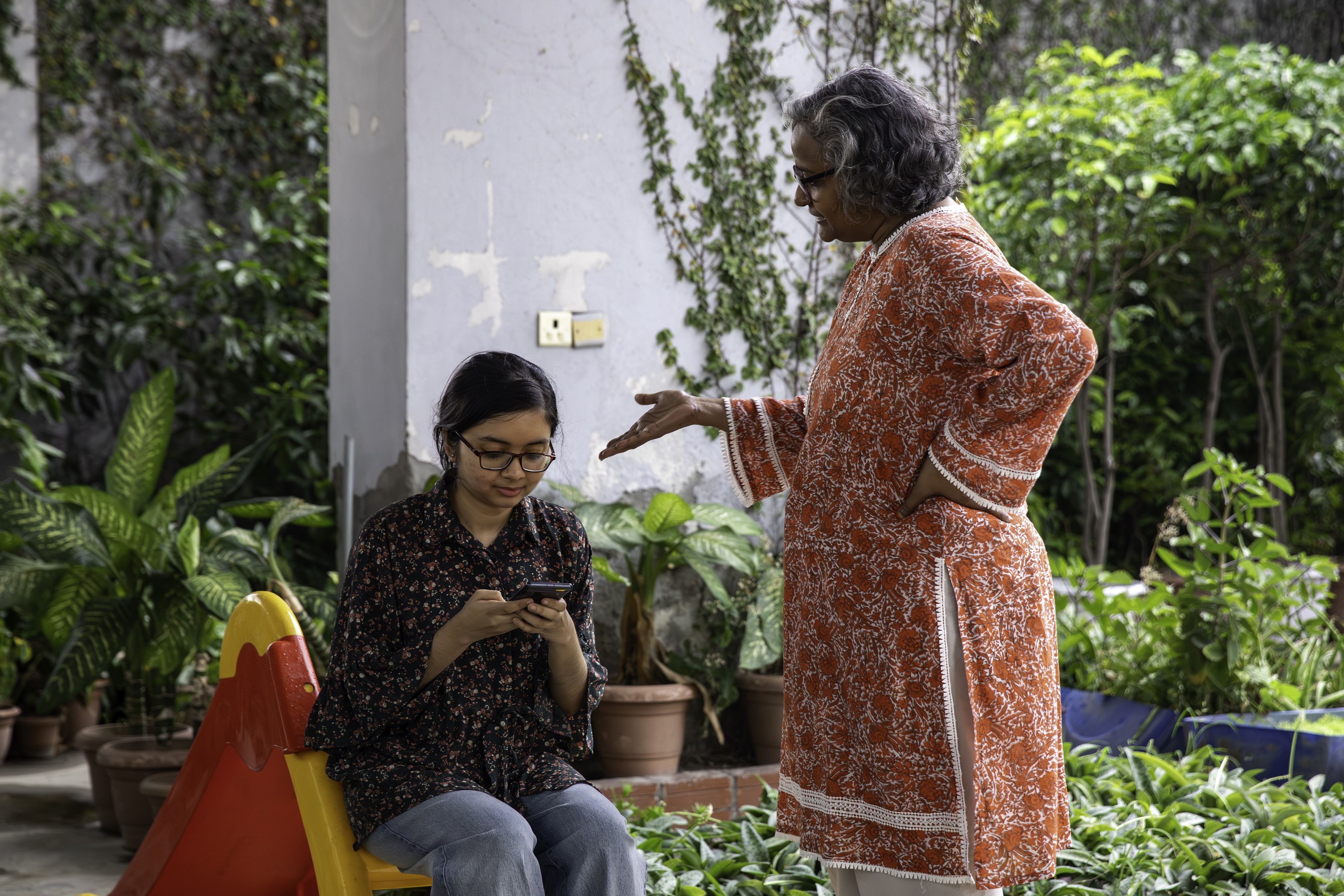
I’ve heard a parent say that she doesn’t allow her daughter to attend school events because boys and girls would be standing in close proximity. While I couldn’t decipher whether her concern came from religious beliefs or simply a sense of safety, I could imagine the perspective of her 14-year-old daughter. Through her eyes, she would be the one staying home while her friends laughed, shared stories, and made memories she could only watch from afar. The frustration, the sense of being left out, and the comparison to her peers are feelings that often go unspoken, but they shape the way she sees herself, her freedom, and her place in the world.
The tension we feel under strict rules doesn’t disappear when we leave home; it often reshapes our choices and the way we carry ourselves. Many young adults struggle with confidence after years of social restriction, feeling uncertain in situations where others move naturally. They may stumble over social cues, hesitate when interacting with the opposite gender, or second-guess themselves in group settings. Over time, these gaps can influence friendships, romantic relationships, and even career opportunities, as fear of judgment or failure lingers.
Jahan further highlights, "If young people are not given opportunities to make choices or express their opinions, they may struggle to understand who they are. Over time, this can lead to confusion, dependence on external validation, and difficulty trusting their own judgement."
Until we become parents, we cannot truly know the fear of setting our children into the world. Every rule carries a weight of worry, every boundary a quiet plea for safety. Every troubling headline stirs unease, a reminder of the dangers that lurk beyond the walls we cannot control. Every bad grade whispers concern, a fear that they may be falling behind, that the world will leave them behind. The strictness around friends and acquaintances often blooms from a single hope—to shield their child from hurt, disappointment, or betrayal. Yet, beneath the surface of these rules lies a deep human tension: the struggle to balance love with freedom and protection with trust. Parents see threats and risks where children see only life, curiosity, and possibility.
I understood quite late that my mother’s silence that day wasn’t from the company I was keeping, but it was a revelation of the fact that I had made myself vulnerable and capable of being hurt. Over time, I was able to share parts of my life that were initially difficult for her to grasp, but it strengthened our relationship in the long run.
Being able to speak openly with your parents is comforting in a way nothing else is. Their stories, advice, and simply listening can turn all the fear and guilt into something you actually understand, and it feels liberating to be heard by the very people who shaped you.
*Names have been changed upon request*
 For all latest news, follow The Daily Star's Google News channel.
 Zara Zubayer is a half-pianist, occasional grandma (she knits), and a collector of instruments she never learns. Suggest a new hobby she won’t commit to at @zarazubayer1@gmail.com