


Heavy school bags and the burden of our inaction
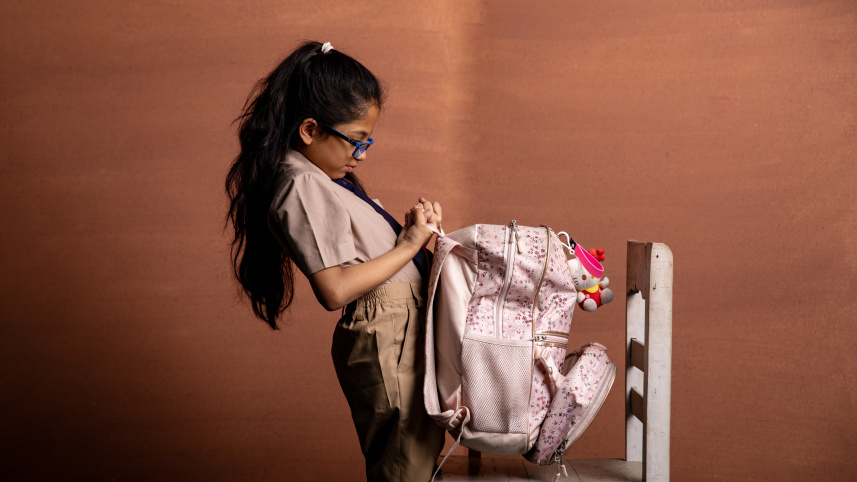
Before the start of a new school year in January, amma would take me shopping to buy a year’s worth of school kit. We’d get new uniforms, a new tiffin box, new shoes, and if I had rough-handled my bag enough the previous year, a new school bag as well.
I was a scrawny kid for my age. And the school I went to mandated that students bring separate copies for classwork and homework. These copies, added with four or five books, a water bottle, and a tiffin box, made the bag so heavy that I could barely stand with it, let alone carry it to my class on the fifth floor.

Empathetic to my difficulties, my parents bought me a trolley bag one year, the ones you could drag like luggage. I really loved that bag, even though it didn’t solve the problem entirely. I still had to carry it to the fifth floor, but that bag gave me huge street credit amongst my classmates, with its handle and wheels that wowed second graders.
Yet, to my dismay, after a week of using the bag, my teachers noticed and called my parents to bar me from using that bag on account of setting ‘a bad precedent’. Students aren’t supposed to drag articles of education so close to the floor, so I was to carry a normal school bag up the stairs like everyone else.
Now, as an adult, I struggle with backaches and problems with my posture, and it makes me wonder how much of it can be traced back to the weight I carried as a kid.
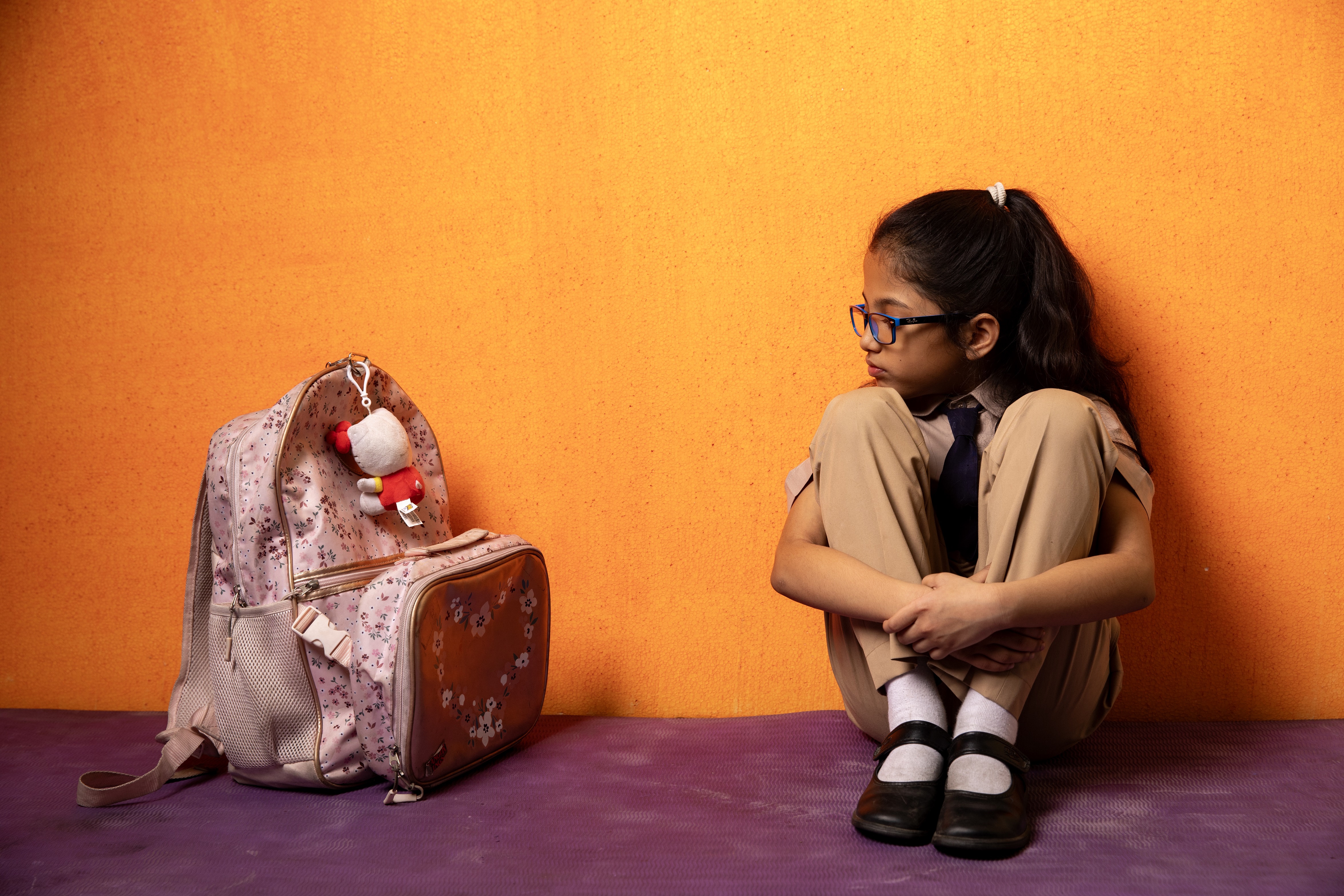
Universal medical guidelines suggest that the weight of the schoolbag shouldn’t be above 10-15 percent of the child’s body weight. Heavier school bags may lead to a variety of musculoskeletal disorders, reducing the quality of life of the child that can persist into adulthood. So, why are school bags for children so heavy? What is the cost of putting so much weight on such delicate shoulders? And what are we doing about it, if anything at all?
In 2016, the High Court replied to a writ petition questioning the inhumanity of children being made to carry heavy bags. According to the High Court’s response, primary school children cannot be forced to carry backpacks weighing over 10 percent of their weight. Moreover, according to a study published in the International Journal of Advanced Research in Nursing in 2025, the average weight of schoolbags carried by fifth to seventh graders is still above five kilogram, which exceeds the 10 percent limit by quite a lot.
“On a regular school day, my daughter carries around four books, two to three exercise copies, a diary, a tiffin box, and a water bottle,” says Reneta Nowrin, mother of a seven-year-old school-going student. “If she has art class, she also carries art supplies. Obviously, the bag is too heavy for her, and she bends forward under the weight. My husband or I try to carry the bag for her, but she has to carry it up the stairs at school herself as we aren’t allowed to go in.”
In addition to government-mandated textbooks and separate exercise books for each class, many schools also encourage students to purchase and carry extra supplementary books or materials, adding even more weight to already heavy school bags. Failure to implement the mid-day meal programme and the supply of drinkable water in most schools only adds to the burden children have to carry.
Regarding the advent of heavy school bags and the mid-day meal programme, Shaela Nasrin, Headmaster at the capital’s Motijheel Government Girls High School says, “I have been an educator since 1991. I don’t think this problem really existed in the 90s. In those days, children would get a longer break at mid-day as there was only one academic shift. They would go home, have lunch, and come back to school again. Many of the government schools had a mid-day tiffin programme as well. Now, ours remains one of the few schools with a meal-plan. The problem, in my opinion, is multifaceted. Consumer culture has a lot to do with heavy bags. So many students attend different coaching classes before or after school. They carry everything they need for the day in those bags, and parents often support this culture as well. At the end of the day, we can only communicate the government circulars to the guardians. We can’t enforce it.”
According to the study cited earlier, 80 to 90 percent of the children who participated in the study reported experiencing upper or lower back pain, neck pain, or shoulder pain. Multiple studies conducted across different countries reach similar conclusions: carrying bags weighing more than 10 percent of the body weight of the child leads to long-standing muscle pain, deformity in the spine’s natural curvature, and even chronic pain resulting from nerve compression involving the brachial or cervical plexuses. The effects are even worse for students in primary school.
“We view bones as tough and solid structures, but in actuality, the spine is very malleable in children up to high school age,” explains Dr Anowar Hossain from the Department of Physical Medicine, Mugda Medical College Hospital. “I often see children hunched forward from all that weight. Besides the pain felt at such a young age, it may lead to permanent hunch-back, poor posture, reduction in core strength, and degenerative conditions like cervical or lumbar spondylosis in their later years.”
Relating to the broader problem, Dr Hossain adds, “I have a daughter in the fourth grade myself. Despite my warnings, she carries a very heavy bag, with six books and six copies on most days. She feels that if she doesn’t carry all those books, she will fall behind in class.”
Heavy school bags are not a new problem. Many countries have solved this problem by installing lockers, water filters, and ensuring meals at school, which directly negates the necessity of carrying extra books, water bottles, or heavy tiffin carriers. As evidenced by the High Court ruling, this isn’t a problem we haven’t tried to tackle in this country either. But issuing circulars and providing guidelines isn’t enough. Schoolbags continue to weigh down on our children's shoulders. Yes, issuing the circular was a step in the right direction. But we also need to take concrete, implementable steps.
We need to find out what students carry in their bags, determine how much of it they really need to bring from home, and help schools secure the funds required to implement the necessary solutions. From an economic viewpoint, solving this problem will potentially return the investment manifold by increasing productivity and decreasing health expenditure. But it isn’t just the economic gain policymakers must consider. It is our duty, as a society, to ensure that our next generation might enjoy a decent quality of life. It is also our moral obligation to guarantee that their shoulders are not burdened with the load of our inaction and apathy.
Mehrab Jamee is a 5th-year medical student at Mugda Medical College and writes to keep himself sane. Reach him at mehrabjamee@gmail.com
 For all latest news, follow The Daily Star's Google News channel.
Comments