


Shadhona Triumphs at Khajuraho
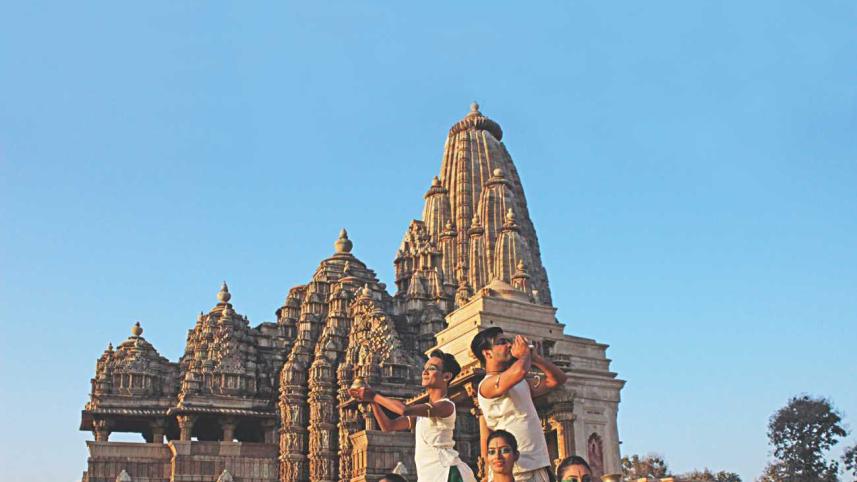
Tell us about the Khajuraho Dance Festival.
The Khajuraho Dance Festival is one of the most prestigious and important dance festivals in the world at the moment, and it has been going on for 43 years. The selection process is very strict, and not everyone is allowed to perform there. There is a committee in Madhya Pradesh named "Ustad Alauddin Khan Sangeet Evam Kala Acadamy" which has been responsible for the selection. Every day, more than 10,000 visitors from all over the world visit the festival while it lasts.
 For all latest news, follow The Daily Star's Google News channel.
Why do you think the festival is so successful?
As you probably know, Khajuraho is already a place famous for its heritage sites. The authority has very adeptly made use of that heritage and has even found a way to include many other forms of art in the festival as well. There is an artist's corner, a "Kala Varta (Dance Dialogue)", a crafts fair and much more to see in it. It is truly diverse and beautiful.
How was Shadhona invited to perform there?
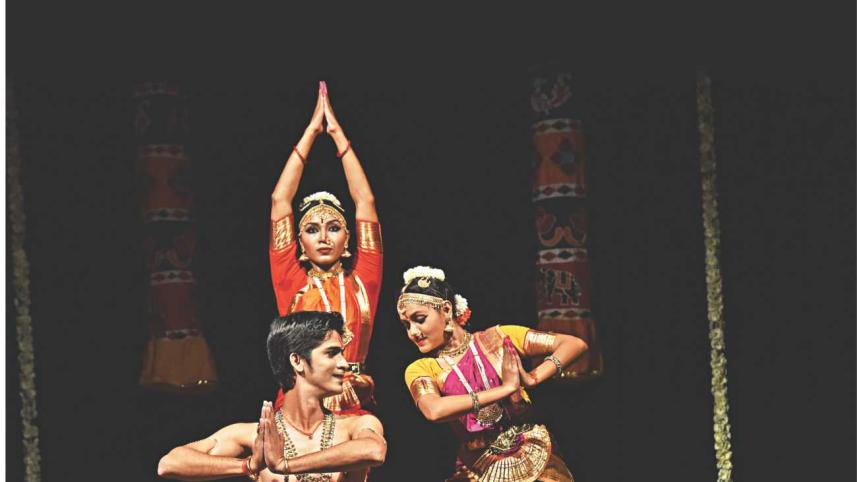
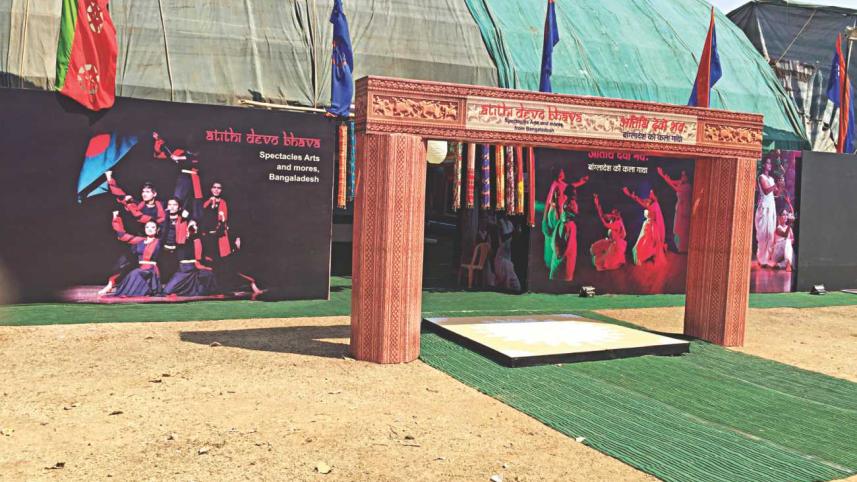
Last year, the authority themselves contacted us to perform at the festival. They told us that they had heard very good things about us and our work, and they wanted us there. As we performed there, they loved it so much that they created an entirely different section called "Atithi Devo Bhav", where they would now invite groups from foreign countries to perform at the Khajuraho Dance Festival. We are honored to be the first.
How were you accommodated at the festival?
Aside from the performances, we were allotted a pavilion dedicated to Bangladesh. We decided to organize an exhibition called "Bangladesh - A Land of Myths & Rivers". Here, we showcased Bangladesh's culture through "Pata Chitras", a photo exhibition, a crafts exhibition which included a display of Muslin by Drik and rickshaw painting. Aside from the performances on the main stage which began at 6:30 onwards, we performed in our pavilion as well.
What dance forms did you perform? How was it received?
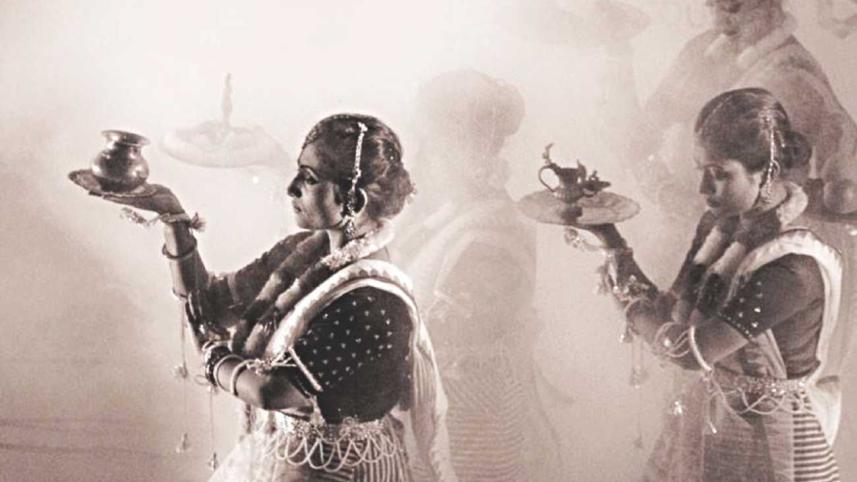
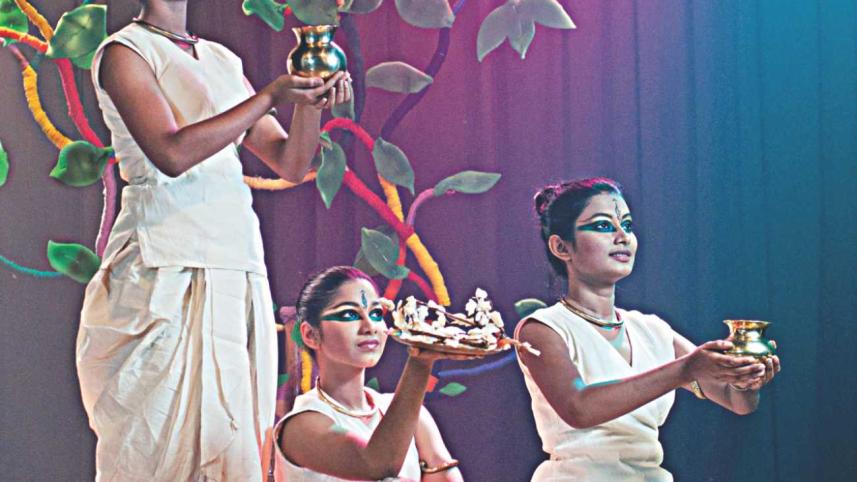
We did something different each day. We did Raibeshe on the first day; then we consecutively did Baul, Nazrul, Manasa, Manipuri, Tagore and finally Patriotic. Also on the last day, six of our performers did the Bharatnatyam. It was really cherished by the audience. Dr. Sunil Kothari, a Padma Shri and one of the most respected dance critics, vehemently praised us in his article. He really touched my heart when he said, "It hardly mattered that the practitioners are Bangladeshi Muslims.
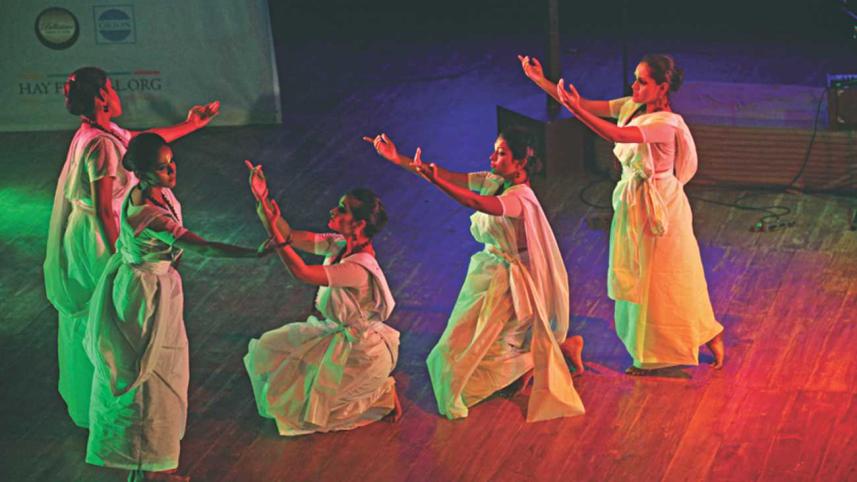
Their performance transcended all barriers." Deb Mukharji, a former Indian High Commissioner to Bangladesh, also talked about us with a lot of enthusiasm. You see, our participation in world stages like these can exude a positive image of Bangladesh. When I was giving a speech where I talked about how our cultures were interconnected, the Holey Artisan incident came up and that was really unfortunate. We really want to show through our cultural activities that we are not like that. Our heritage stretches way beyond those things. By the end of the festival, everyone there knew who we were: Proud Bangladeshis.
What do you think should be done to change the negative preconceived notions regarding Bangladeshi culture held by the outside world?
We really need to exploit the connectivity and relations we have built right now. We need to travel to more and more places to showcase our culture, and I sincerely hope that the Government helps us in this. Even if we had an ounce of investment that the government puts in sports, we would thrive and be able to bring something amazing back every time. With no disrespect to anyone, I would say that sportsmen may lose sometimes but we will always win no matter the situation. We will bring something back every time we step foot out of this country, we will triumph.
Interviewed by Rafi Hossain and Sadi Mohammad Shahnewaz


Comments