Haor farmers are dying, why does no one care?
In 2018, after returning from the haor, I wrote: “There is no end to the sufferings of farmers. They are dying every day due to floods, lightning strikes, or the exploitative market system. Yet they continue to fight, fighting relentlessly.” Years later, there has been no fundamental change in that reality, whether in policy discussions or in the lived experiences of farmers in villages and fields. On the contrary, the agrarian crisis has only deepened.
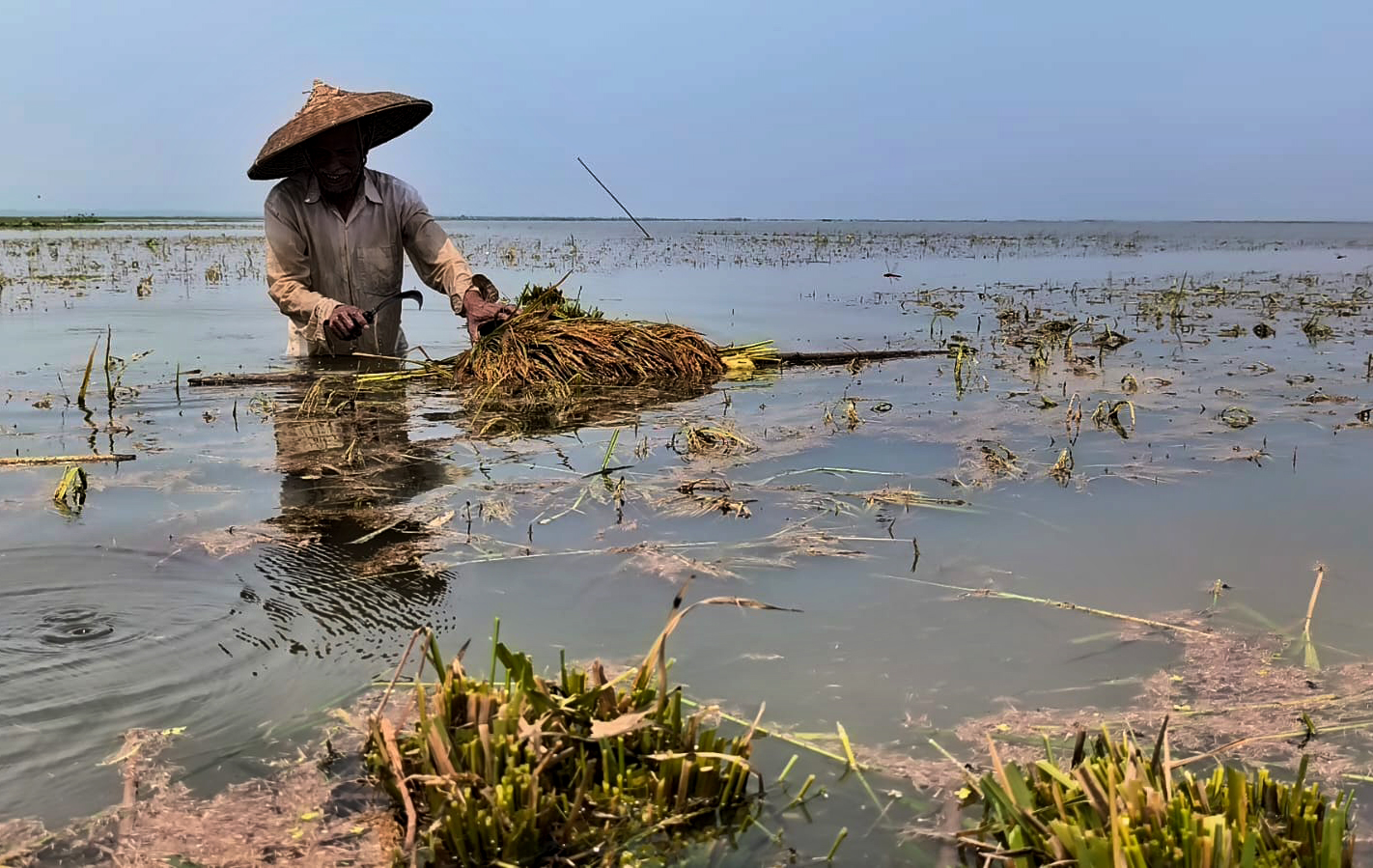
In recent days, newspapers and online platforms in Bangladesh have been filled with reports of the distress of haor farmers. Their fields are being submerged by floods. Untimely flooding and hill runoff, particularly heavy rainfall in the upstream region of India, have caused river levels in haor areas, including Sunamganj, to rise abnormally, submerging ripe and semi-ripe Boro paddy. At the same time, heavy rainfall and waterlogging in late April have delayed harvesting, as water accumulates in low-lying lands. Poorly planned and unscientific embankments are obstructing natural water flow, and in some cases, breaches in these embankments are causing further crop damage. Additionally, labour shortages and adverse weather conditions are hindering harvesting efforts, while muddy fields prevent the use of combine harvesters. Meanwhile, the filling up of rivers and canals has reduced their natural capacity to hold and drain water, prolonging waterlogging and intensifying agricultural losses
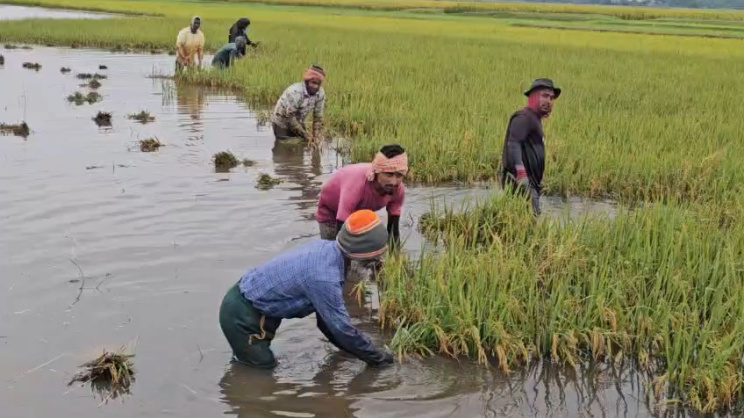
Amid intertwined natural and structural crises, the hardships faced by farmers are becoming increasingly severe and unforgiving. On May 2, in Nasirnagar upazila of Brahmanbaria, a 55-year-old farmer, Ahad Mia, died after seeing his paddy fields fully submerged. According to family and local sources, he had cultivated Boro paddy on six bighas of land by taking a loan of Tk 50,000, expecting to harvest within a few days. However, continuous rainfall inundated his fields, destroying the entire crop. With the water still failing to recede after three days, he remained in immense distress. On the morning of the incident, he went to the field with a few workers to harvest the paddy. Upon witnessing the complete submergence of his crop, he suddenly fell ill and died on the spot shortly afterwards.
On the same day, a similarly heartbreaking incident occurred in the Austagram area of Kishoreganj. Another farmer, Akhter Hossain (60), died of a heart attack after seeing his paddy field submerged under water. He had cultivated Boro paddy on about three acres of land. Due to continuous rainfall and upstream flooding, a vast area of the haor was flooded, and his crop was submerged. Although some paddy had been harvested, it could not be transported home due to logistical constraints. In the afternoon, he went to his field and, upon seeing the submerged crop, fell ill. He was later taken to the hospital, where he was declared dead.
Besides, in the first four months of this year alone, 72 people have died from lightning strikes across the country, a large proportion of them farmers. These deaths primarily occur during the paddy-harvesting season, when farmers are forced to work in open fields. Why is there no adequate protection for farmers in crop fields? In haor and rural agricultural lands, there is a lack of lightning protection systems, safe shelters, and even sufficient palm trees or other natural protective structures that once helped reduce risk. Advanced early warning systems and field-level safety infrastructure are largely absent. As a result, these deaths are often labelled as “accidents,” but they reflect structural neglect. Why should farmers be forced to work under such life-threatening conditions, and why should the state fail to ensure their basic safety? These questions must now be raised more urgently and forcefully.
The harshest reality is that deaths and disasters of this kind fade from public memory within days. There is little sense of collective responsibility to remember them. The death of a farmer or the lifelong hardship borne by his family rarely finds space in public discourse or political debate. More than five decades after independence, the lives and struggles of ordinary people have yet to become central to mainstream politics. The voices of farmers and workers remain largely absent from state priorities and policy discussions. As a result, affected families are left to endure their losses in isolation, with no meaningful structural support. These deaths are thus normalised, without any question mark. Why are farmers repeatedly exposed to such uncertainty and risk? Why is there so little policy attention to the security of their lives, the protection of their crops, fair pricing, and the future of their families?
These questions must be repeatedly raised because the lives and struggles of farmers are not isolated concerns; they are inseparably linked to the country’s economy, society, and sense of justice.
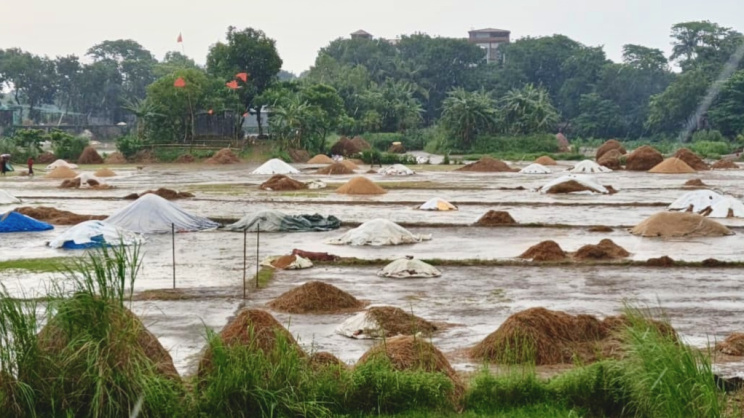
Each year, the same pattern repeats itself. Farmers are unable to sell their produce at the government-declared price. This year, although the procurement price of paddy has been set at Tk 1,440 per maund, reports indicate that many farmers are being forced to sell at below Tk 600 per maund. The situation is even more acute in the haor regions: floods have submerged standing crops, and for those who managed to harvest, prices continue to fall. In many cases, buyers refuse to purchase the paddy as it remains moist. As a result, farmers are compelled to sell their produce at very low prices.
At the same time, farmers lack adequate storage facilities, leaving them with little choice but to sell at distress prices, deepening their losses. These questions must be repeatedly raised because the lives and struggles of farmers are not isolated concerns; they are inseparably linked to the country’s economy, society, and sense of justice. Unless this persistent erasure of farmers’ suffering is addressed, the reality in the haor and across rural Bangladesh will remain unchanged, marked only by recurring crises and preventable tragedies.
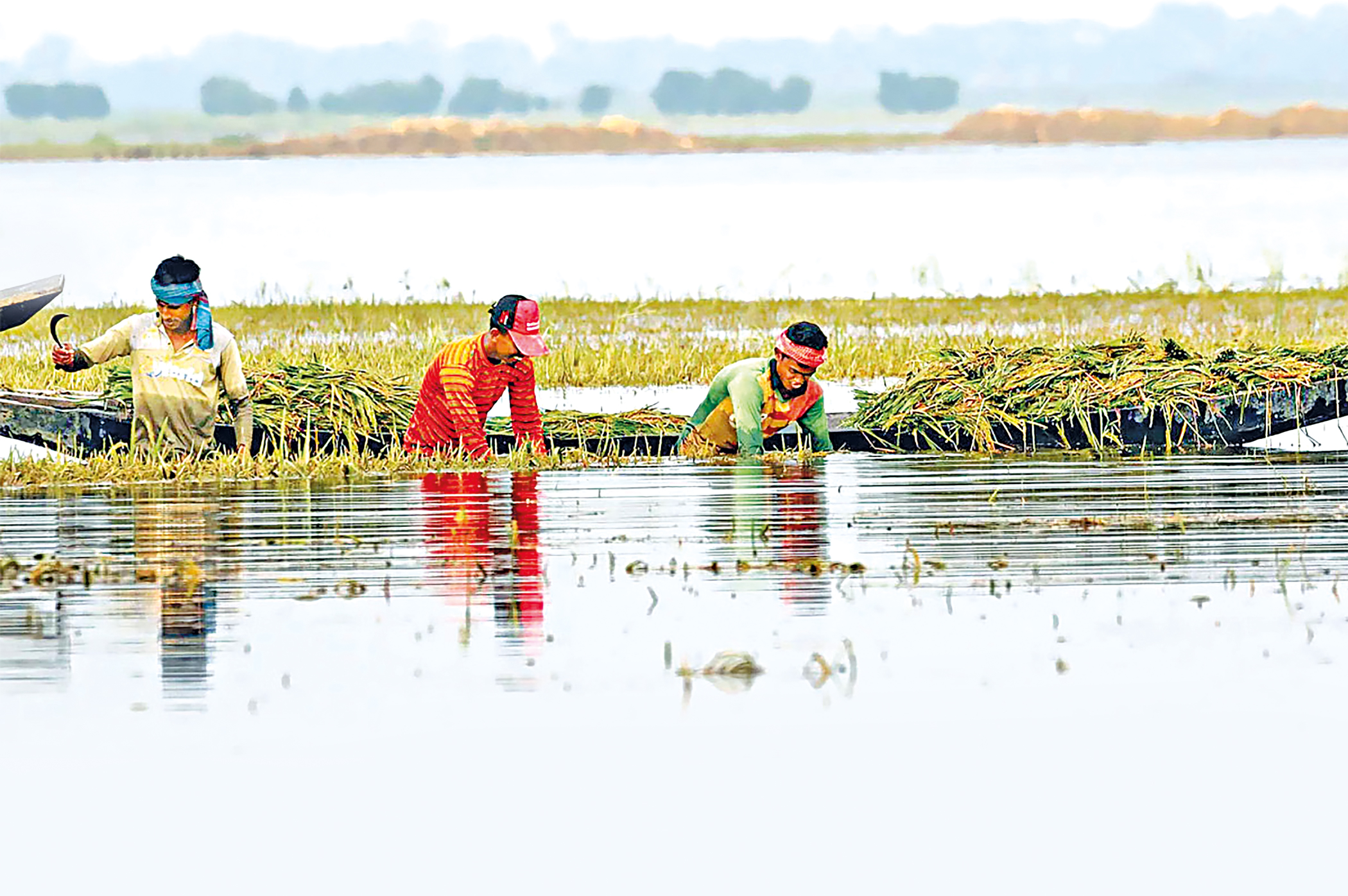
Over time, the agrarian crisis has not only deepened but also become increasingly multidimensional. Alongside natural hazards such as floods, heavy rainfall, and crop submergence, farmers are grappling with structural and policy-related challenges, adulterated seeds and fertilisers, delayed seed germination, and weak regulatory oversight, all of which are steadily eroding the viability of their livelihoods. Governments come and go, yet the condition of farmers remains largely unchanged. Issues central to their survival, livelihood security, fair prices for produce, and basic economic stability receive little sustained attention in mainstream politics or policy discourse. As a result, farmers remain trapped in a cycle of chronic neglect.
An equally troubling reality is the entrenched control of syndicates across different layers of the agricultural market. From fertiliser and seed distribution to crop marketing, these intermediary networks continue to undermine farmers’ rights and earnings. One syndicate replaces another, often under shifting political patronage, further institutionalising farmers’ vulnerabilities.
Concerns are also mounting over the impact of external policy pressures and international agreements on the agricultural sector. A recent trade arrangement with the United States, finalised just before the previous administration left office, reportedly includes provisions that could limit agricultural subsidies and promote the expansion of GMO seeds. Such measures risk undermining local seed diversity and may gradually shift control of agriculture away from farmers towards corporate and multinational interests. This raises a fundamental question: will farmers be able to sustain independent cultivation, or will they become increasingly dependent on corporate and intermediary structures?
Addressing the crisis in the haor region requires both immediate and long-term interventions. In the short term, declaring haor areas as disaster zones, ensuring adequate compensation, waiving loans, providing special incentives, and guaranteeing access to essential agricultural inputs such as seeds, fertilisers, and pesticides are critical. An integrated emergency support package is urgently needed. Over the longer term, sustainable solutions must include the re-excavation of rivers and canals, construction of durable embankments, effective measures to reduce waterlogging, and comprehensive plans to protect the environment and biodiversity. At the same time, strict action must be taken against illegal encroachment and environmentally destructive activities in haor areas.
Ultimately, the crisis facing haor farmers is not merely the outcome of natural disasters; it is also a reflection of structural and political neglect. Unless agriculture and farmers are placed at the centre of national policy and political priorities, a meaningful and lasting resolution to this crisis will remain elusive.
Lucky Akter is a central committee member of the Communist Party of Bangladesh (CPB) and an executive member of Bangladesh Krishak Samity.
From 'wasteland' to Bhasanchar: Bangladesh’s ongoing experiment in governing uncertain land
Why Bangladesh's schools need financial autonomy
What the water knows: The unmaking of Bangladesh's haors
Who writes the history of the July Uprising?
How violence against women is normalised in Bangladesh's chars
Why Bangladesh must invest in community-led early childhood education

The moral architecture of Bangladesh’s parliament

Why Bangladesh innovates but rarely builds global companies
Beyond groundwater: Rethinking Barind's water crisis