Why the Padma Barrage will be a disaster for Bangladesh

Eminent water expert Md. Khalequzzaman, PhD, Professor of Geology and Oceanography at Commonwealth University of Pennsylvania, speaks to Khairul Hassan Jahin of The Daily Star about why the proposed Padma Barrage may deepen Bangladesh’s sediment, water, and ecological crises rather than resolve them.
The Daily Star (TDS): How do you assess the proposed Padma Barrage project?
Md. Khalequzzaman (MK): Before addressing the main question, I should say something about the name of the proposed project. Its original name was the Ganges Barrage, and that is more appropriate because the river is known as the Ganges from its entry into Bangladesh up to Daulatdia. Calling it the Padma Barrage may create the impression that we are overlooking Bangladesh’s fair share of Ganges water under the Ganges Water Sharing Treaty.
The Bengal Delta is one of the largest deltas in the world. Deltas are formed through the deposition of river-borne sediment. For a delta to survive, maintain its landmass, and continue advancing towards the sea, sediment deposition in coastal areas is essential. If sediment deposition declines, the delta becomes more vulnerable, especially as sea levels continue to rise. In that sense, there is no alternative to sedimentation.
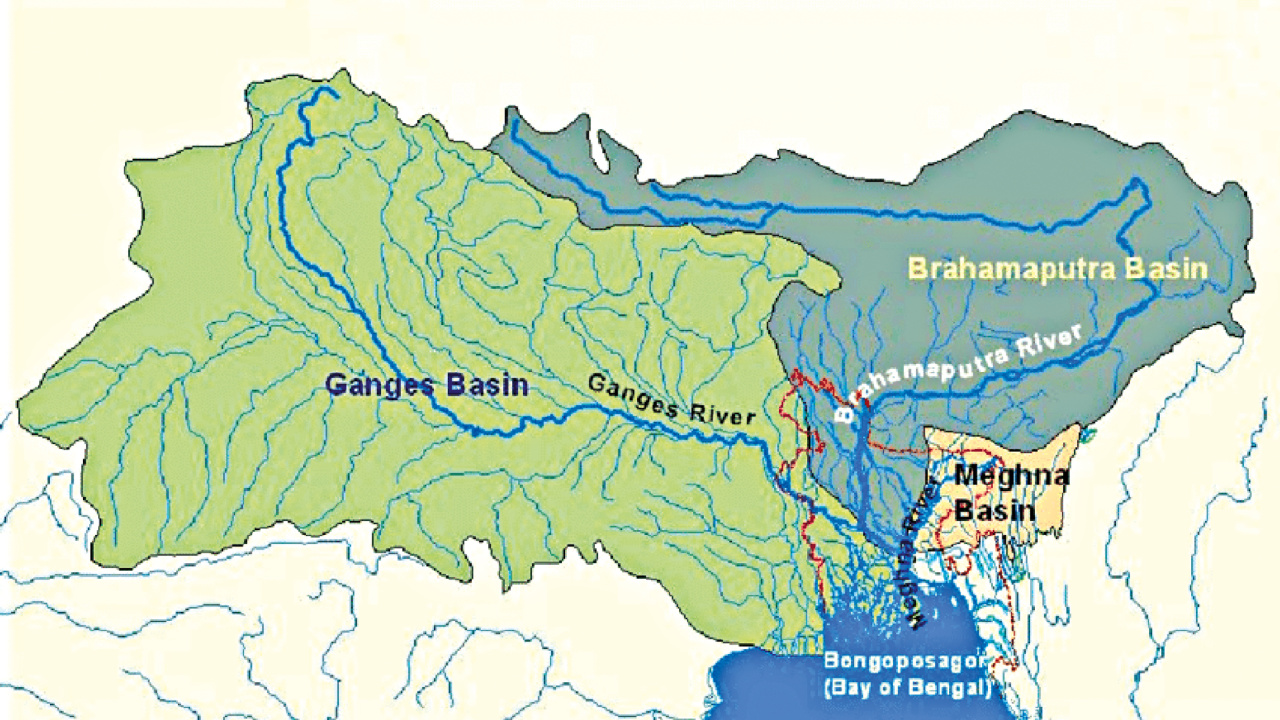
In the 1960s, Bangladesh received roughly 2 billion tonnes of sediment annually through all its major rivers combined. Today, that figure has fallen to below 1 billion tonnes; some studies suggest 600 to 700 million tonnes. The main reason is upstream intervention. Only about 8 percent of the Ganges-Jamuna river basin lies within Bangladesh; the remaining 92 percent lies in India, Nepal, China, and Bhutan. Beyond Farakka, there are at least 34 major structures in the upstream Ganges basin, and if smaller and larger interventions are combined, the total is often estimated at around 300.
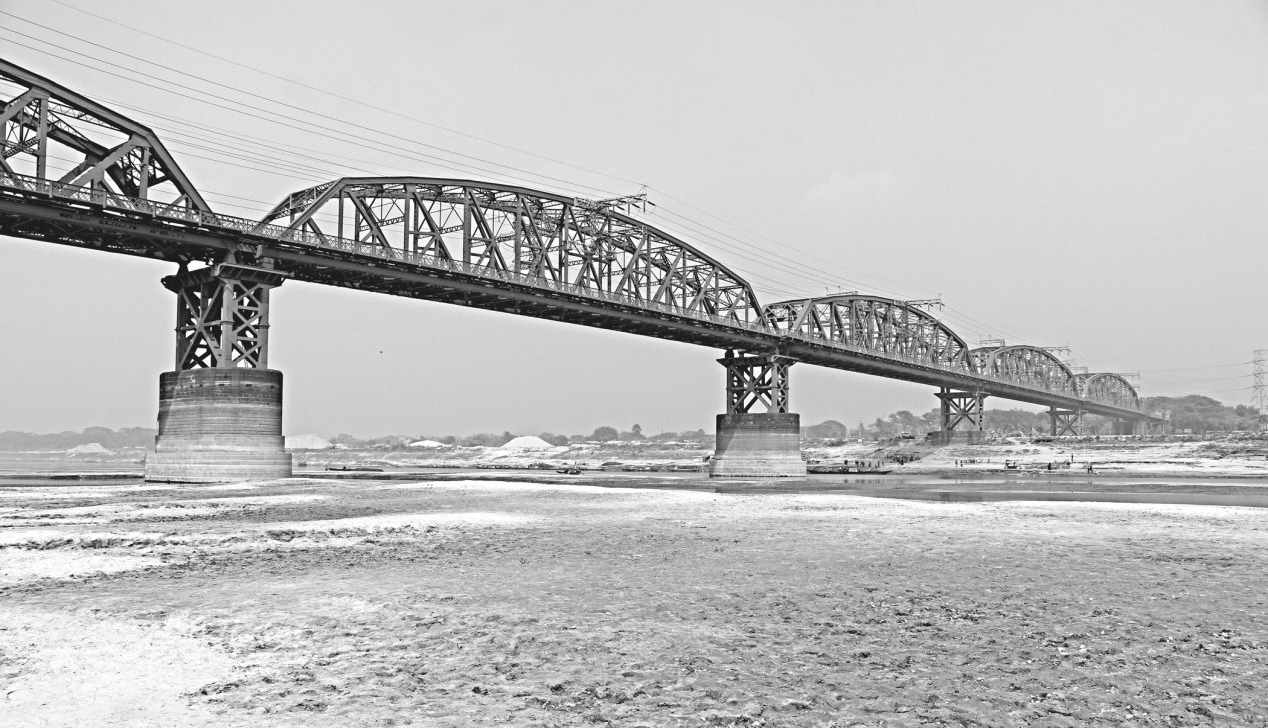
Since the Farakka Barrage became operational in 1975, a large share of the sediment that would have entered Bangladesh through the Ganges has been trapped upstream. Studies suggest that between one-third and nearly half of this sediment is now retained behind the Farakka Barrage. If another barrage is built on the Padma at Pangsha in Rajbari, a significant portion of the sediment that still enters Bangladesh during the monsoon could also be trapped.

At present, the Ganges brings an estimated 400 to 600 million tonnes of sediment into Bangladesh each year. Much of it moves through the Meghna system towards the estuary; some is deposited on coastal floodplains, while the rest is carried into the sea. If another barrage is constructed, the downstream sediment supply will decline further, and more of that sediment will accumulate upstream and around the barrage itself.
The Farakka experience is instructive. Research by SANDRP and Kalyan Rudra found that Farakka traps an average of 300 to 600 million tonnes of sediment annually. This has caused heavy sediment accumulation upstream, reduced the river’s capacity to carry water, and intensified waterlogging, flooding, and erosion. Around 40,000 families in Malda have reportedly been affected. Downstream, in Murshidabad, water scarcity is common, yet when large volumes are released, erosion intensifies. Roughly 100 square kilometres of land have been lost, and around 50,000 homes have reportedly been destroyed.
These may appear to be India’s problems, but they are highly relevant to us. Many Indian scientists, hydrologists, and environmentalists have concluded that Farakka was a fundamentally flawed decision. Movements in West Bengal and Bihar have demanded its removal because of the damage it has caused within India. That experience should be taken seriously before Bangladesh considers another barrage on the same river system.
TDS: Given the uncertainty surrounding dry-season water availability from upstream and the upcoming expiry of the Ganges Water Sharing Treaty in 2026, how viable is the Padma Barrage project for Bangladesh?
MK: I personally think this is a highly premature and poorly considered decision. Before discussing the Padma Barrage, we need to address a more fundamental concern: because of the Farakka Barrage, Bangladesh does not receive adequate water during the dry season. Even after the treaty was signed, we have not consistently received our rightful share. A study examined 20 years of data, from 1997 to 2016. I was part of that research. We found that, despite the treaty, Bangladesh did not receive its fair share of water 52 percent of the time. During the most critical period—from 11 March to the end of May—Bangladesh failed to receive its rightful share nearly 65 percent of the time.
The central problem is that the current treaty contains no guarantee clause. If the flow at Farakka falls below 70,000 cusecs, the available water is divided roughly 50–50. Suppose the flow drops to 50,000 cusecs. Bangladesh would then receive 25,000 cusecs, even though it was supposed to receive 35,000 cusecs, because the water simply does not reach Farakka.
So the urgent question is: what will happen when this treaty expires in December 2026? In my view, discussions on the Padma Barrage should be put on hold. Bangladesh’s first priority should be to renew the Ganges Treaty in a stronger form, with a guarantee clause. Such a guarantee existed in the 1977 agreement, but it is absent from the current treaty. The next treaty should be more robust and, if possible, cover all 12 months rather than just the five dry-season months. Climate change is altering rainfall patterns, river flows, and water availability. We therefore need a basin-wide agreement that ensures an appropriate volume of dry-season flow at Farakka.
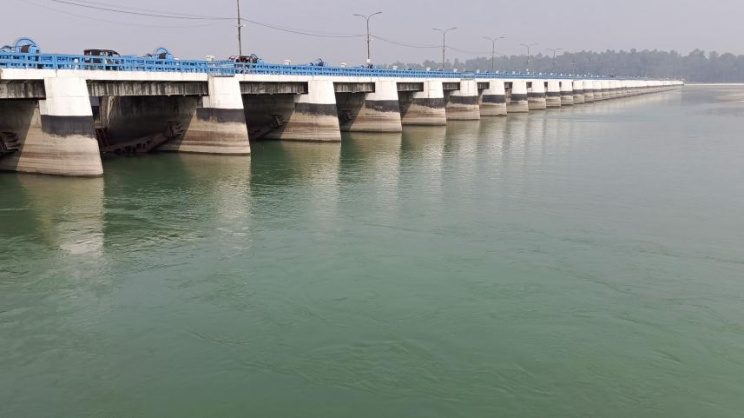
A barrage or dam cannot create water. The water has to come from upstream. If we take the Teesta Barrage as a lesson, then a Ganges or Padma Barrage is not a sound decision unless we first know exactly how much water will come from India in each season, and unless that flow is guaranteed.
At present, the treaty is limited to Bangladesh and India. But the Ganges basin also includes Nepal. If we want a scientifically grounded agreement, it should be basin-based, year-round, include Nepal, and guarantee a minimum dry-season flow. It should also address sediment, not just water, and specify how sediment will be passed downstream into Bangladesh. The treaty should further require India to notify Bangladesh about any new upstream diversionary structures beyond Farakka. There are already at least 34 major structures in the wider Ganges basin. If new structures are planned, or if additional water is diverted, Bangladesh must be informed. For strategic reasons as well, Bangladesh should first see where the treaty negotiations are heading. Only then can we estimate how much water will actually be available and discuss how to manage it.
TDS: What lessons does the Teesta Barrage experience offer for the proposed Padma Barrage, and how realistic are its claims regarding irrigation, navigation, and water management?
MK: The Teesta experience is very important. Bangladesh has a barrage and an irrigation project on the Teesta. But because sufficient water does not reach the basin from India, vast stretches of the Teesta basin have turned into dry sandbars. A barrage or dam cannot create water. The water has to come from upstream.
If we take the Teesta Barrage as a lesson, then a Ganges or Padma Barrage is not a sound decision unless we first know exactly how much water will come from India in each season, and unless that flow is guaranteed.
The Ganges-dependent areas of Bangladesh are concentrated mainly in the southwest, which accounts for around 37 percent of the country’s land area and is already under severe stress. Salinity is increasing in the Sundarbans, in the Ganges-Kobadak Project area, and in waterlogged regions such as Bhabadah. Bangladesh’s concern is legitimate. But the Padma Barrage is not the right response.
According to the project design, the barrage would store 2.9 billion cubic metres of water—roughly 3 BCM. Now compare that with the total annual flow entering Bangladesh through the Padma: roughly 350 to 525 BCM a year. Against that scale, storing 3 BCM is extremely small.
During major floods, the Padma can carry around 75,000 cubic metres of water per second into Bangladesh. In a large flood, the volume entering through the Padma in just one day can reach approximately 6 BCM. So a single day’s flood flow can be twice the amount of water the barrage is expected to store over three months.
One of the key claims is that the barrage will provide irrigation to 1.9 million hectares of land. But my calculations suggest that irrigating that area would require 9 to 26 BCM of water, not 3 BCM. Even at the lower estimate, irrigating 1.9 million hectares would require about 9.5 BCM. Yet the project claims that irrigation for the entire area can be supplied by the barrage.
That is misleading. Even partial irrigation would consume far more water than the proposed storage can realistically support. And if 100 percent of the stored water is used for irrigation, nothing would remain for environmental flow, fisheries, or navigation.
The proposal also claims that the barrage will increase navigability, expand irrigation, and reduce salinity. But even if all the stored water were used for irrigation, it would still not meet the stated irrigation demand. So there is no credible basis for claiming that enough water would remain to enhance navigability.
The deeper problem is that downstream of Farakka, the Padma already receives inadequate water in the dry season, even under an existing treaty. In the Teesta, where there is no treaty at all, water barely arrives. Downstream of the proposed barrage at Pangsha, another 20 to 23 kilometres of river remain before Goalanda. If every available drop is retained behind the barrage, that stretch could fall under a kind of “double Farakka” condition.
TDS: The project promises reduced salinity, improved fisheries, less erosion, and better river management. How realistic are these claims, and what unintended environmental consequences could the project create?
MK: It is true that salinity is increasing because sea levels are rising. But the amount of water the project proposes to store—about 3 BCM—is insufficient to reduce salinity by any substantial amount. The project documents themselves indicate that the expected reduction would be limited.
Downstream of the proposed barrage at Pangsha, another 20 to 23 kilometres of river remain before Goalanda. If every available drop is retained behind the barrage, that stretch could fall under a kind of “double Farakka” condition.
Let us assume that salinity declines slightly in the Sundarbans or other parts of the southwest, as freshwater is supplied by rivers such as the Gorai, Madhumati, Hisna, Mathabhanga, and Chandana. Even then, salinity could increase in the Meghna estuary and the greater Barishal region, including Patuakhali, Barguna, Jhalakathi, and possibly Madaripur. The freshwater that would normally move from the Ganges-Padma system through the Meghna and the rivers of greater Barishal would be reduced. In other words, salinity may fall slightly in one region only to rise elsewhere. It is a transfer of the problem, not a solution.
The project documents also claim that fish production will increase. But before the Farakka Barrage, hilsa could migrate as far upstream as Allahabad. Farakka disrupted that movement. If another barrage is built at Pangsha, the migration of hilsa and many other fish species through the Padma and Ganges would be obstructed further. The more likely outcome is a decline in fish production.
The proposal says that two fish ladders will be included. Fish ladders can work under specific conditions, but their effectiveness depends heavily on the species. Bangladesh has no comparable research showing that hilsa, rohu, catla, or other native fish would use them. I have serious doubts that two small fish ladders would work in our rivers.
Another promise is that the barrage will reduce riverbank erosion. But the Farakka experience tells a different story. Upstream of a barrage, water accumulates. During the monsoon, when large volumes are suddenly released downstream, the increased flow force can intensify erosion. Reports from Murshidabad indicate that around 33,000 to 40,000 people were displaced and roughly 100 square kilometres of agricultural land were lost to erosion.
So will erosion decrease or increase? Our experience does not support the claim that barrages reduce erosion. Bangladesh has never undertaken an experiment of this scale on one of its great rivers. Taking a river as large as the Padma and altering it through a barrage could push it towards collapse.
Waterlogging may also increase upstream of the proposed barrage because water would no longer drain as freely. The same happened upstream of Farakka. Every year, around 328 to 600 million tonnes of sediment are deposited above the Farakka Barrage. If the Padma Barrage is built, a large share of the sediment that still reaches Bangladesh would likely settle upstream of the new barrage. That would worsen waterlogging and increase flood risk.
The project promises increased irrigation, improved navigability, reduced salinity, hydropower generation, reduced waterlogging, increased fish production, and reduced riverbank erosion. In my view, these promises are hollow and misleading. But the most important issue remains water availability. Without a strong treaty and a guarantee clause, a Padma Barrage could create another dry, exposed riverbed like the Teesta project. A barrage cannot create water.
TDS: Instead of pursuing mega-projects like the Padma Barrage, what kind of water management strategy should Bangladesh adopt to protect its long-term water and ecological security?
MK: Bangladesh should accede to the UN Watercourses Convention and ratify it through Parliament. That would strengthen our legal and diplomatic position regarding international rivers. Other basin countries—such as India, Nepal, and, in the case of the Brahmaputra, China—would also need to join and accept it as a framework for dispute resolution. India may not sign. Even so, Bangladesh should. By doing so, we can say to the international community: we follow the prevailing principles of international water law, and we expect support in protecting our rights.
This would strengthen Bangladesh’s claims to all its international rivers. Even if others do not sign immediately, Bangladesh’s standing in international forums would improve. The convention should be used as a strategic tool.
As for the alternative to the Padma Barrage, we must treat the issue on a basin-wide scale. All countries in the Ganges-Brahmaputra-Meghna basin need to move towards integrated river basin management. What happens upstream directly affects downstream regions. This is why coordinated basin-level water governance is essential.
Hydro-diplomacy must become a central pillar of Bangladesh’s foreign policy. Bangladesh has strategic value to India in terms of security, regional stability, connectivity, and transit. Water and sediment are essential for Bangladesh. Our rights in international rivers are not charity or requests; they are rights.
Bangladesh can also do a great deal domestically. The Padma Barrage proposal includes dredging components totalling about 381 kilometres—roughly 135 kilometres in the Gorai-Madhumati system and 246 kilometres in the Hisna-Mathabhanga system. This should be pursued seriously, alongside dredging in coastal rivers to increase water-carrying and water-holding capacity.
Abandoned canals, silted-up channels, and encroached waterways must also be restored. Dredged material should be treated as a resource for raising low-lying coastal land, reclaiming degraded areas, or producing construction materials.
Instead of retaining all available water behind a Padma Barrage, we should focus on the smaller distributaries and branch rivers of the southwest. Many have silted up, and many polders have created persistent waterlogging. Some of those polders could be converted into eight-month embankments, allowing water and sediment to enter during part of the year while still offering seasonal protection.
At the same time, rivers, canals, and wetlands must be restored so that their flow, carrying, and storage capacities all improve. If we recover canals, rivers, and floodplains; dredge them properly; use sediment productively; and increase natural retention across the landscape, many of the underlying problems can be addressed far more sustainably.
We should also revisit basin-wide storage options in Nepal. In the Koshi basin, cooperative reservoir projects could store water for dry-season release, support irrigation in India and Nepal, and increase dry-season flows into the Ganges.
The Padma Barrage proposal also suggests generating around 76 megawatts of hydropower. I do not find that persuasive. Farakka is far upstream, where the gradient is much steeper, yet it has not produced meaningful hydropower. Are we going to endanger the Ganges-Padma system for 76 megawatts? I do not think that makes sense.
This electricity shortfall could be addressed far more safely through solar power, including in char areas, and through wind energy. Rivers should not be treated in fragmented, project-by-project terms. They must be understood within a broader framework of integrated development and basin-wide water governance. Bangladesh must improve internal river management, prevent encroachment and pollution, restore navigability, and expand natural water-storage capacity. If we address these issues together rather than through isolated mega-projects, many of the problems can be tackled far more effectively.
Send your articles for Slow Reads to slowreads@thedailystar.net. Check out our submission guidelines for details.

What kind of doctors does Bangladesh need?
Why aren’t we talking about the health risks of battery rickshaws?

What six South Asian economists taught the world about development

Can Dhaka’s Pink Bus break a four-decade pattern?

Kazi Khalid Ashraf & Adnan Zillur Morshed on Dhaka's Future / What kind of city do we really want?
Is Bangladesh’s garment industry ready for the next shock?

Can pink buses make travels safer for women?

Chained majesties: The plight of captive elephants in Bangladesh

Why Bangladesh needs mandatory warning labels on packaged foods