Zero-waste communities thrive while incinerator plans loom
Before 2020, Betgari, a village in Bangladesh's Rangpur district, was rife with open waste burning, rising waste volumes, and a dreary environment in desperate need of help. A local NGO implemented its zero-waste intervention in Betgari in 2020. Today, Shathi, a waste picker, sees herself as a source of strength for her community as Rangpur embraces the best global practices. However, the bureaucrats responsible for determining our shared environmental fate cannot claim the same.
The Bangladesh government is inching towards the first 'waste-to-energy' incinerator in Amin Bazar, which alone is projected to generate 309.01 million GWh per year; other incinerators are also in the feasibility study stage. We are at a critical juncture in the story of our national environmental governance, as the project is awaiting final approval from the Department of Environment (DoE). The incinerator remains controversial for myriad reasons. The major ones are environmental and health concerns.
Oddly enough, thousands of waste-pickers who are about to be stranded are not adequately represented as the human cost of the project. This is why Shathi's story matters. She presents a powerful story that shows how waste-pickers are a critical piece of our environmental puzzle. Her narratives confirm that environmental stewardship is reshaping community practices even without government intervention.
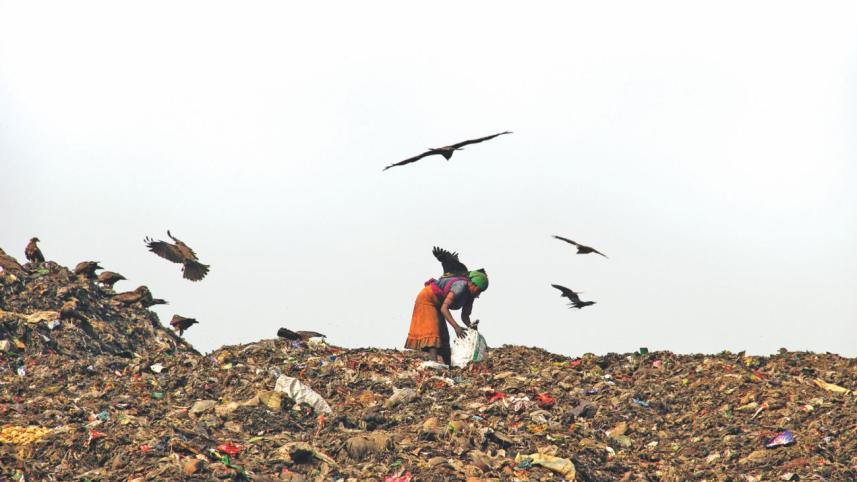
Shathi is a waste worker in Rangpur; her backstory is one of poverty and hardship. Unfavourable circumstances, such as economic hardship and a lack of educational opportunities, closed off opportunities in the formal sector.
Most economic opportunities she can now avail of involve manual labour. Although she does not know the magnitude of her contribution to keeping the city clean and paving the way for a sustainable future, she understands that 'machines' can replace her. Shathi does not know what an incinerator is, but she could guess that it may render her service obsolete. While we were on the topic of the incinerator, she made panic-stricken inquiries, which we could temporarily tackle by explaining that her service does not fall within the radius of the 'machine.'
However, if the successful operation of the pilot incinerator expands to every administrative division in the country, this consolation may be short-lived. Her past has been stolen by poverty and an opportunity vacuum; will her future be stolen as well? What is important to remember is that Shathi's story is not unique to her. Millions of people who have been fighting poverty and have limited skill sets, making opportunities for informal work a necessity for their survival. Once fully operational, the Amin Bazar incinerator will extort the livelihoods of countless marginalised individuals.
Rehabilitating millions of urban poor will be a challenging task. Based on publicly available data, the project is purely infrastructure- and technology-based, with no detailed attention paid to provisions for registering, training, or rehabilitating waste workers. And that's just the economic aspect of the story.
If incinerators are scaled to other administrative divisions, we will be looking at a fundamental shift in our waste management infrastructure, one that alienates community-based environmental stewardship.
Let's look at the impact statistics of Shathi's village, Betgari. As she shows us around the village, we note that the community has 50 twin-pit composters, and each household produces 0.8-1.5 kilograms of kitchen waste and an average of 10-20 kilograms of cow manure. Because of the composters, locals are never short of organic fertiliser to fuel their agrarian lifestyle, which includes selling it commercially, with approximately 400 kilograms generated each month. On the other hand, 4 biogas plants require around 70-80 kg of cow manure per day to meet the villagers' fuel needs for maintaining the plants.
Therefore, 2250 kilograms of cow manure is diverted for cooking, saving 3500 to 4000 kilograms of firewood over a month. In other words, 50 to 75 cubic meters of methane is diverted for cooking that would otherwise contribute to climate change. This is just a story of an emerging zero-waste village; imagine the greenhouse gas emissions that could be avoided if such stewardship were exhibited nationwide.
There is a need to underscore the threat posed by the diminishing of environmental stewardship with the advent of incinerators. The story of Betgari shows that when community members manage their waste, they become mindful of the products they buy and consume; the practices of 'refuse' and 'reuse' become customary.
Moreover, when consumers become aware, the market is compelled to respond and address their concerns, which could, for example, lead to the introduction of sustainable wrapping alternatives. The culture of waste segregation at source also encourages communities to build kitchen gardens and promotes organic farming.
But what about the inorganic waste? Waste pickers like Shathi are particularly important for sorting and managing inorganic waste to support recycling and repurposing. The ongoing global fuel crisis shows that production practices cannot continue to assume unlimited resources.
Manufacturing must focus on material recovery to reduce greenhouse gas emissions. When the government makes Extended Producer Responsibility (EPR) a procedural requirement for brands, waste workers will become particularly significant for sorting waste, recovering materials, and coordinating returns with producers. Under this design, environmental stewardship will involve both community and commercial forces. However, the incorporation of an incinerator jeopardises this equation. Where the reverse logistics stream makes waste workers a vital partner in recovery, incinerators thrive on increasing waste volumes—whether organic or inorganic—making segregation efforts counterproductive.
Even today, climate issues are treated as mutually exclusive from waste management issues. Although methane gas has an 80-times greater warming potential than carbon dioxide, sustainability activists and practitioners have long ignored it as a potent driver of climate change. Therefore, methane emissions are intensifying our intergenerational liability to protect future generations from the environmental consequences of our action and inaction.
The entire waste-to-energy incinerator project is murky. Not only have there been reports of questionable deals with the contractor, China Machinery and Engineering Corp. (CMEC), but the most vital environmental questions are also largely unclear. For example, the Aminbazar incinerator is projected to produce at least 300 metric tons of ash daily.
This ash is highly toxic to the environment and human health, as it contains heavy metals such as lead, chromium, cadmium, arsenic, and mercury. Where will this daily pile-up of toxins be stored? These heavy metals are linked with neurological damage, cancer risk, kidney and liver damage, respiratory problems, cardiovascular effects, and reproductive and developmental issues. What measures will be taken to ensure that the toxins do not contaminate the soil and water systems? The incinerator is very close to residential communities in Savar. Was any safety assessment conducted for the communities in proximity?
Various studies and reports (e.g., MDPI Sustainability, Waste Concern data) show that nearly 80% of the solid waste is organic. Factoring in this data with our workforce potential (40% of people are still employed in the agriculture sector) and massive food security challenges, an incinerator becomes illogical. Why spend millions of tax-paying Taka to destroy valuable resources?
The establishment of an incinerator is in stark opposition to hard-to-ignore scientific and social evidence and represents a massive step back for national environmental governance. The incinerator may load, but policies cannot determine our shared destiny. People's autonomy over their choices and actions is the strongest form of pushback against problematic policies.
Ramisa Rahman is a media and communication associate at Environment and Social Development Organization (ESDO)
Send your articles for Slow Reads to slowreads@thedailystar.net. Check out our submission guidelines for details.
Dhaka accidentally built the city planners now want. Can we make it liveable?

Can Bangladesh produce its own knowledge?
How we are killing Dhaka
Can Bangladesh afford not to invest in Bhola’s gas?
Bangladesh’s renewable policy: Still too little but not too late
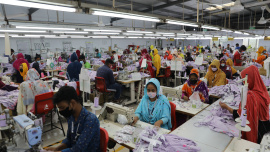
Prabhat Patnaik speaks / Why the Global South must rethink export-led growth
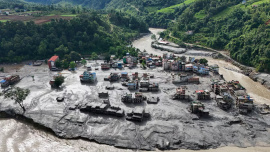
Bhotekoshi flood: Another warning from the Himalayas. Are we listening?
Renewing the Ganges Water Sharing Treaty: What should Bangladesh do?
What it really costs to live in Dhaka