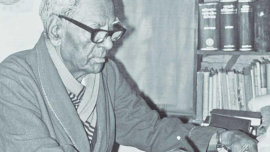
Fazlul Huq and the dream of a new Bengal in a United India

Iconic leader of Bengal, Fazlul Huq, had to sail through many ups and downs from 1913 to 1954. His thought process and actions often became self-contradictory because the coexistence of Indian identity, Bengali identity and Muslim identity made the formation of his psyche very complex. While in UP, Muslims constituted a privileged minority, in undivided Bengal, they constituted a backward majority. As a leading politician of the province, who would one day be its Prime Minister, he was preoccupied with its uplift. Simultaneously, the secular leader had to consider the progress of the entire Bengali nation and combine this consciousness with the idea of a united and independent India. A challenging task indeed.
He was a distinguished leader of both the League and the Congress. To enhance his influence in Bengal, in 1929, he established the Nikhil Banga Krishak Praja Samiti. A careful study of the Samiti's purpose and programme reveals that the three identities mentioned above (Bengali, Muslim, and Indian) were taken into consideration. Within the constraints of the colonial economy and polity, this made his journey very complex and challenging. So Huq's limitations as a leader were also the limitations of his age. His continuous efforts to overcome these challenges had been laudable. His achievements do not merely judge a great leader. He is also judged by his resilience and readiness to combat adverse circumstances.
Hindu-Muslim tension intensified after the revocation of the Bengal Partition in 1911. Huq reflected his eclectic and liberal Bengali identity in that context. His father was very close to another great soul from Barisal, Aswini Kumar Dutta. The latter was very affectionate towards Fazlul Huq. Dutta's support enabled Huq to outsmart Ray Bahadur Kumar Mahendranath Mitra in a constituency which was the citadel of the caste Hindus. That election victory enabled Huq to become a member of the Bengal Legislative Council. Dutta is not alone; Sir Asutosh Mukherjee's affection for young Huq is also well documented. Many people are keen to depict animosities between communities, but very few chronicle the collaborations that culminate in the ascendancy of great leaders such as Huq.
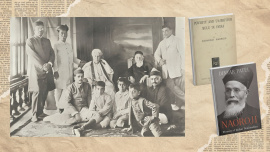
It was a time when a distinct community identity was on the rise in rural Bengal. But Huq's election victory mentioned above confirmed that his universal Bengali identity transcended narrow boundaries. Indeed, in the twenty-first century, we have much to learn from the 'Huq Model'. Like other secular politicians of Bengal, such as CR Das and Netaji Subhas Chandra Bose, Huq also had developmental issues in mind. For example, he was deeply impressed by Ramesh Chandra Dutt's analysis of Bengal's impoverishment during the colonial period. Many nationalist politicians and historians were inspired by the Trio's (Naoroji, Ranade and Dutt) interpretations of India's pauperisation under colonial rule. Presidencian Huq was the product of the same socio-political and economic milieu and therefore shared many of their secular queries.
Jinnah could never become a proud Gujarati, but Huq was always a proud Bengali.
The Indian National Congress's failure to collaborate with Huq pushed him further towards the League. However, there is still scope for intensive research on the complex, multi-layered, and heterogeneous League leadership. Unlike Huq, Jinnah lacked an organic relationship with the people. Like Congress leaders Gandhi and Azad, Huq was fluent in Urdu. Huq could even communicate with the Bengali masses in Barisali Bangal accent. At the same time, Huq's oratorical skill in English was lauded by top-ranking British officials. Anglicised and Agnostic Jinnah learnt Urdu at the age of 71 but was never fluent in it. To promote his superficial claim that Urdu was the language of the Indian Muslims, Jinnah even stopped writing in his mother tongue, Gujarati. Jinnah could never become a proud Gujarati, but Huq was always a proud Bengali.
Indeed, Huq was the son of the soil who found it difficult to cope with the intriguing Upper Indian League politicians. In Bengal's medieval past, uneasiness with the Upper Indian theologians prompted the mass leader Chaitanya to shift from the Vedas to the Bhagavata Purana. In modern Bengal, mass leader Huq's uneasiness with the shrewd leadership of the Upper Indian League prompted him to turn from national to provincial politics. So Jinnah and Huq represented two different categories of leadership. The third category was represented by figures such as Maududi and Akram Khan, who were distanced from secular concerns. Khan was a complex personality. He tried to balance his pro-Pakistan stance by expressing his support for the Bengali language in the early fifties. However, he suggested that Bengali should be written in the Arabic script.
Whereas Huq's love for anything Bengali was so natural, so organic, and so spontaneous. This love ranged from mango to the meandering river of Barisal and its colloquial dialect. It is not inappropriate to mention here that Huq hailed from eastern Bengal and Khan from western Bengal. Unlike Jinnah or Khan, Huq didn't need to relocate geographically in the aftermath of the subcontinent's partition. While criticising the two-nation theory, Gandhi and Azad pointed out that the Prophet never prescribed the formation of a state based on religion. So the partition plan was not in conformity with the Sunnah. Unlike these two prominent Congress leaders, Huq apparently did not try to articulate his political views by citing the Quran, Hadith, or Sirat (Biography of the Prophet), which confirms his secular inclinations.
He had differences with Gandhi at other levels as well. During the Khilafat-Noncooperation Movement, which witnessed the highest level of Hindu-Muslim amity, when Gandhi asked for the boycott of schools, Huq could not agree, as he thought that the educationally and economically backward Muslims in Bengal would lag further behind their Hindu counterparts if they did so. Indeed, he had a genuine concern for the uplift of the Muslim community in Bengal. In 1929, the capitalist world became exposed to the Great Economic Depression. It adversely affected India as well. The price of agricultural produce suddenly fell. Various taxes and declining income made life precarious for Indian peasants.
During that crisis, Huq founded the Nikhil Banga Krishak Samiti to alleviate the suffering of the Bengal peasantry. Of course, the Praja Movement, under his leadership, started much earlier. In 1915, he tried to unite the Muslims and Namasudra peasantry in Barisal, which confirmed that, to serve the interests of the marginalised, he was prepared to transcend the narrow boundaries of community. He organised meetings in several districts and published booklets to raise public awareness of the exploitation unleashed by the mahajans and zamindars. In 1929, he further organised this movement. No one before him in Bengal had mobilised the peasant masses. The programme of this mobilisation reflected the non-communal, liberal and inclusive view of this gifted leader.
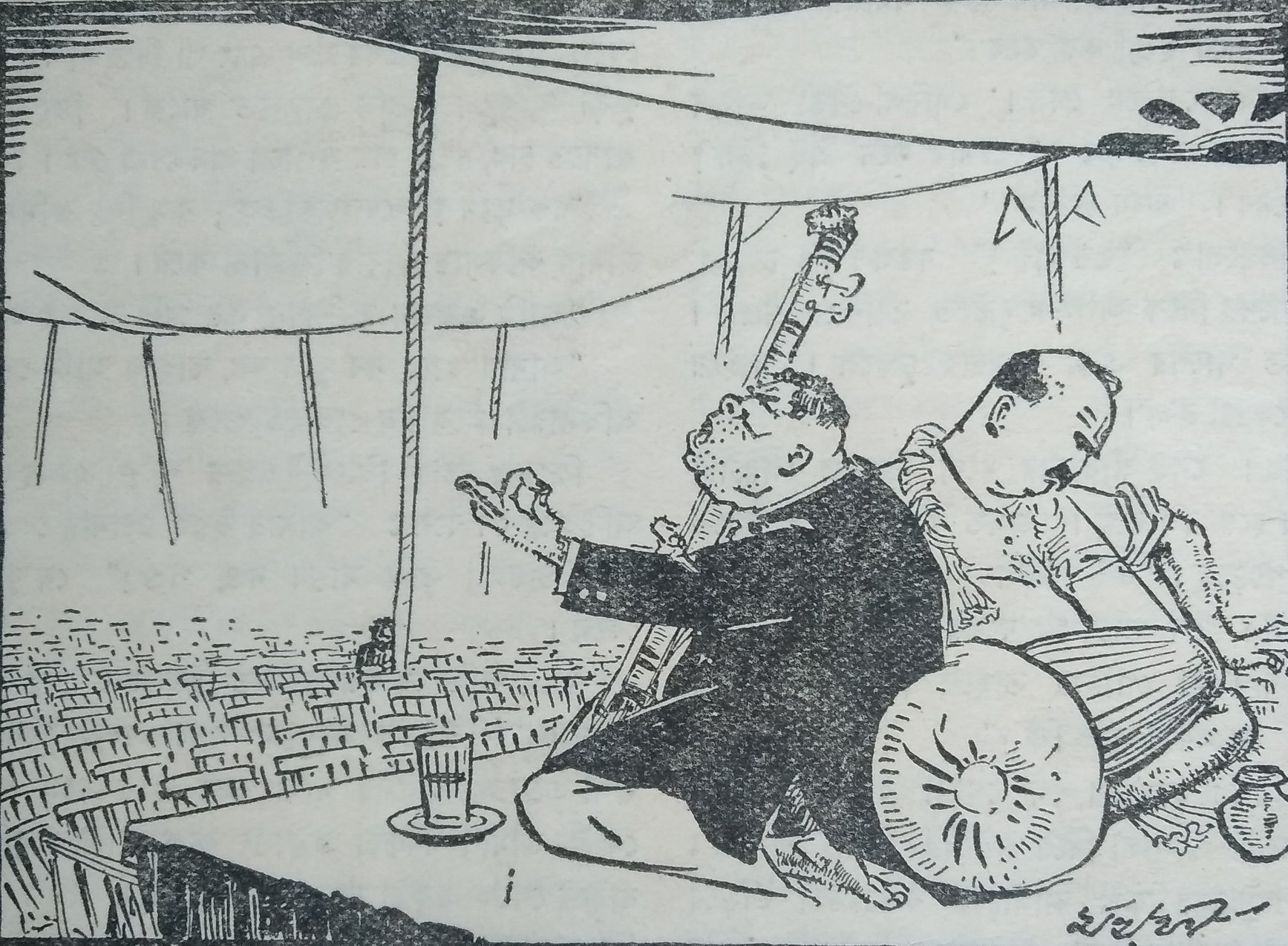
The progressive election manifesto of the Krishak Praja Samiti alarmed its exclusivist rival, the League, as well as the divisive colonial authorities. The pro-Jinnah faction threw its full weight behind efforts to frustrate Huq's constructive, non-communal initiative. But Huq was able to establish an organic relationship with the peasantry and people experiencing poverty in the Bengal countryside. During that period, no other Bengali leader from the major political parties achieved this success in rural Bengal. Congress was a strong all-India party at the time; however, it failed to emulate this great leader's natural ability to expand its rural base. Nor did they understand the significance of collaborating with such a leader to corner the exclusivist League politically.
For this shortcoming in expanding the rural base, Congress had to pay a heavy price in post-Partition West Bengal politics, culminating in the growth of left ideology. However, this ideology could not become a prominent force in East Pakistan's politics for various reasons. This ability to reconnect with the rural masses eventually enabled Huq to outsmart the influential League leader Nazimuddin in the Patuakhali constituency. Congress also achieved success in the Bengal election during that time. The situation became ripe for the formation of the Huq-Congress Coalition Ministry. But the ego-centric Central leadership of the Indian National Congress did not understand the importance of forming the Huq-Congress Coalition Ministry in Bengal, which forced Huq to gravitate towards the League for his own political survival.
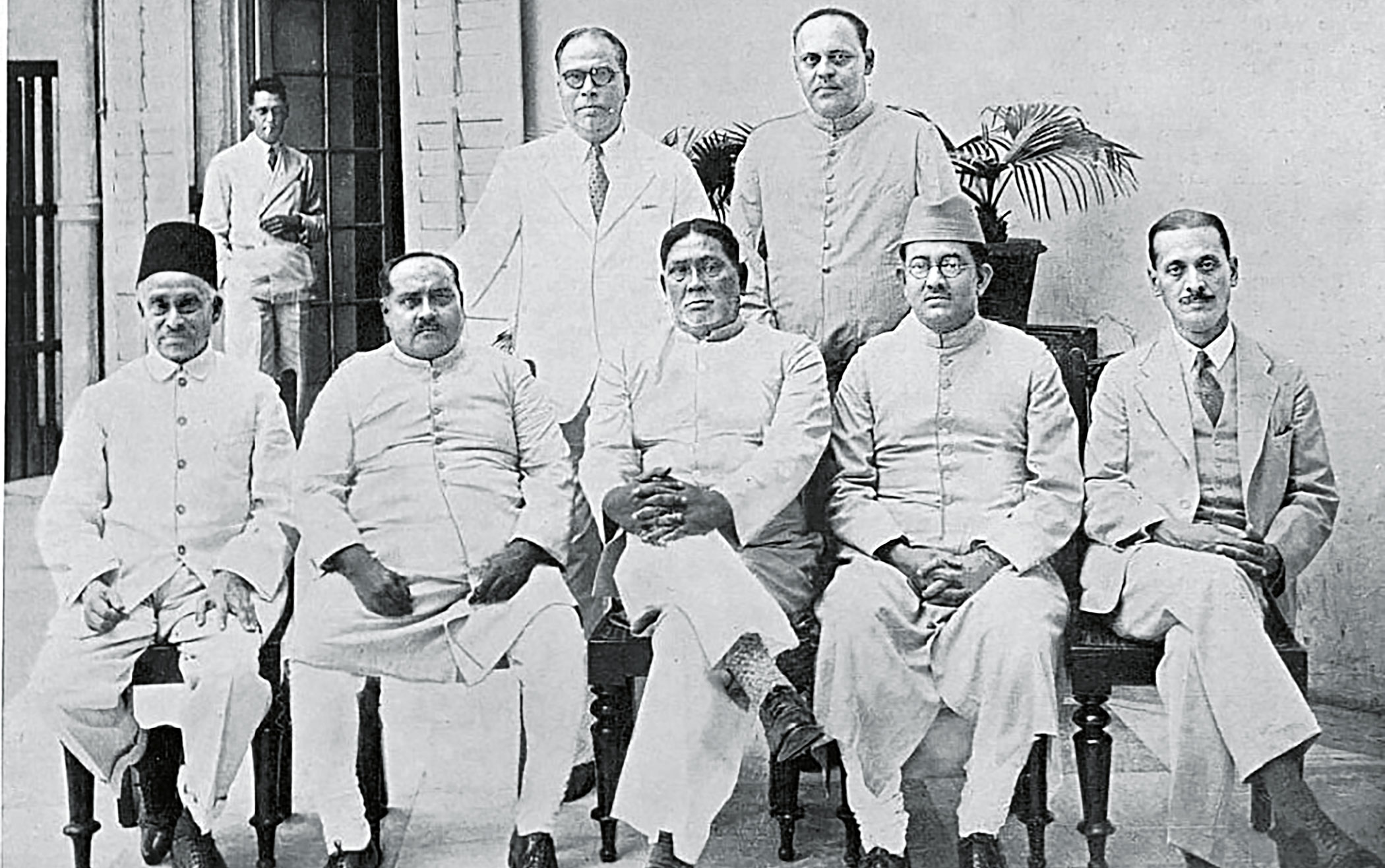
This was the watershed in South Asian politics. Huq's dream of a united Bengal would not be realised, as separatist politics gradually replaced progressive, development-oriented, inclusive politics. This sad event is painfully but artistically depicted in the famous novel by Gour Kishore Ghosh, entitled Prem Nei. 'Love' finally departed at three levels: from the relationship involving a man and a woman, a Hindu and a Muslim, a politician and his motherland. That 'Love' is still an absconder in the subcontinent. That myopic decision by the Congress enabled the League to expand its influence in Bengal rapidly. Congress did not bother to understand the nature of Muslim politics in Bengal.
From 1937, with the establishment of the Huq-League Ministry, the League became so powerful in the province that Huq's own party became politically emaciated. Even the provincial leadership of the Congress failed to make a strong proposal to their Central leadership in favour of forming a coalition Ministry in Bengal with Huq as the PM. Congress could have done that by a serious analysis of Huq's election manifestos circulated from time to time from 1915 to 1936. Huq became a part of Muslim League politics from 1937 to 1941. But he failed to reduce the influence of the pro-Jinnah lobby within the League, which consistently opposed Huq.
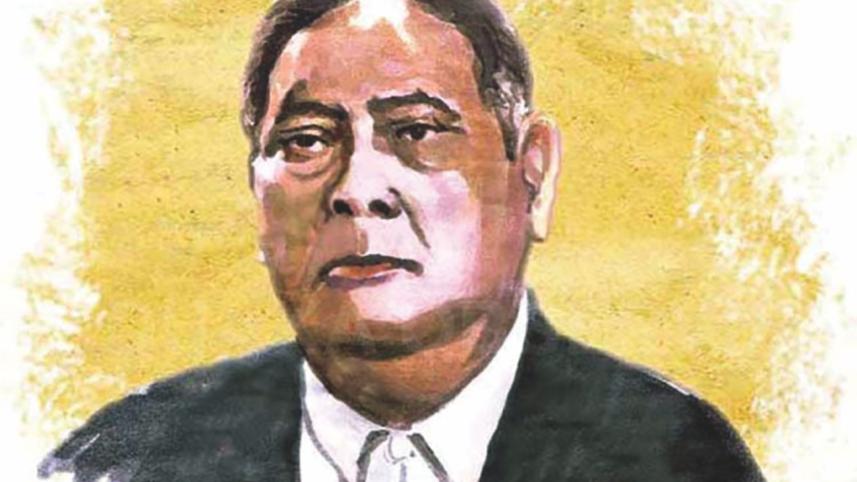
Jinnah would not allow another charismatic leader to rise within the League. Such trends could be visible in other political parties as well. For example, in Congress, a politician of Dr BC Roy's stature, or that of Siddhartha Sankar Roy, was not allowed by the central leadership to rise beyond a certain point. Despite his resourcefulness, Huq often became a victim of circumstances. Amalendu De, a pioneer historian on Huq of Pakistan Prostab O Fazlul Huq fame, claimed that the eclectic, liberal and inclusive Huq always drew inspiration from the roots of Bengali culture, which were shaped by esoteric practitioners of faith such as sufis and bhaktas, auls and bauls, folk poets and folk singers.
Of course, there is truth in this claim. However, one has to remember that in the 1920s, a fatwa was issued prescribing the elimination of the bauls of Bengal. The title of that infamous fatwa is Baul Dhangsha Fatwa. The zealous fatwabaz was able to collect the signatures of many notable persons in support of his noble endeavour, including that of Maulana Muhammad Akram Khan, mentioned above, and MAK Fazlul Huq. Politician Huq again became a victim of circumstances.
Amit Dey is Dean of Arts and Asutosh Chair Professor of History at Calcutta University.
Send your articles for Slow Reads to slowreads@thedailystar.net. Check out our submission guidelines for details.

Bengal and the coming of Islam: A story of soil and spirit
Xuanzang’s travels to Bengal and beyond : The man, the pilgrim and the Monkey King
Professor Anisur Rahman: The economist who put people at the centre
APO 433: Dhaka’s forgotten post office of World War II
Dadabhai Naoroji: The man who exposed the economics of British colonialism

Untold stories of 1971 through private letters
The extraordinary journey of Atish Dipankar Srigyan
Forgotten story of Jeanette Van Tassel, the American woman who flew over Dhaka in 1892
Beyond 1947 / A personal essay