Nehrus, Mians, and the lost tradition of Hindu-Muslim political coexistence

At an election rally in Falakata in West Bengal’s Alipurduar district on 15 April 2026, India’s Minister of Home Affairs, Amit Shah declared that if his party, the BJP, won the state assembly elections held later that month, it would not allow a Babri-style masjid to be built in the Bangla-speaking state of India.
Such rhetoric of intolerance and communal hatred is designed to pour poison into the ears of naïve Hindus and Muslims and exacerbate communal tensions between the two major religious groups in South Asia. Self-serving politicians stir up religious hatred to gain political mileage; therefore, conscientious people should not allow themselves to fall into traps set by crooked public officials.
Against the backdrop of such irresponsible and inflammatory statements, which have the potential to incite violence, I describe below an example of religious harmony between two political dynasties—Lahore’s (Muslim) Mian family and Allahabad’s (Hindu) Nehru family (later the Nehru-Gandhi family). In British India, these two were among the most illustrious families, alongside the likes of Bengal’s Suhrawardy and Bombay’s Tyabji.
The Mian family of Lahore’s Baghbanpura was the custodian of the well-known Shalimar Gardens for more than 300 years, until the early 1960s. It had a significant impact on the course of British Indian history. Its members include Mian Muhammad Shafi (1869–1932) and his daughter Jahanara Shahnawaz (1896–1979). They were influential in Muslim League politics, just as members of the Nehru family—especially Motilal Nehru (1861–1931) and Jawaharlal Nehru (1889–1964)—were in Congress politics. During the colonial period, both families maintained a warm relationship that transcended religious and regional barriers.
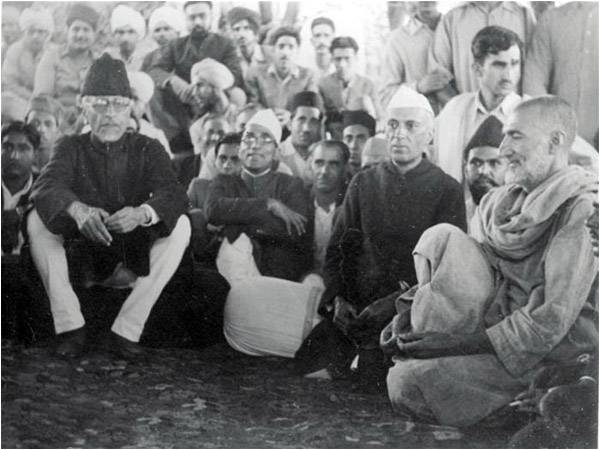
Even though British India was partitioned into India and Pakistan in August 1947, cordial relations between the two families continued. For example, after Muhammad Iftikharuddin of the Mian family died on 6 June 1962, Jawaharlal Nehru sent the following condolence note on 11 June 1962:
I am deeply sorry at Mian Iftikharuddin’s death. He was an old friend and colleague, and though circumstances cut us off from each other ever since Independence and the partition of India, he remained dear to me. His death has come as a personal sorrow. His last few years were spent in struggle against illness and authority, which no doubt shortened his life.
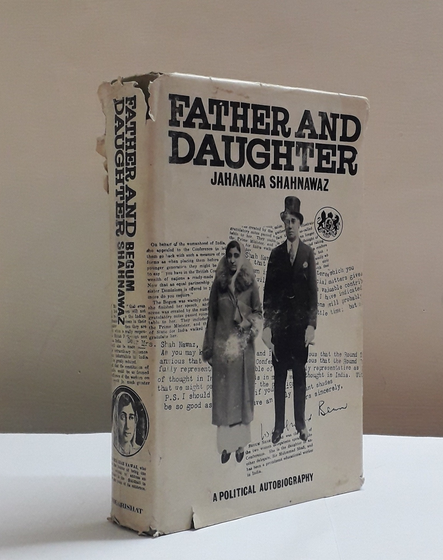
In her memoir, Father & Daughter: An Autobiography (1971), Jahanara Shahnawaz highlights the cordial relationship of the Mian family with the Nehru, Suhrawardy, and Tyabji families. However, according to her, the Mian family had a closer connection with the Nehru family. Shafi and Motilal became very good friends while studying law in England. They “were never content with just shaking hands when they met, but would embrace each other like brothers” (p. 73). The warm social connections between the Mian and Nehru families that Jahanara outlines span a considerable portion of the book. She pays a generous tribute to the broad-mindedness of Motilal Nehru and shows respect for Jawaharlal Nehru, noting that these personal relationships allowed for cooperation across political lines, even in times of communal conflict.
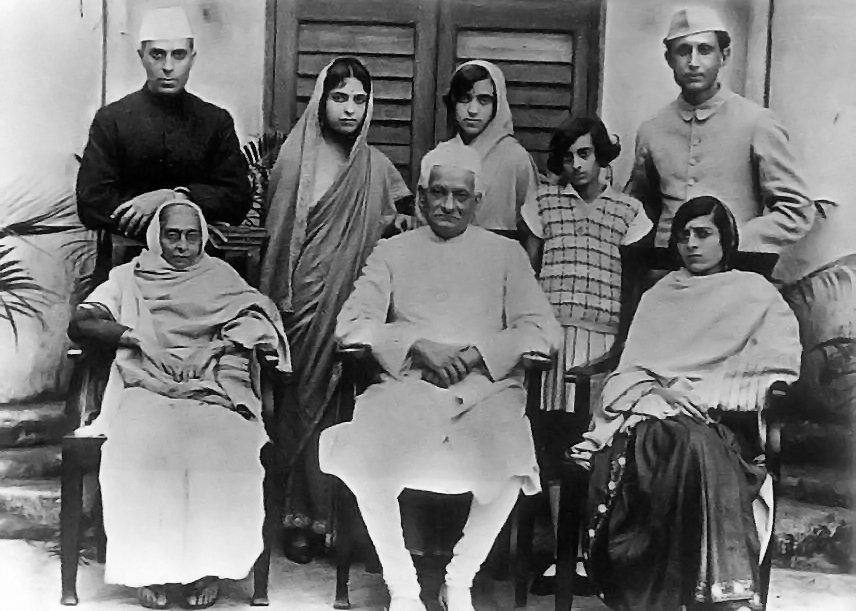
Jahanara called the patriarch Motilal Nehru “uncle”, following the South Asian tradition of extending kinship terms to non-kin individuals, as the community structure in this region is built on the closeness of both kinship and kinship-like family relationships. She states: “I can never forget Uncle Moti Lal Nehru’s affection for me. He became fond of my daughter, Mumtaz, who was writing a great deal of poetry and was beginning to be a good speaker” (p. 74). She recounts a dinner she arranged at her house to meet Motilal Nehru’s granddaughter, Indira Gandhi (1917–84), after the latter’s marriage. It was also attended by Indira Gandhi’s father, Jawaharlal Nehru, to whom Jahanara related the following story.
In 1927, Jahanara and her husband, Mian Shahnawaz, arranged a dinner party in Delhi, the guest list of which included her father, Muhammad Shafi, and British colonial administrator James Crerar (1877–1960). She also invited Motilal Nehru, as she wanted him to spend some time with her father. However, being a co-founder of the Swaraj Party, which led civil disobedience and non-cooperation campaigns against the British in the 1920s, he expressed his inability to attend the dinner, as it was partly thrown to honour a (colonial) government official. However, Motilal Nehru relented and attended after a “sad and aggrieved” Jahanara asked: “How can an uncle say ‘no’ to a niece?” He joined the dinner party and ended up spending “a happy evening” and having “a long talk” with Shafi (p. 74). Thus, social ties between the Mian and Nehru families took precedence over the religious divide and political polarisation.
Earlier, in 1919, Motilal Nehru, along with his family members, came to Lahore, where the Indian National Congress session was held. Jahanara’s husband took their daughter, Mumtaz, to see him, while Jahanara arranged a dinner at home in honour of Mrs Nehru and met their daughter (and Jawaharlal Nehru’s diplomat sister), Vijaya Lakshmi (1900–1990), for the first time (p. 53).
The British government transferred power to the dominion of Pakistan on 14 August and to that of India on 15 August 1947. In the course of these two days and the days that followed, there were episodes of wholesale carnage both in India and Pakistan. Many of the massacres occurred on trains, when people gathered at railway stations to cross borders in search of safety. Jahanara describes “compartments full of blood or dead bodies” in trains that were arriving in Karachi (p. 209). Jahanara mentions an incident that took place in the then Muslim-majority Batala in Punjab. As the Radcliffe Line came into effect on 17 August 1947, Punjab was divided into two, and Batala fell on the Indian side of the border. One night after 17 August 1947, Jahanara and other members of the Mian family came to know about an impending massacre of Muslims in Batala. They reached out to Jawaharlal Nehru and sought his intervention to prevent the mass murder. Jawaharlal Nehru respected their request, and thus the looming slaughter of Muslims in Batala was averted (p. 211).
The incident described in the following discussion makes the friendly relations between the Mian and Nehru families more obvious.
During British colonial rule in India, Jawaharlal Nehru was incarcerated altogether nine times. In her essay “Jawaharlal Nehru (1889–1964),” Antoon De Baets says: “Between 1921 and 1945, he spent almost nine years in prison and passed much of the rest with the prospect of detention” (p. 190). The first time Jawaharlal Nehru landed in jail was on 6 December 1921, and he remained there for 88 days; the last time was on 9 August 1942, when he was behind bars for 1,041 days. In the 1920s, Jawaharlal Nehru and other leaders were campaigning for a boycott of foreign goods. In 1922, he organised one such movement in Allahabad and was involved in picketing and fining businesses that did not comply with the boycott. He was “arrested, tried on charges of criminal intimidation and extortion, and on 19 May 1922 sentenced to twenty-one months” (B. N. Pandey, Nehru, 1976, p. 97). At that time, there were three Indians in the Viceroy’s Executive Council—Muhammad Shafi, B. N. Sharma (1867–1932), and Tej Bahadur Sapru (1875–1949). Even though the last two were Hindu and one of them (Sapru) was the Law Member of the Viceroy’s Executive Council, Motilal Nehru sent Pandit Madan Mohan Malaviya (1861–1946) to Shafi for possible assistance in securing his son’s release. This tells us about the trust and cordiality between the two families.
Hindus and Muslims should take inspiration from the cordiality between the Mian and Nehru families, seeking peace and pooling their efforts in the struggle against bigotry. They should not be duped by political opportunists who incite hatred only to fish in muddy waters.
On a final note, we must prevent a return to the horrors of the traumatic 1947 Partition riots, which saw widespread violence, the mass migration of about 15 million people between India and Pakistan, and “the deaths of half a million to one million men, women and children … [in] indiscriminate callousness” (Yasmin Khan, The Great Partition, 2007, p. 6)—some estimates put the number much higher. We have only one option: to treat each other as brothers and sisters in humanity and live harmoniously.
Md Mahmudul Hasan, PhD, is Professor in the Department of English Language and Literature, International Islamic University Malaysia.
Send your articles for Slow Reads to slowreads@thedailystar.net. Check out our submission guidelines for details.
APO 433: Dhaka’s forgotten post office of World War II
Dadabhai Naoroji: The man who exposed the economics of British colonialism
Untold stories of 1971 through private letters
The extraordinary journey of Atish Dipankar Srigyan
Forgotten story of Jeanette Van Tassel, the American woman who flew over Dhaka in 1892
Beyond 1947 / A personal essay
Abul Mansur Ahmad / A global quest in search of a nation
Chand Bibi and the forgotten history of Muslim women’s political resistance
Women’s voices in Nazrul’s Dhumketu