Remembering Mrinal Sen: Through rain, memory, and cinema

I sometimes reminisce about a distant rainy afternoon in Barisal that changed how I see the world today. I was in my first year of university, beginning to study filmmaking. I was sitting on an old sofa with my mother while monsoon rain blurred the trees outside our window and turned the afternoon into a deep grey haze. Together, we were watching Ek Din Pratidin by Mrinal Sen. I remember the air in the room feeling heavy with the smell of damp earth and tea, but what unfolded on screen felt even heavier. In the film, the eldest daughter, nicknamed Chinu, does not return home after work, and her middle-class family slowly descends into a quiet, anxious panic. What struck me most was not only their fear for her safety, but the way their minds immediately turned towards the neighbours, towards gossip, towards how quickly their respectability might collapse by morning. Sitting there in the dim light beside my mother, I felt a knot form in my stomach because I recognised that feeling. We are a middle-class family too, and for perhaps the first time, I understood so clearly what it means to live inside that invisible cage of respectability, where public image can feel more fragile than one’s own emotions. In that moment, Mrinal Sen did not feel distant to me. He felt like someone who had quietly entered our living room and pointed towards the things we usually keep hidden.
Mrinal Sen was born on 14 May 1923 in Faridpur, a district town in East Bengal that held both the quiet beauty of rural life and the slow build of political tension. His father, Dinesh Chandra Sen, was a lawyer who defended young anti-colonial revolutionaries during British rule. His mother, Saraju Bala, was a housewife from the Dutta Gupta family of Faridpur. In his memoir Always Being Born, Mrinal recalls his hometown as a place where communal harmony existed almost naturally, and that early sense of shared living remained with him throughout his life. Growing up in a crowded, politically conscious, and emotionally alive household meant he was never an isolated figure, but always part of a collective rhythm of voices, tensions, and care. This experience of constantly living within a community became the foundation of his cinematic humanism, shaping a filmmaker who would later understand people not as isolated individuals, but as beings profoundly shaped by their social world.
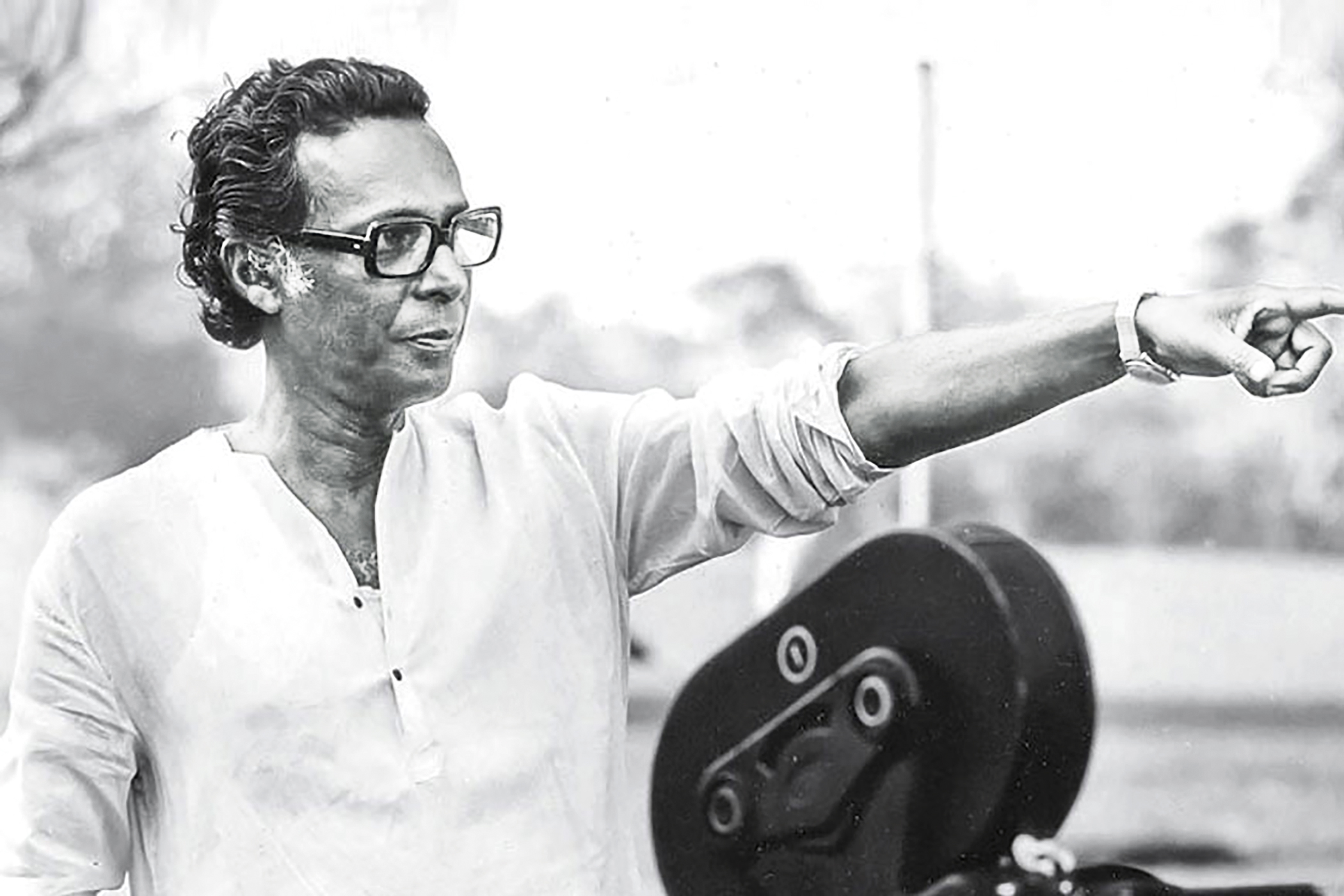
In 1940, after spending around 17 years in Faridpur, Mrinal Sen left for Kolkata to study Physics at Scottish Church College. During this time, he lived in a boarding house on Kailash Bose Street. In his memoir Tritio Bhuban, Mrinal expressed his feelings for Kolkata in these words: “Yet, I still consider Kolkata to be El Dorado. It is as if I am a part of this anatomy. The Bob Dylan song comes to mind: ‘Love is just a four-lettered word.’... I am a beggar for love. I am deeply, intensely entangled with it. My relationship with Kolkata is exactly like the love-hate relationship I have with my lover. I cannot escape. I receive love, yet I hurl insults as well. Both, in equal measure.”
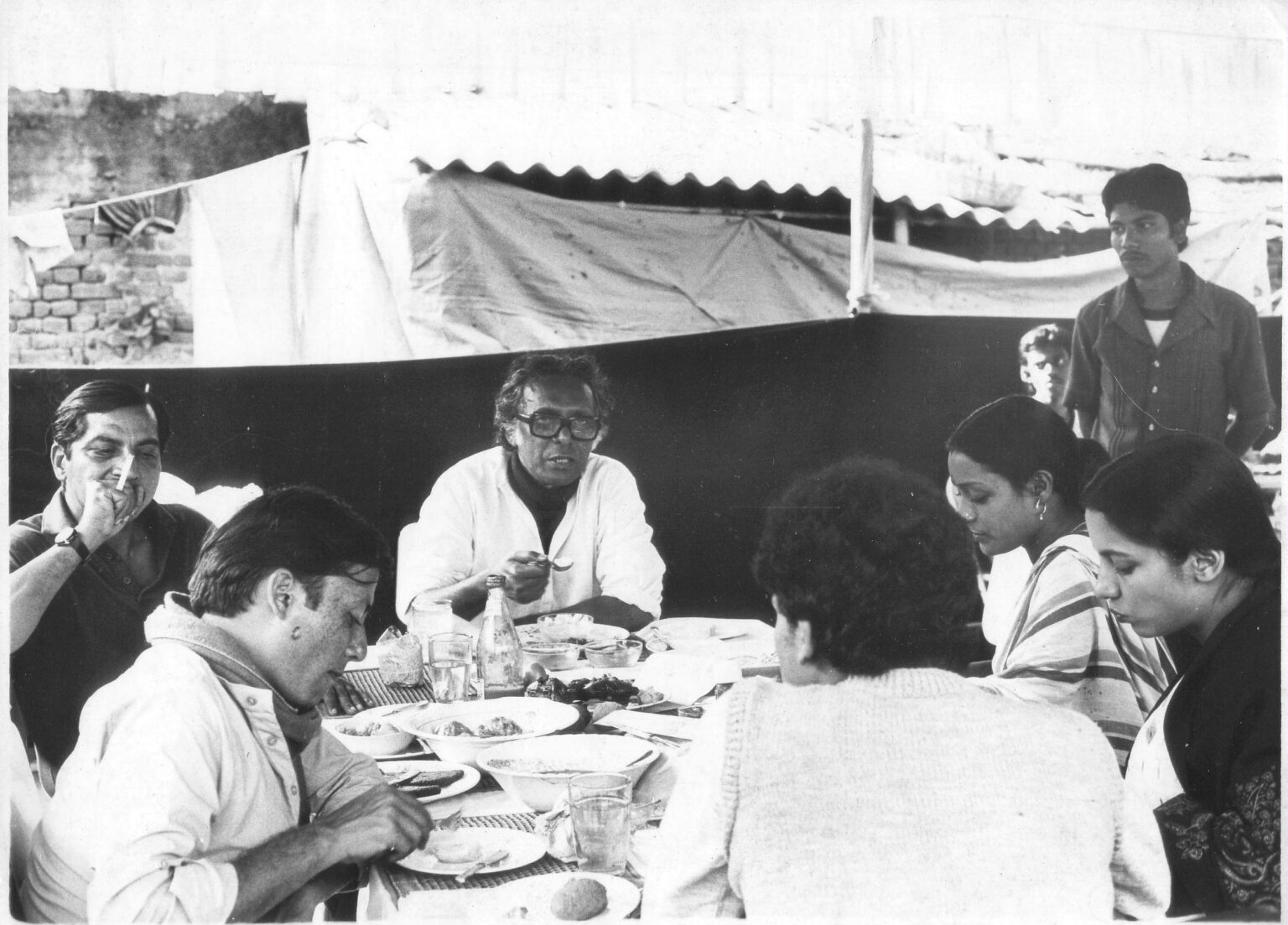
Although his formal education was in science, his real education came from outside the classroom, shaped by the pulse of the city, its endless conversations, and the political instability that defined wartime Kolkata. The Bengal Famine of 1943 became a turning point in his life. Witnessing widespread starvation and death across the city affected him deeply and transformed the way he understood society and responsibility. What had once been an intellectual engagement with ideas gradually became something urgent and unavoidable in the face of such immense human suffering. Around this time, he worked as a medical representative and later became involved in writing and cultural discussions, travelling across different parts of India and becoming increasingly aware of the everyday realities of social inequality. Gradually, he was drawn towards the cultural and political activities of the Indian People's Theatre Association, where artists sought to connect art with social reality. He was deeply influenced by leftist thought, though he was never formally associated with the Communist Party. Alongside this political and cultural awakening, he developed a serious interest in film theory, reading widely and thinking deeply about the language of cinema.
Mrinal Sen’s debut feature was Raat Bhore, released in 1955. Reflecting on his entry into filmmaking, he wrote in his book Tritiyo Bhuban, “I finally entered the kingdom of cinema! It’s strange; I never dreamed I would make films. It was a pure accident.” In the preface to the same book, he further expressed, “I live with cinema. I am involved in the complex process of film structure and atmosphere-building. I am trying my best to be a constant companion to the history of changing scenes and aesthetic excellence... I have never cared whether what I did was right or wrong. Why worry? Who can say where cinema ends, or if it has an end at all?”
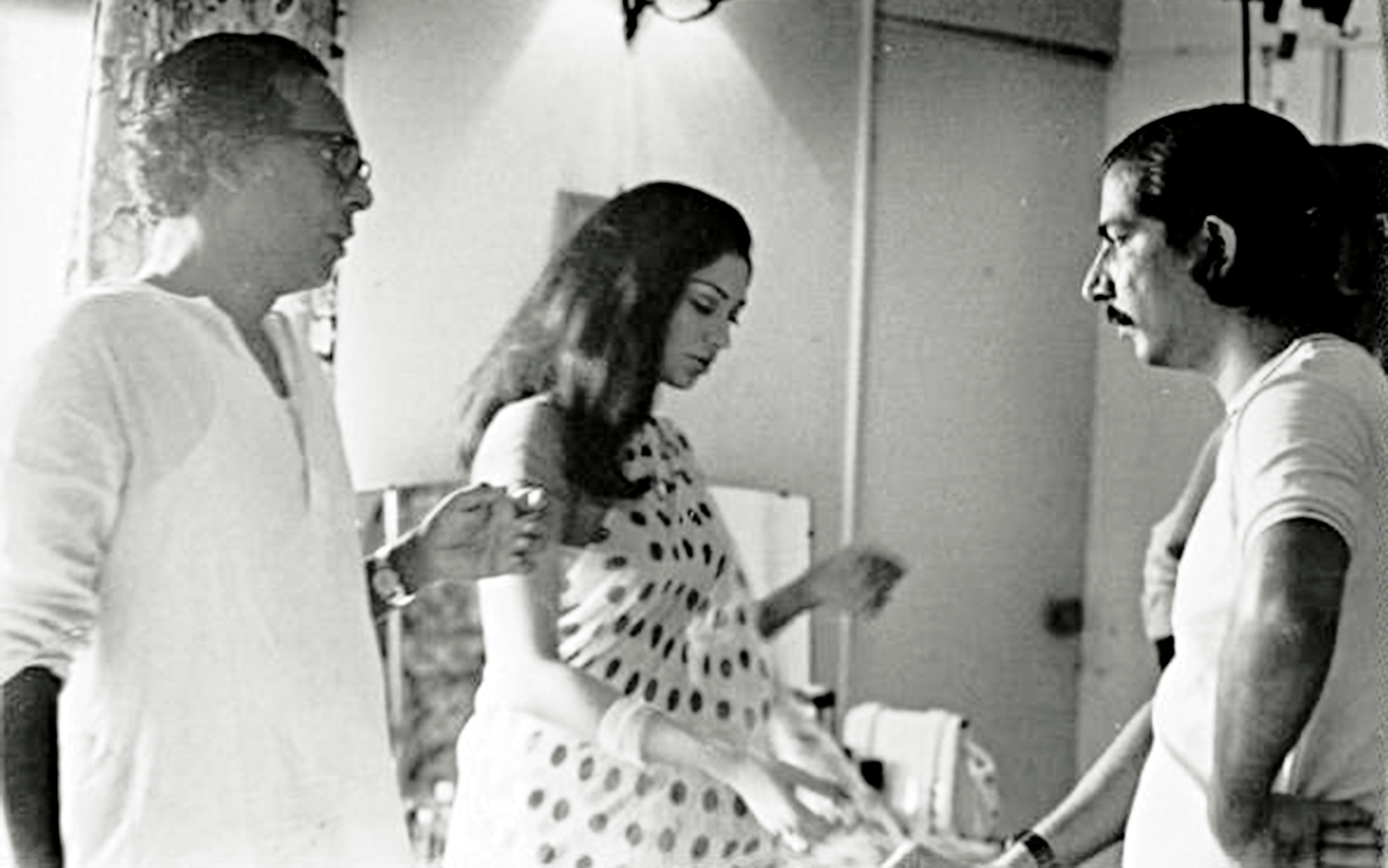
In a striking coincidence of film history, his first film was released in the same year that Satyajit Ray’s Pather Panchali altered the course of Indian cinema forever. Yet while Ray’s debut was met with immediate acclaim, Sen struggled through a far more uncertain beginning. He later spoke of Raat Bhore with brutal honesty, calling it “a disaster”. Through those difficult early years, he found unwavering support in his beloved wife, Gita Sen. Rather than retreat after his first setback, Sen returned with sharper political conviction in Neel Akasher Neechey (1959), a film centred on the relationship between a Chinese street hawker and a Bengali housewife in colonial Kolkata. The film later became historically significant when it was briefly banned by the Indian government on political grounds. These early years were marked by uncertainty, struggle, experimentation, and frequent failure. Yet they were also the years in which Sen slowly began to discover a cinematic language of his own, one capable of holding together his political convictions, intellectual restlessness, and deep faith in ordinary human lives.
By the late 1960s, Mrinal Sen had grown increasingly dissatisfied with the polished safety and predictable emotional rhythms of mainstream Indian cinema. The social and political turbulence around him demanded a different kind of cinematic language, one capable of capturing uncertainty, anger, contradiction, and the fractured mood of the time itself. The turning point came in 1969 with Bhuvan Shome, a modestly budgeted film that became an unexpected critical and commercial success and is now widely regarded as one of the foundational works of the Indian New Wave. With that film, Sen broke decisively from conventional narrative grammar. What emerged was a freer, more playful, and openly experimental style. He no longer treated the camera as a passive observer; instead, it became an active, disruptive force within the film itself. Through jump cuts, freeze frames, direct address, abrupt tonal shifts, and self-reflexive techniques, he shattered cinematic illusion and forced viewers to remain conscious of the act of watching.
This formal revolution led directly into his celebrated Calcutta Trilogy: Interview (1971), Calcutta 71 (1972), and Padatik (1973). In these films, Kolkata breathes, protests, trembles, and burns alongside its inhabitants. Sen was no longer interested in neat storytelling or emotional closure; he wanted cinema to register the confusion, anger, and fragmentation of an era shaped by political unrest and ideological disillusionment. The young men and women in these films are trapped between revolutionary desire and historical defeat, between idealism and urban despair. What Sen created during this period was not simply political cinema, but a new cinematic language for political crisis, a kind of newsreel for the inner life of a generation. He proved that film could function simultaneously as historical witness and formal provocation, not by offering answers, but by turning the screen into a space of argument, discomfort, and urgent questioning.
At the heart of Mrinal Sen’s cinema was a philosophy of provocation. He rejected the idea of cinema as passive entertainment or escapist spectacle, believing instead that art carried a moral responsibility to unsettle, confront, and awaken. This conviction shaped the distinctive anti-illusionist style for which he became known, a mode of filmmaking in which he deliberately disrupted traditional narrative flow to prevent audiences from sinking into comfortable emotional identification. Drawing heavily from the influence of Bertolt Brecht and Brechtian alienation, Sen repeatedly reminded viewers that what they were watching was a constructed work, not a seamless illusion. His goal was not to immerse audiences completely in fiction, but to compel them to think critically about the social and political realities reflected through it.
His Marxist worldview was not merely thematic material for his films; it shaped the very way he understood human relationships, institutions, and moral contradiction. He remained deeply interested in unstable truths, ethical ambiguity, and the impossibility of easy moral judgement, often using his films to question not only his characters’ choices, but also the ethics of representation itself. This is why he frequently broke the fourth wall, disrupted continuity, or inserted documentary footage into fictional narratives: to collapse the distance between cinematic fiction and political reality, between the screen and the street. For Sen, a successful film was not one that comforted its audience or offered tidy resolutions, but one that left viewers unsettled, intellectually provoked, and burdened with unanswered questions.
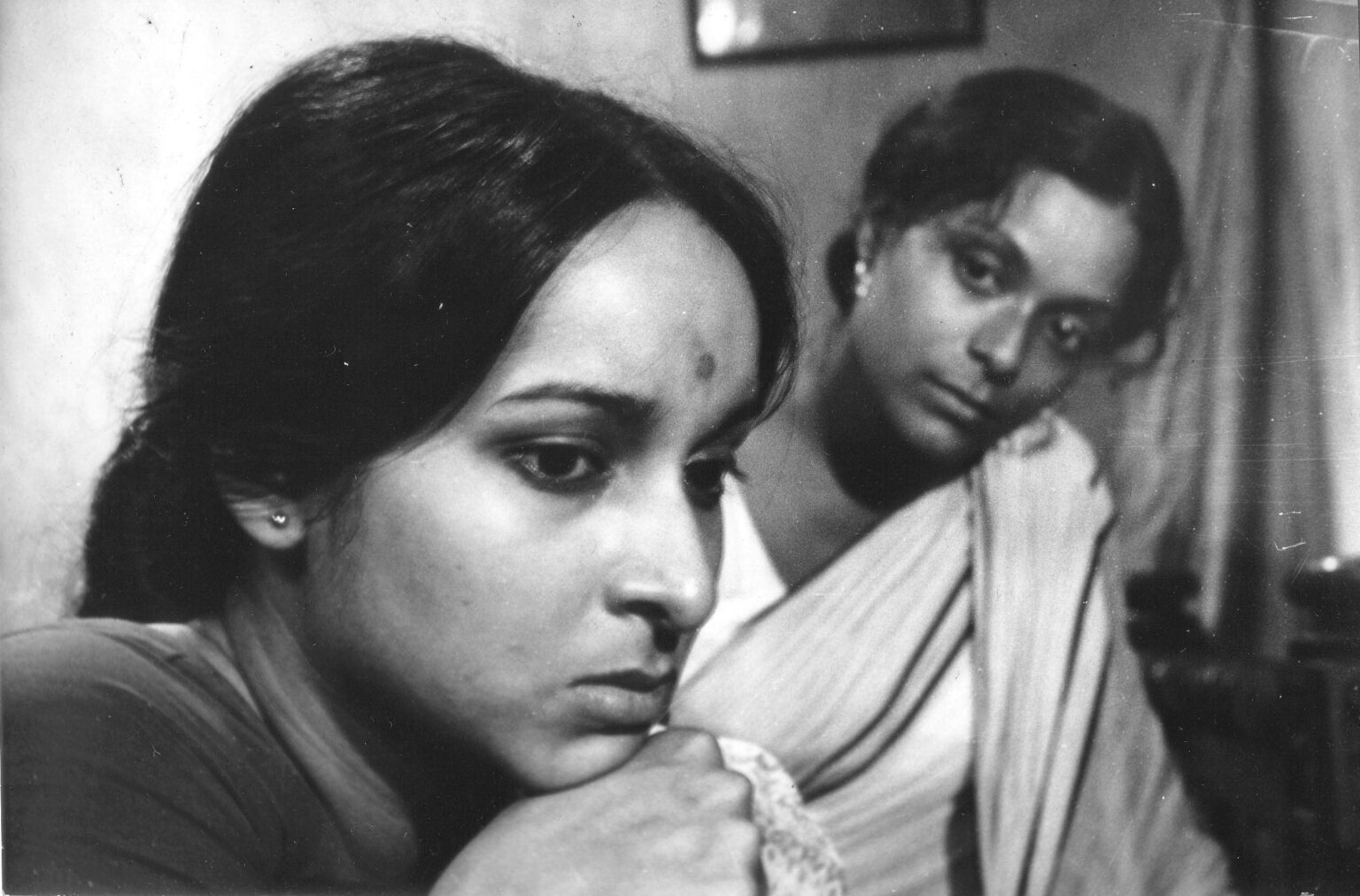
Among the films through which Mrinal Sen examined the Bengali middle class, Ek Din Pratidin (1979) remains one of his most precise and devastating works. Based on Amalendu Chakraborty’s story Abirata Chenamukh, the film marked a significant shift in Sen’s formal approach and stands as one of his sharpest dissections of middle-class anxiety. It follows a seven-member household led by the retired Hrishikesh Sengupta, whose survival depends almost entirely on the income of the eldest daughter, Chinu. As the dutiful daughter who finances her siblings’ futures and sustains the family’s present, she functions as the invisible pillar of the household. But when she fails to return home one evening, that dependence quickly gives way to panic, a panic rooted not purely in concern, but in fear of social disgrace.
Sen exposes with brutal clarity the hypocrisies of the ‘bhadralok’ middle class, portraying a family more shaken by the possibility of neighbourhood gossip than by uncertainty over their daughter’s safety. The father waits anxiously while hiding the truth from others, the mother worries openly about humiliation, and with every passing hour, the film reveals how fragile familial affection becomes when social respectability is threatened. When Chinu finally returns, the household offers her not relief, but accusation, silence, and resentment for having “made people laugh” at them. In that moment, Sen transforms the film into a ruthless critique of patriarchal morality: the unemployed brother can roam freely without scrutiny, yet a working woman returning home late is enough to trigger suspicion, moral judgement, and character assassination.
Through Chinu’s silent realisation that her family has transformed her into a stranger within the span of a few hours, Sen reveals how conditional middle-class love can become when filtered through patriarchy and public shame. The film received major critical acclaim in India and remains one of Sen’s most piercing statements on the social reality that economic contribution alone does not liberate women from patriarchal suspicion. Even as providers, they remain trapped within the invisible prison of respectability.
As Mrinal Sen moved through the 1970s and into the 1980s, his cinema grew even more restless, introspective, and formally adventurous, turning increasingly towards the moral and psychological consequences of living under political and social pressure. Having already transformed Indian political cinema through the Calcutta Trilogy, he began pushing beyond direct street-level agitation into more layered and self-reflexive territory. In Akaler Sandhane (1980), one of his most intellectually ambitious works, a film crew attempting to recreate the Bengal Famine of 1943 gradually confronts its own distance from the suffering it seeks to represent, forcing difficult questions about class privilege, historical memory, and the ethics of artistic representation itself. Sen’s filmmaking during this period became more fragmented and interior, often using discontinuous editing, symbolic imagery, and fractured narrative structures to capture not simply events, but states of mind.
In Khandhar (1984), he replaced the overt urgency of his earlier political cinema with a quieter, more mournful atmosphere, using the decaying architecture of a ruined mansion both as a physical setting and as a metaphor for historical exhaustion, emotional paralysis, and the collapse of old promises. Even in these more subdued works, Sen remained committed to what many have described as his “anti-cinema” approach, consistently breaking the illusion of seamless storytelling so that viewers would never lose awareness of themselves as critical observers rather than passive consumers.
Underlying all of this was Sen’s central belief that cinema must remain a space of debate, discomfort, and provocation. He did not make films to deliver answers or offer moral reassurance; he made them to unsettle the conscience of the viewer. For Sen, the camera was never neutral; it was a political instrument capable of exposing the hidden hypocrisies of the middle class and the structural violence embedded within everyday life. He remained fascinated by what might be called unstable or unreliable truth, often blending documentary textures with fiction in order to blur the boundaries between lived reality and cinematic representation. His films repeatedly stage collisions between wealth and poverty, memory and history, tradition and modernity, ideology and compromise, allowing contradiction itself to generate meaning. By rejecting the comforts of mainstream cinematic escapism, Sen demanded that audiences leave the theatre not soothed, but unsettled, carrying with them unresolved questions about the society they inhabit.
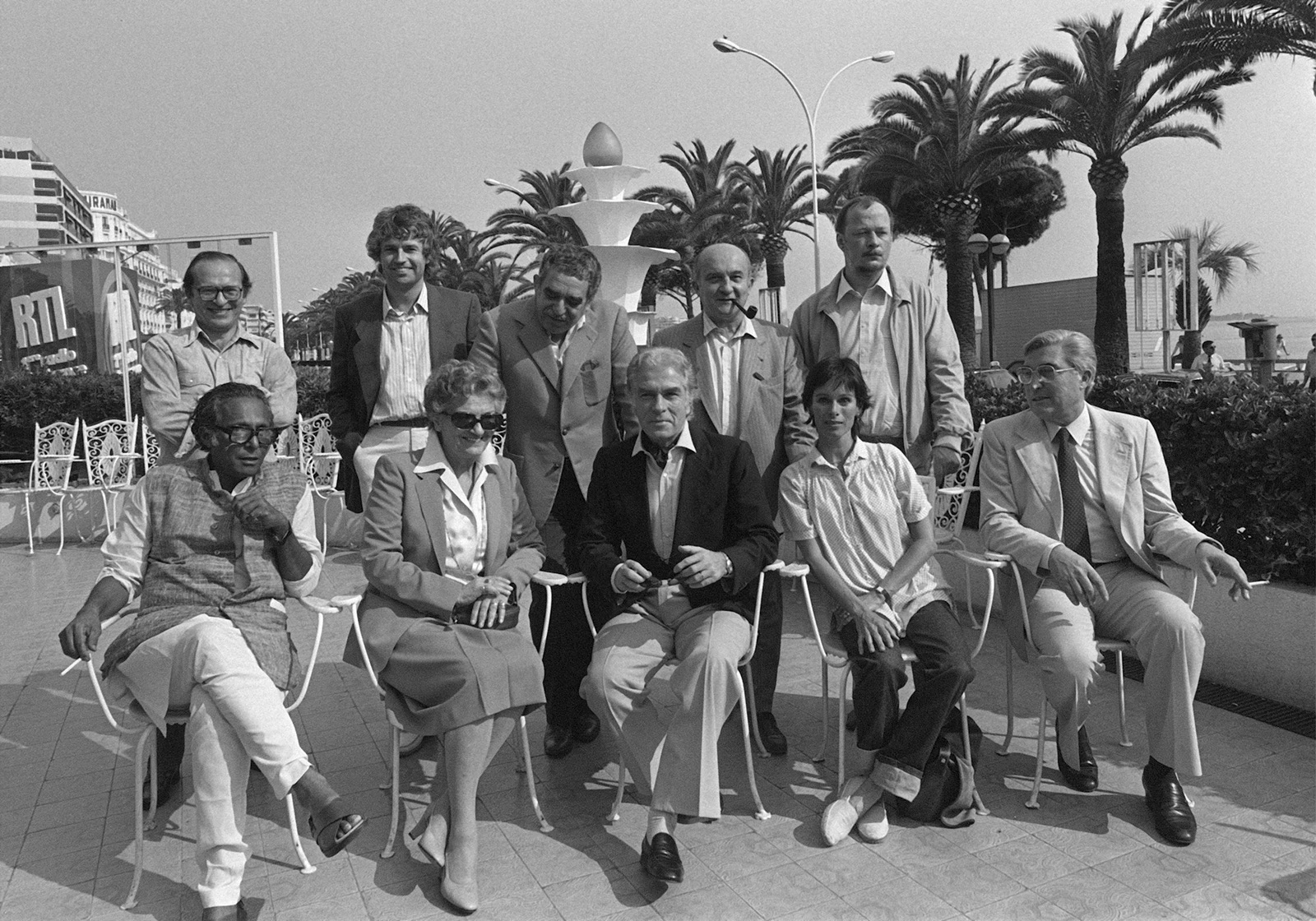
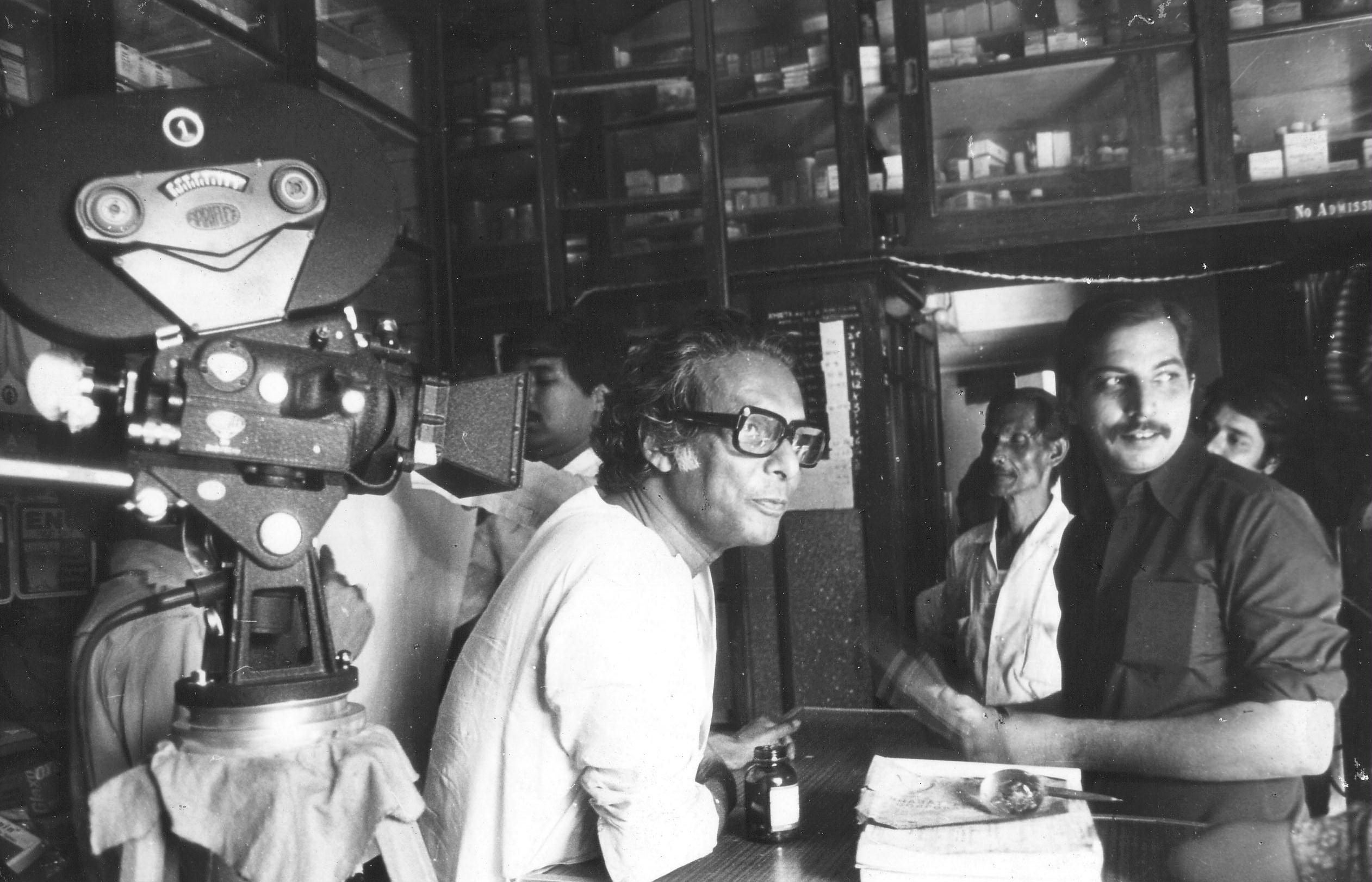
Beyond his radical aesthetics and political commitments, the essence of Mrinal Sen lay in his personality: restless, curious, argumentative, and deeply engaged with ideas. With his silver hair, thick-rimmed glasses, and sharp voice, he often seemed like someone perpetually in conversation with the world around him. He lived through discussion and debate, both within and beyond his films. Conversation itself became part of his creative practice, and he often spent long hours speaking about cinema, politics, literature, and society. He also maintained close relationships with film students and young filmmakers, particularly through the Film and Television Institute of India, where he served as president. There, he interacted with and influenced a generation of filmmakers, including Kumar Shahani, Mani Kaul, John Abraham, and others who later became major figures in Indian parallel cinema. For Sen, cinema was never merely technical; every cut, movement, or silence carried thought and responsibility. In 1982, he also became the first Indian to serve on the jury of the Cannes Film Festival.
Mrinal Sen remains one of the defining voices of South Asian cinema. His journey from Faridpur to international recognition was driven not by ambition alone, but by intellectual honesty and political awareness. He was a filmmaker who refused easy answers, a humanist who avoided sentimentality, and a thinker who used cinema not to comfort society, but to question it. His films continue to matter because the questions they raise about class, morality, and judgement remain painfully alive even today.
Note: The information, anecdotes, and biographical details about Mrinal Sen are primarily drawn from his memoirs Tritiyo Bhuban (Ananda Publishers, 2011) and Always Being Born (published in 2004).
Md Rabbi Islam is a filmmaking student and writer; he can be reached at mdrabbi_islam@icloud.com.
Send your articles for Slow Reads to slowreads@thedailystar.net. Check out our submission guidelines for details.
How Milad-un-Nabi shaped Muslim cultural life in colonial Bengal
What Rashomon teaches us about truth and human behaviour

Why Chittagong never became a maritime city
The many worlds of Ghulam Murshid

Operation Jackpot: How Bangladesh’s naval commandos struck at Pakistan’s lifeline in 1971
The Yellow Butterfly: How Sheba shaped my world growing up

What Bangladesh’s historic Test victory in Australia means for Bangladeshi-Australians
Remembering Sumit Sarkar, a historian who questioned orthodoxy
The unfinished histories of Partition