


Reviving Bengal’s oldest songs: The Charyapada today

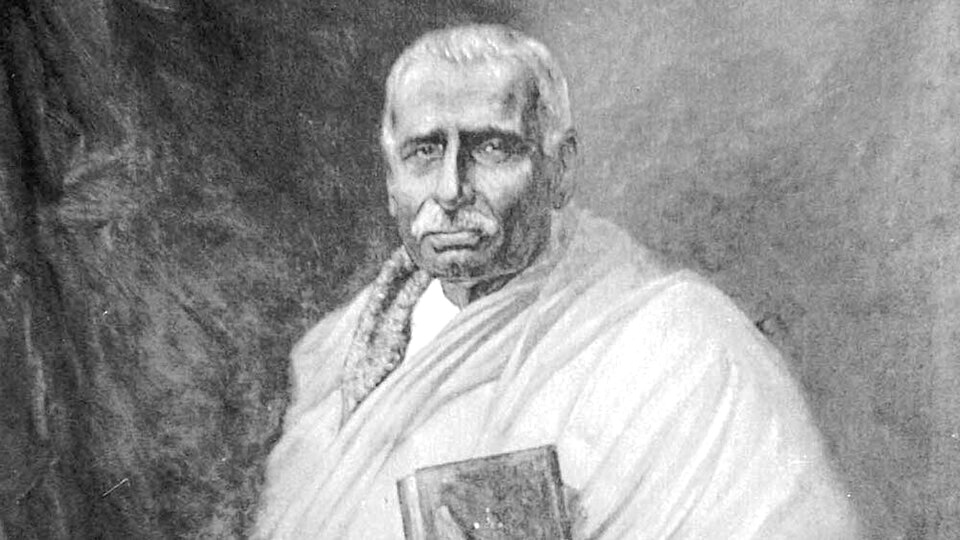
When Haraprasad Shastri discovered the Charyāpada in the early twentieth century at the royal court of Nepal, the history of Bengali literature and culture had to be rewritten. A new era began in the study of the Bengali language and literature. It was as if the “inner knowledge” of a people—submerged for a thousand years in darkness—suddenly glittered in the light. The tide of self-discovery that rose within the Bengali intelligentsia after Shastri’s breakthrough remains, even today, the foundation of our unique cultural self-identity.
The priceless manuscript that Shastri uncovered in Nepal was edited and published in 1916 under the title Hajar Bacharer Purano Bangala Bhashay Bauddhagan o Doha (Buddhist Songs and Dohās in a thousand-year-old Bengali language). In the preface to the book, Shastri wrote with astonishment, “In 1907, after going to Nepal, I happened to see a few manuscripts. One of them was titled Charyācharyāvinishchaya, which contains several kīrtana-like songs accompanied by Sanskrit commentaries. The songs resemble the kīrtanas of the Vaiṣṇavas; they are called ‘Charyāpada’” (Shastri, 1916: 4). From the very first encounter, he realised that these were ‘gītapada’—verses meant to be sung. They belonged to music, performance, cadence, and rhythm.

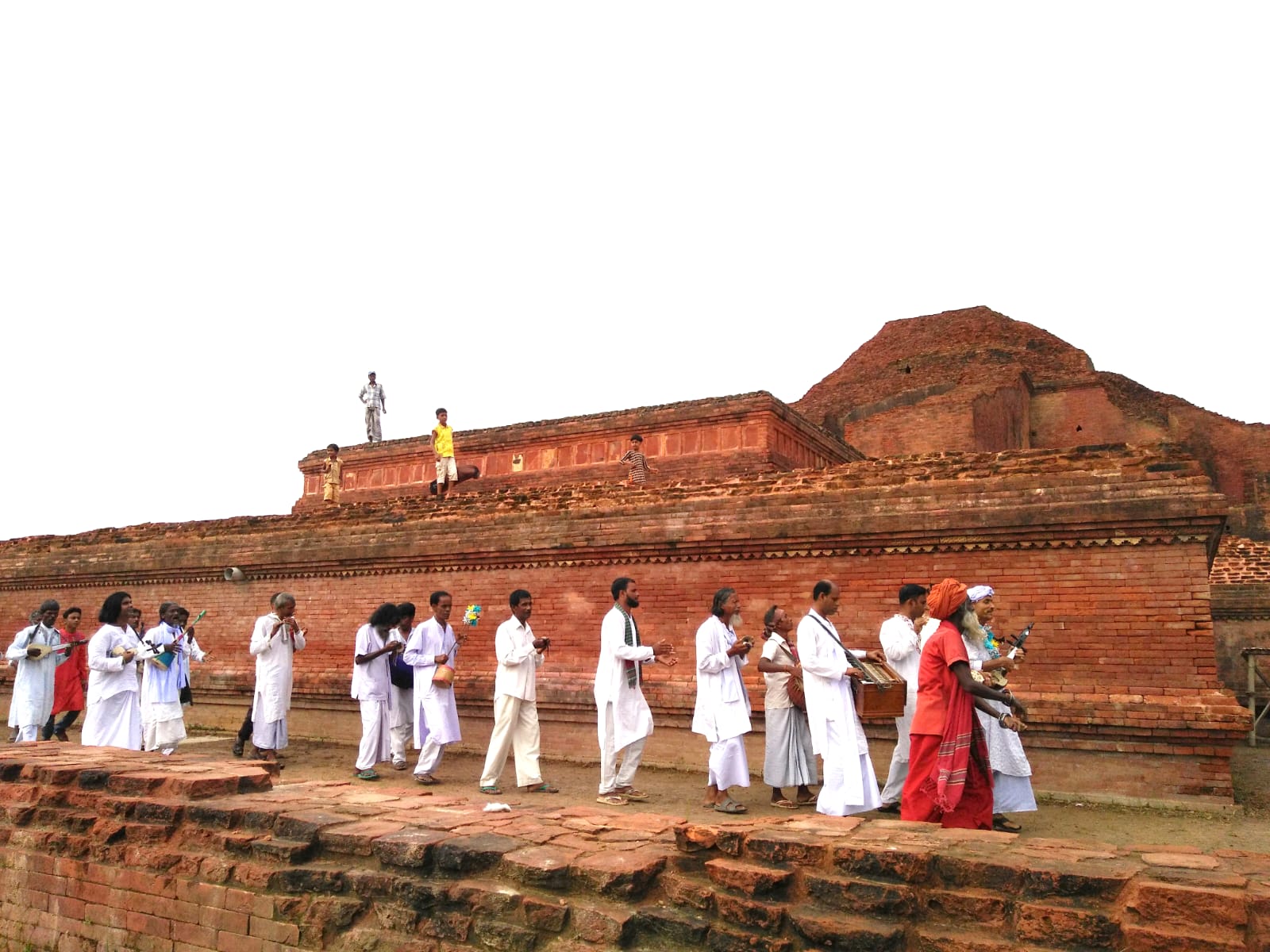
Scholars now unanimously agree that the Charyāpada were not merely sung but performed within diverse religious and social contexts. The composers themselves were singers, instrumentalists, and sometimes actors, dancers, and interpreters. The performance of the Charyā was inherently multi-layered. As most people of that wider region were non-literate, the complex spiritual symbolism and philosophical metaphors embedded in the Charyā relied on age-old art forms—melody, dance, drama, and instrumental music—for transmission. The performance of the Charyāpada functioned as a vehicle of social reform and knowledge dissemination—right here in our own land. Few may know that the two most prolific composers of the Charyāpada—Kanhupa and Virupa—were resident teachers at the historic Paharpur Buddhist Monastery. Manuscripts preserved in Nepal and Tibet also show that the famed Vajrayāna master Atīśa Dīpaṅkara Śrījñāna of Bikrampur safeguarded copies of the Charyāpada.
Historians note that between the 6th and 12th centuries CE, the Charyā exerted a profound influence on the socio-cultural life of Bengal and neighbouring regions. However, with the end of Buddhist rule, the continuity of Charyā practice was ruptured. Emerging political forces and their allied social groups played active roles in erasing the Charyā tradition. Although we can no longer say with absolute certainty why or how such a vibrant cultural stream fell silent across such a vast region, some assumptions remain plausible: caste hierarchies, the rise of power-centric religious ideologies, and the expansion of coercive orthodoxy likely sought to suppress the liberatory humanism and independent spiritual practice embodied in the Charyā—much like how recent decades in Bangladesh have witnessed violence and intimidation against Bauls, Boyatis, Fakirs, and folk performers.
But culture is like a river. A river is a living being; so is culture. One may obstruct it, but cannot kill it. The flow of music—the core element of culture—may be diverted, but is never extinguished. As long as a single bird survives, it will sing; as long as a single river exists, it will find its own path to the sea. In that same eternal logic, people’s music too, continues with even greater vitality. Music is intertwined with human life, with nature, with living beings so deeply that no cultural stream can ever be stopped forever.
It is thus reasonable to say that the Charyāpada never fully vanished from human life; it remained dormant. Avoiding social fear and prohibitions, it survived like an invisible current in specific, limited spaces. In parts of Nepal, the “Chacha” performance tradition—directly descended from the Charyā—persisted quietly. In Bangladesh, however, the educated classes long regarded the Charyāpada as a cryptic, sacred, manuscript-bound text—an object of study rather than a living cultural form. An ideological fear was cultivated; that if the Charyāpada were revived as living culture—in contemporary language, voice, and melody—the purity of class-defined sanctity might somehow be threatened. As a result, for more than a century after its discovery, most attempts at performing the Charyāpada were scholastic, notation-bound, and rendered in the original archaic language that remained nearly incomprehensible to the common folk. Consequently, the Charyāpada never entered the everyday life of the greater community beyond classrooms and research tables.
But the logic of culture functions differently. If even a tiny seed of an ancient tradition survives somewhere, it can awaken again in the right hands. It can assume new forms. Heritage can be reborn. Yet, just as one cannot bathe twice in the same river because the river keeps flowing, cultural elements too are fluid, transformative; they do not remain unchanged. And in the present context, the practice of the Charyāpada confronts some fundamental questions: What was the authentic form of Charyā performance? How were the songs sung? They were surely recited as well, but what was the tonal or performative character of them? No recordings exist. What we do know is that all major scholars—Haraprasad Shastri, Dr Muhammad Shahidullah, Rajyeshwar Mitra, Sukumar Sen, Shashibhushan Dasgupta, Nilratan Sen, Ahmad Sharif—agreed that the Charyāpada were sung. The greatest evidence lies in the ragas and raginis mentioned above each verse. But ragas and raginis themselves are impermanent; they evolve. Consequently, those who have attempted to sing a few Charyāpada in recent times have largely failed to touch the hearts of connoisseurs.
Traditions fade, transform, and new traditions arise. With changes in modes of production, economic shifts, climate change, 'religio-social' psychology, technological transformations, and political or geographical upheavals, human perspectives and cultural consciousness inevitably change. It is therefore clear that the performance form of the Charyāpada, as it once existed, will not return. Nor is that necessary. In fact, transformation across generations is essential to the vitality of heritage itself. And this is the most meaningful way to remain connected to one’s cultural roots. It is in this very logic that Bangladesh is witnessing a renewed flowering of the Charyāpada.
Bangladesh is fortunate—the Charyāpada has awakened. And what a remarkable renaissance it is! Across the country—from the historic Paharpur Buddhist Monastery to Kushtia, Pabna, Netrakona, Kishoreganj, Chuadanga, Madaripur, Cumilla, Sunamganj, Barishal, Patuakhali, and Dhaka—Bauls, Fakirs, and folk artists are performing the Charyāpada. In their voices, the Charyā has found new life, new form, new language. Through contemporary folk melodies, native pronunciation, and the idiom of modern-day people, the Charyā has returned to Bengali homes once again.
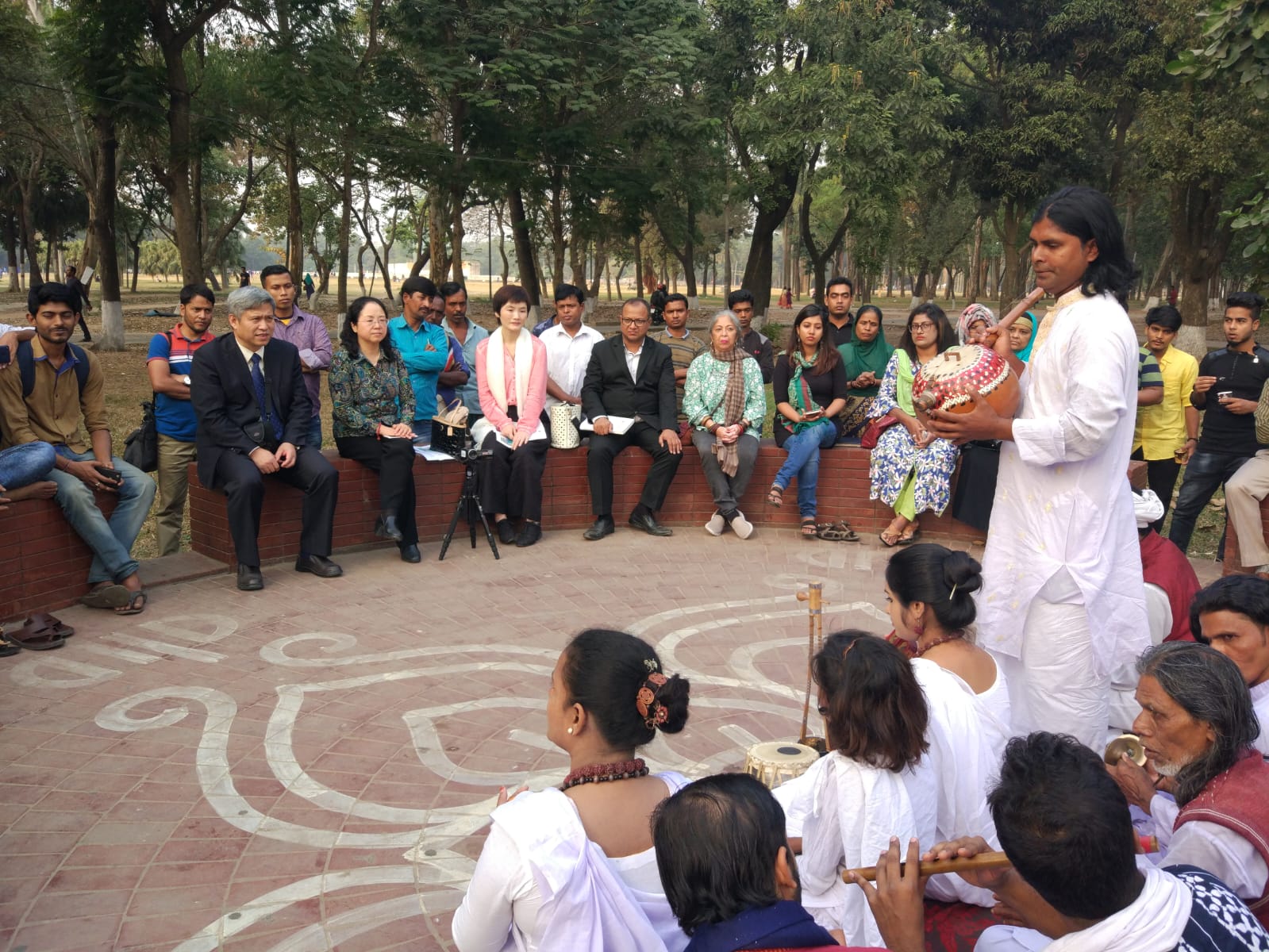
For over a decade, every Wednesday afternoon at Dhaka’s Suhrawardy Udyan, the Bhābānagar Foundation—an organisation devoted to cultural research and practice—has been hosting a regular Charyāpada gathering. To date (26th November 2025), the Bhābānagar Sadhusangha has held 578 sessions of Charyā singing. In 2024 and 2025, they organised two successive Charyāpada Reviving Festivals with participation from national and international figures. There is no comparable example in Bangladesh of such sustained, dedicated, spontaneous practice of cultural heritage. Ordinary people, foreign researchers, passersby, students, professors, artists—all gather there to witness with their own eyes the living performance of the Charyāpada.
From here, the Charyāpada has reached the world. Artists in Europe, America, Japan, China, and Sri Lanka are learning and performing Charyā songs—in Bengali. The Department of Music at the University of Chicago has included revitalised Charyāpada songs in its curriculum. Bangladeshi practitioner Srijoni Tanya teaches the Charyā to the students from around the world and tirelessly brings it to global stages. She has organised Charyāpada sessions at the University of Chicago and in Japan, Nepal, Hungary, Germany, France, and other countries. Alongside this, the Bangladesh Shilpakala Academy, the National Museum, Bangla Academy, Bangladesh Television, and various university music departments are contributing significantly to the revival of the Charyā tradition.
At the heart of all this stands one person—Dr. Saymon Zakaria. Through his research, lyrical translations, immense patience, and unwavering conviction, the Charyāpada has ceased to be merely the name of an ancient manuscript and has become a living musical heritage. Through his solitary yet indefatigable efforts, the Bauls and Fakirs of Bangladesh have made the Charyā accessible to all—simple yet majestic.
The extraordinary cultural logic behind this renaissance among Bauls and Fakirs can be traced to the writings of Ahmad Sharif. Sharif argued that the poet–saints of the Charyāpada were the earliest Bauls of Bengal. The words “Bajil” and “Bajul” used by the poet–mystics Bīṇāpā and Bhadepā are, according to him, the proto-forms of the word “Baul” (Bajil > Bajul > Baul).
Yet the culture of fear that now threatens traditional Baul and Fakir communities casts a shadow over the efforts to revive the Charyāpada. But Baul artist Shah Alam Dewan speaks with firmness: “Deep within the Charyāpada lies the primordial self-knowledge of the people of Bangladesh. When sung in contemporary language and popular melody, people instantly recognise that this is our own source of wisdom.” But this valued revival also requires the awakening of listeners and readers—those who love music, who love the intangible cultural heritage and who wish to know the origins of Bengal’s literary and musical consciousness.
Nurunnabi Shanto is a short fiction writer and researcher specialising in intangible cultural heritage.
Send your articles for Slow Reads to slowreads@thedailystar.net. Check out our submission guidelines for details.