The alchemy of sweet-making in Bengal
Across ‘Epar and Opar Bangla’, sweetshop owners complained about a need for more skilled craftsmen and nostalgia for senior karigar/ustad. During the early days of fieldwork in Bangladesh, I realised that, similar to Mayara, the word karigar was redundant. On one occasion, when I asked a sweetshop owner if I could meet the senior karigars, he directed the salesman to call “ustad”. I was a bit puzzled. Halfway into the conversation about his life in Alauddin Sweets, I asked Md. Zakir Hussain if ustad is an equivalent term of karigar, and he replied, “No”. “Here we use the word 'ustad'. If anyone uses the word karigar, it will be seen as an insult. Let me share an example: in case someone makes a mistake, we tease him and say you have proved you are a karigar”.
In a discussion with Professor Manosh Chowdhury of Jahangirnagar University about this semantic shift, he cautioned me not to be reductive, as ustad as a term of address cuts across professions, embodying craftsmanship. Ustad, also spelt and pronounced as Ostad, is used as a mark of deference. In a Bangla short story authored by Chowdhury (2014), the protagonist visits Sakhari Bazaar in Puran Dhaka (the older part of Dhaka) to buy a harmonium for his colleague. The person at the shop refers to the protagonist as Ostad and mistakes him as someone who might be a master performer, either with the travelling theatre form called Jatra or the devotional musical genre Kirtan. The protagonist refutes both these claims and tells him he teaches at a local college. Both the protagonist and the seller of the harmonium, who is both skilled at repairing the harmonium and singing, refer to each other as Ostad. The story takes us through the life of a craftsman who closes the harmonium shop because the number of people in travelling theatre and devotional music is dwindling, and by the end of the story, they meet again on a train after three years when the skilled craftsman-singer has joined a “polio party” as a singer as part of a polio vaccination camp.
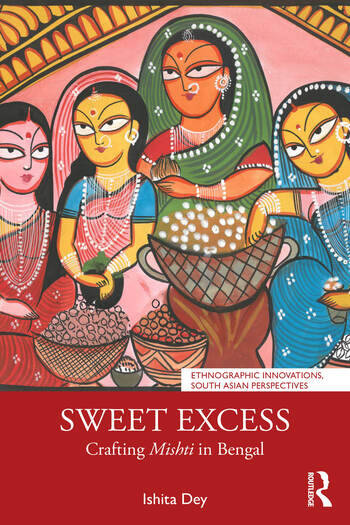
The life of craftsmen and craftsmanship is best captured in the story because by the time I started writing the book, some of the interlocutors I had interviewed as part of my PhD, had moved to another line of work. When I returned to Krishnanagar in 2017 with a copy of my dissertation, Krishna Sanyasi, one of the skilled karigars in the shop of Bijoy Moira, had opened his flower business. Hearing that I would be coming to the shop, he met me. I asked him if he was tired of sweet making. He said, “Everyone wants to try different things. Something new." As he ran his finger over his name, he remarked, “At least I will be remembered as a shilpi”. The word shilpi implies artist. Derived from the word shilpo, which is used for art, craft, and industry. Both Krishna Sanyasi and Zakir Hussain take pride in their art and craft of sweet making and achieving the status of a karigar and ustad respectively. They are well aware of the long hours of work, not being able to return home during festivals, and most importantly how they have adapted to the changes, how they need to innovate, and how a new product is a synthesis of tacit knowledge of the entrepreneur and skilled craftsmanship. Two karigars at Jalbhara Surjya Modak and Bijoy Moira remind me that their owners know each and every stage of the work. And they clarify, “They have to know to run the business. They might tell you because they belong to the legendary families of Mayaras, but they learned in their own way and we learn in our way”. Most of the karigars/ustads and people at other levels of work hierarchies pointed to the palm of their hands and said, “This is our everything.” The faith in skill is mainly translated through figures of speech about hands, gestures, and most importantly, developing an andaz. Andaz is the Bangla word for sensibility, and across 'Epar and Opar Bangla', in each of the interviews, the craftsmen tell me about the significance of the development of andaz.
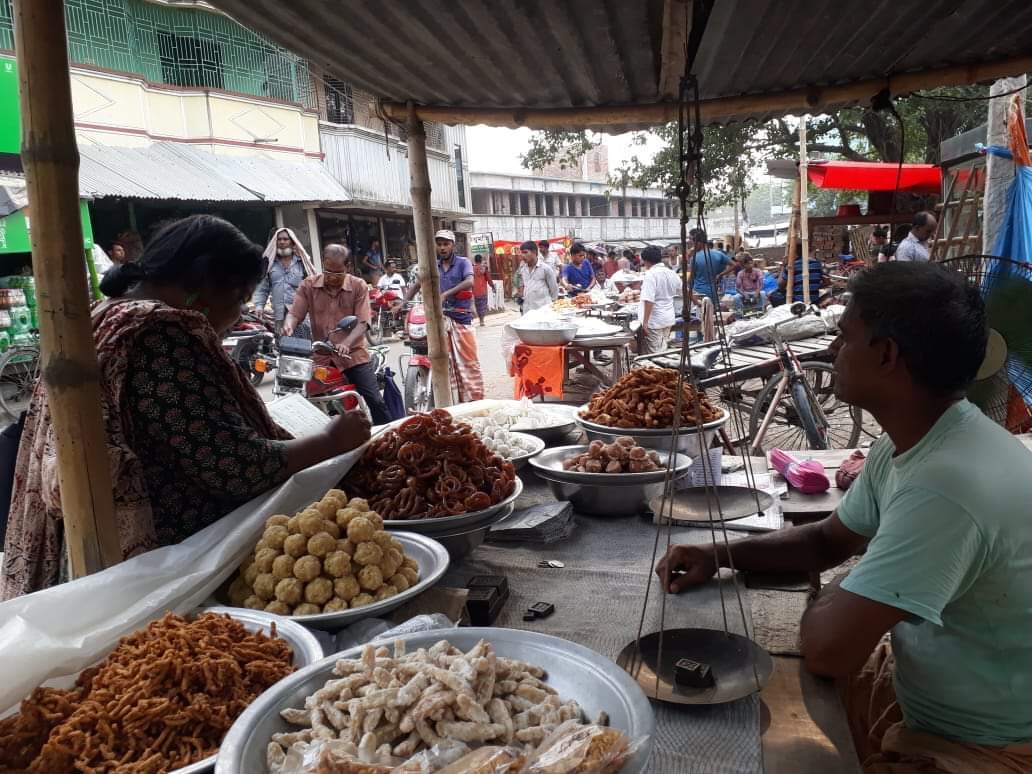
Sukumar Ghosh took portions of cooked paste to roll in his palms while sharing his life as a half-karigar. He checked the weight of five pieces of sweets on the weighing scale. He exclaimed with pride that each of the sweets weighs the same. He said, ‘Andaz hoye gechhe’ (I have developed a sense). Andaz is a common word used to communicate a sense of proportion, taste, and texture of any raw ingredient or cooked paste. Andaz is used to communicate the knowledge that the worker has developed through years of experience. Andaz, or the development of a sensibility, is key to the survival and making of a karigar/ustad. Most of the workers who have transitioned from being a helper or mehter to a karigar/ustad share that much of the transition from one stage to another is about working on andaz. As Sukumar Ghosh explains, andaz is not restricted to measurements of ingredients in a particular recipe but is about adapting the theoretical to the practical, developing an eye for detail in translating the recipe into the product. He explained to me the stage-by-stage process of preparing a khaja, a flour-based fried sweet sold especially during Diwali. The dough is sealed with a wet muslin cloth, followed by kneading.
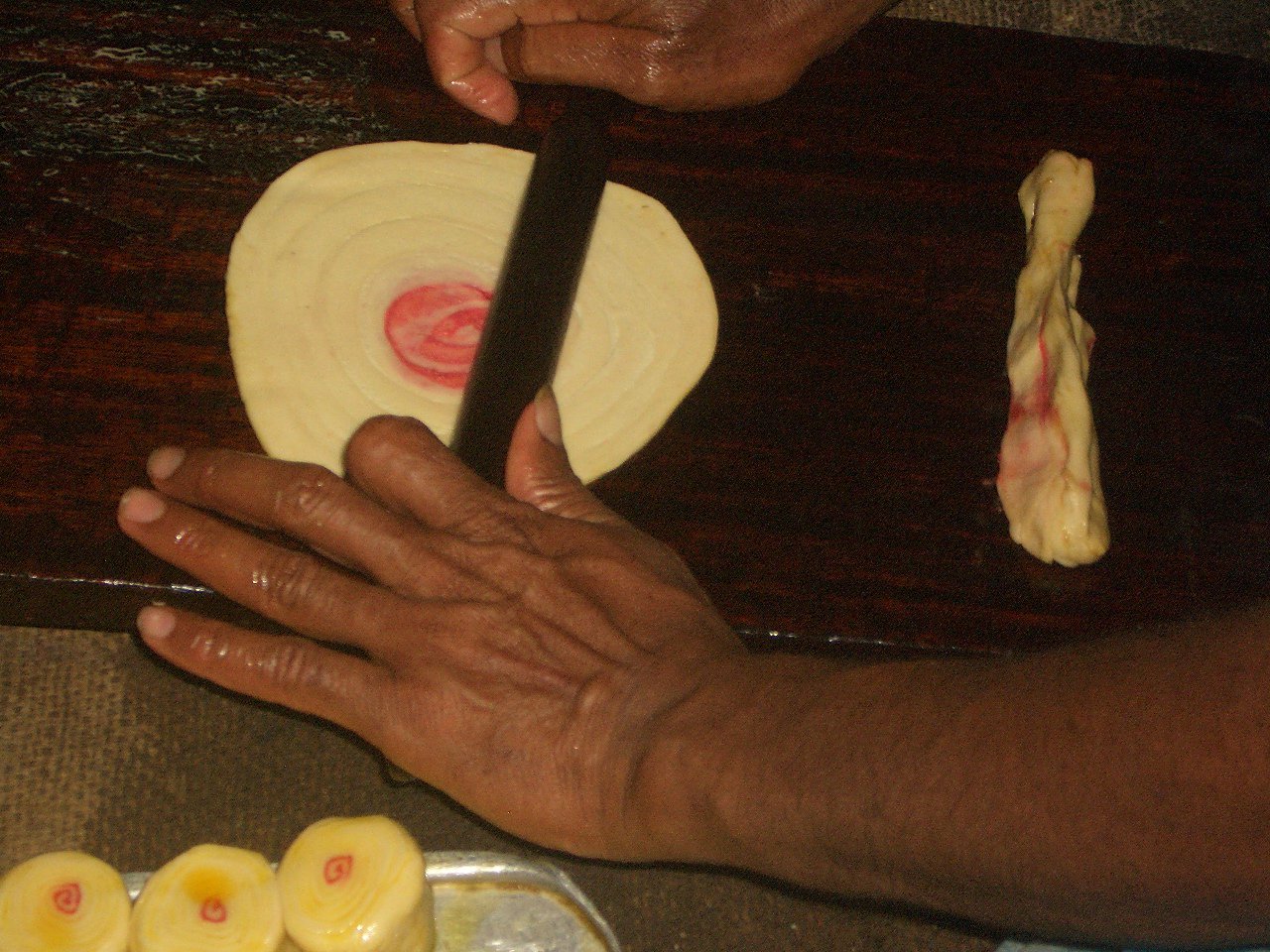
When the workers started to knead the dough, Sukumar Ghosh remarked, “See the way they are kneading the dough. You have to push back and forth and apply equal amounts of pressure to all parts of the dough. It really depends on how you treat the dough at this stage. Watch it carefully”. Since it was a festive season, Swapan Ghosh took over kneading the dough. As a head karigar, Swapan Ghosh’s years of training and development of andaz are useful in treating the dough. While other workers helped to grease the wet cloth with oil and seal the kneaded dough, Swapan Ghosh did most of the kneading, followed by Shaila Bhor, another worker with years of experience. Since this sweet was available on select three days and involves an arduous process of ‘getting the dough ready’, it involved maximum effort from skilled workers. Saibal Kumar Modak (the owner) commented, “Previously, katrar karigar (worker skilled with flour-related items) would prepare such items.” Most shops do not have separate workers for flour-related work.
Despite the mechanised production unit of KC Das, Bengaluru, the idea of andaz is implicit in the everyday laboratory procedures and in preparing the cooking paste. Most of the workers tell me about the standard method of texture stabilisation of rosogolla, and the proportion of the lab-mix they need to add to prepare probiotic yoghurt. Yet, a worker said he could figure out the paste is cooked if it sticks to the taru.
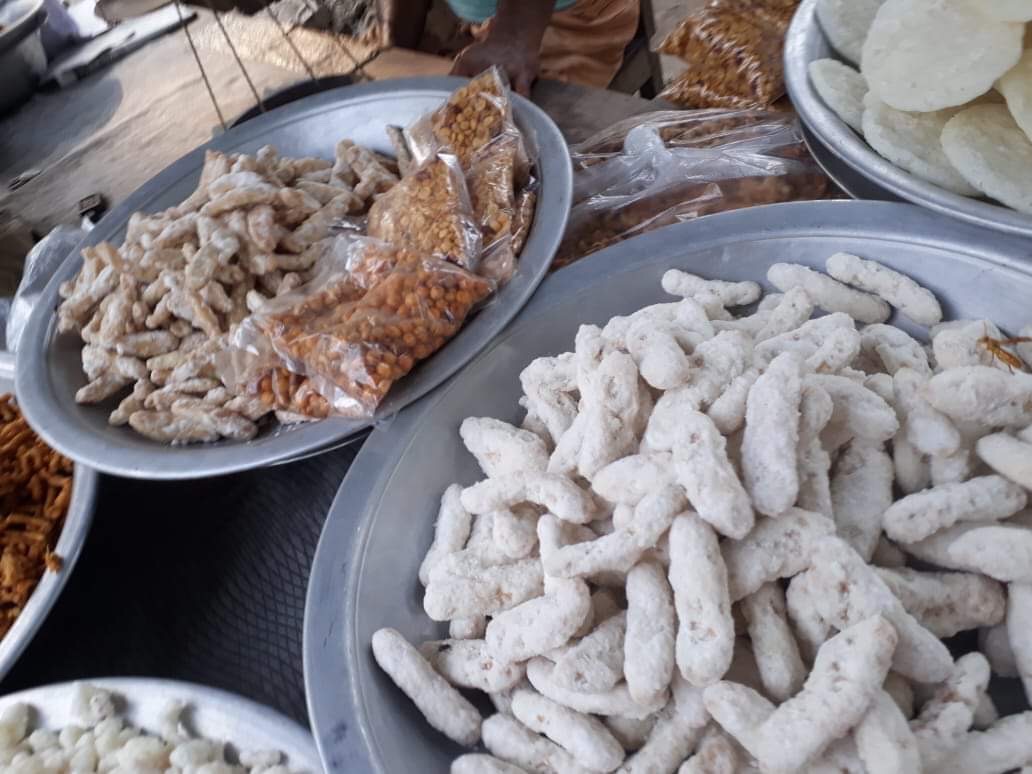
Andaz is one of the most common words I have come across in 'Epar and Opar Bangla'. Andaz was used to communicate a sensibility, a sense of approximation, and at each stage of work hierarchies, the development of andaz meant different things. Md. Masud remembered Md. Suman, who was his ustad. Md. Masud was one of the few craftsmen who could rise up the ladder in the same sweetshop. Recounting to me the journey of a met, he said that as a met, one learns about proportions, ratios of sugar and milk for barfi. Then slowly one gets to learn about consistencies of sugar syrup. “In our line of work, you have to learn by doing”. Yet no senior craftsman wants to leave their work unattended, so the met has to earn the confidence or wait for an opportunity to prove that he has trained his eyes and will be able to translate that learned vision into practice. A helper and/or met has to learn to see, observe and smell. The first step of developing an andaz is training the eye to sense without touching. Md. Zakir Hussain recounts that andaz comes with experience. For Kamal Aich, andaz comes with an ability to see, and to translate that seeing into imagination. For Sukumar Ghosh, andaz is about repetition and practice. Andaz is used in multiple senses to communicate how a worker trains his vision.
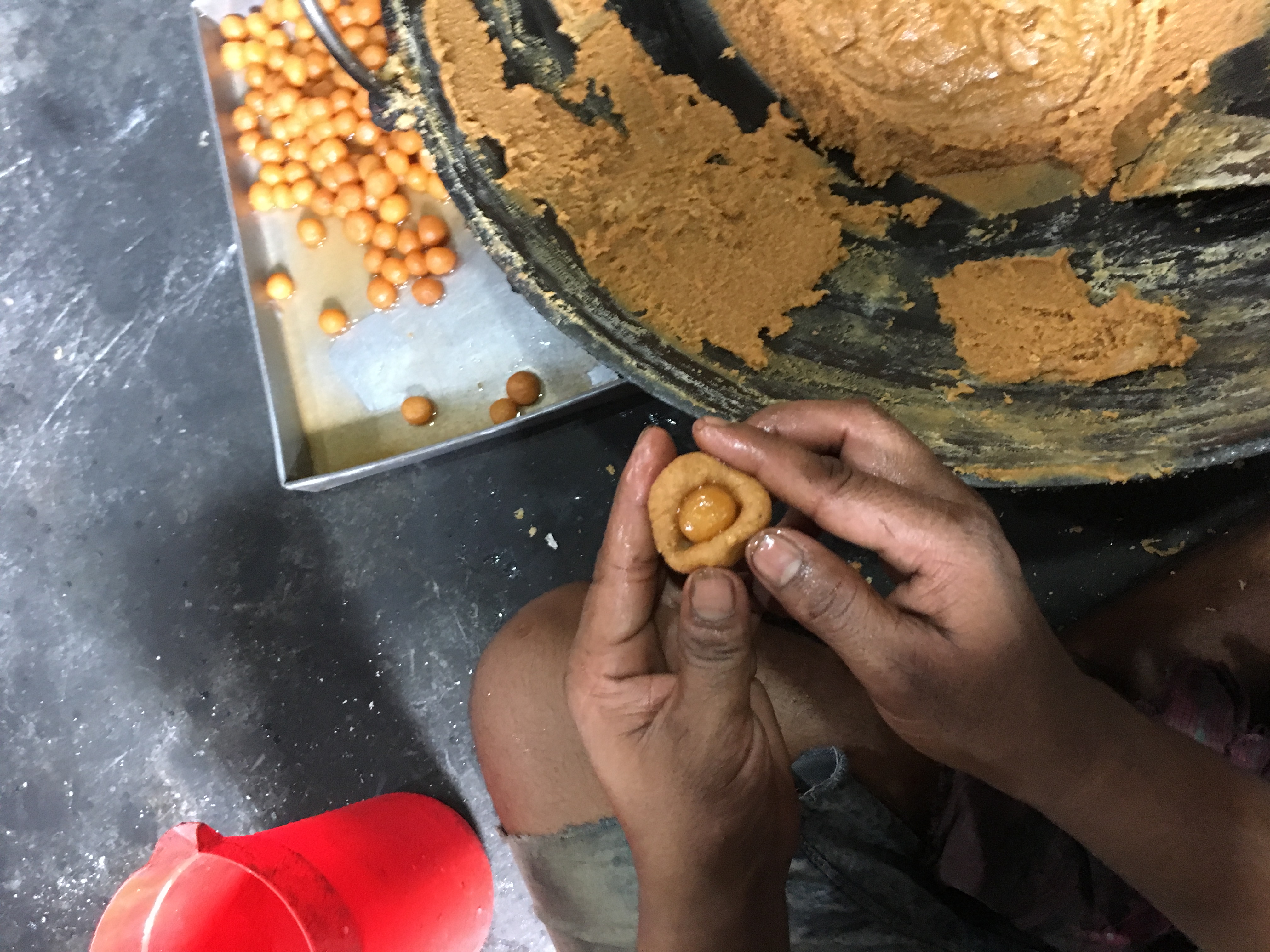
Skilled vision can assume varied forms. In the case of Bogurar doi, time and again across factories/karkhanas, workers emphasise the need for an experienced eye. Doi is a fermented milk dessert. The producers of Bogurar doi take pride in quality milk, quality air and quality water that shapes the ecology and production of Bogurar doi. They also emphasise the craftsmanship needed to keep a check on the proportion of sugar because “not all milk is the same. Even after undergoing a lactometer test, you need ‘experience’ to sense how much sugar is to be added”. “We don’t taste as we go along,” observed another worker. The previous worker continued, “So we need an experienced eye to know exactly the proportion of sugar that is to be added to reduced milk and mix it well”.
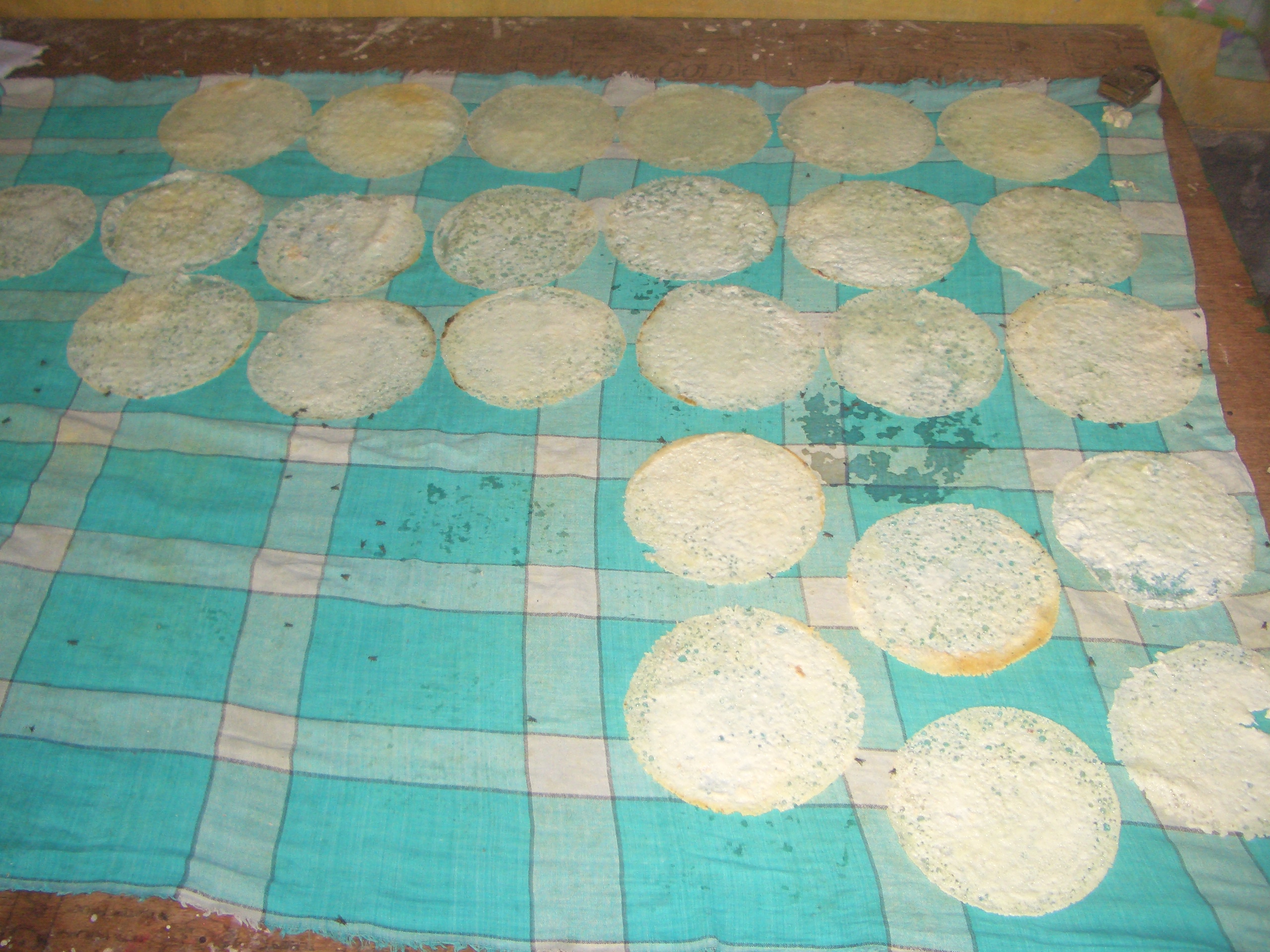
One of the workers asks me to join him in the area where this reduced boiled milk with sugar will be added to clay pots. The clay pots are flat-bottomed and are called sara. One of the important tasks before adding the mix of reduced sweetened milk with the previous day’s curd and milk is to disinfect the sara. The saras are left in the oven for some time and then are neatly arranged in circles around the burner of the oven. One of the senior workers, who had just finished boiling work, joins in and tells me, “Did they tell you they will add yesterday’s curd to slightly warm milk? … This is called beej/seed … without the seed no curd will set.” I wait for the clay pots to be ready. Two young workers take the clay pots with an iron tong and remove them from the heat and start arranging them neatly around the oven. By then, another worker takes the mix of sweetened reduced milk and “seed” and starts pouring the mix from a plastic jug into the clay pots. One of the workers asks me to take a photo of matal/chhati made from bamboo. As the workers finish adding the milk mix to the clay pots, they show me the bubbles that have appeared on the top. One of them quips, “After two hours, half of the milk we have added will dry up. After all, clay soaks up …”. Two workers tell us to move as they carry the jhapi/chhati/matal to cover the clay pots. One of them takes a round to check if there is any gap between the chhati so that “no heat escapes”.
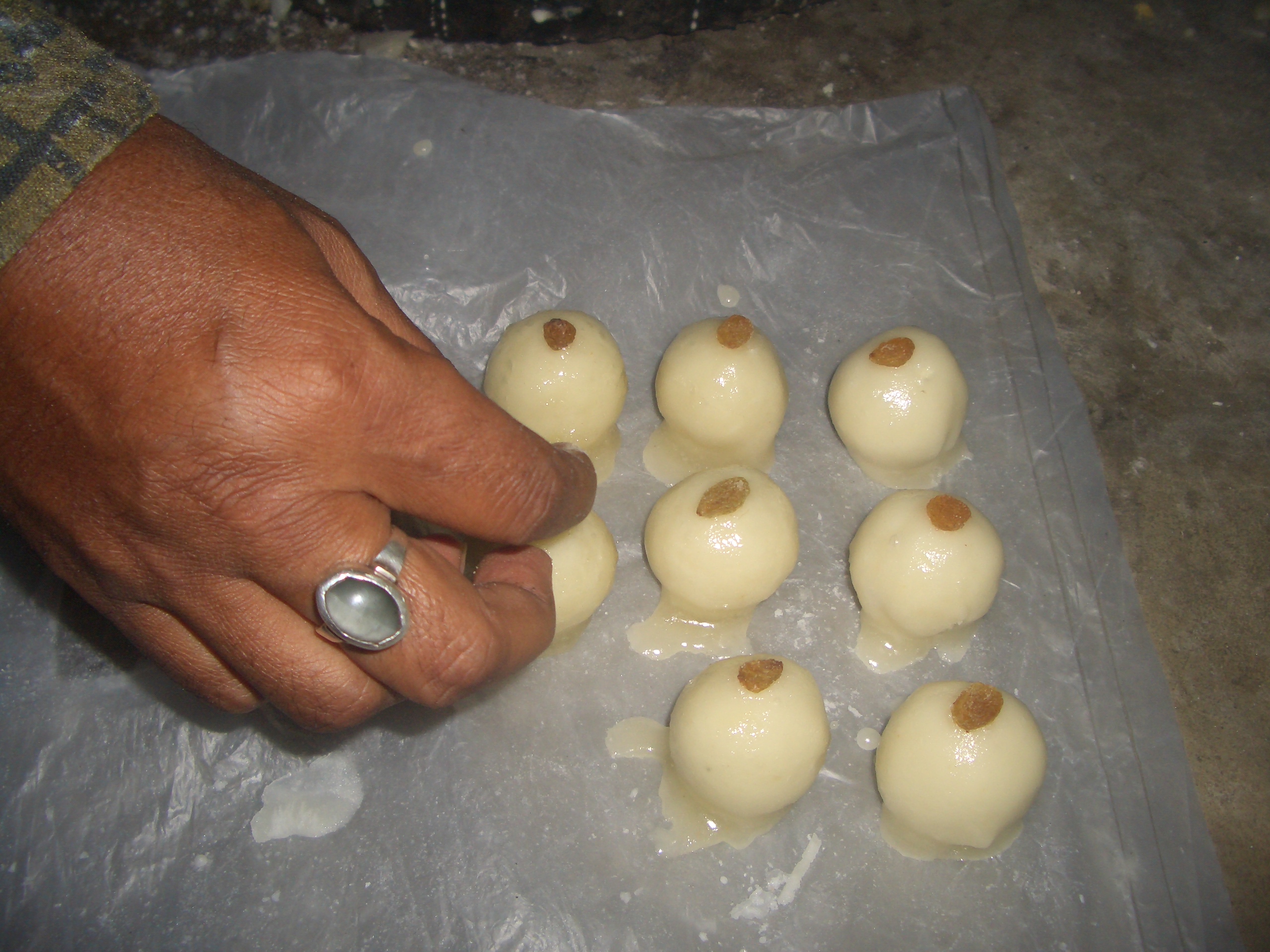
“Didn’t I tell you to add our ability to withstand the heat in the list of things other people told you – air, water?” observed one worker. A few hours later, the workers have to lift the chhati carefully and add sweetened reduced milk as the clay pot soaks up quite a bit of milk. This process, one of them tells me, has to be repeated twice. As I cross-check whether it is twice or thrice, one of the workers tells me that it is best to write that this process of adding milk will be continued till the milk is set to curd. Once the curd is set, small bubbles of milk cream deposits stiffen. Sometimes, black particles from the coal oven also get mixed. “Not all factories can afford a gas burner”. “Repetition” is key to training your hands and eye. “See, your eye is trained to see the hands move (drawing a circle) and then imitating the dabu move; similarly we work in ‘rhythm’.”
This article is an excerpt from Ishita Dey's book, Sweet Excess: Crafting Mishti in Bengal (Routledge, 2026)
Ishita Dey, PhD, is an Assistant Professor of Sociology at South Asian University, New Delhi, India.
Send your articles for Slow Reads to slowreads@thedailystar.net. Check out our submission guidelines for details.

APO 433: Dhaka’s forgotten post office of World War II
Dadabhai Naoroji: The man who exposed the economics of British colonialism

Untold stories of 1971 through private letters
The extraordinary journey of Atish Dipankar Srigyan

Forgotten story of Jeanette Van Tassel, the American woman who flew over Dhaka in 1892
Beyond 1947 / A personal essay
Abul Mansur Ahmad / A global quest in search of a nation
Chand Bibi and the forgotten history of Muslim women’s political resistance
Women’s voices in Nazrul’s Dhumketu