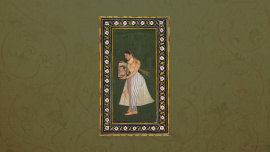
The Biryani excavation
What does Biryani represent in my life? It represents Eid, weddings, Friday afternoon lunches, Sunday dinners (in England), and the art of bringing together, in one dish, a perfect balance and layering of spices, meat, and rice. Given the many variations, it would take an encyclopaedia to include all the types. So instead, I thought I would start by examining the dish as a form of culinary stratigraphy – a layered record of the historical forces that shaped it. Like an archaeologist reading soil layers, we can read the distinct layers preserved within it: the Persian bedrock, the Mughal refinement, the regional adaptations, and economic circumstances. Each biryani is a fossil, and this article is an excavation.
The excavation gets especially interesting because, if you travel across India and Pakistan, most biryanis follow the Pakki (cooked) method, in which the meat is cooked before being layered with rice. Yet in Bangladesh, Kachhi (uncooked) biryani - raw meat and par-boiled rice are cooked together entirely at a low heat- this is the standard. This article will examine nine biryanis across the subcontinent, each representing a different historical layer.
THE BEDROCK
Layer 1: Persian Foundation (Pre-16th Century)
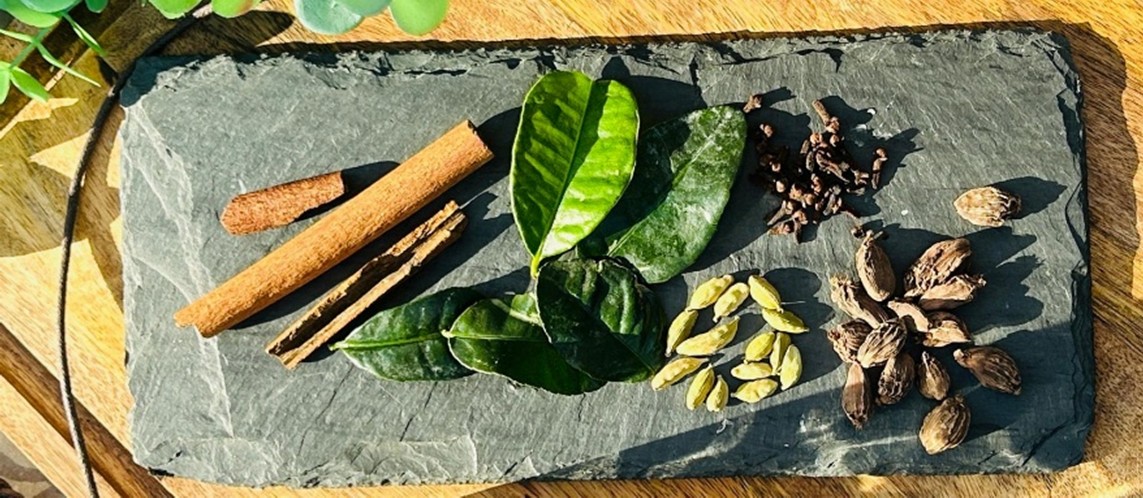
Before biryani, there was Pilaf. The concept of cooking meat with rice originated in ancient Persia and travelled to the subcontinent with armies, traders, and Sufi saints over many centuries. The word "biryani" comes from the Persian birian, meaning "fried before cooking", which refers to the method of frying rice and meat with ghee or oil before simmering with spices. During this period, the "dum" technique (sealing the pot and slow steaming) also emerged. This is the source, and these ideas, along with the spices, travelled the ancient trade routes and, on Indian soil, evolved into a series of diverse dishes.
THE EXCAVATIONS
Layer 2: Kacchi Biryani (16th Century)
Region: Awadh (Lucknow)
Kacchi biryani is the closest surviving relative of the original dish that accompanied Persian-influenced armies in the 16th century. It demands the cook trust the process completely—the same trust required of those early cooks who had no modern thermometers or timers.
To eat Kacchi biryani is to taste the 1600s. It is the archaeological bedrock of our excavation, the first Indian expression of the Persian idea. This Biryani originated in Awadh (Lucknow) and is defined by raw, marinated meat being layered with raw rice. The dish cooks entirely in the dum steam and has no pre-cooking of any component. It requires immense skill and perfect timing.
Layer 3: Dhakaiya Kacchi (1610 Onwards)
Region: Dhaka, Bangladesh
When the Mughals made Dhaka the capital of Bengal in 1610, officials poured in from Lucknow—and with them came their bawarchis, carrying the art of Kacchi biryani: raw meat and raw rice cooked together in dum.
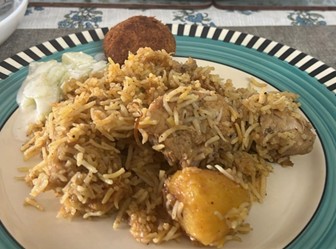
Back in Lucknow, cuisine kept evolving. Chefs developed the Pakki method for more control. But in Dhaka, far from the evolving centre of Mughal gastronomy, something different happened. The cooks preserved what they had brought, frozen in time. Over centuries, while Lucknow moved toward Pakki, Dhaka's Kacchi remained a culinary fossil of 17th-century Awadhi technique.
When the potato arrived in Bengal in the late 1700s, Dhaka's Kacchi tradition was already two centuries old and deeply entrenched. So, the potato simply joined the pot—absorbed into an ancient framework. Dhakaiya Kacchi is stratigraphy in a single pot: 17th-century Awadh, adapted by 19th-century Bengal, served in 21st-century Dhaka.
One person who led the flag for Kacchi biryani was Fakruddin Munshi. He learned dum cooking from a chef for the Nawabs of Murshidabad, then started in the 1960s running the canteen at Viqarunnisa Noon School.
Growing up in Bangladesh, I learned early that not all weddings were equal. There were weddings you attended out of obligation, and weddings you begged to attend. The difference was not the couple or the venue. It was the caterer. My mom would say, "Sabina, your father's colleague's niece's wedding is on Saturday. You should go." I'd groan. Then she'd add, "They're serving Fakhruddin biryani." And I'd be halfway to the closet yelling, "Fakhruddin? Why didn't you lead with that? What time? Should I wear something loose? My mom would just shake her head, laughing. Every Bengali child of my generation understood: you didn't attend a Fakhruddin wedding—you prepared for it. And when someone asked why I suddenly cared so much about a stranger's wedding? Simple. The name on the pot was Fakhruddin.
Layer 4: Lucknowi Pakki Biryani (18th-19th Century)
Region: Lucknow
While Kacchi biryani preserves the ancient technique, Lucknowi biryani preserves the courtly refinement of that technique. The Nawabs of Awadh were connoisseurs of fine living. Their cooks transformed the rustic Kacchi method into something more controlled, more elegant, more predictable. The Pakki method allowed for greater consistency—essential when feeding royalty.
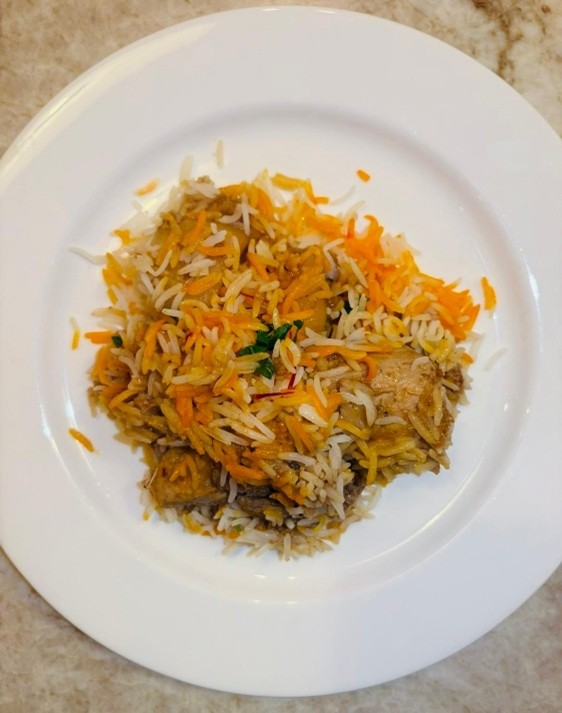
Lucknowi biryani is the layer where technique meets aesthetics. It uses the Pakki method—meat cooked separately before layering. It has a subtle, elegant spice profile —no single flavour dominates. There is a generous use of saffron, kewra water, and rose water. The meat is often browned in ghee before cooking (bhuna technique), and the dum cooking is gentle and prolonged
Layer 5: Hyderabadi Pakki Biryani (18th-19th Century)
Region: Hyderabad
When Mughal influence spread south in the 18th century, it encountered a different palate—one that favoured sharper, more pronounced sourness. The Nizam's cooks adapted the Lucknow template to local tastes.
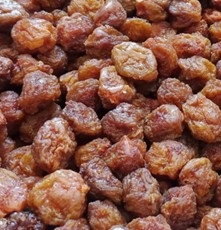
Hyderabadi biryani also uses the Pakki method (meat cooked before layering), uses dried plums (Alu Bukhara) for sourness—a potli ka masala—whole spices tied in a cloth and cooked with the rice, abundant use of nuts, saffron, and edible silver leaf.
Layer 6: Tahiri (Vegetable Biryani) (18th century)
Region: Hyderabad and across the Mughal courts
According to culinary historians, the vegetarian biryani called Tahiri (also spelt Tehri or Tehari) emerged during the Mughal period for a specific reason. Tahiri developed as a refined vegetarian dish that symbolised the Islamic influence on South Indian food while accommodating Hindu dietary practices.
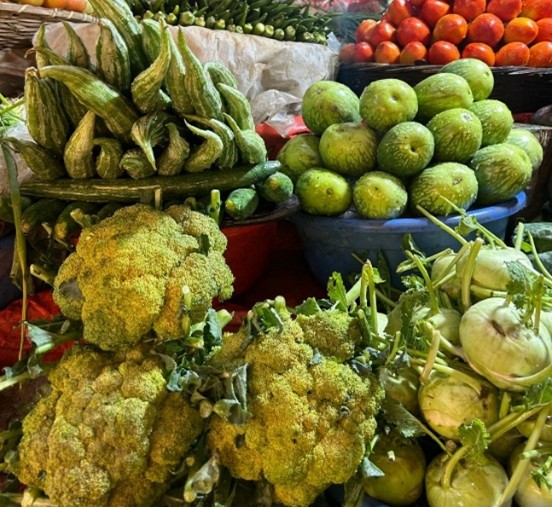
While traditional Indian Tehri relies on potatoes for flavour and texture, In Dhaka, Tehari evolved into a non-vegetarian dish consisting of short-grain aromatic rice, curried meat (beef or mutton), mustard oil, and intense green chillies.
Layer 7: Sindhi Biryani (14th-19th Century)
Region: Sindh (now Pakistan)
Sindh sat at the crossroads of Persia, Central Asia, and India for centuries. From the 14th century onward, caravans carried spices, textiles, and ideas through this region. Sindhi biryani was shaped by centuries of continuous trade. The result is the most intensely spiced biryani family—a taste of the spice corridor itself.
Layer 8: Kolkata Biryani (Post-1856)
Region: Kolkata, West Bengal
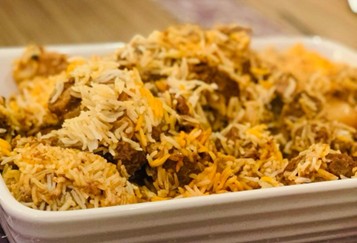
In 1856, the British exiled Wajid Ali Shah, the last Nawab of Awadh, to Calcutta. His entourage included his royal cooks. But in exile, there was no royal treasury. The cooks had to stretch the dish. Kolkata biryani does not just taste different. It tastes of history—specifically, the taste of poverty disguised as tradition. The potato is a fossil of exile.
Layer 9: Bombay Biryani (Late 19th-20th Century)
Region: Mumbai, Maharashtra
Bombay was not built by royalty but by commerce. In the late 19th and early 20th centuries, migrants poured into the city from Lucknow, Kolkata, and across India. Each community brought its biryani tradition.
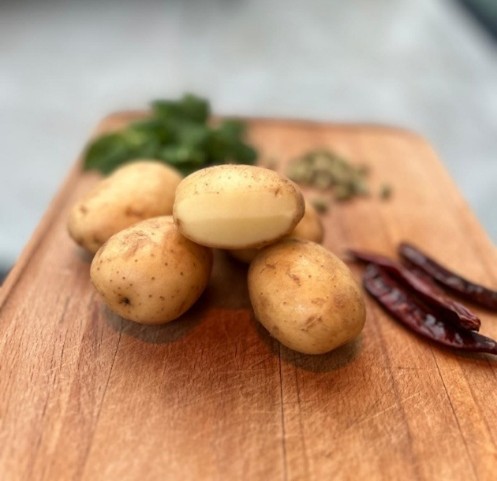
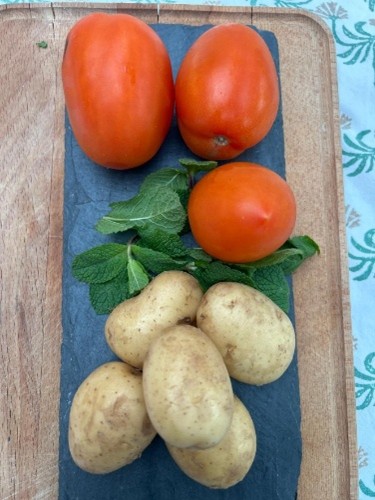
In addition to the meat, the Bombay biryani is defined by two humble ingredients that tell a story of migration and adaptation: the tomato and the potato. The tomato, a new world crop that arrived via colonial trade, breaks down into a tangy, vibrant masala -Bombay's signature contribution to the biryani family. The potato is borrowed from Kolkata's exiled cooks. Together, they represent the moment biryani left the royal court and became urban street food—adaptable, speedy, and unapologetically democratic.
In Andaleeb Wajid's novel “More than just Biryani,” biryani is the thread that connects three generations of Muslim women in Bangalore. The story shows how the dish is more than a recipe; it's a vessel for memory, identity, and love, passed down through generations. It’s a perfect example of how food shapes lives.
The next time you lift the lid of a biryani pot, pause before serving. The biryanis of the subcontinent are not variations on a theme. They are historical documents. They tell us who ruled, who traded, who migrated, who prospered, who struggled, and who accommodated. They tell us what grew where, what people could afford, what they believed, and what they dreamed of.
Tahiri, the vegetable biryani, teaches us something often forgotten. The Mughal project was not just a conquest. It was also an administration, and an administration required collaboration. Hindu accountants and bookkeepers sat in Mughal courts, managing the finances of an Islamic empire. They could not eat from the royal kitchen, so the royal kitchen adapted for them. A new dish was born, not from conquest, but from coexistence.
The Dhakaiya Kacchi teaches us something equally profound. Culinary traditions do not always evolve in a straight line. Sometimes they freeze. Sometimes they preserve what the source has lost. To eat biryani in Dhaka is to taste a version of Lucknow that only exists in small pockets in Lucknow itself. The past is not gone. It is simmering in a sealed pot, waiting to be excavated.
At Sabinasflavourlab, we believe food is never just food. It is evidence. And biryani—in all its glorious diversity—is the most compelling case study we have. From the ancient technique of 16th-century Kacchi to the urban hustle of 20th-century Bombay, from the refined courts of 18th-century Lucknow to the exiles of 1856 Kolkata, from the 14th -century spice corridors of Sindh, to the preserved 17th-century traditions of Dhaka, to the 16th -century accommodation of Tahiri—each pot tells a truth that no textbook can.
Follow along and taste history with me. Please feel free to comment, especially about a biryani that you enjoy that I may not have included in this article - and we can work to collectively build an anthology of biryani.
Sabina Khan, with an MPA from NYU and work experience in social enterprise, including founding the Social Enterprise Journal, Sabina now leads her culinary brand, “Sabinasflavourlab.” Find her on Instagram @sabinasflavourlab
Send your articles for Slow Reads to slowreads@thedailystar.net. Check out our submission guidelines for details.
Why Chittagong never became a maritime city
The many worlds of Ghulam Murshid
Operation Jackpot: How Bangladesh’s naval commandos struck at Pakistan’s lifeline in 1971

The Yellow Butterfly: How Sheba shaped my world growing up
What Bangladesh’s historic Test victory in Australia means for Bangladeshi-Australians
Remembering Sumit Sarkar, a historian who questioned orthodoxy
The unfinished histories of Partition
In conversation with William Dalrymple / ‘Britain didn't conquer India’
Sheikh Mujib’s killing: What the newspapers told and what they omitted