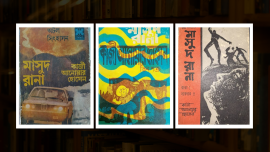
The forgotten art of Bengali advertising
I have never seen someone at a rustic village market, anklets jingling, shouting slogans for "Khol Company’s Ringworm Ointment." No smooth-talker has ever leaned in, fanning out thin booklets like a deck of cards, whispering rhythmically, "Here are the mysteries of Gopal Bhar, and here—the secret love letters."
I never hid colourful advertisements of a reclining Gauhar Jaan, cigarette in hand, between the folds of shirts in my drawer. I did indeed rummage through my grandfather’s pockets to collect old tram tickets, but none of them bore that curious notice for "Ashtavakra Toothpowder." Perhaps the elders of the house witnessed a tram tearing through the heart of a half-awake city, bearing the Khadi Pratisthan’s pledge for cow protection—but there was no question of me witnessing such a sight.
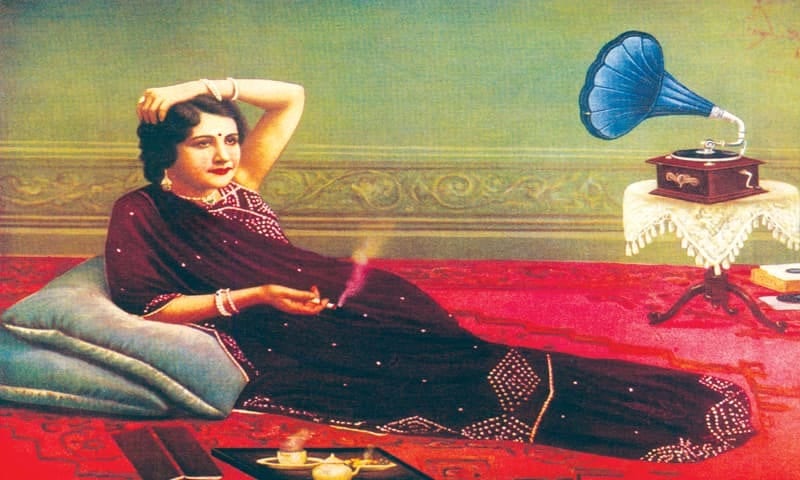
Someone’s great-grandfather might have known which drummers came beating the kara and nakara to announce, "Tonight at seven, the Chaitanya-lila folk play commences." I never heard the name of a young "lad" like Dhiren Bal, who reportedly painted the advertisement for "Himkalyan Hair Oil" at a three-way junction in Dinajpur.
While searching the Panjika (almanac) for the auspicious moment of a wedding, I never had the chance to chuckle at the suggestive illustrations for "Libido-Enhancing Tablets." On a morning shortly after Mahatma Gandhi’s assassination, I didn't sit with a newspaper wondering which artist, known only as "Munshi," had used swirling brushstrokes to sketch a portrait as a final tribute on behalf of some bankrupt cotton mill.
I saw none of this because I hadn't been born yet. Most of those who witnessed it are now gone forever. Yet, even without being born in that era, I have managed to 'see' it all. The old, withered newspapers and digital archives acted like Alibaba’s cave, revealing to me a lost jewelry box. To me, those vintage advertisements were not just pages of history; they were the precious Sita-har, the Jhumko, and the Nak-chabi themselves. I saw those 'ornaments'—the lost illustrations—and through them, I glimpsed a world that has otherwise vanished.
Actually, on a sudden whim, I spent a long time digging through ancient newspapers and periodicals. My eyes kept getting stuck on the bizarre advertisements still surviving on the faded, brownish-yellow newsprint of yore. I was looking, most of all, at the illustrations.
As I tasted this history, I remembered a book I read long ago: The Lost Tribes of Israel by Tudor Parfitt. Many believe that since the foreign invasions of Israel in the 8th century BC, at least twelve tribes went missing. Mr. Parfitt scoured the planet in search of them—a search that reportedly continues today. Some even believe the signs of those lost people are visible in the Afghans.
Looking at the drawings for old advertisements, I felt I found a resemblance between those legendary lost tribes and these forgotten illustrators. That is why the book came to mind. It also felt as though there was no such mismatch that could prevent us from linking these unknown artists’ ghosts to their successors, even without a DNA test!
The connection might be clear, but can we not grant them even a small corner in the history of Bengal's illustrative arts?
Renowned figures like the artist Raghunath Goswami continue to say—no, those advertisement drawings or ideas are not even worth considering. They claim it is a "mindless and indiscriminate simplification of art objects." They say the expression has neither grace nor form. Artistic value? Far from it!
For some reason, despite respecting the scholars' verdict, I grew stubborn. As I weighed the pros and cons, even the "ugly" artworks of those who drew advertisements for ringworm cures or hair-growth tonics began to pull at my eyes. I saw in them plenty of humour, and plenty of heartache too. Nevertheless, I began looking for a way to have a long conversation with those early advertising artists.
A representative of a "vanishing species" like O.C. Ganguly (Arun Kumar Gangopadhyay) introduced me to a certain "madman." He had a crow's nest of hair. His lower garment was draped over his chest like a shawl. He wore a striped vest. His hands were shackled in massive iron rings.
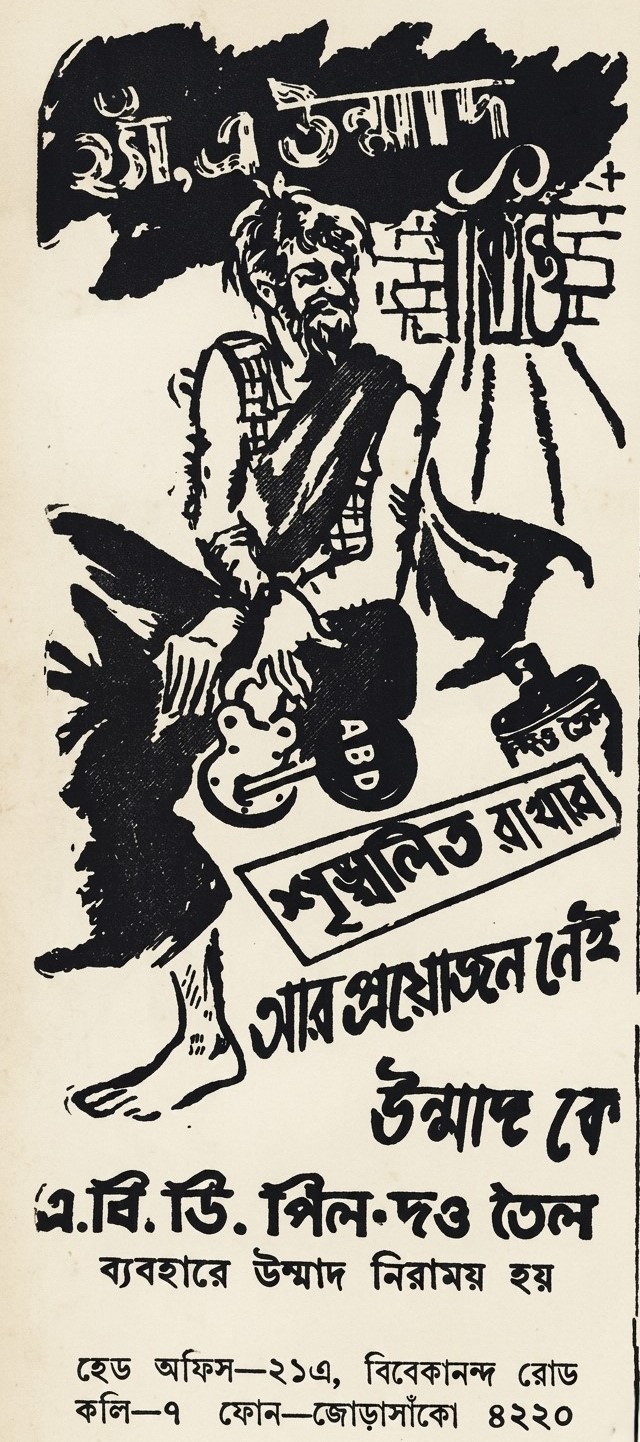
Apparently, such a madman would no longer need to be restrained. Why? Because the illness would be cured simply by administering "ABD Pills" and "Dutta Oil." Such was the claim of the "Bengali Asylum" of Dutta Nagar, Dum Dum, whose head office was at 29-A Vivekananda Road (Phone: Jorasanko 5220).
Seeing the address "Jorasanko" in that illustrated ad, I was immediately reminded of the Tagore family—specifically, their members who struggled with mental health. One was Birendranath Tagore, the fourth son of Maharshi Debendranath. He was brilliant at mathematics but suddenly fell victim to "wind-disease" (mental instability). The other was Somendranath, another brother of Rabindranath.
The Nobel laureate poet knew well which medicines helped the "insane." I learned of another advertisement—not for the ABD Pills of Dum Dum, but a special notice from "S.C. Roy & Co." at 167/3 Cornwallis Street. They advertised Dr. Umesh Chandra Roy’s world-famous "Great Cure for the Mad," priced at five rupees per bottle. The ad claimed that for over 70 years, this medicine had cured "millions of violent madmen and all kinds of nervous patients." This advertisement would appear with a quote from the poet himself, saying: "...I have been aware of its efficacy for a long time." Was the "Great Cure for the Mad" then used on Birendranath or Somendranath? I know bringing up Rabindranath's name is somewhat irrelevant, but seeing these old drawings makes my mind wander in a thousand directions!
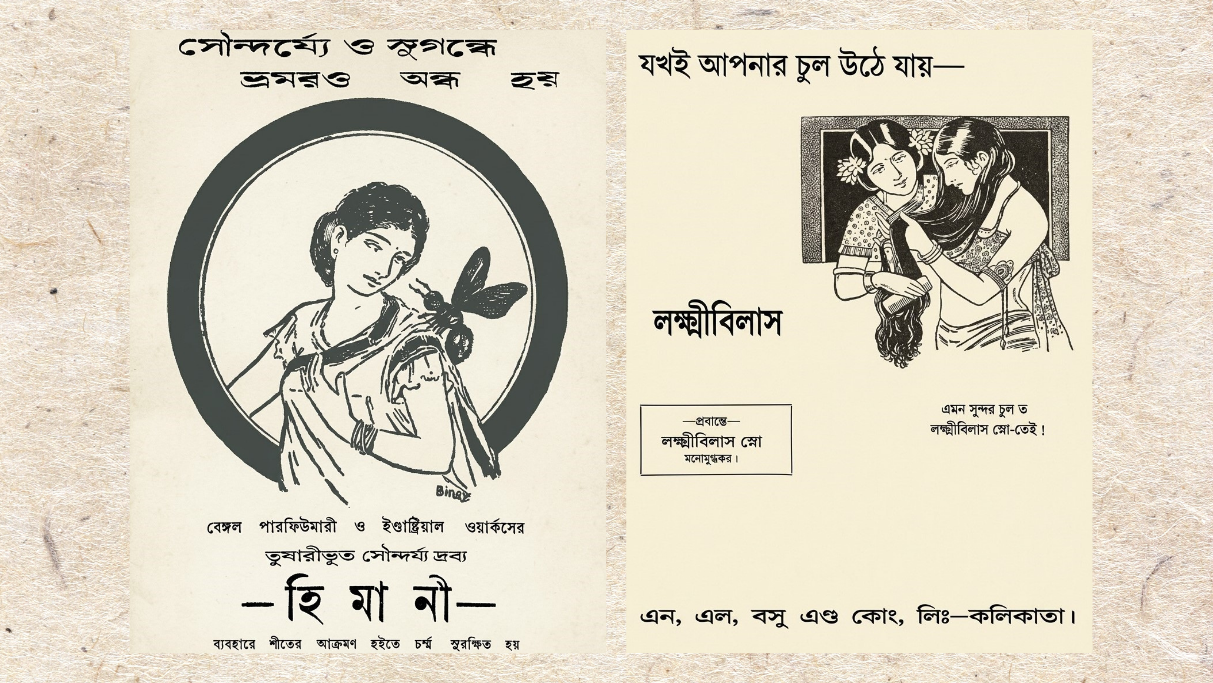
The illustrated advertisement I mentioned was published in 1952—the day I saw the picture of the shackled madman in the paper. That drawing was made several years after legendary artists had already begun to dominate Bengali advertising. By then, Bengalis had seen hundreds of fantastic drawings for various products. A legend like O.C. Ganguly was earning forty rupees a month at Calcutta’s "Stronach Advertising" as early as 1937. An agency named "Paradise Advertising" existed in Calcutta in 1928. No one can really speak of agencies in East Bengal (now Bangladesh) before the Partition. We mostly know of the birth of agencies like Bitopi, East Asiatic, or Interspan in the 1960s. Clearly, advertising production in both Bengals (undivided India at the time) was centred in Calcutta. Be that as it may, an agency required an artist—someone to present the matter attractively to lure customers.
But not all sellers went to agencies. Instead, they took "ugly" creations (by today’s standards) made by local artists to make printing blocks for newspaper offices. The madman illustration is a classic example. The calligraphy in that ad was purely amateurish—something no professional agency would ever approve. Whether that ad ran before 1952 or if that was the first, I do not know.
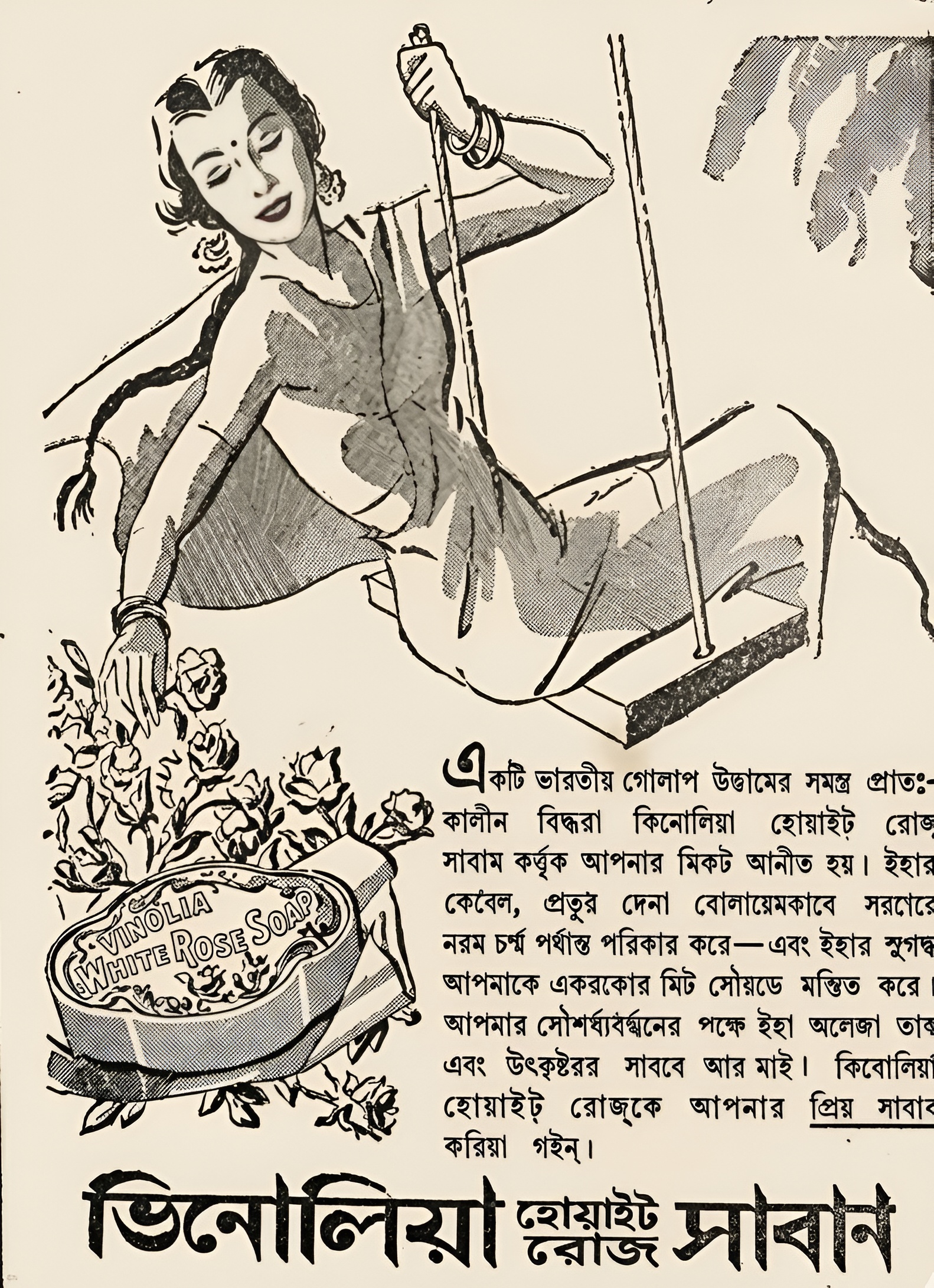
It is undeniable that finding artists from the era before the establishment of agencies (pre-partition) is extremely difficult. Only a handful of artists signed their names on those ads, and even then, it was just a tiny first initial of their name and surname, usually in English. Pranabesh Maity, who drew ads in the 60s and 70s, had a more bitter experience. He claimed that even if artists signed, agency bosses would often erase the signature to imply that the agency was everything and the artist didn't matter.
This makes me think of the "Lost Tribes" and a piece by Premendra Mitra about the Patuas (traditional scroll painters). Premendra once had a great desire to find the lost Patuas of Kalighat. Briefly, the story goes like this—a young boy walking the streets of Kalighat would watch with wonder a specific style of indigenous painting. Ordinary men in dirty clothes sat cross-legged on mats in small roadside shops, painting those pictures. Yet, the walls of the shops were adorned with framed, colourful photographs of gods and goddesses. People coming to the temple preferred to buy the framed photos. Even so, the Patuas would sit down to paint whenever they found a moment’s respite between sales.
Then came a day when not only the scroll paintings but even the expensive printed pictures of deities vanished from those shops. The Patuas disappeared too. I don't know if that young boy was Premendra himself—since his childhood was spent in North India, having been born in Varanasi. But for a creative man like him to imagine that boy while thinking of the Patuas is not far-fetched. When a kind soul eventually went looking for those Patuas, he was utterly disappointed. He learned that they had been pushed out of the city. Their descendants had not become "useless" painters; some took jobs as labourers in jute mills or chose other professions. At most, unable to ignore the "blood connection," some practised their hand at painting the chalchitra (background canopy) of idols. Premendra tracked down a few of these "unfortunate" descendants and asked to see old scroll paintings. He was shocked to find they had almost nothing left. One or two pulled down a bundle of papers tucked into the thatch of their huts. Premendra saw the pathetic state of those soot-stained, discoloured papers—they were ready to crumble at any moment. Calling the insects "connoisseurs of art," a somber Premendra described how those paintings were being destroyed.
The author was accompanied by an art collector. His friend bought some paintings that were in good condition from the descendants for an unexpectedly high price. Later, he and others wrote about them. Premendra noted how his "self-satisfaction" was bruised. He commented that while many were becoming famous artists by adopting the Patua style, and those paintings were selling at major exhibitions to decorate drawing rooms—even impressing Pablo Picasso—the Patua sitting on a dirty mat in a narrow shop and the ordinary customer buying them for a pittance are nowhere to be found today.
Thinking of the early artists of Bengali advertising, I am reminded of Premendra Mitra's essay "Barbar Yuger Pore" (After the Barbaric Age), just as I was of The Lost Tribes of Israel. In it, I found no real difference between the forgotten Patuas and the nameless illustrators from the dawn of Bengali advertising.
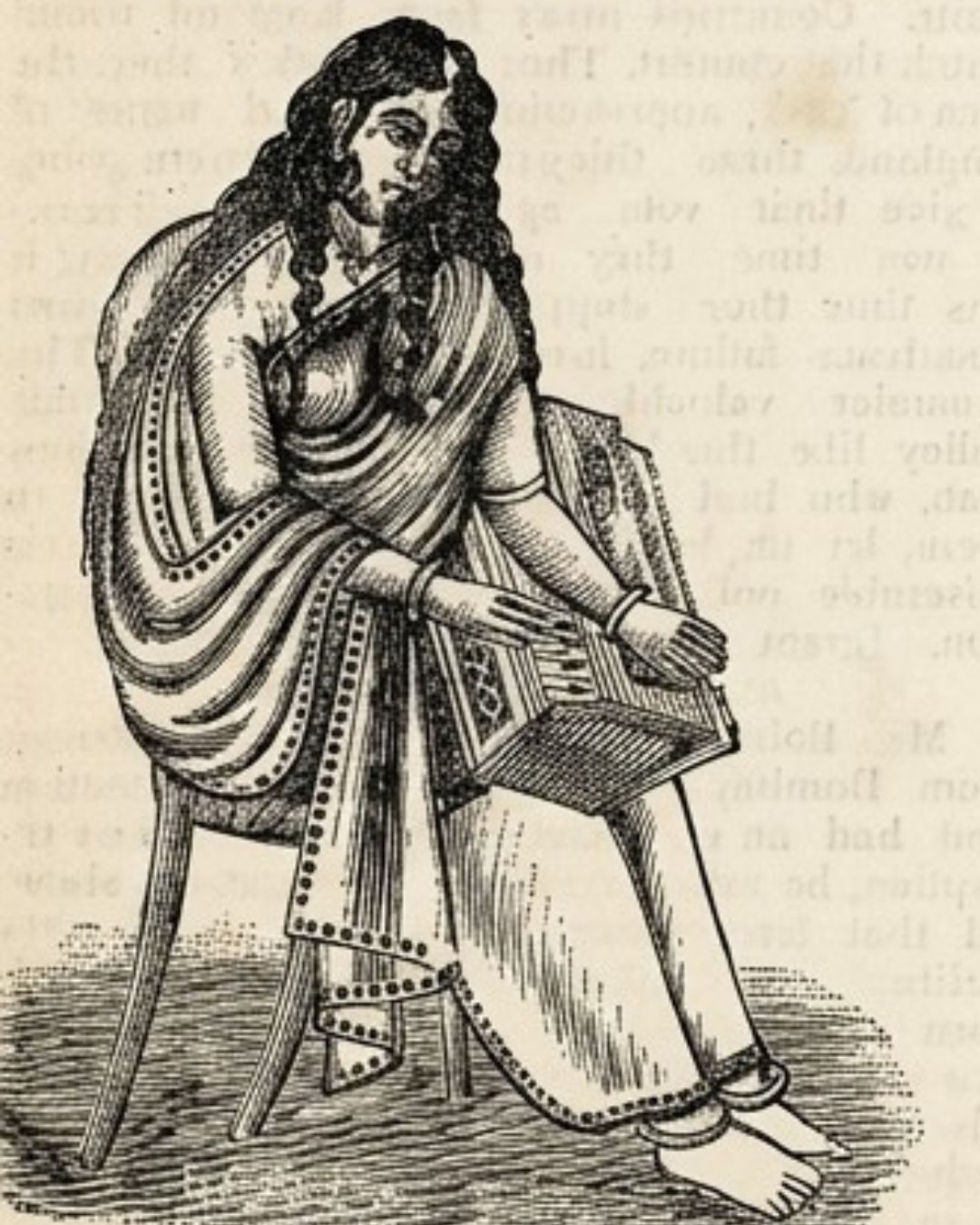
The artists whose work I later came to know and appreciate were giants like Annada Munshi—whose ideas and illustrations revolutionised the look and feel of Bengali advertising. But I wanted to see what kind of "ugly and tasteless" creations (as labelled by later critics) Annada and his peers had replaced. Without seeing those, how could I understand the evolution of style?
Here, I must mention the artist Hemen Majumdar. He is never known to have drawn for advertisements. Everyone knows that when art lovers discuss him, his paintings of "drip-wet Bengali women" inevitably come up. Who that woman was, was once a subject of intense speculation. A few know that he often painted while keeping a photograph by his side. Hemen had taken photos of his wife, Sudharani, in various poses as she returned from bathing in the family pond. His wife was his model. When giving the picture its final form, he would simply change Sudharani’s face and paint the face of a relative instead—much like modern-day Photoshop!
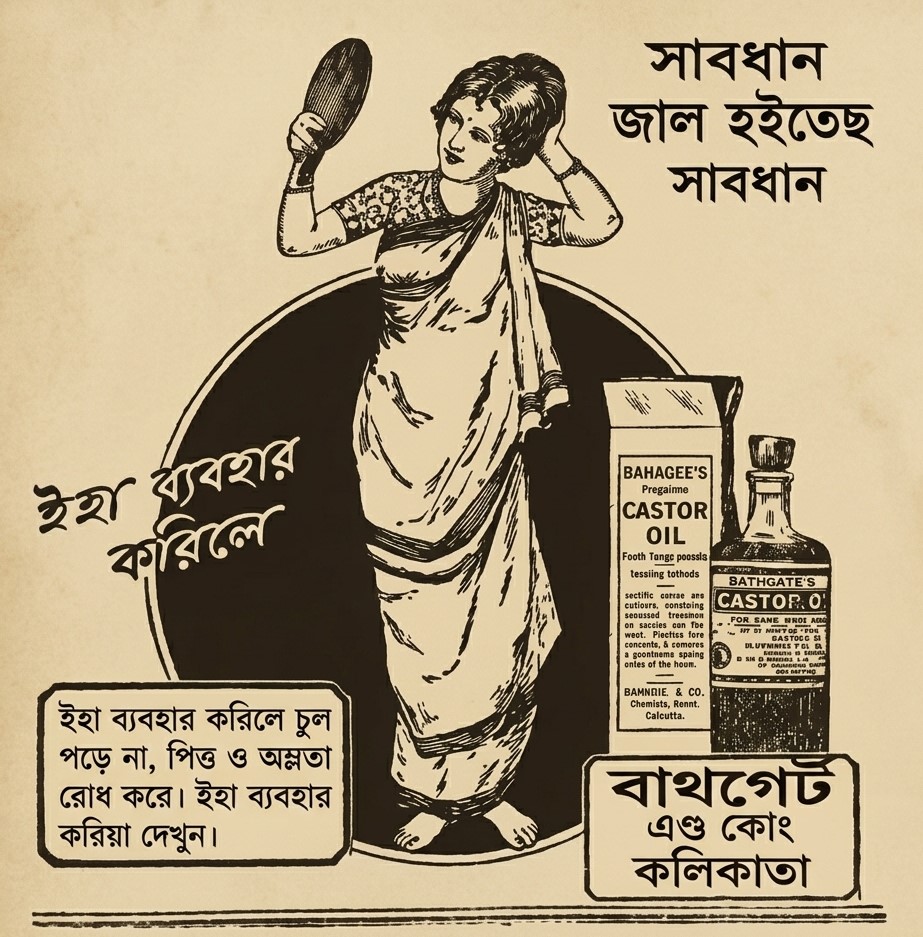
Though Hemen was skilled at copying photographs, he knew the magic of glorifying them with colour. But that wasn't all. This was a man who was invited to design the gateway for King George V’s visit to India, who was a pioneer in publishing art journals, who painted the landscapes of Kashmir at the invitation of the Maharaja, who was the "Court Artist" of the Maharaja of Patiala, and who gave an artistic form to Mahatma Gandhi at the spinning wheel. He didn't just paint wet clothes!
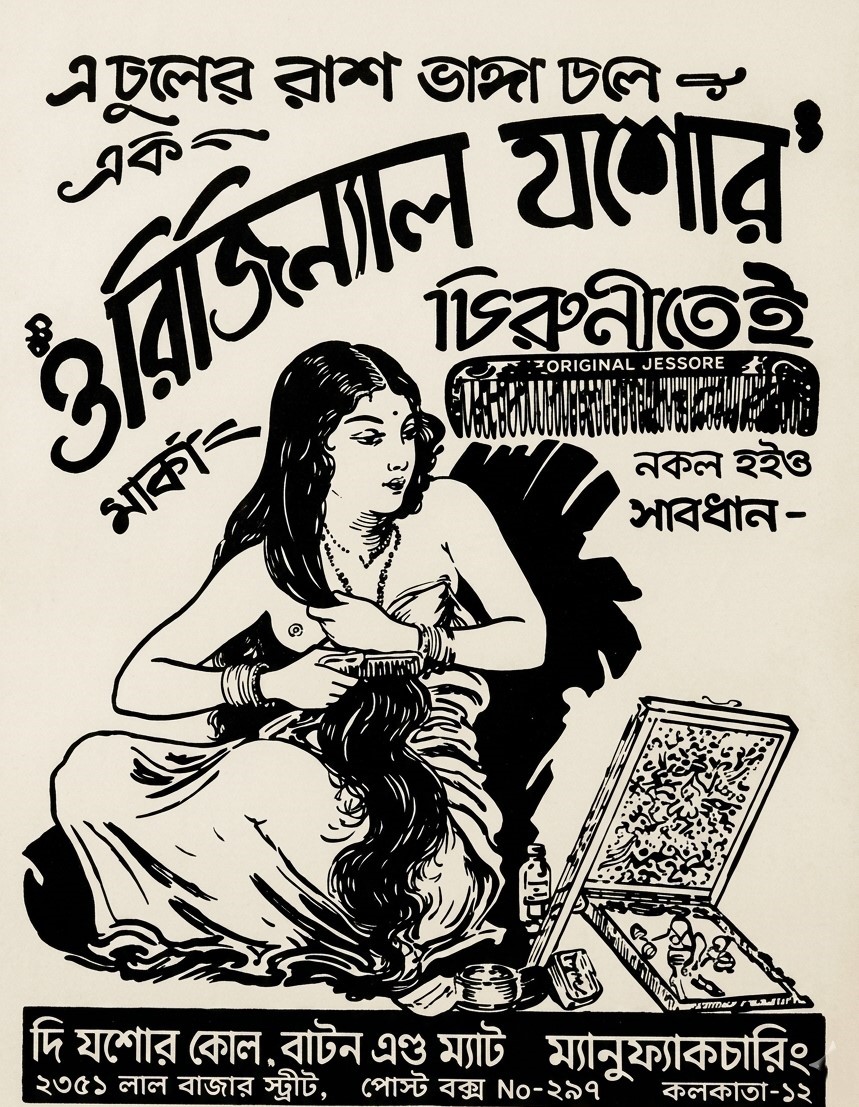
At the same time, it is true that his skill at painting beautiful women was so popular that other artists, while drawing women for advertisements, often mimicked Hemen’s postures—or those of the women painted by Raja Ravi Varma. Thus, even without drawing for ads himself, Hemen was "present" in this branch of art through the figures of women drawn in his style. Of course, bringing out the "wet-clothed" look or suggestive sensuality in black-and-white newspaper ads was a difficult task!
It’s worth mentioning that Hemen’s own work was occasionally used in advertising. An organisation called "Bengal Autotype" used to run ads featuring a sketch of Rabindranath Tagore by Hemen, accompanied by the Poet’s message. The advertisers even sold prints of that picture. The ad read: "A Wonderful Picture of Poet." Each print cost one rupee, with an additional 50 paise for postage. This ad appeared in the Visva-Bharati journal in the late 1930s, detailing the paper quality and dimensions.
In the eyes of some critics, the work of the "erotic painter" Hemen began to gain popularity in 1926 after a commercial firm in Mumbai bought his paintings to make calendars. The "forbidden" sword of the Hemen-style became a weapon for advertising illustrators too. One could easily call them followers of Hemen’s "voyeuristic" work. However, no matter how they were drawn, it's not as if the artists of the Battala press or the Patuas hadn't used such "swords" long before! Based on the consumer's mindset, this tradition seems never-ending—at home, abroad, and everywhere else.
Sandip Dasgupta has spent nearly three decades working in the editorial offices of newspapers and news portals. He has authored several history-based books, and a subject particularly close to his heart is the illustrations created by Bengali artists.
Send your articles for Slow Reads to slowreads@thedailystar.net. Check out our submission guidelines for details.
Beyond 1947 / A personal essay
Abul Mansur Ahmad / A global quest in search of a nation

Chand Bibi and the forgotten history of Muslim women’s political resistance
Women’s voices in Nazrul’s Dhumketu

How Milad-un-Nabi shaped Muslim cultural life in colonial Bengal
What Rashomon teaches us about truth and human behaviour
Why Chittagong never became a maritime city

The many worlds of Ghulam Murshid
Operation Jackpot: How Bangladesh’s naval commandos struck at Pakistan’s lifeline in 1971