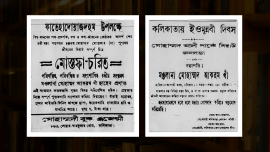
The making of Pritilata Waddedar

She is remembered for how she died. Much less is said about how she became.
On 23 September 1932, an armed assault disrupted colonial Chattogram, targeting the Pahartali European Club, a site associated with racial exclusion under British rule. A group of revolutionaries, moving in disguise, carried out a coordinated attack and set parts of the building on fire before attempting to retreat. The operation was part of a wider revolutionary network led by Surya Sen. During the retreat, one of the attackers was injured and soon surrounded by British police. Rather than face capture, she consumed potassium cyanide. She was 21 years old. Post-mortem reports later confirmed that her bullet wound was not fatal.
The person leading the operation was Pritilata Waddedar. This moment is often used to define her legacy as an act of courage and sacrifice. However, it does not explain how she reached that position. To understand that, it is necessary to return to the beginning: her birth on 5 May 1911 in Dhalghat village in Patiya, Chattogram, and the conditions that shaped her early life.
Pritilata Waddedar was born into a middle-class Bengali family. Her father, Jagabandhu Waddedar, worked in the Chattogram Municipality, and her mother, Pratibhamayi Devi, maintained a household structured around discipline and education. The family was not politically active, but it valued learning and self-regulation—factors that influenced her early outlook. She began her education at Dr Khastagir Government Girls’ School in Chattogram. She was known as a disciplined and academically consistent student. Teachers noted her focus rather than public visibility. At this stage, there was no direct political involvement. However, she displayed attentiveness to inequality and everyday hierarchies, observing differences in authority, access, and treatment that were normalised within colonial society.
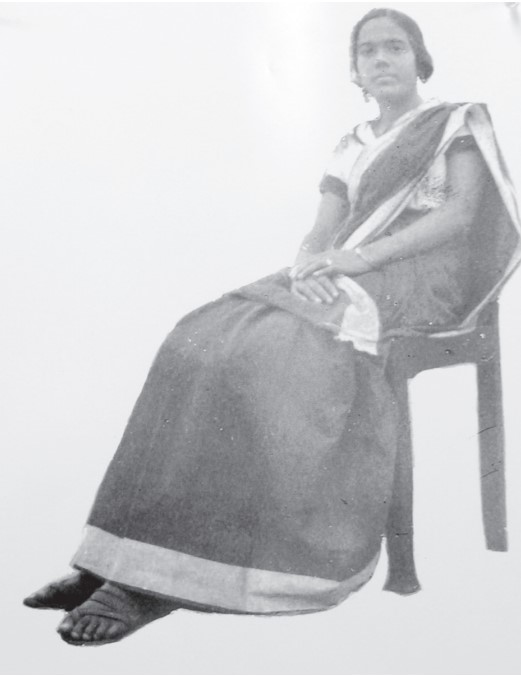
Her development was gradual. It began with observation rather than action. After completing her schooling, she moved to Dhaka to study at Eden College. This transition exposed her to a broader intellectual and social environment. Women’s education was expanding during this period, but expectations remained limited. Education was encouraged, yet participation in public and political life was still restricted. She later enrolled at Bethune College in Calcutta, one of the most prominent institutions for women’s higher education in colonial India. There, she studied philosophy and graduated with distinction. This phase was critical in shaping her thinking. Philosophy introduced structured engagement with ideas of justice, rights, authority, and moral responsibility.
In a colonised society, these ideas were not abstract. They highlighted contradictions between principle and practice. Concepts of equality coexisted with racial discrimination. Discussions of liberty were framed within a system that denied it. For Pritilata Waddedar, this created a growing tension between intellectual understanding and lived reality. At the same time, her own experience as an educated woman exposed further limitations. Access to education did not translate into equal participation in social or political spheres. This reinforced her awareness that both colonial rule and gender structures imposed constraints.
Her move into revolutionary activity was not triggered by a single event. It developed through the interaction of education, observation, and the political context of the time. By the early 1930s, Chattogram had become a centre of militant anti-colonial activity. Underground networks were forming alongside mainstream nationalist movements.
After completing her studies, she returned to Chattogram and joined Nandankanan Aparna Charan School as a teacher, later becoming its headmistress. This was a respected and socially accepted role for an educated woman. It provided stability, but it also placed her within an institutional structure that reinforced social expectations for women.
Her work as a teacher is important to understanding her development. It allowed her to engage directly with young students while observing how education functioned as a tool of both empowerment and limitation. While it created opportunities, it also prepared girls for predetermined social roles.
At the same time, her political involvement began to take shape. On 13 June 1932, she met Surya Sen, widely known as Masterda. This meeting marked her entry into an organised revolutionary network operating in Chattogram.
Her initial responsibilities were practical. She assisted with logistics, communication, and maintaining operational secrecy. These roles were essential to the functioning of the movement, but they were also consistent with the gendered division of labour within revolutionary organisations.
Her progression beyond these roles was gradual. Through consistent participation, she became involved in planning and coordination. She demonstrated reliability, discipline, and the ability to operate under pressure. Over time, this led to increased trust within the network. This process reflects how she became a revolutionary. It was not the result of a single turning point, but a sequence of developments: early awareness of inequality, structured academic training, exposure to political contradictions, and gradual integration into an existing movement.
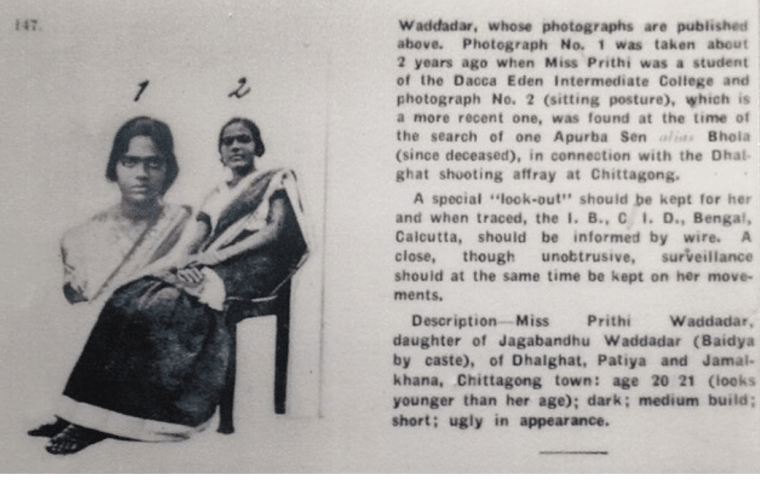
Each stage reinforced the next, creating continuity rather than abrupt change. Her preparation for more active roles was systematic. She underwent physical training, learned to handle firearms, and developed skills in disguise and covert movement. Revolutionary activity required discipline, planning, and coordination rather than impulsive action. She maintained a dual identity. Publicly, she was a teacher and headmistress; privately, she was engaged in underground political work. This required careful control over movement, communication, and behaviour. It also reflects how revolutionary activity during this period often operated within everyday social structures.
In 1932, under the leadership of Surya Sen, a plan was developed to attack the Pahartali European Club. The club symbolised racial segregation and exclusion within colonial society. Its policies reflected the broader inequalities embedded in the colonial system.
Following the arrest of Kalpana Datta, responsibility for leading the operation was assigned to Pritilata Waddedar. This decision indicates her established role within the organisation. It also represents a shift within the movement, where leadership of an armed operation was entrusted to a woman.
On the night of 23 September 1932, she led a group of approximately 10 to 12 revolutionaries towards the target. They approached in disguise and carried out a coordinated attack. Parts of the club were set on fire, and the group engaged in armed confrontation before attempting to withdraw.
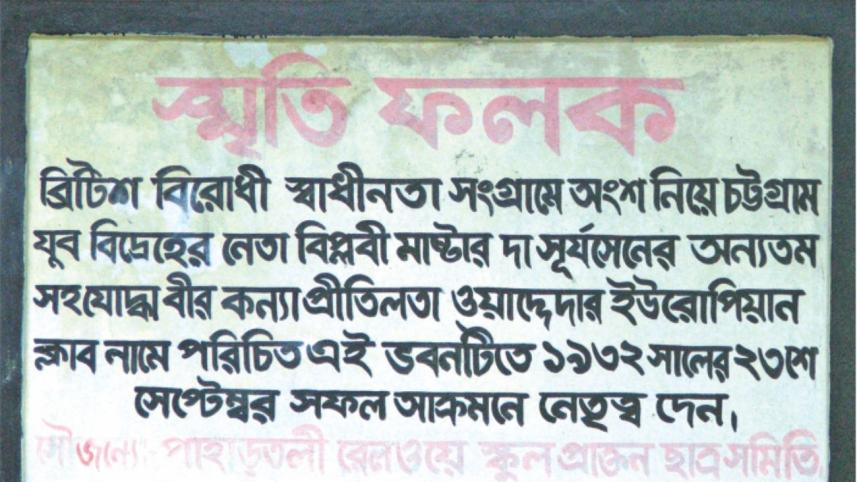
During the retreat, British police forces attacked. She was injured and eventually surrounded. As part of operational protocol, members carried cyanide to avoid capture, which could involve interrogation, imprisonment, and torture. She consumed it and died shortly afterwards. She is also recognised as one of the first women in Bengal to lead an armed anti-colonial operation. However, focusing only on this final moment obscures the longer process that led to it.
The significance of Pritilata Waddedar lies in her trajectory from awareness to action. Her life reflects the wider condition of women in colonial Bengal. While access to education grew, leadership roles remained limited. Her move from a socially accepted profession to underground politics marks both a personal shift and a challenge to those constraints.
Nationalist history remembers its martyrs selectively. It tends to remember men as leaders and women as sacrifices. Pritilata Waddedar was a sacrifice in the way every soldier who dies in battle is a sacrifice. She was also a commanding officer. Both things are true. Only one is usually told.
Musrat Hossain Mithila works at the Slow Reads, The Daily Star. She can be reached at mmusrat30@gmail.com.
Send your articles for Slow Reads to slowreads@thedailystar.net. Check out our submission guidelines for details.
APO 433: Dhaka’s forgotten post office of World War II
Dadabhai Naoroji: The man who exposed the economics of British colonialism
Untold stories of 1971 through private letters
The extraordinary journey of Atish Dipankar Srigyan
Forgotten story of Jeanette Van Tassel, the American woman who flew over Dhaka in 1892
Beyond 1947 / A personal essay
Abul Mansur Ahmad / A global quest in search of a nation

Chand Bibi and the forgotten history of Muslim women’s political resistance
Women’s voices in Nazrul’s Dhumketu