Zobaida Khatun Chowdhury: A life carved in courage

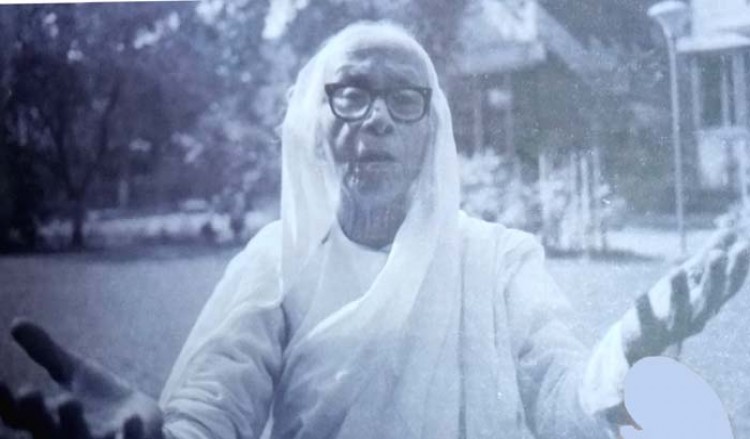
In 1928, in Sylhet, a young woman walked into a crowded hall and did not cover her face. The Muslim Students’ Conference was underway, with Kazi Nazrul Islam and A. K. Fazlul Huq seated among a roomful of men. Jobayda Khatun Chowdhury’s entrance was quiet, but it unsettled the rules that governed who could be seen, and where. Purdah was not only a custom; it organised space, speech, and authority. By stepping into that space unveiled, she redrew its limits. It was an early, deliberate act—one that would shape her work in education and reform, and her insistence that women belong in public life.
Early life and formative influences (1901–1919)
To understand the woman who would later be called a "Fearless Vanguard," one must look to the borders of the British Raj. Born in 1901 in Jorhat, Assam, Jobayda’s childhood was an exercise in breaking ground from the very start. Her father, Khan Bahadur Sharafat Ali, a high-ranking officer in the British Police, and her mother, Nurjahan Begum, belonged to an enlightened aristocracy that valued order, yet allowed for a rare kind of intellectual freedom for their daughter.
By 1906, while most girls her age were learning the domestic arts, Jobayda was already navigating the complexities of formal education at her father’s workstation in Dibrugarh. Her academic journey eventually led her to the prestigious Eden School, where she became one of the earliest female students to grace its halls. It was here that the seeds of her internal rebellion were sown.
In 1919, she married Dewan Abdur Rahim Chowdhury. It was a union that could have easily retreated into the comforts of his legislative career as a member of the Assam Assembly. Instead, it became a rare partnership of intellect and activism. Her husband’s support acted as a catalyst, transforming her from a privileged daughter into a passionate advocate for her people.
On 22 February 1948, while the political establishment in Dhaka was still debating the status of Bengali, Jobayda led a delegation of women to send a daring memorandum to Chief Minister Khawaja Nazimuddin. This act was so radical that Principal Abul Kashem, regarded as a key figure of the Language Movement, wrote to her personally to congratulate her on her "bold initiative."
Swadeshi and civil resistance (1920s–1930s)
As the anti-colonial struggle intensified across India, Jobayda transitioned from a silent observer to an active agitator. Initially joining the Congress party, she was elected President of the District Women’s Congress. She understood that the British Empire was built on economic exploitation, and she targeted its most visible symbol: foreign cloth.
During the Swadeshi Movement and the boycott of foreign goods, she persuaded women to cast their expensive foreign silks into bonfires, urging them to embrace the humble, local loom. Her fearless role during the Civil Disobedience Movement of the 1930s was not without risk. She faced the social scrutiny of her peers and the legal threats of the Raj, yet remained unshakeable. Her political evolution was always guided by a moral compass that prioritised the identity of her people over party loyalty, eventually leading her to leave Congress when she felt the rights of the Bengali Muslim community required a different vanguard.
Championing the mother tongue (1948–1952)
The Partition of 1947 brought a new set of challenges. As the newly formed East Pakistan began to grapple with its identity, the question of language became the ultimate battleground. Jobayda, now a seasoned leader, recognised early on that the suppression of the Bengali language was a suppression of the soul.
On 22 February 1948, while the political establishment in Dhaka was still debating the status of Bengali, Jobayda led a delegation of women to send a daring memorandum to Chief Minister Khawaja Nazimuddin. This act was so radical that Principal Abul Kashem, regarded as a key figure of the Language Movement, wrote to her personally to congratulate her on her "bold initiative."
By 1952, the struggle became visceral. On 21 February, police fire in Dhaka claimed the lives of students and left others injured. Among the wounded was Jobayda’s own son, Ahmed Kabir Chowdhury, a student at University of Dhaka. For many, this would have been a reason to retreat into maternal grief. For Jobayda, it was fuel. As a core member of the Sylhet Regional All-Party State Language Council, she organised the women of Sylhet into a regional force, ensuring that the defence of the mother tongue became a household mission.
Building institutions: Public health and social welfare
From a feminist lens, Jobayda’s leadership was remarkable because she understood that liberation was hollow without social infrastructure. She did not believe that a woman’s work ended at the protest line. Between her political engagements, she dedicated seven years to serving as the General Secretary of the Sylhet District Red Cross.
In this role, she established the Sylhet Maternity Hospital, recognising that mortality in childbirth was as much a barrier to women’s freedom as political oppression. Her work in healthcare and social welfare was so impactful that she was twice awarded the Queen Elizabeth Prize. She viewed health and literacy as the ultimate forms of women’s self-defence, forming associations and even a National Guard to empower women to protect their own bodies and minds.
From mass uprising to liberation (1969–1971)
Age did nothing to dampen her militancy. During the 1969 Mass Uprising in East Pakistan, Jobayda, now 68, stood at the head of a massive procession of women. It was a sight that inspired a new generation: a grandmother leading a march for democracy. When the Bangladesh Liberation War broke out in 1971, her home and her influence became anchors for the resistance. She was a quiet architect of the struggle in Sylhet, organising freedom fighters and providing the logistical support needed for the Mukti Bahini. After the war, she dedicated herself to the repatriation of stranded Bengalis, ensuring that those lost in the transition of nations finally found their way home.
Final years
In her later years, Jobayda remained an avid reader and writer, a student of the world until the very end. She eventually aligned with the Bangladesh Nationalist Party, continuing to advise and influence the political sphere. She was a mother of nine children—five sons and four daughters—and her domestic life was a testament to her belief that a woman could be both a "best chef" and a political strategist simultaneously.
What remains most striking about Jobayda Khatun Chowdhury is not any single milestone, but the quiet consistency of her presence across them. From that moment in 1928, when she stepped into a room where women were not expected to stand, to the decades that followed through movements, institutions, and crises, she never quite stepped back. Her rebellion did not unfold in one dramatic rupture. It stretched, adapted, and endured across regimes, ideologies, and generations. And perhaps that is why it is easy to overlook. It was not loud enough to dominate history, but steady enough to shape it.
Musrat Hossain Mithila works at the Slow Reads, The Daily Star. She can be reached at mmusrat30@gmail.com.
Send your articles for Slow Reads to slowreads@thedailystar.net. Check out our submission guidelines for details.
25th Death Anniversary / A life so full: Remembering Ahmed Sofa
Bengal's forgotten slave trade: Portuguese, Arakanese and Dutch trafficking networks
Mufazzal Haider Chaudhury and the idea of Bangladesh
The Tagore paradox: Why critique strengthens his legacy
What Sufism can teach us about the modern world
The journey of Qawwali across South Asia: Music, mysticism, and cultural exchange
Thinking with Partha Chatterjee
Why secularism is losing ground in South Asia
Interview / Modern Islam has always been a 'secular' entity