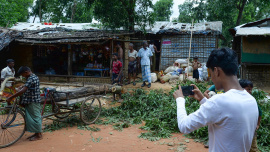
Can the China-Myanmar-Bangladesh Economic Corridor become a reality?

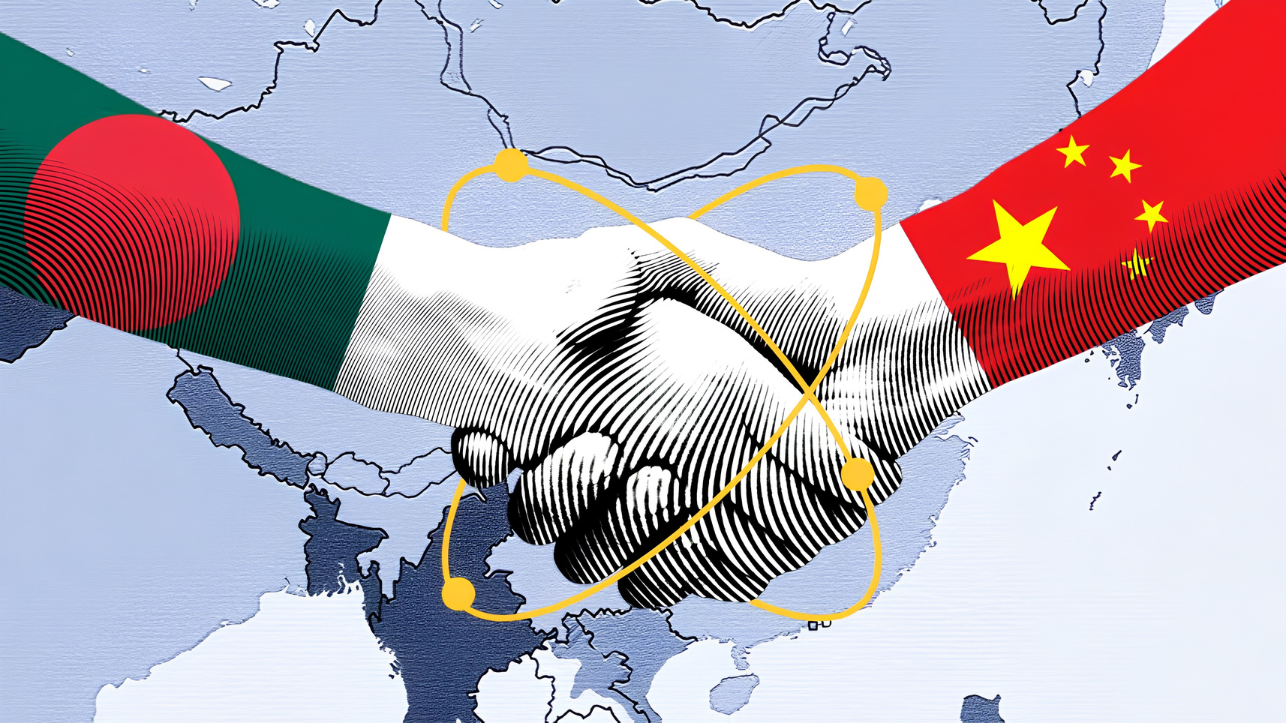
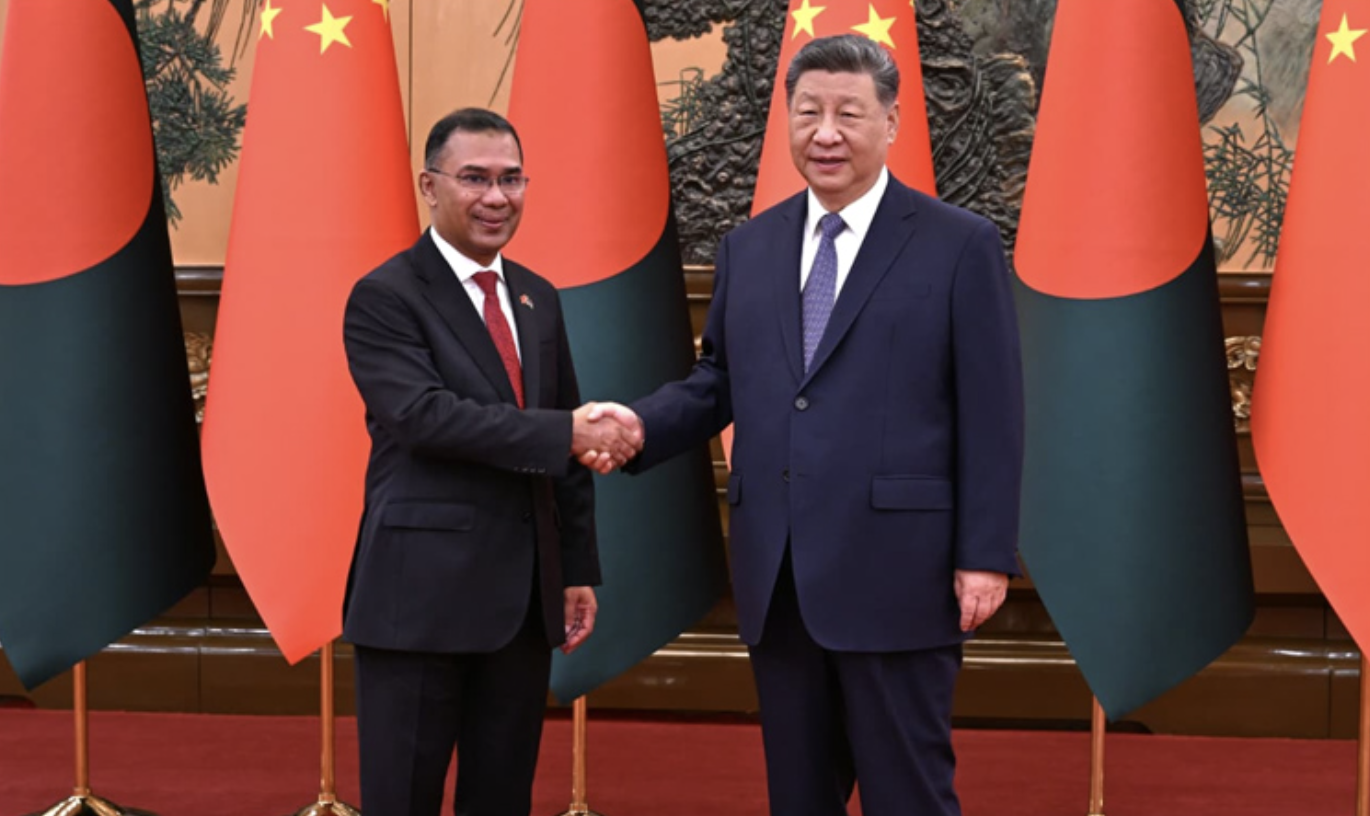
Prime Minister Tarique Rahman returned from China on June 26 after a four-day official visit that produced a series of agreements aimed at expanding Bangladesh-China cooperation.
The two countries agreed to elevate bilateral ties to a "China-Bangladesh community with a shared future in the new era", discussed a proposed 2+2 foreign and defence dialogue mechanism, announced cooperation on Teesta River management, and outlined several infrastructure and investment initiatives.

Among the issues discussed was China's proposal to develop the China-Myanmar-Bangladesh Economic Corridor (CMBC), a transport network linking Yunnan Province with Bangladesh through Myanmar and providing access to the ports of Chittagong and Mongla.
The existing China-Myanmar Economic Corridor, the backbone of the proposed route through Myanmar, spans approximately 1,700 kilometres from Kunming to Myanmar's coast; any extension to Bangladesh would add further distance, though no official figure for the full corridor length has been confirmed.
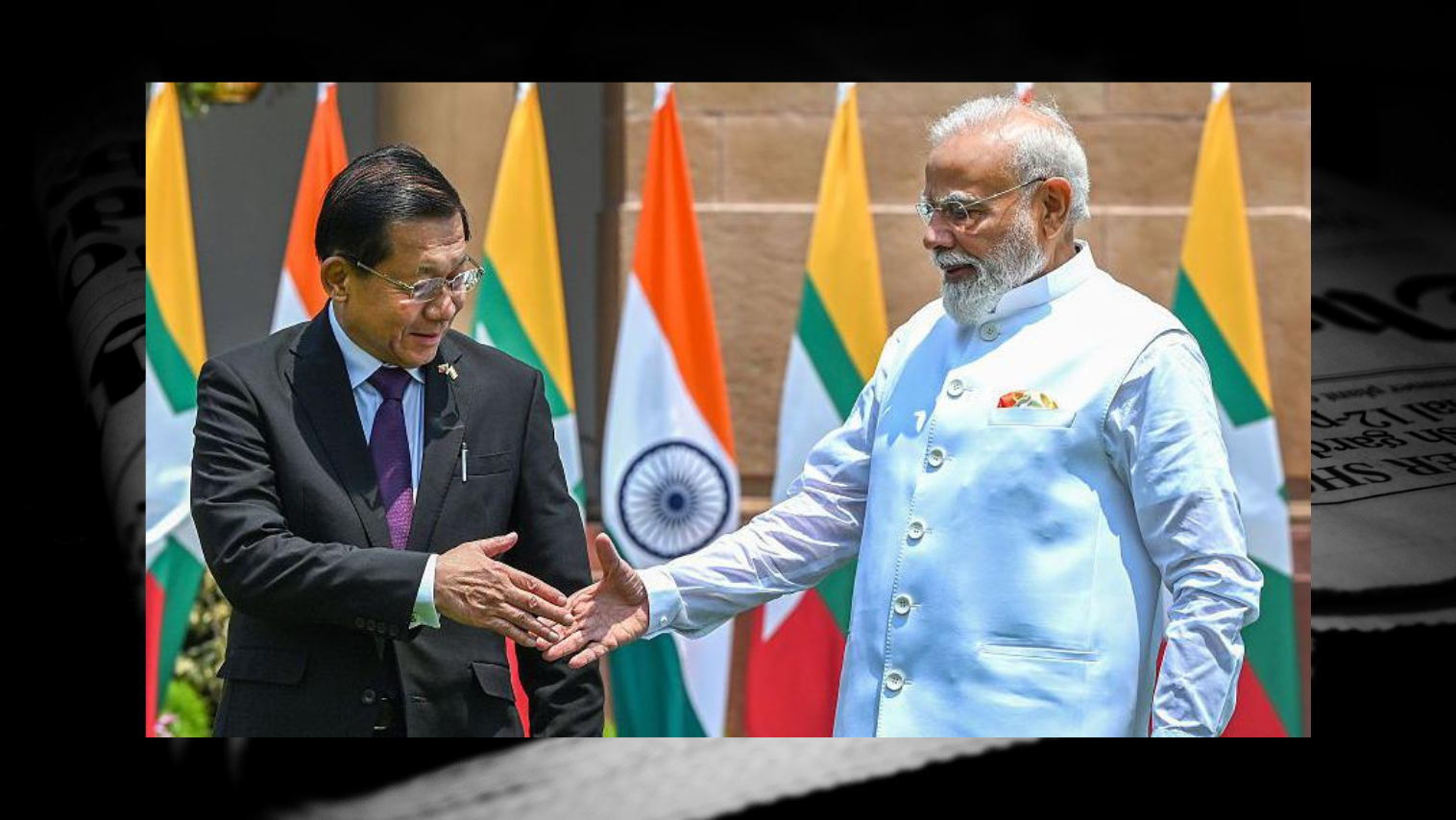
The proposal revives a corridor originally conceived in 1999 as the Bangladesh-China-India-Myanmar (BCIM) Economic Corridor under the BCIM Forum, before India gradually disengaged from the initiative over strategic and security concerns linked to the Belt and Road Initiative and deteriorating Sino-Indian relations.
On June 27, while speaking at a press briefing, Foreign Minister Khalilur Rahman said Bangladesh was "currently examining" the proposal and had "taken no position" on it. He added that any overland connectivity through Myanmar would remain explicitly conditional on the restoration of peace and stability in Rakhine State.
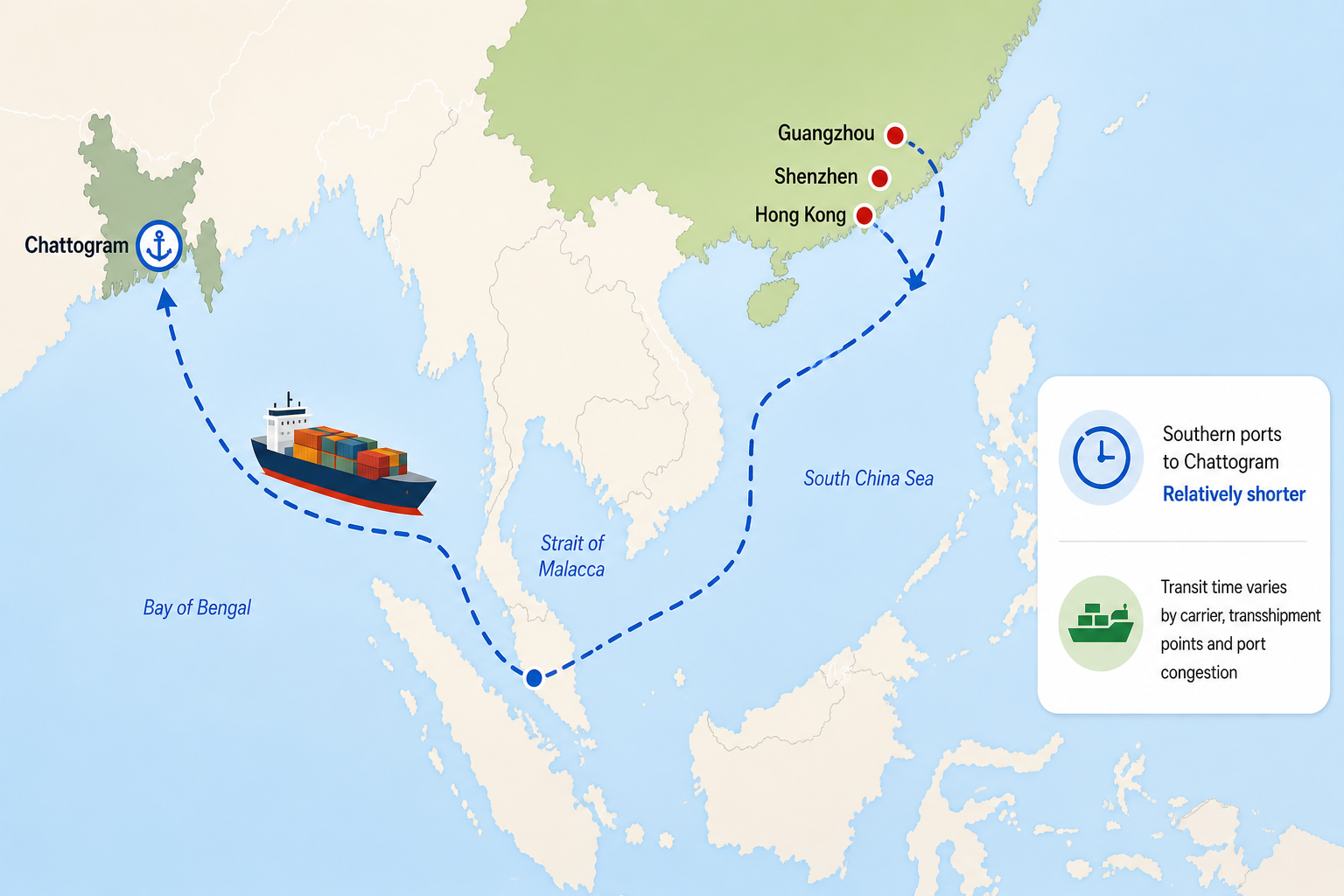
On paper, the corridor offers clear economic logic. It would give south-western China a shorter overland route to the Indian Ocean, reducing reliance on longer maritime lanes such as the Malacca Strait and providing landlocked Yunnan Province with direct access to Bangladeshi ports.
For Bangladesh, it could strengthen its position as a regional transit hub by serving as the coastal terminus of a tri-nation transport network, potentially attracting investment into its maritime infrastructure.
This trade traffic would support the economic infrastructure along the route, feeding into manufacturing hubs such as the newly approved Chinese Economic and Industrial Zone in Anwara, Chattogram.
In practice, however, the corridor's viability depends on the political and security situation in Myanmar, where conflict has disrupted both governance and infrastructure development.
Rakhine State, through which the corridor would pass, is now largely outside the effective control of Myanmar's military government. The Arakan Army, an ethnic armed organisation, controls about 14 of the state's 17 townships. The junta formally retains the townships of Kyaukphyu, where the proposed deep-sea port is located, the state capital, Sittwe, and the island of Manaung.
However, Kyaukphyu is now under active siege conditions, with Arakan Army forces reported to be fighting within approximately two kilometres of key junta naval bases and infrastructure. The situation there is better described as contested than as being under stable government control.
The security situation has already affected Chinese investments. A China-backed power plant at Kyaukphyu, a $140 million facility operated through a joint venture between Hong Kong-listed VPower Group and the Chinese state-owned China National Technical Import and Export Corporation (CNTIC), was progressively dismantled and relocated beginning in late 2024, with the pace accelerating sharply into early 2026 as fighting drew closer to its location.
On paper, the corridor offers clear economic logic. It would give south-western China a shorter overland route to the Indian Ocean, reducing reliance on longer maritime lanes such as the Malacca Strait and providing landlocked Yunnan Province with direct access to Bangladeshi ports.
The plant had already been suspended since late 2023 after the junta failed to supply sufficient natural gas and could not pay for electricity in US dollars. The episode illustrated the operational risks facing major infrastructure projects in the area.
The Kyaukphyu port project has also faced repeated delays. Initial memorandums of understanding were signed with China's CITIC Group as far back as 2009, and the project was formally awarded through an international tender in December 2015, at an original estimated value of $7.3 billion. Myanmar's civilian NLD government renegotiated the terms in 2018, scaling the project down to about $1.3 billion amid debt sustainability concerns.
The port is being developed through a joint venture between China's CITIC Group and the Myanmar government. Although the junta announced renewed momentum during the recent Chinese visit, construction has made little visible progress amid repeated security disruptions and worker evacuations.
The Arakan Army's control of much of the surrounding territory, and its ongoing assaults on Kyaukphyu Township, continue to shape the project's prospects.
The railway components are even less advanced. The 431-kilometre Muse-Mandalay railway, estimated to cost almost $9 billion, has progressed slowly since a feasibility study was completed in 2019, with later environmental review work and disputed claims that construction had started in 2023–24.
Myanmar's Financial Analysis Committee sought a soft loan from China in 2024 to fund construction, but no financing agreement has been publicly announced. Earlier this year, junta officials claimed construction had begun, although independent observers disputed those assertions, noting that sections of the proposed route pass through areas controlled by armed groups opposed to the military government.
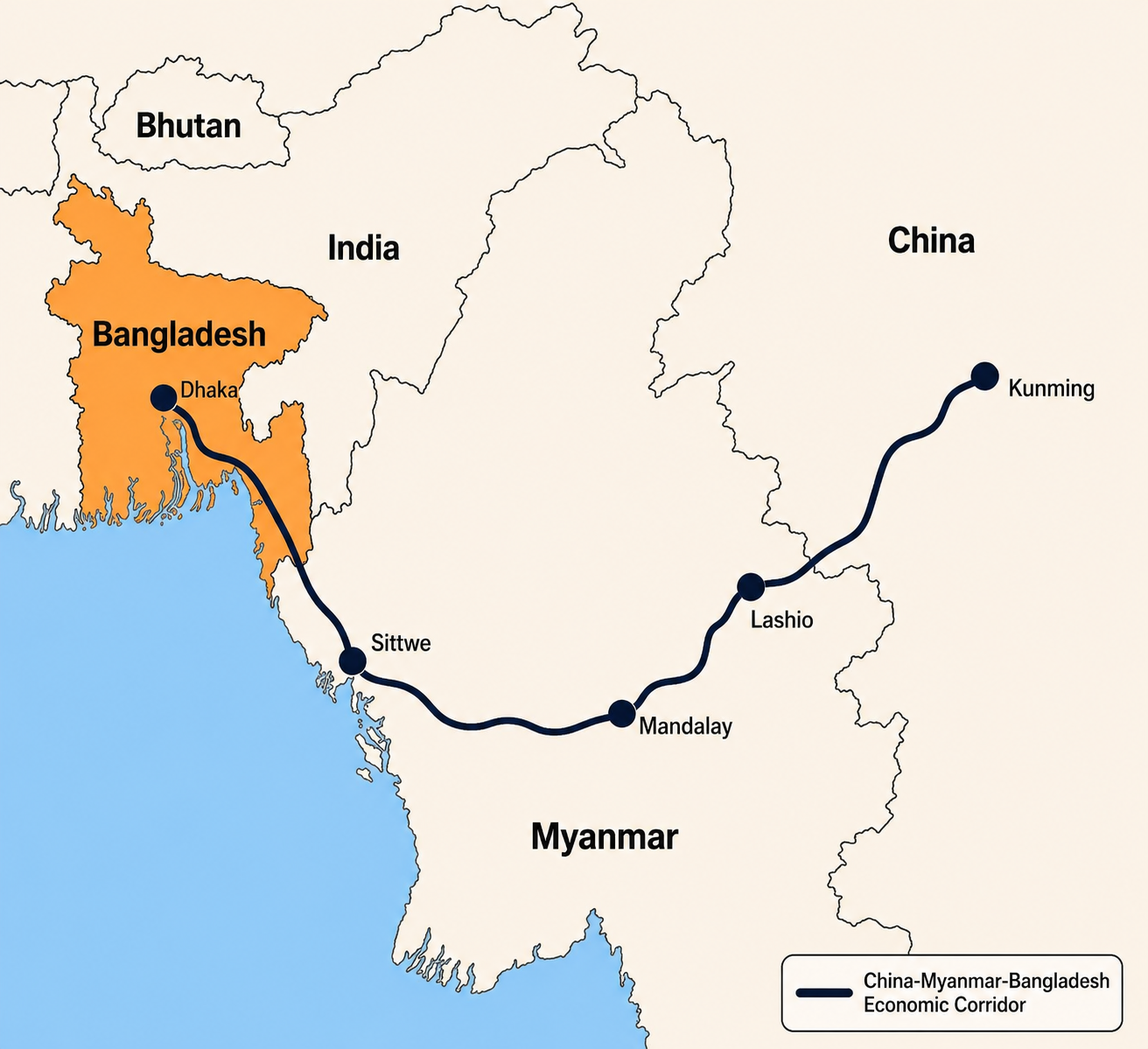
Progress on the Mandalay-Kyaukphyu railway has also been limited. Myanmar and China signed an MoU in 2021 to conduct feasibility, environmental, social, and cultural heritage studies, but no public construction timetable has been announced, and the project has advanced slowly since then.
The wider political and economic context presents additional obstacles. Since the military seized power in 2021, Myanmar has become increasingly fragmented. According to a 2026 UN Security Council briefing, the junta now controls approximately one-fifth of the country's territory, a figure consistent with BBC investigative mapping, while resistance forces and ethnic armies hold an estimated 42 per cent, with the remainder either contested or under active fighting.
Myanmar's economy contracted in recent years, inflation remained elevated, and sanctions, conflict, and other financing constraints have limited the military government's ability to fund large infrastructure projects or absorb delay costs.
The conflict also appears unlikely to end soon, and the Arakan Army's gains in Rakhine were part of Operation 1027, launched in October 2023, which shifted the military balance across Myanmar.
Although China brokered a ceasefire between the junta and the Myanmar National Democratic Alliance Army (MNDAA) in January last year, that agreement has not produced a broader political settlement, and the Arakan Army, the group most relevant to the Rakhine corridor, was not party to it. Most independent assessments continue to view Myanmar's instability as a long-term challenge rather than a temporary disruption.
For Bangladesh, the corridor is closely linked to the Rohingya crisis. Dhaka has consistently argued that progress on regional connectivity should be accompanied by conditions that allow the safe, voluntary and dignified return of around 1.2 million Rohingya refugees currently living in Bangladesh, whose numbers have continued to grow as people flee renewed violence in Rakhine State.
That objective has become more difficult as conditions in Rakhine have deteriorated. Fighting has displaced additional Rohingya populations, while reports indicate that the Arakan Army, which now controls much of the state, has also been implicated in abuses against Rohingya Muslims.
Any overland corridor through Rakhine would therefore depend not only on improved security but also on political arrangements that remain uncertain.
Taken together, these constraints suggest that the corridor is unlikely to become operational in the foreseeable future. Even if fighting subsides within the next few years, financing is secured, and construction proceeds without major interruptions, the Muse-Mandalay railway alone would likely require close to a decade to complete.
The Kyaukphyu port would also require several years before reaching full operational capacity, while the Mandalay-Kyaukphyu railway has yet to move beyond preliminary planning. A fully integrated transport corridor linking Yunnan with Bangladesh through Myanmar is therefore more likely to become a project of the 2040s than of the current decade.
That does not diminish the significance of the Beijing visit itself. Several of its outcomes, including cooperation on Mongla Port, plans for a Chinese industrial zone in Anwara, continued work on Teesta River studies, and broader investment commitments, are bilateral initiatives that do not depend on developments inside Myanmar. They can proceed independently of the corridor and may deliver economic benefits on their own.
Bangladesh is also pursuing several connectivity projects that are already under way. The expansion of Chittagong Port's Bay Terminal with World Bank support, which approved a $650 million loan for the project in June 2024, the Japanese-backed Matarbari Deep Sea Port, whose construction contract was signed with Japanese firms under JICA financing in April last year, and improvements to domestic transport infrastructure are likely to have a more immediate impact on the country's trade capacity than an overland route through Myanmar.
Against that backdrop, the government's current position appears appropriately measured. Keeping the corridor under review while withholding formal endorsement allows Bangladesh to preserve future options without committing itself to a project whose success depends on factors beyond its control.
The China-Myanmar-Bangladesh Economic Corridor remains a potentially important long-term initiative. For now, however, its prospects are shaped less by diplomatic agreements than by the realities inside Myanmar.
Until those conditions change, Bangladesh's immediate priorities are likely to remain the bilateral projects that can move forward today while continuing to evaluate the corridor as a longer-term possibility rather than a near-term development strategy.
Jannatul Naym Pieal is a Dhaka-based writer, researcher and journalist. He can be reached at jn.pieal@gmail.com.
Send your articles for Slow Reads to slowreads@thedailystar.net. Check out our submission guidelines for details.
Rohingya genocide: Will the ICJ verdict bring justice?
Should Bangladesh join the Mecca Pact?

Documenting Rohingya history / Rohingya repatriation needs more than diplomacy

Nine years on, Rohingya refugees need more than shelter
Myanmar’s partial Rohingya repatriation plan: Another attempt to mislead Bangladesh?

Is Trump’s Gaza peace plan falling apart?

What Japan’s changing Indo-Pacific strategy means for Bangladesh

Can India and Bangladesh build a more equal economic partnership?

Bangladesh First: Rethinking the relationship with India