Do Mamata and the Trinamool Congress have a political future?

When the Trinamool Congress lost power in West Bengal last month, few predicted that the party would fragment as rapidly as it has.
Mamata Banerjee had built something monolithic: a political machine that dominated India’s most fractious state for 15 years, a personal fiefdom so complete that Time magazine named her one of the world’s most influential people on multiple occasions. She had achieved the unthinkable: overthrowing 34 years of Communist rule. She kept the Bharatiya Janata Party at bay for a long time, even as it expanded across much of the rest of India.
But none of this prepared us for the deeper tragedy now unfolding: that Mamata may have to return to the National Congress she broke away from in 1998 — the very party she spent decades fighting — simply to survive as a national political figure.
The TMC won 26 million votes and 80 seats, retaining more than 40 per cent of the popular vote. By any measure, this was a defeated opposition that should have regrouped quietly.
Instead, within weeks, three-quarters of the party’s legislators revolted against both Mamata and her nephew Abhishek, her presumed heir. Twenty of the TMC’s 28 Lok Sabha MPs signalled that they would break away.
What began as a state-level mutiny became an existential implosion.
This speed reveals what the TMC actually was: not a traditional party but a franchise model in which local strongmen were granted autonomy in exchange for loyalty to the centre.
The structure held because two things remained constant: Mamata’s brand value and the state machinery’s capacity to dispense patronage and protection. The moment power disappeared, the logic inverted completely.
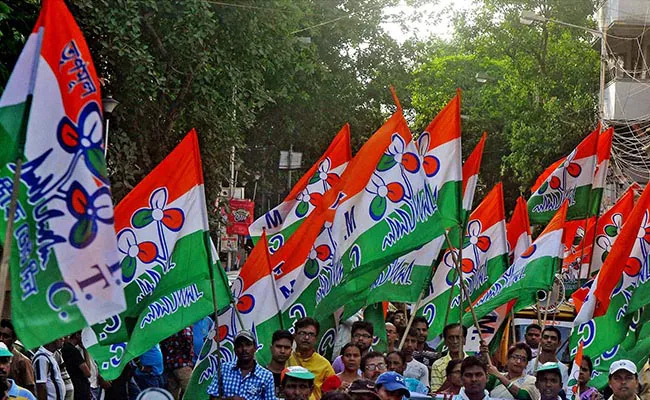
The franchise collapses
A political party anchored in ideology can survive defeat.
The Communist movement Mamata overthrew in 2011 had been embedded in everyday livelihoods for decades. The TMC never built anything like that. It rested on two fragile pillars: one woman’s personality and access to state resources.
Mamata maintained control through powerful local leaders who were given autonomy in their own territories. Power brought patronage, protection and opportunities for enrichment. Intra-party rivalries were fierce but manageable through sheer force of will.
The moment she lost the election, all calculations changed.
Local strongmen who had staked their livelihoods on Mamata’s invincibility faced a choice: loyalty to a diminished patron facing the risk of legal investigations, or accommodation with the new authority in power. Nearly every prominent TMC leader chose the latter.
Arrests began immediately. Party offices were deserted. Organisational networks were dismantled. Within weeks, figures who had once commanded fear in their strongholds were abandoned by their own supporters.
This is not theatre. It is the systematic demolition of the infrastructure through which power flowed.
The franchise model required the continuous dispensation of resources and protection. Without it, local strongmen had no reason to remain.
Former minister Ujjal Biswas was arrested and paraded. Riju Datta, a close aide of Abhishek’s, publicly thanked the BJP for protecting his family and alleged that his own party had abandoned him. Party workers fled their neighbourhoods in panic. The edifice crumbled.
The state assembly rebellion exposed the deeper wound.
Ritabrata Banerjee, a former CPI(M) member who later joined the TMC, led 58 MLAs against the high command. The flashpoint was Mamata’s unilateral decision to appoint Sovandeb Chattopadhyay as Leader of the Opposition. Rebels alleged that their signatures had been forged on the endorsement letter.
This reveals something structural: even in opposition, Mamata governed through unilateral diktat, expecting everyone to obey without question. When she held power, this worked because she controlled enforcement. Once she lost power, it triggered rebellion.
The TMC had never been a functioning party but a personal kingdom. Now that it had fallen, its constituent parts were attempting to save themselves.
Ritabrata’s faction claimed that they still considered Mamata their supreme leader — a formulation that satisfied the two-thirds anti-defection requirement.
But everyone knew what was really happening. The franchise holders were watching which way the wind was blowing. The original TMC, they seemed to be saying, would be the one repositioning itself alongside the new power.
Mamata’s rump would be Trinamool Lite — still around, still vocal, but no longer the machinery through which Bengal’s political economy ran.
Against this backdrop, the Congress offer becomes intelligible. Sonia Gandhi and Rahul Gandhi have reportedly reached out to Mamata with a proposal: return to Congress, assume the position of national vice-president, and preserve her relevance while the TMC implodes at the state level.
Both sides officially deny it. But politically engaged observers know that conversations are taking place.
The cruelty deserves underlining.
Twenty-eight years ago, Mamata split from Congress because she would not tolerate its hegemony in Bengal. She spent decades positioning herself as the anti-Congress leader, the authentic Bengal voice against metropolitan elites. Now, with her machine disintegrating, she is being asked to return to the structure she spent her career demolishing.
This is not failure in the conventional sense. This is failure with historical irony built into its very skeleton.
The nephew problem and the succession question
Abhishek Banerjee stands at the centre of this collapse in ways that his aunt’s loyalists struggle to articulate and his critics cannot resist emphasising.
At 38, he was supposed to be the future. Instead, he became the principal lightning rod for rebellion.
Almost every faction blamed him for the party’s decay. His influence over I-PAC, the political consultancy that ran the 2026 campaign, was cited as emblematic of a corporate-style management approach that alienated the party’s traditional base.
His systematic sidelining of senior leaders who had been loyal to Mamata fed a narrative that he was consolidating power in preparation for dynastic succession.
Mamata’s rump would be Trinamool Lite — still around, still vocal, but no longer the machinery through which Bengal’s political economy ran. Against this backdrop, the Congress offer becomes intelligible. Sonia Gandhi and Rahul Gandhi have reportedly reached out to Mamata with a proposal: return to Congress, assume the position of national vice-president, and preserve her relevance while the TMC implodes at the state level. Both sides officially deny it. But politically engaged observers know that conversations are taking place.
Whether these accusations are entirely fair matters less than the fact that they became the dominant interpretation among party cadres once the election was lost.
Mamata’s attachment to Abhishek shapes everything about where the party goes next.
She sidelined senior leaders to create space for him and projected him as next in line. Ambitious lieutenants may accept a founder’s authority, but they often balk when leadership passes to a family heir who lacks the founder’s mass appeal or credibility.
This pattern has played out before in Indian politics. But it proved especially destabilising in a franchise model where local power brokers remained in the party because of Mamata’s charisma, not organisational discipline or ideology.
Abhishek himself understood this dynamic.
His corporate approach to party management — his dependence on I-PAC, his distance from ground-level work, and his perceived imperviousness to dissent — reflected an attempt to build modern infrastructure where only personality-based authority existed.
This was not inherently a bad idea. But the execution was catastrophic. Instead of strengthening the party, it centralised power in ways that triggered the very rebellions he had hoped to prevent.
Mamata, facing a choice between her nephew and her party’s survival, chose her nephew. She refused to sacrifice the succession plan. This means that the condition that would most help the TMC recover — Abhishek stepping aside — remains the condition she is least likely to meet.
The party needs organisational renewal and clarity on succession. Mamata cannot provide either without abandoning the project of ensuring Abhishek’s elevation. Abhishek cannot lead a credible revival because his legitimacy depends entirely on being Mamata’s chosen successor, a status that crumbles the moment his aunt loses her authority.
This creates a loop with no obvious exit.
The parliamentary implosion and the legal trap
When rebel TMC MP Kakoli Ghosh Dastidar claimed that 20 of the TMC’s 28 Lok Sabha MPs wanted to formally support the NDA, the immediate interpretation was that the party was finished.
Constitutional experts have since complicated this narrative.
The anti-defection law does not protect MPs simply because two-thirds decide to leave. It protects them only if their party formally merges with another party. An individual or a large bloc breaking away without an organisational merger remains vulnerable to disqualification.
This means that the 20 MPs are playing a dangerous game. They could face disqualification if they vote against the TMC whip without triggering a formal organisational merger.
The BJP wants those seats in the NDA column but cannot simply absorb them without risking disqualification. The rebels want protection but cannot obtain it without Mamata herself dissolving the TMC into the BJP — something she is unlikely to do.
The threat of disqualification keeps her remaining loyalists in the party and constrains rebels from acting with complete impunity.
What this legal maze reveals is that the political collapse, however real and visible in defections, has not yet crystallised into a final organisational reckoning.The TMC is in a state of flux — neither coherent as a party nor fully dissolved into the BJP.
But it also means that the situation is not yet irreversible. If Mamata can hold her nerve, if she can project that there is still a TMC worth fighting for, and if she can create space between herself and her nephew’s liabilities, the rebellion itself could fragment further.
Constitutional scholars are already divided on how a Speaker would rule on disqualification petitions — these disputes almost always become political. The game is far more complicated than the headlines suggest.
From insurgent to supplicant
But there is a deeper question beneath all of this.
Bengal’s electorate has a well-established pattern: once it decides to throw out a ruling party, it does not easily give that party a chance to return.
The Congress lost power in 1977 and never regained meaningful authority. The Communist movement lost power in 2011 and has spent the last 15 years in irrelevance.
When a ruling party loses, the newly empowered authority rapidly colonises all the spaces that the previous power vacated — panchayat networks, block structures, local patronage chains, and municipal positions.
The opposition finds itself excluded from the machinery of distribution. Within a few years, the machinery itself atrophies.
The BJP will pursue this colonisation with precision. It knows how to dismantle opposition networks.
In West Bengal, it now controls the state machinery and enforcement capacity. Every day the TMC fractionalises is a day the BJP consolidates its position at the block, municipality and panchayat levels. By 2029, when the next Lok Sabha election takes place, the party will look radically different.
There is another problem rooted in electoral sociology.
Of the 80 Trinamool candidates who won, more than 70 represent Muslim-dominated constituencies. The party’s consolidation of Muslim voters was crucial to its victories in 2011, 2016 and 2021. But this base is now both a strength and a trap.
If Mamata campaigns with these candidates, the TMC risks being branded a pro-Muslim party, a label the BJP will use to further polarise Hindu voters. If she tries to win back Hindu votes by moving rightwards, she alienates the one captive constituency she retains.
The party is now seen as sectarian by a large portion of the Hindu electorate and lost significant Muslim support this year.
The coalition that once appeared broad is now confined to a demographic corner. This is why the Congress option — the very Congress she fought — has become a conversation worth having in closed-door meetings.
On 2 June, while staging a sit-in at Dharmatala in Kolkata, Mamata made her boldest move since the election defeat.
She claimed that Union Home Minister Amit Shah had personally called her to suppress information about arrests linked to a killing in Bangladesh, referring to the assassination of Osman Hadi.
She alleged that she knew the full story but would not reveal it because doing so might trigger unrest across the border.
The allegations triggered an FIR against her. Bangladesh’s State Minister for Foreign Affairs, Shama Obaed, dismissed her remarks, noting that Bangladesh had no interest in statements made by a political leader following an election.
What matters is the strategic logic. By invoking the Hadi case, Mamata was attempting to signal that she retained intelligence about Indian state covert operations, reposition herself as the target of hegemonic power rather than a discredited ruler, appeal to West Bengali voters with connections to Bangladesh, and, most importantly, recover the insurgent identity that made her formidable.
She was trying to transform herself from the leader of a defeated ruling party into an outsider fighting unjust power.
The problem is structural, not tactical. When Mamata fought the Communists in the 1990s and 2000s, she was fighting an entrenched, ideologically coherent machine with a clear record of violence and economic failure. The Bengali electorate was exhausted by it.
Today, she is the machine that failed, fighting a nationally dominant BJP that controls central agencies, the electoral apparatus and the West Bengal state government.
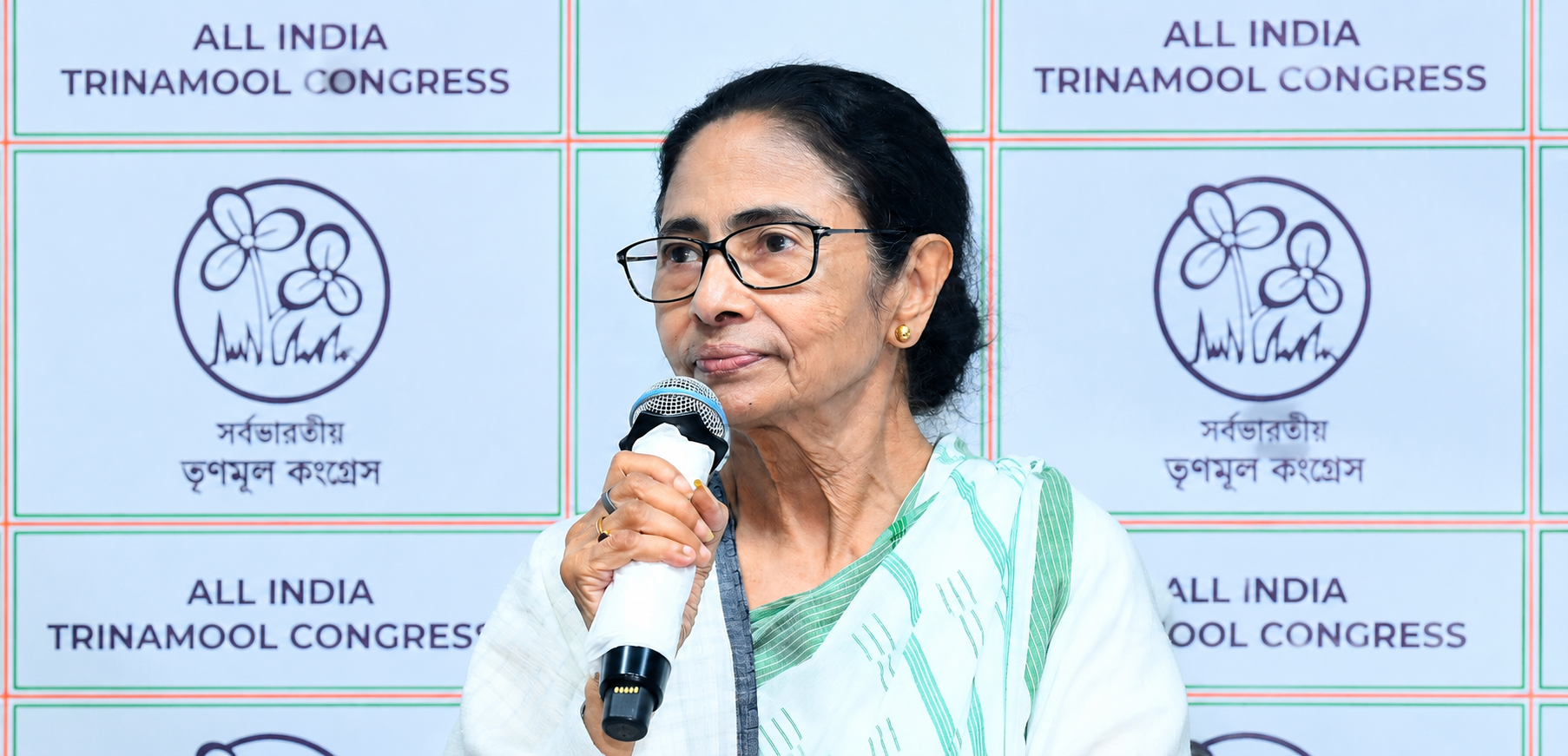
Her insurgent identity, however skilfully resurrected, lacks the demographic and political foundation it once had. You cannot replay the role of a revolutionary outsider when the electorate has already rejected you as an insider.
The reckoning
At 71, stripped of power, surrounded by defectors, facing FIRs, and commanding a party functionally divided between her rump and her nephew’s liability — where does this leave her?
Writing off Mamata would be premature. She has defied political odds before, and done so consistently. But the conditions that enabled her defiance in the past no longer obtain.
The BJP is not the CPI(M). It does not allow opposition leaders room to breathe while it consolidates power.
The arrests of TMC leaders, the dismantling of panchayat networks, and the FIR against Mamata herself — this is the methodical work of an organisation that has studied its predecessors’ errors.
A revival would require more than charisma. It would require a willingness to renew the party and make difficult decisions about leadership. It would mean accepting that the franchise model is dead and that a new organisational architecture is necessary. It would mean having an honest reckoning about Abhishek’s role.
None of this comes naturally to Mamata. Throughout her career, her strength has been her capacity to surprise others. Her weakness has been her inability to surprise herself. She remains invested in the structures that made her powerful, even after they have collapsed.
The future of the TMC is also the future of a particular kind of regional politics in India — one built on personality, patronage and the whims of a dominant leader rather than on organisation, ideology or democratic process.
If the TMC survives in any meaningful form, it will do so only through a transformation of everything that made it what it was. If it does not survive, it will join the Congress and the CPI(M) in the graveyard of once-formidable political machines that could not adapt to the loss of power.
Mamata Banerjee has always found a way to survive. What remains to be seen is whether she can survive the one thing she has never truly faced: the consequences of her own power.
Jannatul Naym Pieal is a Dhaka-based writer, researcher and journalist. He can be reached at jn.pieal@gmail.com.
Send your articles for Slow Reads to slowreads@thedailystar.net. Check out our submission guidelines for details.

What Nepal’s flood devastation means for Bangladesh, India and China
Five reasons why Bangladesh shouldn’t join the Mecca Pact
Why Gaza peace deals keep falling apart
Rohingya genocide: Will the ICJ verdict bring justice?

Should Bangladesh join the Mecca Pact?

Documenting Rohingya history / Rohingya repatriation needs more than diplomacy

Nine years on, Rohingya refugees need more than shelter
Myanmar’s partial Rohingya repatriation plan: Another attempt to mislead Bangladesh?

Is Trump’s Gaza peace plan falling apart?