Here’s what China is learning from the US war in Iran

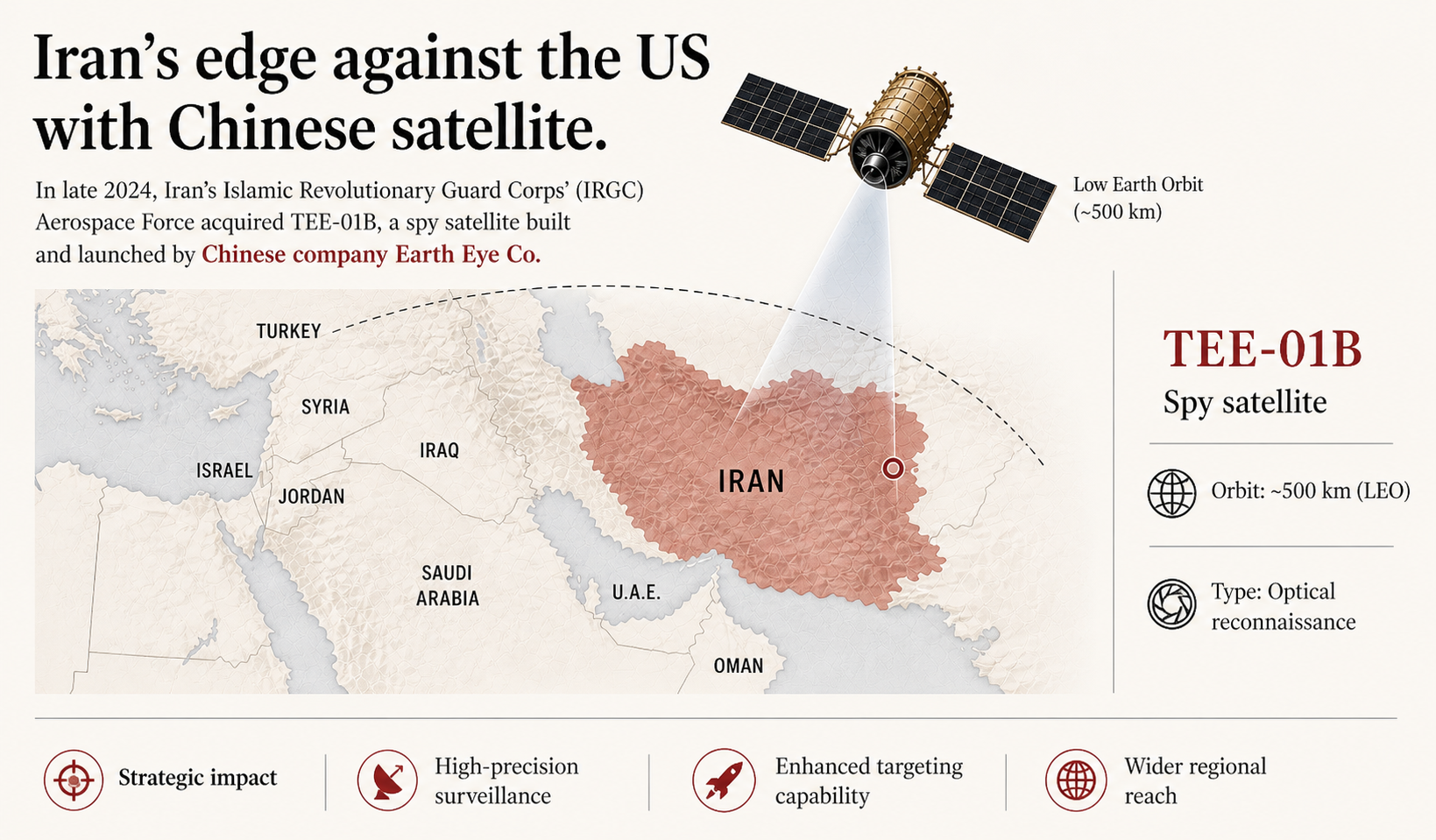
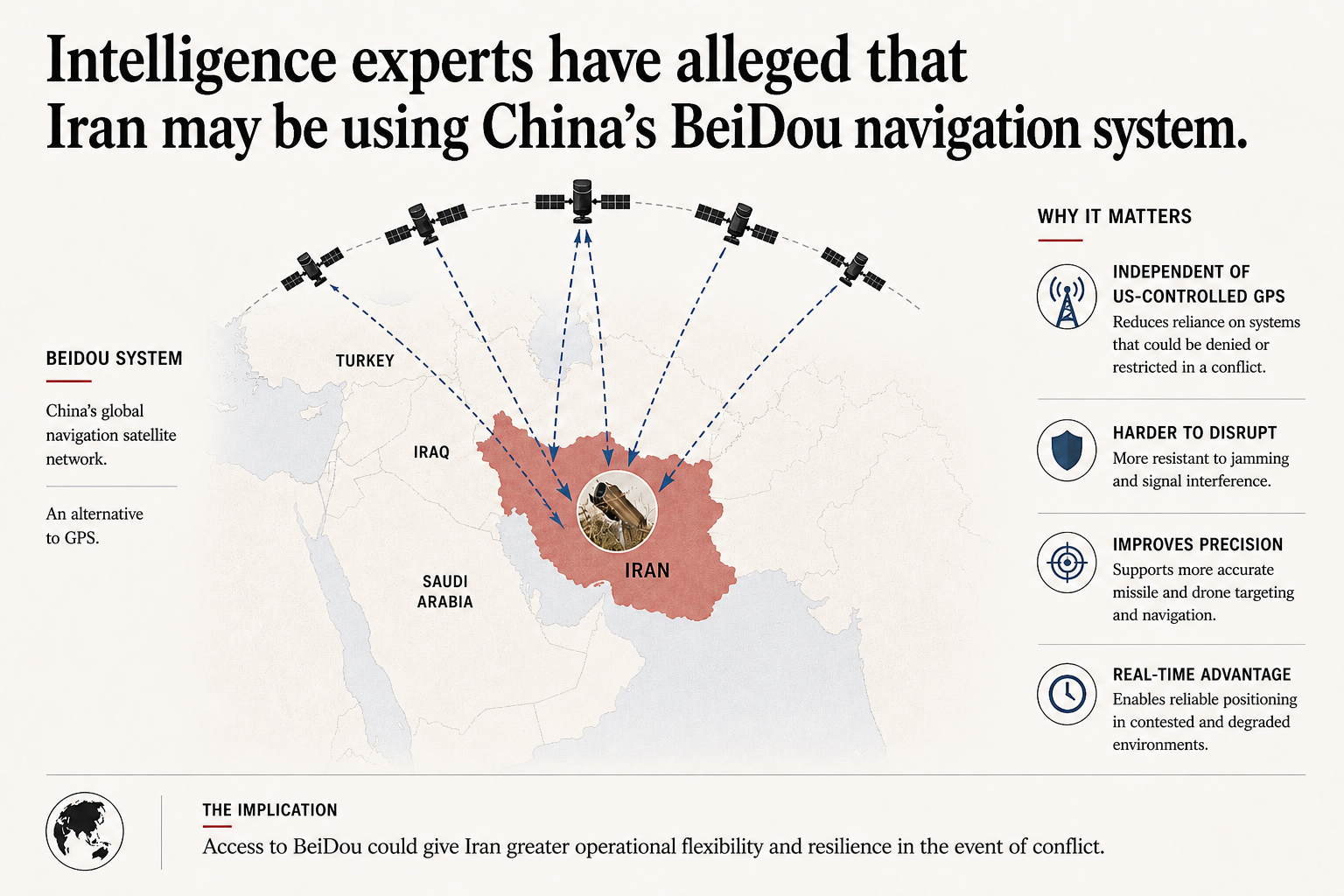
On February 9, just weeks before the US-Israel joint military action against Iran, a Chinese commercial satellite company, MizarVision, published images of the Army Terminal High Altitude Area Defence (THAAD) system at Muwaffaq Salti Air Base in Jordan. The deployment was part of the US Armed Forces’ preparations for the upcoming war. MizarVision deployed again on April 19, when the THAAD and Patriot missile-defence batteries were moved to another location within Jordan during the ceasefire. Thanks to the Chinese satellite navigation system BeiDou, Iranians seem to know the precise location of their targets and hit them accurately, a capability that was rare during the 12-day war in July last year. In late 2024, Iran’s Islamic Revolutionary Guard Corps' (IRGC) Aerospace Force acquired TEE-01B, a spy satellite. Built and launched by the Chinese company Earth Eye Co, it has enabled the IRGC to target US interests with high precision across the Middle East during the current war.
China is clearly an active yet little-noticed actor across missile warfare, surveillance and space-enabled intelligence. Beijing’s strategists are also taking notes, running calculations and studying possible outcomes that could reshape the global balance of power for decades to come.
Reading America's Playbook
The war is an excellent opportunity for China to study the American playbook in real time. The Pentagon’s operational approach, command-and-control architecture, targeting priorities, and decision-making rhythms are all on display. Chinese military planners, who have spent decades modelling a potential confrontation over Taiwan, are watching not only what the US does but also how quickly it does it, where it hesitates, and where it fails.
Perhaps the most revealing incident, likely examined closely in Beijing, was Iran’s downing of a US aircraft in early April. That operation required the seamless integration of intelligence assets, surveillance platforms, and special operations forces, along with real-time coordination across multiple command levels. For Chinese planners, it was a live experiment showing how the US conducts a rescue under fire, how long it takes, what technology it deploys, and where the gaps, if any, are.
The Economics of Asymmetric War
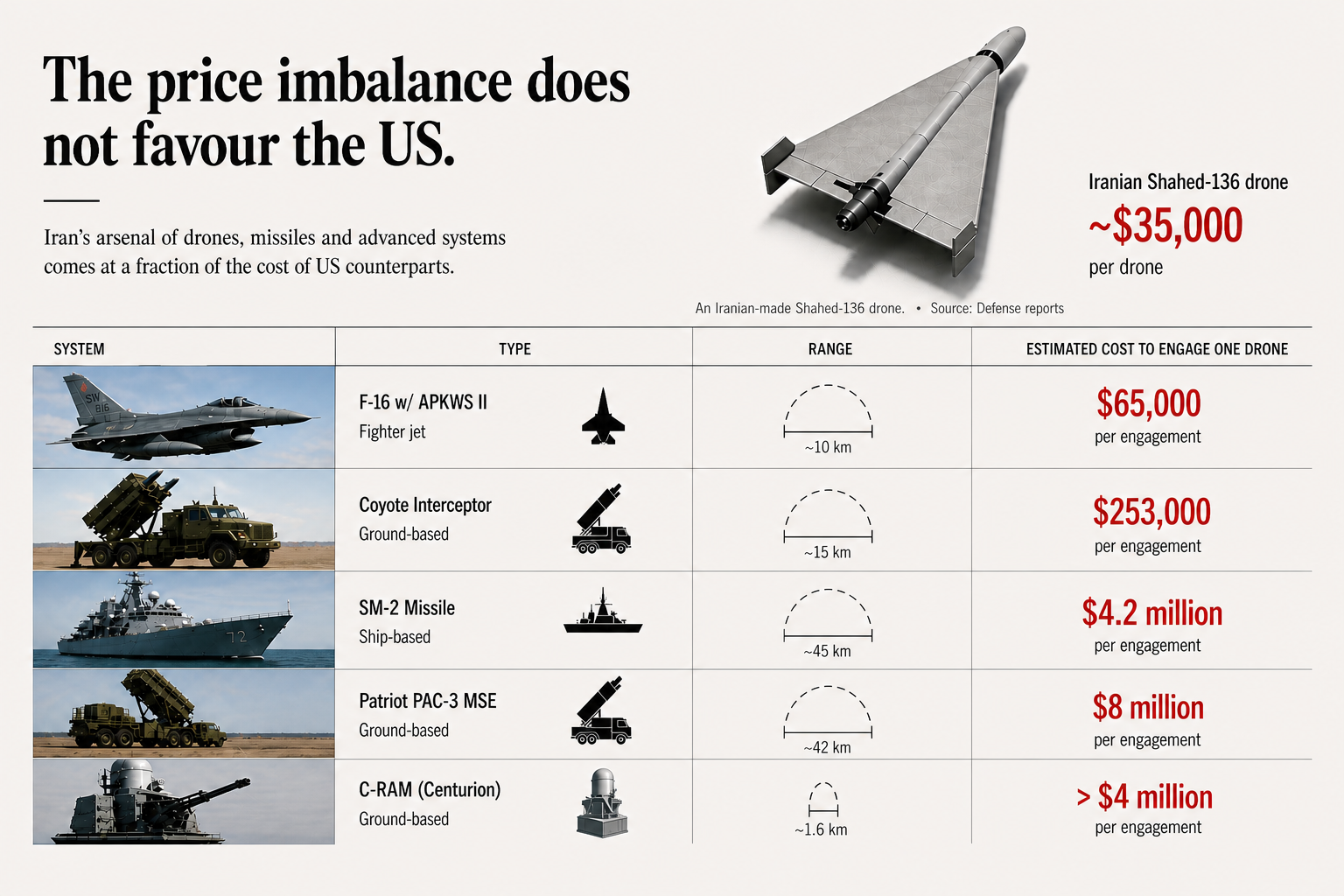
Superior technology does not automatically translate into sustainable military dominance, especially when the adversary is willing to play the game differently. Iran has deployed low-cost drones and missiles in overwhelming numbers. The US and Israel have largely intercepted them with missile defence systems, but at a higher cost.
Brown University’s studies indicate the total cost of the Iran war has exceeded $28 billion and is increasing by the day, with drone interceptors driving much of it. The F-16 can use the Advanced Precision Kill Weapon System (APKWS) II to destroy a drone from about 10 km away. But two such rockets — as required by military protocol — and an hour of F-16 flight time would cost about $65,000. Two of the ground-based Coyote interceptors cost $253,000, with a range of about 15 km. Ship-based SM-2 missiles cost $4.2 million per pair and can kill a drone from approximately 45 km away. The much-advertised ground-based Patriot can fire two PAC-3 MSE missiles at a staggering cost of $8 million, though the range is long, approximately around 42 km. The last resort is the ground-based Centurion C-RAM, which can destroy a drone just about 1.6 km away when it is less than a minute from the target, allowing little to destroy it. Waves of cheap Iranian Shahed-136 drones — costing approximately $35,000 each — are rapidly depleting the US stockpile of expensive and slow-to-produce advanced missiles.
In essence, the US has employed a trillion-dollar war machine and conventional tactics, while Iran wages a campaign that is primarily political and economic. Interestingly, this is almost a replay of the Persian invasion of Greece in 480 BC. The invaders, with their vast forces, were in complete dominance over the region and launched the campaign to resolve an apparently minor issue at the remote edge of their empire. They deployed a huge army and the largest naval fleet ever seen, but suffered humiliating defeats and had to withdraw, though they still claimed victory.
Today Iran is playing the Greek side, haemorrhaging US’ money every time a missile intercepts one of its Shahed drones. However absurd it may sound, individual tactical successes are contributing to Washington’s embarrassment and potentially its overall defeat in the war.
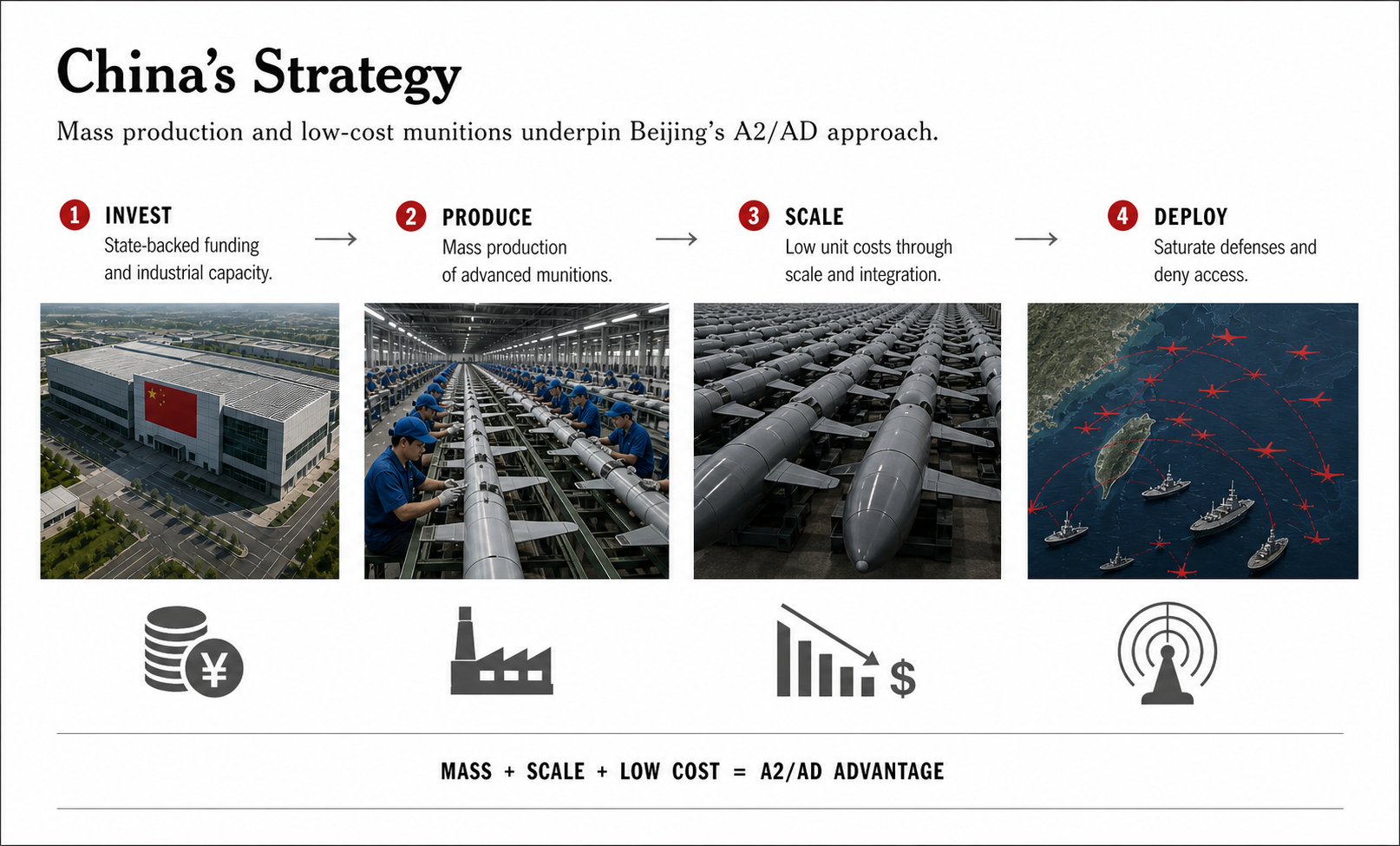
China, which has invested heavily in mass-production, low-cost munitions strategy as part of its anti-access and area-denial (A2/AD) doctrine, is watching the model validate itself in real time. The lesson is evident: winning a war requires much more than advanced technology, and low-cost equipment can also be a game-changer if used correctly.
The Weaponisation of the Strait
Without launching a full-scale naval war, Tehran has created a perfect weapon in the Strait of Hormuz, sending shockwaves through the global oil markets, pushing prices to unbearable levels.
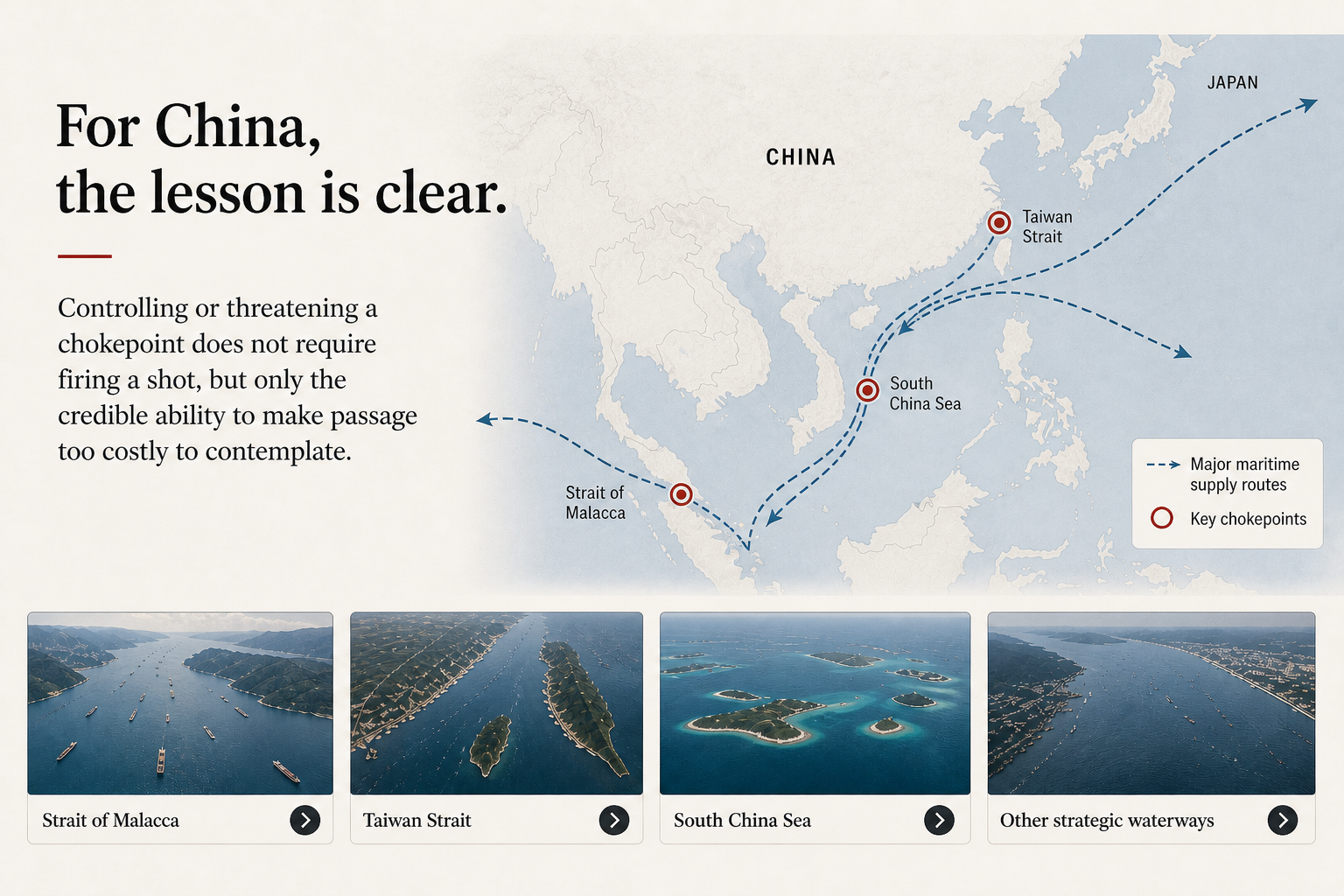
For China — which is acutely aware of the vulnerability of its maritime supply lines and of US naval power in the Pacific — this is confirmation that its concerns are real. Controlling or threatening a chokepoint does not require firing a shot, but only the credible ability to make passage too costly to contemplate. This also shows the possibility of deploying similar tactics by either side in the Strait of Malacca, the Taiwan Strait, the South China Sea, and other strategic waterways in the event of hostilities.
Regime Resilience and the Limits of External Pressure
Contrary to the expectations of many Western analysts and policymakers, the conflict has not sparked a domestic uprising in Iran. Despite contradictions, the regime has used the external threat to consolidate authority, rally nationalist sentiment, and suppress dissent under the well-worn banner of foreign aggression. The lesson is not lost on Beijing.
China's Technology in the Field
China is also receiving feedback on its defence exports. During brief but intense hostilities between India and Pakistan last year, Pakistani pilots flying Chinese-built J-10CE fighter jets reportedly shot down the Indian Air Force’s French-made Rafale jets with long-range PL-15E air-to-air missiles from approximately 200 km.
The outcome of at least some of those engagements, though still disputed, was described in numerous defence analyses as favourable to the Chinese side. Long-range air-to-air missiles, guidance systems, and radar integration, all of Chinese origin, were put to a test that no laboratory can fully replicate.
In the current war, Chinese-origin technology, components, and doctrinal influence are, to varying degrees, embedded in Iranian military capabilities, though Iran has not officially confirmed its usage. Every engagement becomes a closely-studied performance review.
Eyes in the Sky
China's satellite surveillance network has reached a level of sophistication that is only now being fully appreciated outside specialist circles. Its constellation of reconnaissance, radar imaging, and intelligence satellites is providing persistent coverage of targets for Iran, and has been tracking US naval and air movements in and around the Gulf region with remarkable accuracy. The implications go beyond the current conflict. US operational security, which has long relied on an intelligence advantage, faces a genuinely competitive challenge. That challenge is being field-tested in this war.
It’s important to note that none of the lessons mean that China wants a prolonged war. Its economic stake in regional stability is substantial. Nevertheless, the war has provided it with numerous opportunities to learn. By contrast, the US is fighting a war while managing a crisis of its own making. When the conflict eventually concludes, in whatever form, Beijing will emerge with a body of strategic knowledge about US capabilities, the limits of technological supremacy, the resilience of targeted regimes, the coercive power of geography, and the real-world performance of its weapons systems.
Dr Sayeed Ahmed is a consulting engineer and CEO of Bayside Analytix, a technology-focused strategy and management consulting organisation.
Send your articles for Slow Reads to slowreads@thedailystar.net. Check out our submission guidelines for details.

The politics of fear: From Gaza's paper kites to ‘unsafe’ on campuses
Shared rivers, shared responsibilities: The case for water treaties
Shanghai Cooperation Organisation at 25: Can China, India and Russia really speak with one voice?
Bihar wants Delhi to not renew Ganges treaty. What does it mean for Dhaka?
Bangladesh and the United States: Beyond the tariff bargain
From the Carter Doctrine to the Mecca Pact: A changing Gulf security order
More capability, less autonomy? Bangladesh’s emerging security dilemma
An anti-West network is emerging: How should Bangladesh respond?
The Mecca Pact: Deterrence, Israel, and the new Gulf security equation