No to War: Spain calls out global hypocrisy

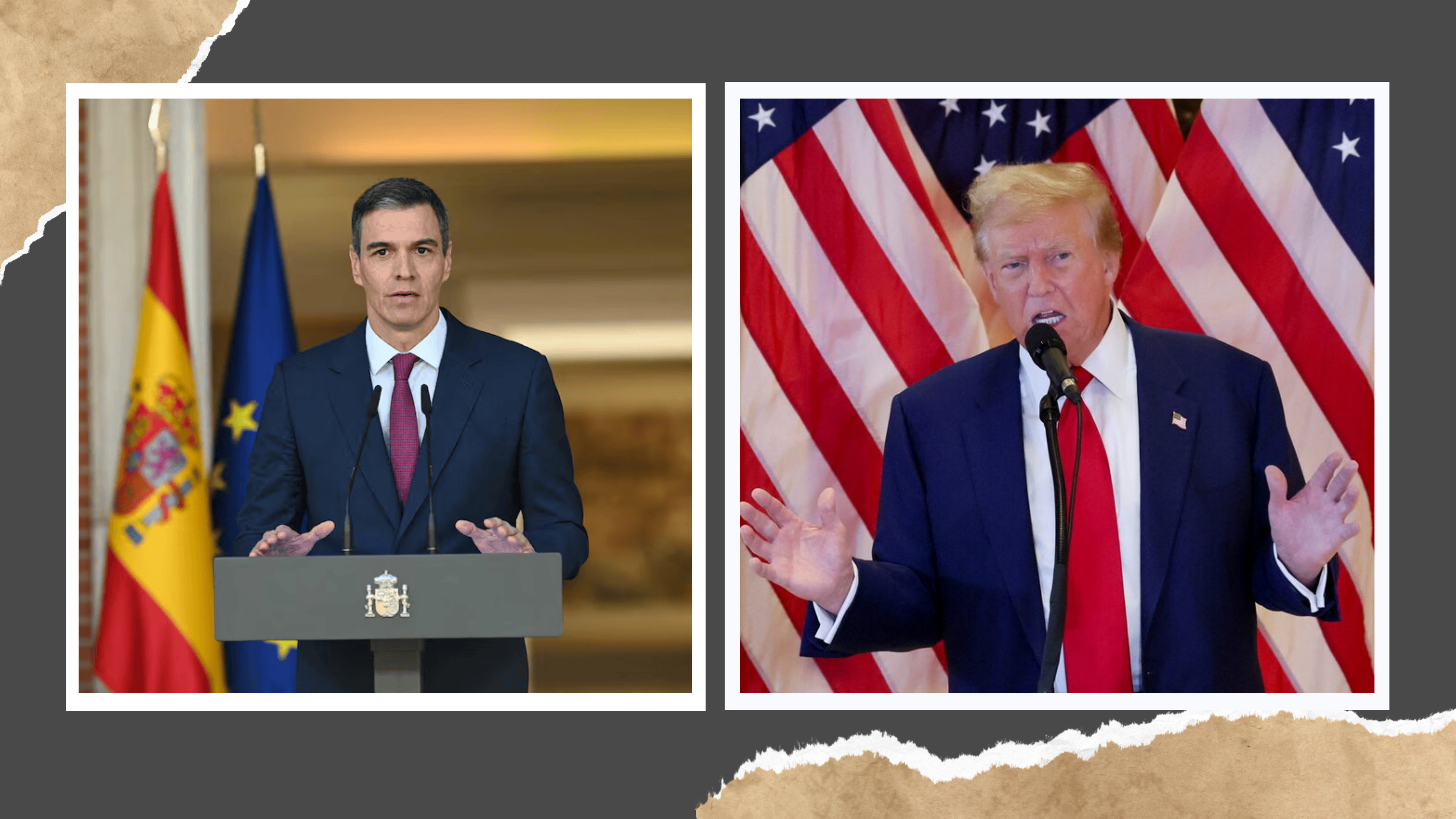
The Spanish Prime Minister, Pedro Sanchez has recently made headlines for his statements, saying “No to war,” and condemning the US-Israel attacks on Iran, provoking a war that could have been avoided. For the dystopian world we live in now — the most simple, direct statements from Western leaders, that, most importantly, disagree with US President Donald Trump’s foreign policies, are remarkable because they are outliers. The Spanish Prime Minister’s statements invoke similar sentiments to the Canadian Prime Minister Mark Carney’s candid remarks at Davos, about the rupture of the rules-based international order. They make headlines because too few leaders in the Western world have had the courage to speak the truth and call out global hypocrisy, especially when it comes to the superpower of the United States — the so-called architect of the rules-based order.
Spanish Prime Minister Sanchez has long upheld Spanish sovereignty and its own values, stating that “leadership is not following what others do.” Before the war in Iran, he refused to give in to NATO’s proposal of requiring a five percent increase in defense spending which angered Trump. The Prime Minister has been the most vocal European critic of Israel’s genocide in Gaza. As the Iran-US-Israel war started, Madrid refused to rally behind the US and did not grant the US permission to use jointly operated bases in Southern Spain to continue its attacks on Iran. The decision drew condemnation from Trump, who threatened to halt trade with Spain and “cut off all dealings,” with the country. Trade threats in response to diplomatic disagreement is now a hallmark of the Trump administration.
On Wednesday, the Spanish Prime Minister doubled down on his position to stand against violence, refusing to bow down to Trump’s bullying. In a ten-minute speech, Prime Minister Sanchez addressed key principles: Spain believes in international law, which applies to Gaza, Ukraine, Greenland, Venezuela, and Iran. The statement was a refusal to conform to the practice of selective application of international law, where powerful nations can do what they like without accountability. He stated that the same international law that applies to Russia’s invasion of Ukraine, also applies to other regions of the world, stating “No alla guerra,” meaning no to war, and he meant no to war everywhere. He added, Spain will not “be complicit in something that is bad for the world, contrary to our values and interests, simply out of fear of reprisals from some.” He was uncompromising that Spain believes in coherent application of international law. He did criticise the current Iranian regime for killing women, but reiterated that regime change through bombs and violence is not the way to solve the issues, and called for dialogue and diplomacy.
Sanchez recalled the war in Iraq, in 2003 — which the previous Spanish government had supported — as a cautionary tale of rallying behind an ally when they’re making the grave mistake of starting wars. He did not speak in support of Saddam Hussein, by any means. He simply stated that removing a dictator through force previously resulted in negative ripple effects: the loss of innocent lives, the rise of Jihadist terrorism, increased illegal migration particularly in Europe, and increase in energy prices. He warned that the current war could have an impact on millions, and said, “You cannot answer one illegality with another, because that is how the great catastrophe in humanity began.”
The key principle of the Prime Minister’s statements was the rejection of Trump’s war, and a reminder of the existence of international law. Unlike national laws, where you can go to court and resolve conflict within a nation, international laws require nations to work together, organise themselves for resolution. One nation cannot kidnap or kill another nation’s leader because the latter is authoritarian. Every nation’s sovereignty must be respected despite all of its flaws, according to Sanchez, in order to work together in a globalised world. The Prime Minister’s maintenance of his country’s position, as a sovereign democratic nation capable of upholding its own values, is one that stands out from far too many other nations that, for strategic alignment, fail to criticise the powerhouse of the United States, and its alliance with Israel’s dangerous campaigns in the Middle East.
Sanchez is second to Canadian Prime Minister Carney in reprimanding the US — even if indirectly — for the breakdown of the international order and the need to reassert international laws. It calls for the re-examination of the global world order and re-examining the efficiency of systems in place. As the US continues to set new standards of violating other nations' sovereignties with brute force, middle powers speaking up is a sign of some hope for global diplomacy. While many in the right-wing view the Spanish Prime Minister’s position as a “left wing view,” it should not be a polarising concept to say, “No to war.” In his speech, the Spanish Prime Minister addressed that some people called his position naive, stating, “It is naive to continue violence.” It is undeniable that the war in Iran is costly for the world, and continuation of it may have unintended consequences. For the past two years, the world has seen more and more short wars, and the sustenance of two long wars. It is time that more leaders reject all wars, regardless of which nation provokes them.
Ramisa Rob is Geopolitical Insights editor at The Daily Star.
Send your articles for Slow Reads to slowreads@thedailystar.net. Check out our submission guidelines for details.
The politics of fear: From Gaza's paper kites to ‘unsafe’ on campuses
Shared rivers, shared responsibilities: The case for water treaties
Shanghai Cooperation Organisation at 25: Can China, India and Russia really speak with one voice?

Bihar wants Delhi to not renew Ganges treaty. What does it mean for Dhaka?
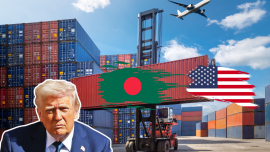
Bangladesh and the United States: Beyond the tariff bargain
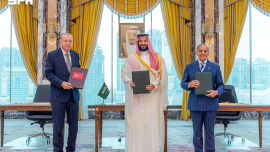
From the Carter Doctrine to the Mecca Pact: A changing Gulf security order
More capability, less autonomy? Bangladesh’s emerging security dilemma
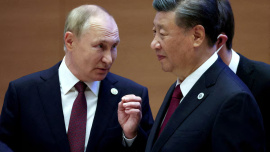
An anti-West network is emerging: How should Bangladesh respond?
The Mecca Pact: Deterrence, Israel, and the new Gulf security equation