The real question behind Tarique Rahman's China visit

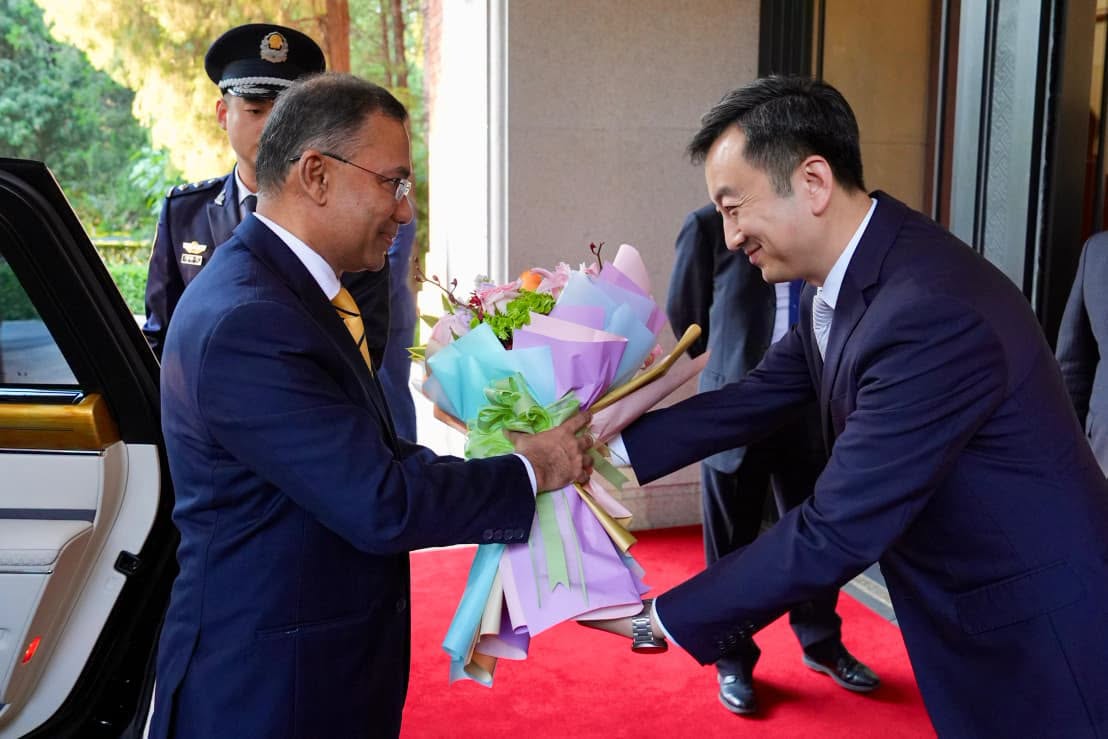
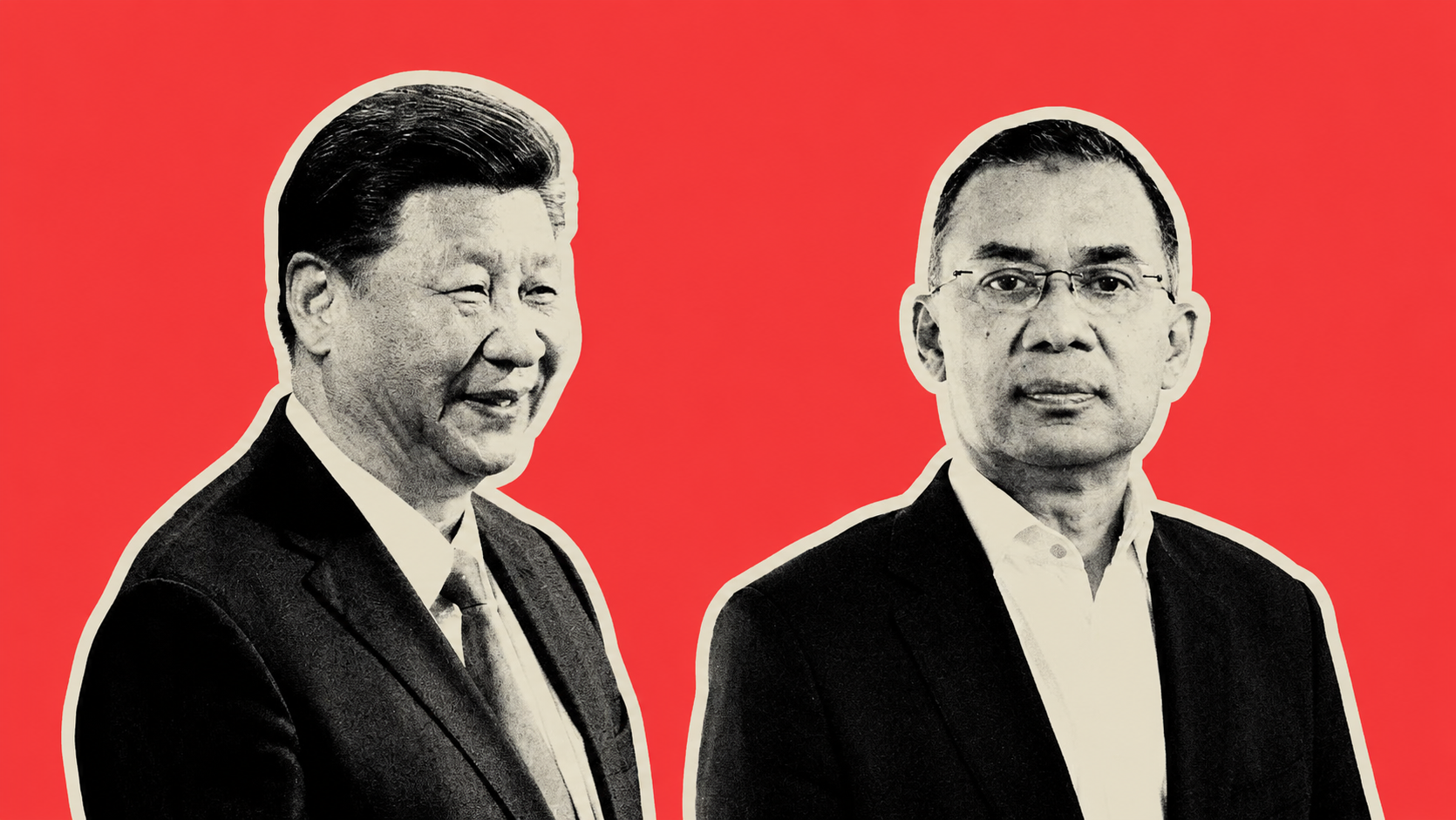
The Prime Minister's first trip to Beijing has prompted considerable strategic speculation. In my reading, the visit is dominated by something less dramatic and more pressing: our internal compulsions. It is those compulsions that drive a country's foreign policy, and in our case, they are economic before they are strategic.
What Bangladesh wants
Three needs shape what Dhaka is asking for.
The first is financial support. The economy is in poor shape, and a government in that position turns to its friends. The precedent is instructive. In 2024, the then-prime minister went to Beijing and sought about $5 billion in budget support; the Chinese did not agree, as the underlying economic conditions did not justify it, and the visit ended on a sour note. The basic structure of the economy has not improved since; if anything, it is weaker, so securing some financial support will again be a priority.
The second is investment, because employment is among our most serious problems. Here, the Prime Minister is expected to press for Chinese investment, and the government has just designated a dedicated Chinese Economic and Industrial Zone to encourage Chinese firms to take Bangladesh seriously and utilise its opportunities as a free trade zone.
The third is infrastructure, where China is already our foremost partner. Press reports suggest Dhaka is seeking around $6 billion in infrastructure support, and this is the area where Beijing is most likely to respond positively, because it holds the surplus capacity it can transfer to help build ours.
Financial support, investment, infrastructure: these are what we want.
What China wants in return
China's expectations matter just as much.
First, Beijing will want Bangladesh to reaffirm the One-China policy, a constant in its diplomacy. Bangladesh has supported it consistently and will be glad to do so again.
Second, China would like Bangladesh to be more deeply integrated into the Belt and Road Initiative across infrastructure, finance, agriculture, and renewable energy.
Third, Beijing is advancing its broader frameworks, including the Global Development Initiative. I believe Bangladesh can be receptive to the GDI in particular because development cooperation is the least contentious of these initiatives and carries limited strategic implications; when it comes to more security-oriented frameworks, Dhaka is likely to be more cautious.
There is also a real convergence of interest in technology and energy. China has world-leading capacity in semiconductors, electric vehicles and solar power, and these are precisely the areas where it can support us. Bangladesh has lagged behind its neighbours here; Nepal is now the largest market for Chinese electric vehicles in South Asia, and with energy security back in focus, the government is looking at electric vehicles and renewables afresh. The presence of the energy adviser in the delegation indicates that this will be discussed seriously. Cooperation on agriculture and education may follow.
We urgently need to strengthen our capacity to absorb and utilise external support, and that requires meaningful reform, stronger institutions, and effective implementation mechanisms.
Defence is the more uncertain area. Since Bangladesh is among the largest buyers of Chinese military equipment, Beijing would like to build on that. How far Dhaka is willing to go at this stage is not clear.
Reading the geopolitics
The geopolitical dimension warrants a more measured assessment. On the Teesta, the Foreign Secretary has indicated that Bangladesh is reviewing the process and may discuss the project's feasibility with China rather than its financing. That distinction is deliberate. It reassures our regional partners and helps keep Bangladesh out of unnecessary geopolitical contention, which is a positive outcome. As long as the engagement remains on the economic side, the geostrategic competitors are willing to accept it; only if Bangladesh moves too far into the BRI and its security frameworks do things become difficult.
The Malaysia stop should be read in the same spirit. It signals that Bangladesh does not wish to be drawn into an adversarial Indo-Chinese frame, and our neighbours will understand the message. I sense that we continue to remain engaged with both sides, conscious of each other's concerns and respectful of them. I do not believe this government is any more inclined than its predecessors to become part of that competition. We will pursue our interests, but within the same established framework.
So this visit is not a departure from our established way of doing things. It is more bilateral than geopolitical, aimed at addressing domestic challenges, and it will be cautious. Most of the understandings will be in infrastructure, employment, financial support, and energy, the areas where we need urgent help and where China has the capacity we would like to tap. Nothing very large in geopolitical terms should be expected.
The question we keep avoiding
There is a more difficult question underlying all of this, and it concerns us rather than China. China is not the easy partner we sometimes assume it to be. Beijing is tough. It declined the previous government's request precisely because a weakened financial system offered no assurance that the money could be repaid, a lender's logic, not a political one.
Vietnam offers a useful point of comparison. It maintains a close security relationship with the United States. It attracts substantial Chinese investment at the same time because it has the capacity to handle both. Our constraint is our own capacity to absorb. We are slow, our processes are heavily bureaucratic, and our collective ability to turn agreements into delivered projects is limited.
The conclusion, then, is not about leaning towards Beijing or away from it. We urgently need to strengthen our capacity to absorb and utilise external support, and that requires meaningful reform, stronger institutions, and effective implementation mechanisms. Without that domestic preparation, no agreement, whether with China, India, or the United States, will deliver its full potential. The Prime Minister can secure agreements in Beijing, but their implementation will depend on our capacity to deliver at home.
M Humayun Kabir is president of the Bangladesh Enterprise Institute (BEI) and a former ambassador of Bangladesh to the United States. This article was transcribed by Khairul Hassan Jahin.
Send your articles for Slow Reads to slowreads@thedailystar.net. Check out our submission guidelines for details.
Can Pakistan fix its problems at home?
How social media is reshaping the Bangladesh-India border conflict
Will Netanyahu derail Trump's Iran peace deal?

Bangladesh–Türkiye relations: Towards a disciplined strategic partnership
The Iran ceasefire deal and the limits of American power
Why the Strait of Hormuz reopening won't ease price pressures anytime soon
Why fencing the Myanmar frontier alone won’t work
Why the US can no longer contain China

The real crisis behind India-Bangladesh border push-ins