Why Trump’s ‘Jesus moment’ ended in deletion

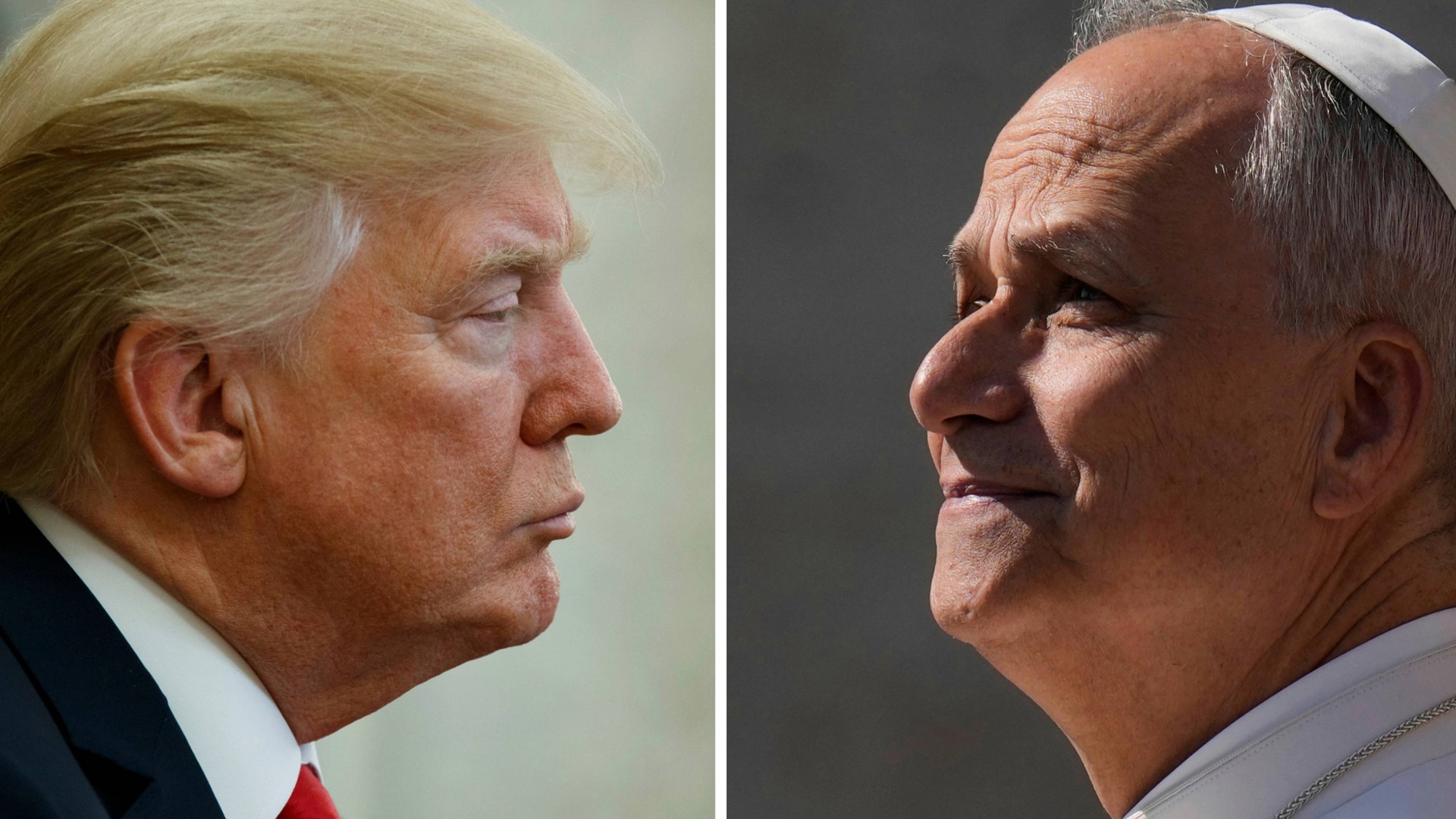
For a man not known to be particularly religious, US President Donald Trump spent a lot of time on matters of faith last weekend, prompted, perhaps, by statements made by Pope Leo. The supreme head of the Catholic church had suggested that there was a “delusion of omnipotence fuelling the US-Iran war”. The pope, who does not usually indulge in such pointed criticism of world leaders, exclaimed: “Enough of the idolatry of self and money! Enough of the display of power! Enough of war! True strength is shown in serving life.” His statements did not mention Trump by name, but it was him they were directed at.
All of this was just too much for Trump. The irate president shot back: “Pope Leo is WEAK on Crime, and terrible for Foreign Policy”, adding, “I don’t want a Pope who thinks it’s OK for Iran to have a Nuclear Weapon”. A little while later, Trump posted an AI-generated image of himself apparently as Jesus, curing a man.
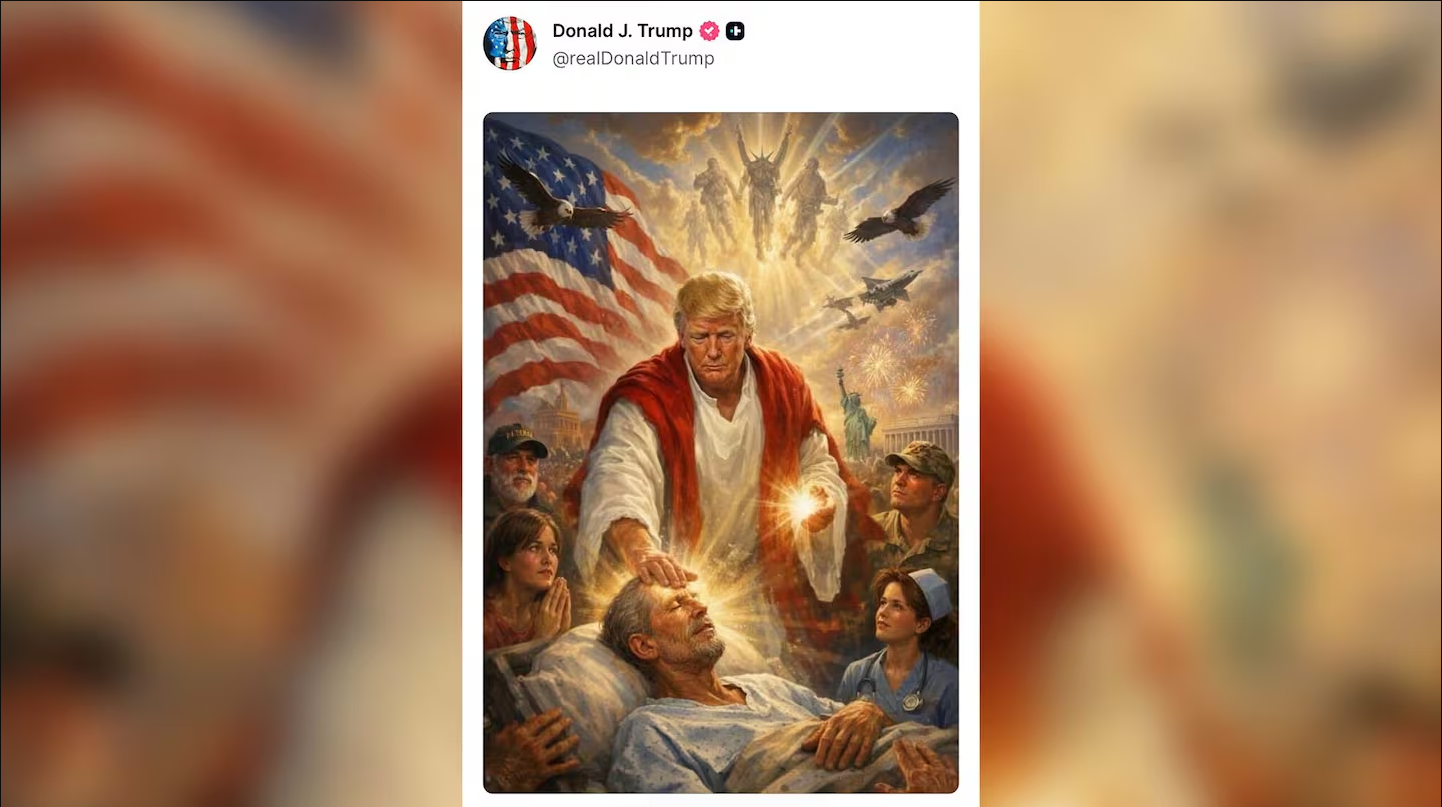
The move did not get the kind of response he wanted. Predictably, Trump’s detractors found such criticism of the pope, and such a comparison of himself with Jesus, astounding — but this time the critics included those who usually champion Trump. Riley Gaines, a Fox News podcaster and conservative commentator, said she “could not understand why he would post this”. Meghan Basham, a commentator at the conservative Daily Wire, called the post “Outrageous Blasphemy”. Former Congresswoman Marjorie Taylor Greene said, “I denounce this and I am praying against it”.
Not all the Catholics in Trump’s administration were willing to comment publicly on the president’s posts, including Vice-President JD Vance, a convert to Catholicism, and Caroline Leavitt, the White House spokesperson. It is notable that six out of the nine supreme court justices — including conservatives who have supported Trump administration policies — are Catholic.
The public outcry — and perhaps fear of censure — prompted Trump to do what he almost never does: delete a post. The Truth Social picture of himself as Jesus — which he had tried to explain away by saying that he thought he looked like a doctor in the image — was deleted. But, as we know, in the realm of posts, nothing is ever truly erased. Screenshots continue to circulate, along with the denunciations from the very people Trump’s supporters listen to.
The move did not get the kind of response he wanted. Predictably, Trump’s detractors found such criticism of the pope, and such a comparison of himself with Jesus, astounding — but this time the critics included those who usually champion Trump. Riley Gaines, a Fox News podcaster and conservative commentator, said she “could not understand why he would post this”. Meghan Basham, a commentator at the conservative Daily Wire, called the post “Outrageous Blasphemy”. Former Congresswoman Marjorie Taylor Greene said, “I denounce this and I am praying against it”.
One of these was former Fox News host Tucker Carlson, who now runs his own media platform. Carlson — a cornerstone in Trump’s re-election bid — is part of intra-MAGA divisions. He, along with podcaster Candace Owens, has become a vocal critic of what they call the president’s ‘Israel First’ policies. Both have offered critiques of what they describe as Zionist and Christian Zionist agendas. Carlson recently interviewed Mike Huckabee, US ambassador to Israel, portraying him as strongly supportive of Tel Aviv’s expansionist agenda rather than acting solely in America’s interest.
Carlson’s take on the image was notable. Comparing the AI-generated image circulating online and the one posted by Trump, he pointed out that in the original version a figure above Christ’s head appeared to be an American soldier. In the version shared by the White House, he claimed this figure had been altered. Carlson remarked: “The American soldier over the president as Jesus’ head has been changed, and is now, if you look very carefully, a demon. Some kind of winged creature of hell. So, it goes from an image that suggests healing and light to an image that suggests, I don’t know, a scene from Revelation?” When Trump was questioned, Carlson added, he said that he did not explain why it had been altered.
The allusions may seem far-fetched to the rational viewer, but Trump supporters — particularly those who listen to Carlson — are familiar with narratives of hidden meanings and religious prophecies.
In this case, the reference to the ‘Book of Revelation’ insinuates a comparison with the coming of the Antichrist, which Christians believe will precede Jesus’s return. It reflects how apocalyptic narratives are being shaped in sections of the American far right.
As for the rest of us, we too are witnessing the unsettling nature of recent events, beginning with Israel’s war in Gaza. But if omens are to be considered, the past weeks have been full of them.
Reports of swarms of bees in parts of Israel, unusual rain near the Strait of Hormuz, and large gatherings of crows over Tel Aviv have been interpreted by some through a prophetic lens. Such interpretations often draw on imagery from the ‘Book of Revelation’, including passages describing birds gathering “for the great supper of God”.
This article was first published under the title “Trump’s gambit” in Dawn, an ANN partner of The Daily Star, on April 18, 2026.
Rafia Zakaria is an attorney teaching constitutional law and political philosophy.
Send your articles for Slow Reads to slowreads@thedailystar.net. Check out our submission guidelines for details.
Why Gaza peace deals keep falling apart
Rohingya genocide: Will the ICJ verdict bring justice?

Should Bangladesh join the Mecca Pact?

Documenting Rohingya history / Rohingya repatriation needs more than diplomacy

Nine years on, Rohingya refugees need more than shelter

Myanmar’s partial Rohingya repatriation plan: Another attempt to mislead Bangladesh?
Is Trump’s Gaza peace plan falling apart?

What Japan’s changing Indo-Pacific strategy means for Bangladesh

Can India and Bangladesh build a more equal economic partnership?