When the river remembered: The vanishing world of Bangladesh's old folk festivals
Picture a Bangladesh nobody living today has ever fully seen. It is a land before electricity reached the villages, before the radio crackled and the mobile phone lit up the dark. The river is the road, the monsoon is the calendar, and the only entertainment a farmer knows—the only theatre, the only music, the only communion with something larger than his paddy field—arrives a few times a year in the form of a mela. A fair. A gathering that is half prayer and half party, equal parts marketplace and mythology.
That Bangladesh, the one threaded together by its folk festivals, is not entirely gone. But it is leaving. And to understand what is being lost, you have to understand what these festivals were—not just as events on a calendar, but as the living, breathing soul of a people who had no other way to say, "We are here, together, and this moment is holy."
The Bangla calendar — the agricultural heart that beat beneath everything — divided the year into six seasons, and almost every turn of that seasonal wheel came with its own ritual gathering. Baisakhi, the new year festival that opens the month of Baishakh, was perhaps the most democratic of them all. On the very first day of the new year, traders settled their accounts in a ceremony called Halkhata—merchants would open fresh ledgers, offer sweets to customers, and begin the year clean and unburdened by old debts. It was not merely a financial tradition; it was a philosophical one. The idea that every year could begin again, innocent and full of promise, was embedded in the very accounting books of Bengal.
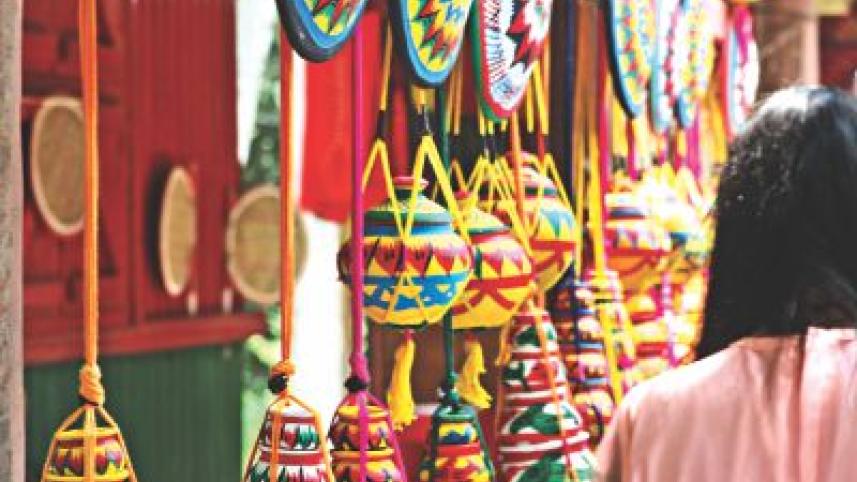
But the fair was where the year really announced itself. In towns and villages, Baisakhi melas would erupt overnight like flowers after rain — wrestlers came to show their strength, folk singers arrived with their ektara and dotara, potters spread their wares on jute mats, and children ran between the stalls in a state of pure, unmedicated joy. For the farmer who had worked through the cold and the dark of the previous months, this was the reward. Not money. Not rest. This—the noise and colour and press of bodies, the smell of molasses candy and fried dough, the sense that the whole world had come out to be alive at once.
If Baisakhi was the festival of beginnings, then Nabanna was the festival of gratitude. Celebrated during the harvest of the winter crop—when the paddy finally bowed its golden head and the fields turned the colour of old brass—Nabanna was the moment a Bengali farmer paused to say thank you. New rice would be cooked and offered first to the gods, to the ancestors, to the spirits that lived in the water and the earth. Only then would the household eat. The name itself means "new rice," and there was something deeply honest about that—a festival named not after a deity or a legend, but after the food itself. After the thing that kept everyone alive.
These harvest rituals were never separate from the spiritual life of the village. They were the spiritual life. The boundary between religion and agriculture, between worship and work, simply did not exist in the same way it does now. When a woman drew alpana patterns on her mud floor at harvest time—intricate geometric flowers made from rice paste—she was not decorating. She was protecting. She was inviting abundance. She was having a conversation with forces older than any scripture in a language made entirely of art.
Water is the great constant of the Bengal delta, and so it is no surprise that some of the most spectacular folk festivals were built around the river itself. The Itna Mela, held in the wetlands of Kishoreganj during the monsoon season, was one of the strangest and most beautiful of them all. Imagine a fair that floats. When the rivers swell in the rainy season and the floodwaters merge the land and the sky into a single shimmering mirror, the people of the Haor region gather at Itna—not on solid ground but on boats. Hundreds of boats, possibly thousands at the festival's height. Traders, performers, pilgrims, families — all of them arriving by water, living by water, celebrating by water. For a people whose very existence was shaped by the annual flood, this was not a festival of survival. It was a celebration of it.
And then there was Ras Purnima—the full moon festival of Radha and Krishna, most spectacularly observed in Barisal and in the ancient temple precincts of places like Shibchar. On the night of the full moon in the month of Kartik, thousands of oil lamps would be lit and set adrift on the river in small clay boats. The sight — the dark water alive with light, each flame trembling, each one reflected and doubled by the current — was described by those who witnessed it as something that could undo a person quietly, in the way that only beauty can. The boats were called "akashprodip," everything for the sky, even as they sailed on water. Perhaps that is as Bangladeshi a metaphor as any: a sky-lantern that chooses to live on the river.
The spring brought Dol Jatra—or Holi, as it is known further west—when the air itself seemed to change colour. Named after the dol, the ceremonial swing on which images of Radha and Krishna were rocked back and forth by devotees, this festival of coloured powder and water transformed the village into something almost hallucinatory. The social rules that governed who could speak to whom, who could touch whom, and who belonged where—all of it dissolved in a cloud of red and yellow and green. For one day, the boundaries came down. For one day, everybody was the same colour. There is no government policy, no civic program, that has ever managed to do what a bucket of coloured water once did in a matter of seconds.
Alongside these seasonal festivals ran the great web of the mela culture—fairs tied to particular shrines, particular rivers, and particular legends. The Kartik Mela, held in honour of the warrior god Kartik at the close of the harvest season drew pilgrims from dozens of villages who came not just to worship but also to trade, to gossip, to find marriage prospects, and to settle feuds with a handshake in a holy place. The Shitala Mela, dedicated to the goddess who governed smallpox and disease, was both a religious event and a communal ritual of solidarity—a way of confronting the fear of epidemics together, in public, with prayer and noise and colour rather than alone and in silence. These melas were not escapes from reality. They were reality—the place where the anxieties of ordinary life were processed, dramatized, and finally released back into the air.
What gave these festivals their particular texture — what made them feel unlike the celebrations of any other place — was the art that lived inside them. Jatra, the folk theatre of Bengal, could hold an audience of thousands on an open field for an entire night with nothing but oil lamps for lighting and human voices for amplification. The stories were drawn from the Mahabharata, the Ramayana, and the Mangalkavya—but also from local legend, local scandal, and local grief. A good jatra troupe could make a village cry for a character it had never met and could make it laugh at a villain it recognized immediately. This was literature for people who could not read. This was cinema before the projector, psychology before the clinic.
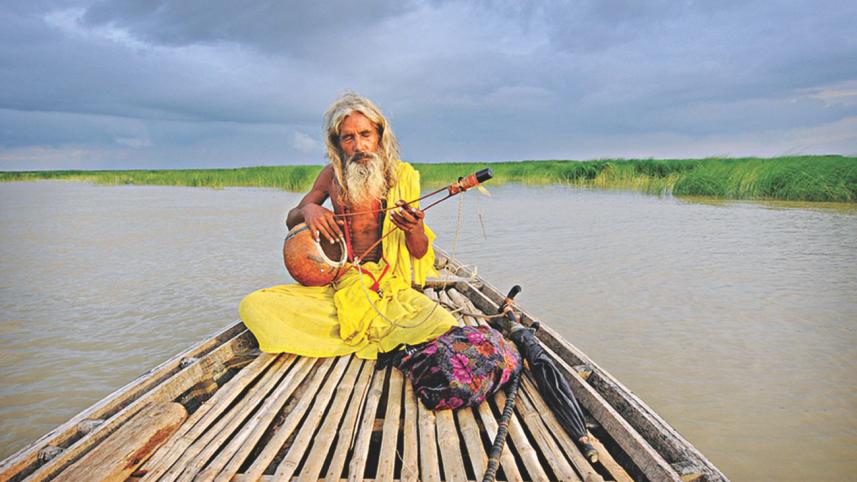
Alongside Jatra was Kirtan—the devotional singing that could begin at dusk and continue until the sun rose, carrying entire congregations into a state somewhere between prayer and trance. Every village had its kirtan singers, and every festival had its night when the singing would not stop, when the sound was too important to let go before dawn. And there were the Bauls—the wandering mystic poets who stitched together Hindu and Sufi thought into something entirely and stubbornly Bangladeshi. Their songs spoke of the body as a boat, the soul as a river, and God as a beloved who is always almost but never quite visible. The Bauls were the philosophers of the mela, and their songs were the philosophy. They sang questions nobody else was brave enough to ask out loud, and they sang them in public, in the middle of a fair, to anyone who would stop and listen.
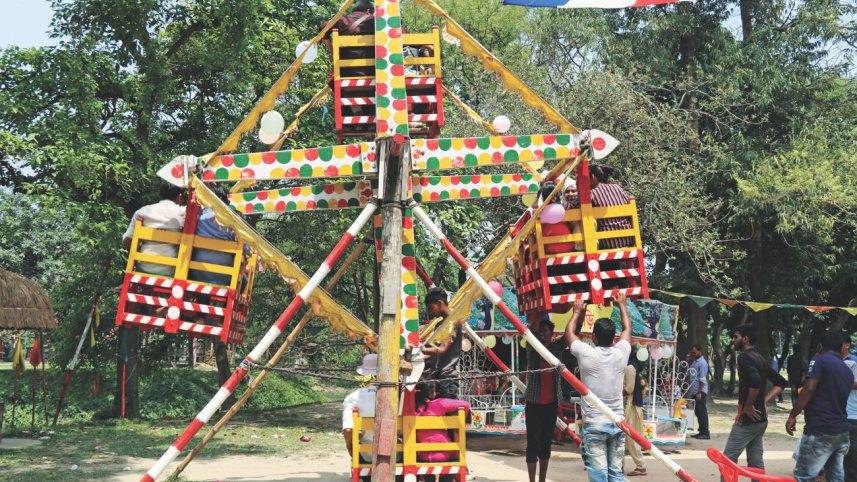
Much of this is now memory. Some of it survives, changed beyond recognition — Pahela Baishakh is celebrated with enormous energy in Dhaka, but the city version, with its processions and its commercial culture, is a different creature from the small-town mela where a farmer once settled his debts with a cup of tea and a handshake. The Itna Mela still happens, though fewer boats come each season. Kirtan still rings out in certain old villages on certain old nights. The Bauls are still walking the roads, still singing to whoever will listen.
But something has shifted in the relationship between people and these festivals — a thinning of the membrane between the sacred and the everyday that once made these gatherings feel necessary rather than optional. When your entire year was governed by rain and harvest and river and flood, the festivals that marked those rhythms were not leisure. They were the structure of time itself. They told you where you were. They told you who you were.
When a calendar app on a phone can tell you what day it is, you no longer need the fair to remind you that the year has turned. When a streaming service can give you music at any moment, you no longer feel the particular hunger that made a night of kirtan feel like water after thirst. The festivals did not disappear. The hunger that made them indispensable did.
Yet here is what remains true: no app has yet been built that can do what the Ras Purnima lanterns once did—set a thousand small flames adrift on dark water, each one a prayer, each one a person, all of them moving together on the same current, going the same direction, briefly, beautifully, before the river takes them where it will. Some things, it turns out, can only be celebrated in person. Some things can only be kept alive by gathering. That is what Bangladesh's old folk festivals understood, in their bones, long before anyone thought to write it down.
SB Meraj is a writer, theatre artist, and film enthusiast. He can be reached at sbmeraz.14mgbhs@gmail.com.
Send your articles for Slow Reads to slowreads@thedailystar.net. Check out our submission guidelines for details.
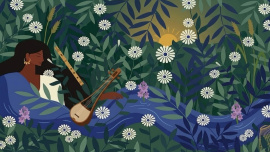
Bhawaiya: Songs of desire and defiance
Santal weddings: A vibrant display of tradition and ritual
How rivers and rural life shape Bangla folk music
Bizu: A celebration of blooms, beginning, and bounty
Roots and rules: The folk games of Bangladesh
Wera Saether: The Norwegian voice of Bengali folk music

Why folk artists remain invisible in a culture that celebrates their art
Why folklore study matters in modern Bangladesh?
The Nakshi Kantha: Tradition and transformation