


Can workers seize the opportunity as Western capitalism declines?

The Daily Star: Today, a worker might be in a garment factory in Bangladesh, or alone on a delivery bike, or stressed at an office desk. When workers are this separated, who makes up the working class?
Richard Wolff: I think the important thing is to understand, as your question suggests, that the conditions of work have changed, as they always do, and that it is therefore necessary to adjust and change the way we think strategically and tactically about how to organise the working class. So yes, people are not all crowded into huge factories the way they once were, and that allowed a certain kind of organising focused on the factory. On the other hand, organising, and this is just as important, shows that there's much more unification of the working class than there used to be.
If you think about the difference between manufacturing and farming, well, that difference meant that, for most of the 19th and 20th centuries, organising industrial workers was radically different from trying to organise farmers, peasants, and rural people. And we struggled, the left, the socialist movement and so on, on how to deal with that very big difference. There was often a situation where you could organise one, the industrial, but not the agricultural, or vice versa. Well, we don't have that problem now. Agriculture is shrinking, and the growing reality is urban and industrial. Let me make a suggestion. What we need more than ever is to organise people around what they have in common. And here's the thing that they have now more than anything else. The working class are ‘employees’. In other words, we have a divide in our society between the ‘employer class’, the people who have jobs to give, and the mass of people who need those jobs to live, and in the relationship between the employer and the employee, many opportunities for political organisation present themselves.
Let me give you an example here in the United States. I'm sitting in the middle of New York City talking to you. Well, what we have here is a very diverse group of people doing very different kinds of work. Still, they all understand that, according to the United States government, employers account for only 3% of our people. The other 97% are not. Of that 97%, at least 77–80% are employees. Okay, that's who we focus on. We focus on the employees, and then we show them, which is easy to do, that the power and the wealth are in the 3%, in the employer class, and that capitalism is a system that serves first and foremost the employer class and then not at all adequately the employee class. It's a way of defining class that organises what we all have in common, which is ‘we are employees’, either in the private sector or the government sector, but it is not all that important whether it is private or government, because the bottom line is that we are the lowest priority because we are employees. For us, that has become the focus of the next stage of anti-capitalism.
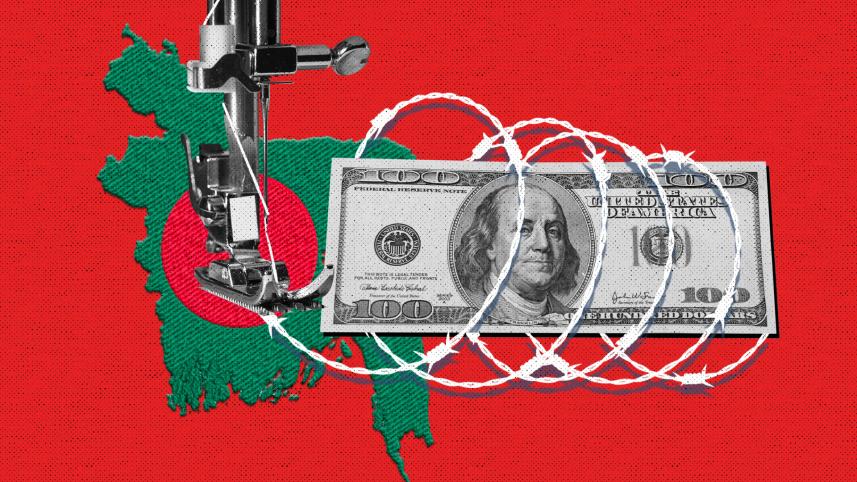
TDS: If we look at one of those groups—Bangladesh exports 47 billion dollars in garments, but the workers face poverty wages and rising inflation—is this just an unfair distribution of profits, or is it a deeper structural flaw in which the system is designed to keep wages low?
RW: Yes, the system is carefully designed to keep wages low and to ensure that any profits are taxed at the lowest rate. To give you an example, this is hypothetical, so this is not a concrete example, it's just to give you an idea. You could produce clothes in Bangladesh, and then store them in a warehouse, let's say somewhere in North Africa or in Europe, and then ship them to the United States, where they are sold. Well, where does the profit come? It's one company that does this. It produces an invoice stating that the clothing was produced in Bangladesh and cost, let's say, $10, and was sold to another company for $11, so only $1 in profit. Why? Because Bangladesh has taxes that they don't want to pay.
The warehouse that gets it for $11, the $10 shirt, will then sell it to an American retailer for $25, making an enormous profit. Why? Because it paid a low price for the shirt and sold it for a high price. Why is it organised that way? Because it's the same company. The same company that makes the shirts in Bangladesh stores them in, I don't know, Algeria, and ships them to Boston. The same company, but they want the profits to be taxed in the jurisdiction with the lowest tax rate. So they manipulate prices to make the profit appear where they will pay the least tax. And what does that depend on? Well, I'll give you a real example. If there were a storage facility in Algeria, it's because the company bribed officials to secure a low tax rate on its business profits, maybe by giving them a Mercedes-Benz, since that's cheap compared to the taxes they'd save.
So they find out who they can bribe to get the lowest tax rate and then write their invoices to make it all look good. So, here's the point. Don't ever be fooled by a local spokesperson for one of these companies telling you that they have a very low profit margin on what they produce in Bangladesh. We cannot pay our workers more because we sell the shirt for only $11, even though it costs $10 to make. Those numbers are not about cost. Those numbers are manipulations designed for tax purposes. And so don't let them fool you. If you make them pay you more for workers' wages in Bangladesh, they can do that because they can adjust the rest of what they do to account for it. They use their own manipulations to keep wages down in the countries of origin.
TDS: What would it actually take for countries like Bangladesh to fight back and change the rules of that global game? When we ask our government, they say there is no alternative but to accept that global brands hold the power in supply chains.
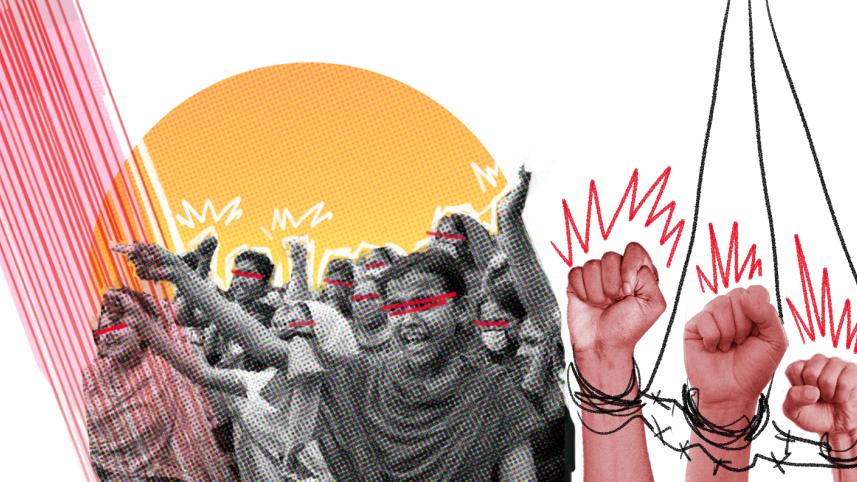
RW: Yeah, well, they will always say that because they have always said that to get you not to fight. The bottom line, please remember, and this is a lesson of economics, is that without the workers, nothing happens. If they want an industry exporting textiles or clothing from Bangladesh, they need workers. They can buy raw materials, but nothing happens. They can open a factory, but nothing happens. They've got to have the workers. They know it, but the irony of history is that the workers don't seem to understand the power that they have. And how do you exert that power? Well, in the end, there is one way, and that is you withhold the labour without which they have nothing. And remember, they don't have much tolerance for this.
These corporations are usually using borrowed money. That means they have to pay interest. They have to repay the money they used to build the factory, the warehouses, the machines, and everything else. Those are current expenses they have to meet. The only way they can meet them is if the workers are working. If the workers hold back, they are finished. Now, I know it is difficult for any worker not to go to work and earn their wages because they depend on it.
I appreciate that that is the situation, especially in Bangladesh. I know something about wage levels in Bangladesh and the struggles you have already had over the past few years regarding those wages. But those struggles, and especially the ability to withhold labour—and you know sometimes you don't have to withhold labour; you have to threaten the employer that you may withhold it—become very important. For example, it becomes very important to get the workers together, hold a demonstration, hold a big meeting in a hall somewhere, and take a vote. How many are ready and willing to go on strike? If you know that you have the majority and let everybody vote, let the employer realise that if they don't meet you halfway, they risk losing the labour. In the end, that is the most powerful weapon that you have.
TDS: We have seen you talking about workplace democracy for years. But how can the global south, like Bangladesh, organise when there are many informal workers or gig workers? If they don't have a traditional workplace to take over, how do they really organise in the current situation?
RW: Well, what you have to do is make a strategy. Typically, not always, but typically, if you have a group of workers that are easily or relatively easily organisable, you can begin because they are in a clothing factory somewhere, or they all live closely together in a certain part of the community and so on. Begin with them. Begin by organising where you can make a strong beginning.
Then, and this is crucial, make a serious effort to reach out to the other workers who are not so easily organised, who have to be brought together around their religion, around their neighbourhood, around their, who knows, their sporting activities. Let it be clear to the other communities, the other kinds of workers, that the union or the political movement you're developing wants to reach out to them, to find allies, to find friends, to find people who will be working with you. And you can tell them, very honestly, that we will help you organise workers like you in whatever way you understand to be possible.
Don't dictate to them what they should do. They know better than you do about what might work. What they need is help, support, friendship, and you can provide those things. That's usually enough to find the individuals who will then become organisers in the rural area, among independent workers. I'm well aware that in Bangladesh, in Pakistan, in India, there's this enormous so-called informal sector of little self-employed people. Those people have real concerns about the government, the police, and many other issues they face. They need organisations too; there's no reason why organisations for them cannot build out of the organisations of the factory workers.
TDS: Taking all of these into account, let's look at the world right now. We see new wars, trade conflicts, and failing democracies everywhere. Are these just temporary problems, or are they signs that the capitalist system is finally reaching a breaking point?
RW: Well, what you are seeing, and what we feel we are living through here in the United States, Western Europe, and Japan, is the end of the old Euro-dominated capitalist system. Yes, that is fading. The United States, in many ways, is no longer able to dominate, to lead. The whole period after World War II, from 1945 until 2010, 2015—that period of United States domination—is over. The United States has lost its economic dominance. That is now passing to China. It has lost its political dominance; that is, the global South is emerging as a new player in the world system.
Nothing lasts forever. And the American empire, like every empire before it, is now over its rise, over its peaking, and is on the way down.
All the United States has left is its military power. And you can see, for example, right now that even military domination doesn't solve the problem. The war in Iraq is being won, as I speak to you, by Iran, not by the United States. The United States has more military power, more ability to destroy, to bomb, to kill, but it can’t translate that into domination.
The irony is that back in the 1960s, 70s, or 80s, it didn't have to rely on its military dominance to secure its political and economic dominance. So that is a radical change. And because all of Europe and Japan imagined, with the United States, that it would be the United States that could protect them and could guarantee to them the wealth they had, the global dominance they all shared, they expected the United States to remain the hegemonic power forever. That was a terrible miscalculation. Nothing lasts forever. And the American empire, like every empire before it, is now over its rise, over its peaking, and is on the way down.
All that Mr Trump is doing is being furious about the decline, but most of what he has done has made it worse for him and the people he represents.
To give you an example, I'm sitting here in New York City. It's the largest city in the United States. We just had an election a few months ago where we overwhelmingly elected—this was not a close election—an Islamic socialist, Zohran Mamdani, to be the mayor of this city. And he's doing a very good job. He's very popular.
You know, it is a sign of the American people's awareness that the world is changing. And whether it's just American capitalism, just European capitalism, just Japanese capitalism, South Korean capitalism, or the whole system, I don't think we know that yet. Many of the BRICS countries are countries in which the capitalist system, the employer–employee relationship, is still very much the way they organise production. So I'm very confident in telling you that Western capitalism is in decline, no question. But whether what we will see is an Eastern capitalism or a real transition to something beyond capitalism—a socialism or a communism of some kind—I don't think we can be clear about that yet.
TDS: In Bangladesh, we also hear a lot about the rise of BRICS and the decline of Western economic dominance. But for workers in countries like Bangladesh, does this global shift actually offer a chance for better lives, or does it just mean getting a new set of bosses?
RW: Well, you know, that's exactly the struggle that you're going to have to face. That's your struggle, that's our struggle. We have to be sure. Let me put it to you another way. One reason people like me respect Karl Marx and the Marxian tradition is the wisdom he acquired and transmitted in his writings. And one of the remarkable insights he had was that there are no guarantees.
There's nothing built into the capitalist system that will dictate where we go next as capitalism fades away. I'll give you an example. Up until the American Civil War in the 1860s, half of this country, the United States, was a slave society. It was divided into a relatively small number of slaveholders and a huge number of enslaved people. Eventually, the enslaved people's revolt and the contradictions of that system destroyed it. And that was finally resolved during the Civil War, which rocked the United States from 1860 to 1865.
Now, here comes the lesson. The enslaved people demanded freedom. They didn't want to be enslaved anymore. But what exactly that meant had to be struggled over. Some people meant that, the slaves included, that they wanted to be better fed, better clothed, better housed, and better able to keep their families together. But then other slaves said, "No, freedom means the end of slavery. No person can own another person as a piece of property. That has to stop."
It wasn't clear during the Civil War which of these would win. Similarly, in France in the 18th century, the century of the French Revolution, the French people no longer wanted feudalism. No more lords, no more serfs. They wanted a new world. The slogan of the French Revolution: ‘liberty, equality, fraternity’. What do those words mean? What they got after feudalism in Europe, in France, was capitalism. They hoped that capitalism would bring liberty, equality, and fraternity. But it didn't. It brought capitalism, it brought the employer–employee relationship, instead of the lord-and-serf or master-and-slave. But it didn't bring liberty, equality, or fraternity. And Marx, that's why he's famous, explained why capitalism with this employer–employee relationship will never create equality.
We want the masses of people to democratically run the economy for the first time in modern history.
It will create the sort of inequality we have had throughout capitalism's history, right to this moment. So I'm telling you, capitalism is declining the way slavery did in the years before the Civil War, the way feudalism did in the years before the French Revolution. But what comes next depends on us, you, me and people like us. We want a new system that is better than and beyond capitalism. We don't want an employer–employee relationship. We want the masses of people to democratically run the economy for the first time in modern history. But whether we will get that outcome, that depends on how well organised we are, how clearly we understand the situation, and how effectively we can explain it to the masses of people who, by what they do, will make the final decision.
TDS: To finish our conversation, if you could give one message to the workers and young generation in the Global South today, what would it be?
RW: It would be the following. You, by your youth and by being part of the Global South, are thrown into a position where you can see dramatically how unequal this world is. Because of modern telecommunications, you know through your internet, through your television, through all of your programmes like this one that you're producing right now, you are in a position to show the mass of people, particularly in the Global South, that their situation, their suffering, the lack of medical care, educational opportunities, comfort in life, all of the important things have not been made available to them in the Global South in anything like the way they were made available in the Global North.
This is a feature of capitalism. You can teach people right out of their immediate circumstance that capitalism is a system that puts their interests last, and that if they ever want that to change, if they want to have the kind of life that is possible, then capitalism is their problem, not their solution. Capitalism has been in charge of the world for at least the last three centuries: the 18th, 19th, and 20th. It spread across the world. It promised liberty, equality, fraternity, democracy, and prosperity. It delivered that to a very small part of the population because that's how capitalism works. Here in the United States, let me be clear: half of our people live paycheck to paycheck.
What they can consume this week depends on the income they can get this week, and that income is not secure. We have no national health insurance. We don't have half the things that European capitalist systems have given their people. And why? Because, in Europe, the socialist, communist, and labour movements have been much stronger over the last 75 years than in the United States. The working-class organisations make the difference. In Europe, for example, in France, everyone has government-provided medical insurance from the day they are born to the day they die. If you get sick or hurt, you go to a medical care facility where doctors and nurses help you.
You don't pay for that directly; the money is deducted from your wages, and you have national health insurance, which the government funds. We don't have that in the United States. We have nothing like it. Why? Because we haven't, as a working class, struggled hard enough. We struggled in the 1930s, and we got our old-age retirement system, the first minimum wage, unemployment insurance, and the government hiring millions of workers. We know what an organised working class can get. But in the 1930s, we faced two realities: the collapse of global capitalism, the Great Depression, and the rise of powerful socialist and communist parties, along with labour unions, here in the United States. Learn from that lesson.
Capitalism is weaker now in the Global South than it has ever been. Can you organise unions, socialist, and communist parties to work together to take advantage of the decline and changing pattern of Western capitalism to create a space for the Global South you've never had before? That's possible now, and I know that if you do it, you will have many friends and allies in the United States and Western Europe, perhaps more than you know.
Send your articles for Slow Reads to slowreads@thedailystar.net. Check out our submission guidelines for details.