Are Bangladesh’s multilingual youth being heard?
In a world where globalisation provides unprecedented access to information and opportunities for education, business and social activities, “killer languages” have emerged as a threat to multilingualism. We often hear from parents that they want their children to learn English, or, as the case may be in Bangladesh, Bangla, because they will have better education and livelihood opportunities. This can be based on a false assumption. Around 40 percent of learners worldwide still lack access to education in a language they understand best, highlighting the scale of the challenge.
There is clear evidence that learning in multiple languages, starting with the mother tongue and then gradually adding national and global languages, is good for cognitive abilities and does not impair language skills in second and third languages. Opening the language learning window in young children, an optimal, biologically determined period from birth to the onset of puberty when the brain is most receptive to ac-quiring languages, strengthens language ability. During this childhood period, the brain’s ability to create neural networks for language is high, and this has pay-offs for neural development and, hence, cognitive capacity. Neuroscientific research consistently shows that multilingual learning strengthens executive function, memory flexibility, and problem-solving skills.
Language is not only for economic gain; it is also central to identity, cultural preservation, and societal cohesion. Preserving and passing on our cultural heritage contributes to local and national identity and enriches the world. Promoting cross-cultural understanding helps us to avoid past mistakes, stimulates inno-vation, and has significant economic potential.
At the heart of this is education that includes mother tongues and other languages. UNESCO defines multi-lingual education as the use of at least three languages: the mother tongue, a regional or national lan-guage, and an international language in education. In countries such as Bangladesh, where there are mother tongues including indigenous and local languages, the national language Bangla, and then im-portant educational and business languages such as English, the ability to speak multiple languages is clear-ly advantageous. But it is not necessarily easy to achieve.
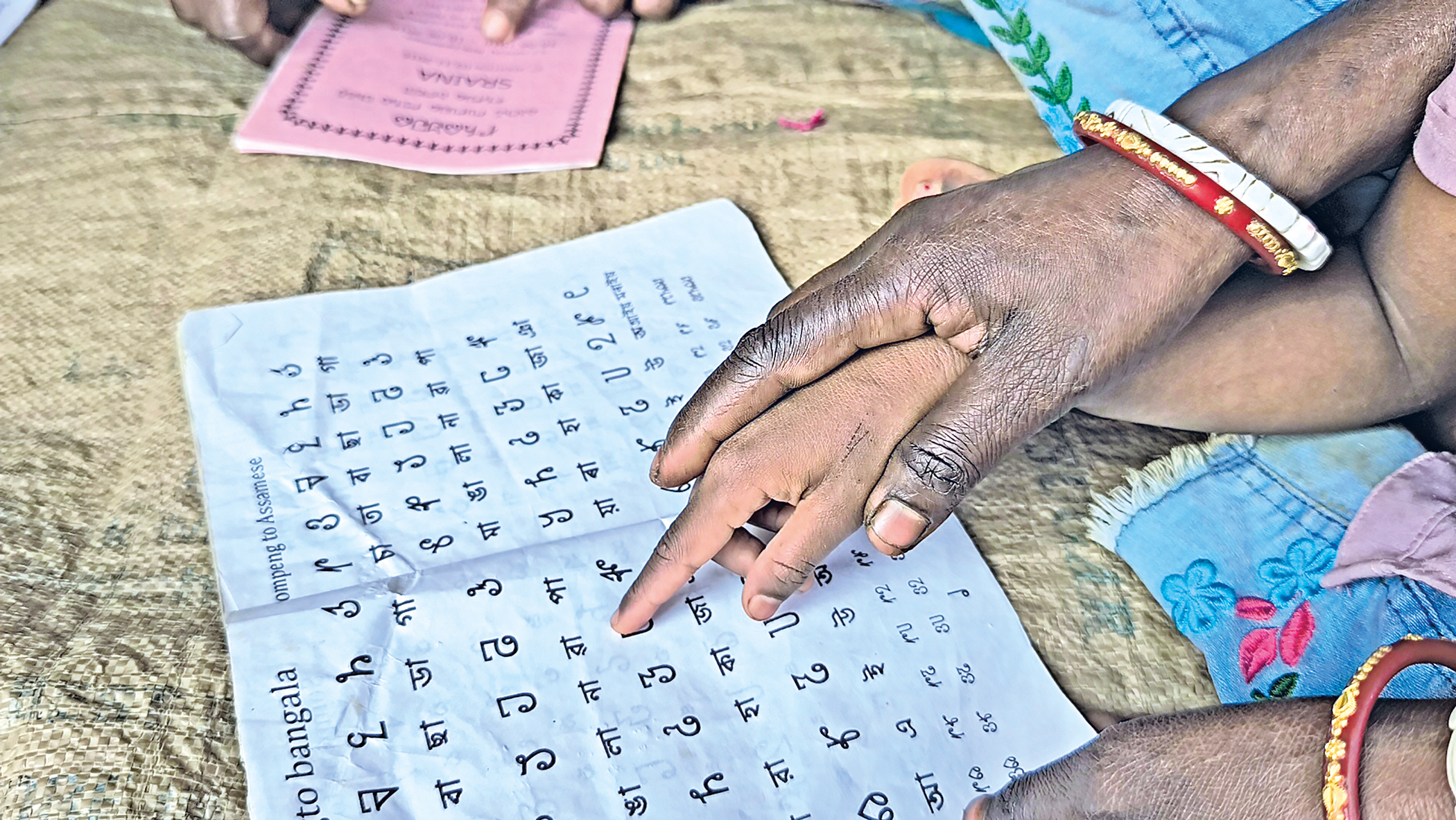
How does a teacher manage a classroom where students have multiple mother tongues? How does the Ministry train teachers to manage multilingualism? How can resources for multilingual education be developed with input from local communities? These are questions facing educators all around the world. They reflect broader tensions between linguistic diversity and standardised education systems worldwide.
UNESCO advocates for approaches that are context-specific and based on the number and status of languages in each country or region, and offers critical areas to guide educators, policymakers, and communities in creating inclusive and culturally responsive learning environments. Across regions, UNESCO supports governments in designing policies, developing learning materials, and strengthening teacher capacity for multilingual education systems. This is where this year’s theme is important: youth need not only to be beneficiaries but active participants in language preservation.
Harnessing technology for language innovation is one way to support multilingual education. Storytelling is another way to document cultural heritage, develop educational resources, and promote language learning. UNESCO recently published stories from young storytellers from Bangladesh’s indigenous communities, including the volume Of Roots and Heritage, featuring narratives from Chakma and Tripura communities. Such efforts complement work by civil society organisations and universities that are documenting and publishing materials in local languages. These global realities are reflected in national contexts, where multilingual education becomes not only an educational strategy but also a question of equity.
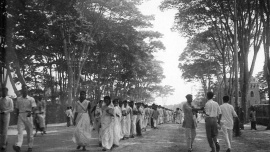
Every year, International Mother Language Day reminds Bangladesh of a truth that is both historical and urgent: language is not merely a tool of communication but a foundation of identity, dignity, and intellectual growth. Bangladesh’s commitment to linguistic rights is deeply rooted in its national history. The Language Movement of 1952 established the principle that language is inseparable from dignity and citizenship. This historical legacy later shaped the country’s constitutional commitments to equality and non-discrimination, including the right to education for all citizens regardless of linguistic, ethnic, or cultural background. Bangladesh’s own linguistic history has given the country a unique moral authority in global conversations on linguistic rights. Yet today, as we celebrate International Mother Language Day 2026 un-der the theme “Youth Voices on Multilingual Education”, it is time to ask a deeper question: are the voices of Bangladesh’s multilingual youth being heard, supported, and sustained within the current education system?
For thousands of indigenous and ethnolinguistic minority youths across Bangladesh, multilingualism is their daily reality. They grow up speaking one language at home, encountering Bengali in public life, and learning English in school. Bangladesh is home to more than 50 indigenous communities, many with their own languages, and national commitments to equality and education rights reinforce the importance of inclusive multilingual learning. Mother Tongue-Based Multilingual Education is therefore not simply about language. It is also about access, equity, and educational success without cultural loss. As Rani Ukhengching Marma, External Affairs, Mong Chief Circle, notes, “Learning in one’s mother tongue is a fundamental right for every indigenous child, and it is the responsibility of the government to ensure this in schools. Starting education in the language children hear at home makes learning easier, strengthens communication skills and cognitive development, and fosters pride in their language and cultural heritage.”
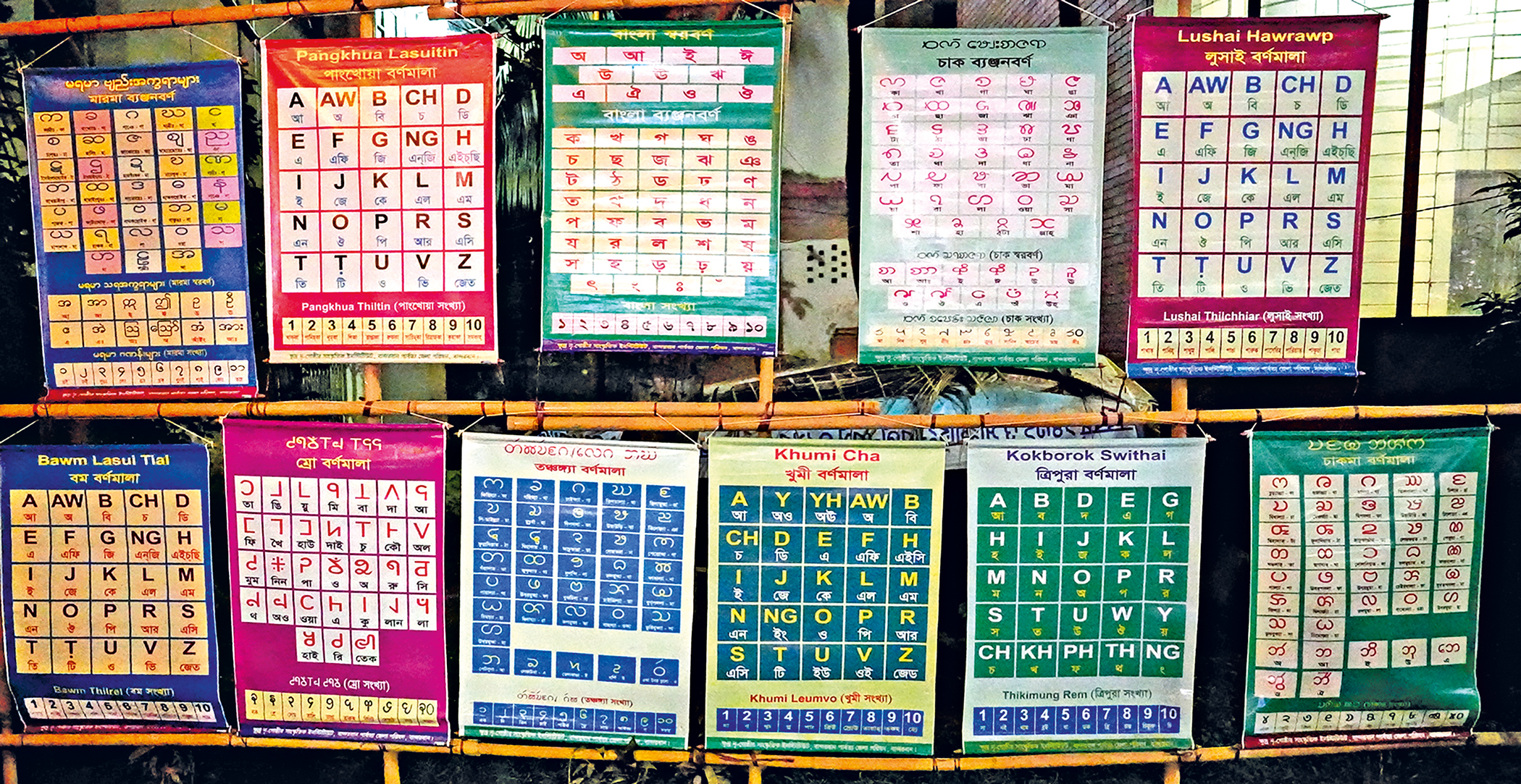
To advance multilingual education, the Government of Bangladesh introduced Mother Tongue-Based Multilingual Education from pre-primary to Grade 3 in five languages: Marma, Tripura, Chakma, Garo, and Sadri. Textbooks were developed and distributed in 2018 to support implementation. However, progress has remained limited due to several challenges, including insufficient teacher training and a lack of sus-tained mentoring and classroom support.
Furthermore, when learners transition to mainstream Bengali-medium instruction after Grade III, they of-ten lose the literacy skills they developed in their mother tongues. This transition can pose challenges for continuity in the learning pathway, highlighting the importance of sustained government attention and support to strengthen the long-term effectiveness of Mother Tongue-Based Multilingual Education initia-tives.
Recent scholarship has highlighted both the transformative potential and the structural limitations of multilingual education in Bangladesh. Similar patterns have been observed in multilingual education systems across Asia, Africa, and Latin America. One of the most consistent findings is that mother tongue-based education improves outcomes. As Samar M Soren, Indigenous Language Technology Specialist and Head of the Language Resource Hub from the Santal community, explains, “When Indigenous children learn in their own language, they are far more likely to stay in school and carry forward their ecological and cultural knowledge to the next generation.” Children who begin schooling in their first language demonstrate stronger literacy skills, deeper understanding, and greater participation. They also transfer these skills more effectively when learning additional languages. Research also shows that multilingual education facilitates, rather than hinders, the acquisition of Bengali and English.
However, research also shows gaps between policy and implementation. Teacher shortages remain a serious challenge, particularly the shortage of teachers fluent in indigenous languages and trained in multilin-gual pedagogy. Many educators report that multilingual classrooms demand strategies for which formal training opportunities remain limited. Supplementary learning materials are scarce, and literacy support often ends too early. Students often acquire basic literacy in their mother tongue during early schooling but lose these skills due to the lack of continued institutional support, creating a paradox where education introduces literacy but fails to sustain it.
Yet opportunities remain substantial. Bangladesh’s experience shows that progress is feasible with sustained investment. Successful programmes demonstrate that community participation strengthens out-comes, especially when communities are involved in teacher recruitment, curriculum development, and school governance. Multilingual education is therefore not merely an educational intervention; it is also a matter of linguistic justice. The challenge now is not whether multilingual education is valuable, but how it can be strengthened sustainably.
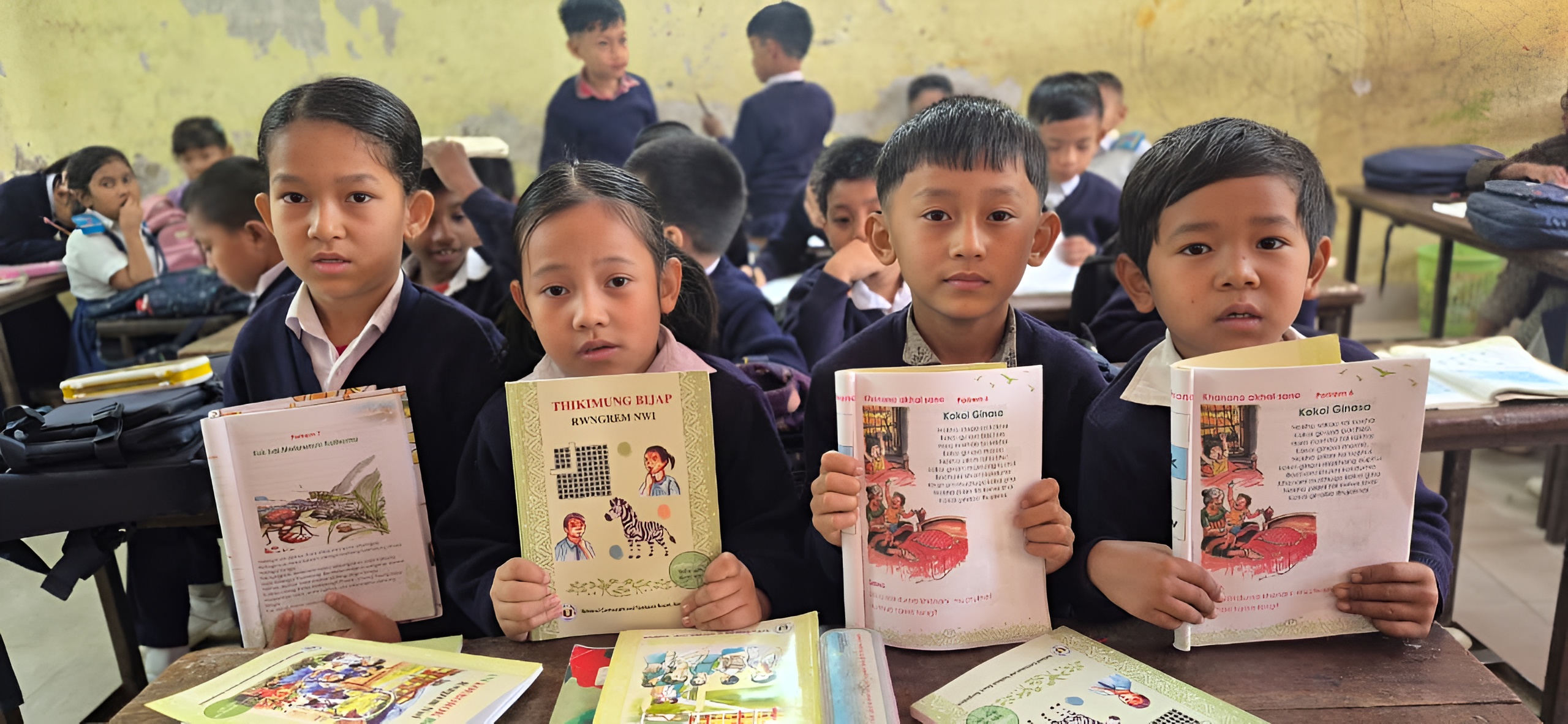
As Bangladesh moves forward, strengthening multilingual education requires a comprehensive approach. One urgent priority is expanding multilingual education beyond the early primary level. Literacy development cannot be sustained if mother tongue instruction ends after Grade III. Teacher recruitment and train-ing must also be strengthened, including recruiting teachers from indigenous communities and equipping them with multilingual pedagogical skills. Resource development must expand to include textbooks, story-books, digital tools, and teaching aids that are culturally relevant and linguistically accurate. Digital plat-forms, community archives, and youth-led language initiatives also offer new pathways for preservation and learning.
Policy coherence is equally important, and multilingual education must be integrated into the broader na-tional education framework rather than treated as a temporary initiative. Research must also be strengthened so that policymaking is guided by evidence. Most importantly, youth voices must be included in policy discussions. Young people are not merely beneficiaries of multilingual education; they are its future custo-dians.
Youth today live in a multilingual world shaped by mobility, technology, and globalisation. Supporting their multilingual abilities is both an educational necessity and a cultural investment. The linguistic diversity of Bangladesh is not a problem to be solved but a resource to be nurtured. Multilingual youth represent a bridge between tradition and modernity, between local identity and global participation.
International Mother Language Day is therefore not only a commemoration of the past but a call to future action. Listening to youth voices on multilingual education means recognising that language rights are on-going commitments. Its success will ultimately depend on whether societies invest in that diversity. The voices of multilingual youth are already speaking. The question is whether we are ready to listen.
Dr Susan Vize is the Head of Office and UNESCO Representative to Bangladesh.
Dr Shourav Sikder is a Professor in the Department of Linguistics at the University of Dhaka.
Send your articles for Slow Reads to slowreads@thedailystar.net. Check out our submission guidelines for details.
Will the next generation speak Kokborok?
Hajong and the cost of being unwritten
Preserving the A’chik tongue

The last speaker of Saura
Thar: A language born on the rivers
The Bawm language at a crossroads

Bangla in the age of algorithms

Beyond Bangla: Why Bangladesh’s other languages matter
What two decades with Hyow taught me about language loss
Language, power, and the erasure of Kol