Between flexibility and uncertainty: The lives behind Dhaka’s food delivery

In just a few years, food delivery platforms have reshaped how Dhaka eats, turning convenience into a daily expectation. Powering this shift is a fast-growing workforce of delivery riders—young, mobile, and constantly on the move. Their labour keeps the city running in real time, navigating traffic, tight deadlines, and unpredictable earnings, while raising urgent questions about rights, protections, and the future of work in Bangladesh.
For many, this sector offers immediate access to income in a highly competitive job market. A rider, Moshiur, working with an online food delivery platform, described how he entered the job during a difficult period, calling it something he “barely managed to get.” Like many others, he relies on this work as a primary or supplementary source of income, earning around 400 to 500 taka per day depending on demand.

Their stories also reflect a broader trend: thousands of young Bangladeshis, often from rural or low-income backgrounds, are entering the gig economy to sustain their education. Food delivery platforms offer flexible, part-time work that can be adjusted around class schedules and exams. For many students, these jobs have become lifelines, allowing them to earn without stepping away from their academic ambitions. The appeal comes from accessibility and flexibility. Riders can choose when to log in, how long to work, and how much they want to earn within their physical limits.
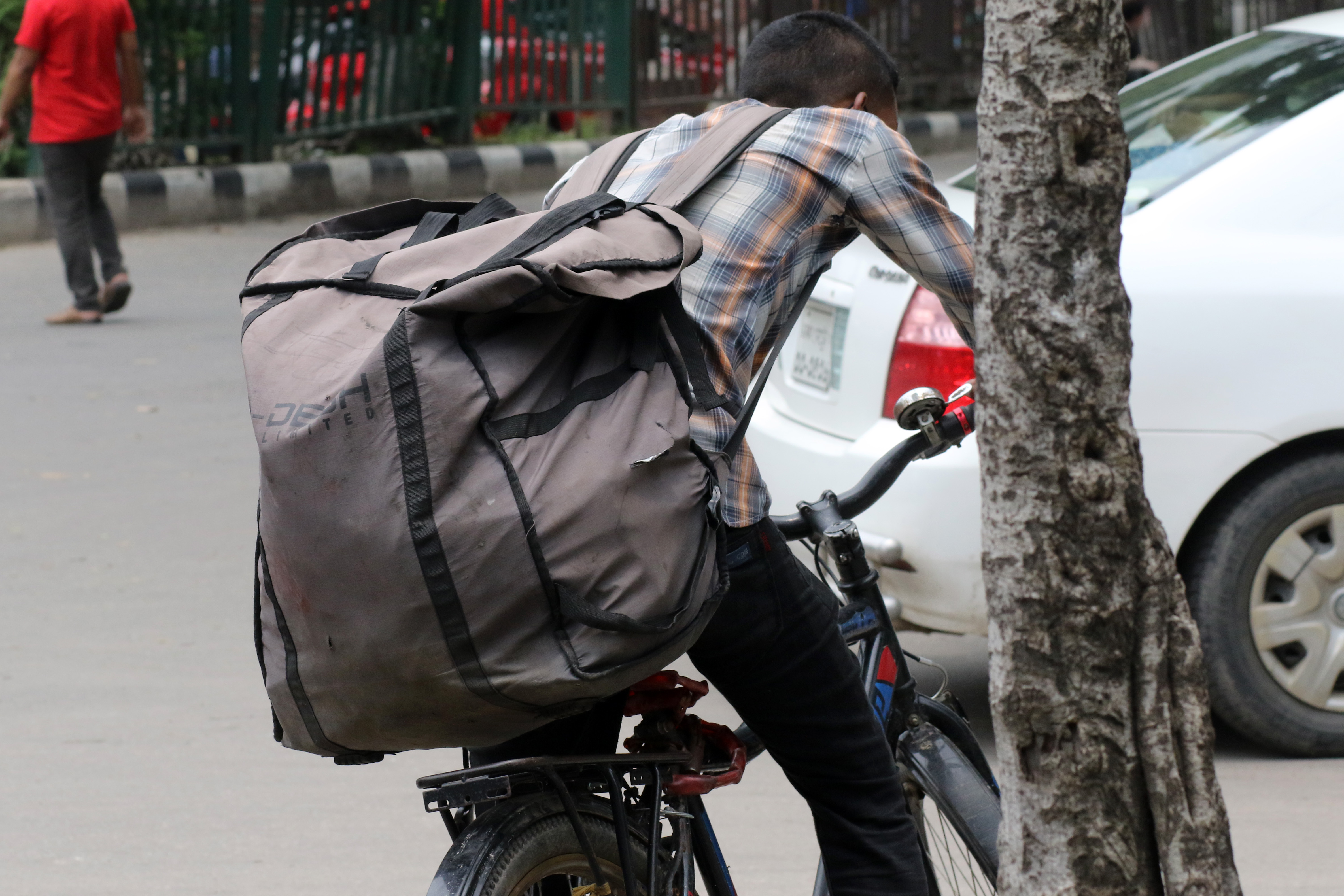
At the same time, the structure of the work introduces certain challenges. Riders operate within a system where customer ratings play a significant role in determining future opportunities. “Customers are generally good,” one rider notes, “but sometimes, if we call to ask for directions, they get disturbed and give a bad review.” These ratings, while useful for maintaining service standards, do not always capture the complexities riders face on the ground, such as unclear addresses or communication gaps. Another rider highlights how coordination across the delivery chain can shape customer experience. According to him, delays from restaurants can sometimes lead to misunderstandings. “Customers are usually polite,” he says, “but sometimes when food is late, they think it’s because of us; actually, restaurants gave it to us late.” This reflects a broader issue where riders become the most visible point of contact in a system involving multiple actors.
Weather and road conditions also influence the nature of the job. Riders continue working through heat, traffic congestion, and seasonal rain—factors that can affect delivery times and physical strain. In some cases, unexpected situations such as accidents or damaged deliveries can create additional financial pressure, as compensation structures are often tied directly to the successful completion of orders. The nature of deliveries itself also varies. Some services require riders to carry heavier grocery items, increasing physical effort without a proportional increase in delivery charges. This gap between labour and compensation, while not always visible to customers, shapes the everyday realities of the job.
They are visible on every street and essential to urban life. Yet if their work is socially recognised, where is its formal recognition, and where are the protections that should follow? As the sector expands, this question becomes increasingly urgent. A large portion of riders are young people navigating a saturated labour market, drawn by immediate income despite long-term uncertainty. Their labour sustains a growing digital economy, but its regulatory and social frameworks have yet to keep pace.
Riders operate within a system where customer ratings play a significant role in determining future opportunities. “Customers are generally good,” one rider notes, “but sometimes, if we call to ask for directions, they get disturbed and give a bad review.” These ratings, while useful for maintaining service standards, do not always capture the complexities riders face on the ground, such as unclear addresses or communication gaps. Another rider highlights how coordination across the delivery chain can shape customer experience. According to him, delays from restaurants can sometimes lead to misunderstandings. “Customers are usually polite,” he says, “but sometimes when food is late, they think it’s because of us; actually, restaurants gave it to us late.” This reflects a broader issue where riders become the most visible point of contact in a system involving multiple actors.
Labour law expert and a member of the Labour Reform Commission 2024, A.K.M. Nasim, argues that platform-based delivery riders should be brought within the scope of labour protection through formal recognition as workers, while acknowledging that their work differs from traditional employment. This raises a key policy question: should existing labour laws be adapted, or is a separate legal framework required for platform work? He emphasises the need for comprehensive dialogue to define appropriate rights and protections.
In the meantime, he points to mechanisms such as the Bangladesh Workers Welfare Foundation Act, 2006, stressing the importance of clarifying whether riders are eligible and how they can access such benefits. He also calls for a more unified labour movement, where coordinated advocacy, rather than fragmented efforts, can push for legal recognition, fair wages, social protection, and safety measures.
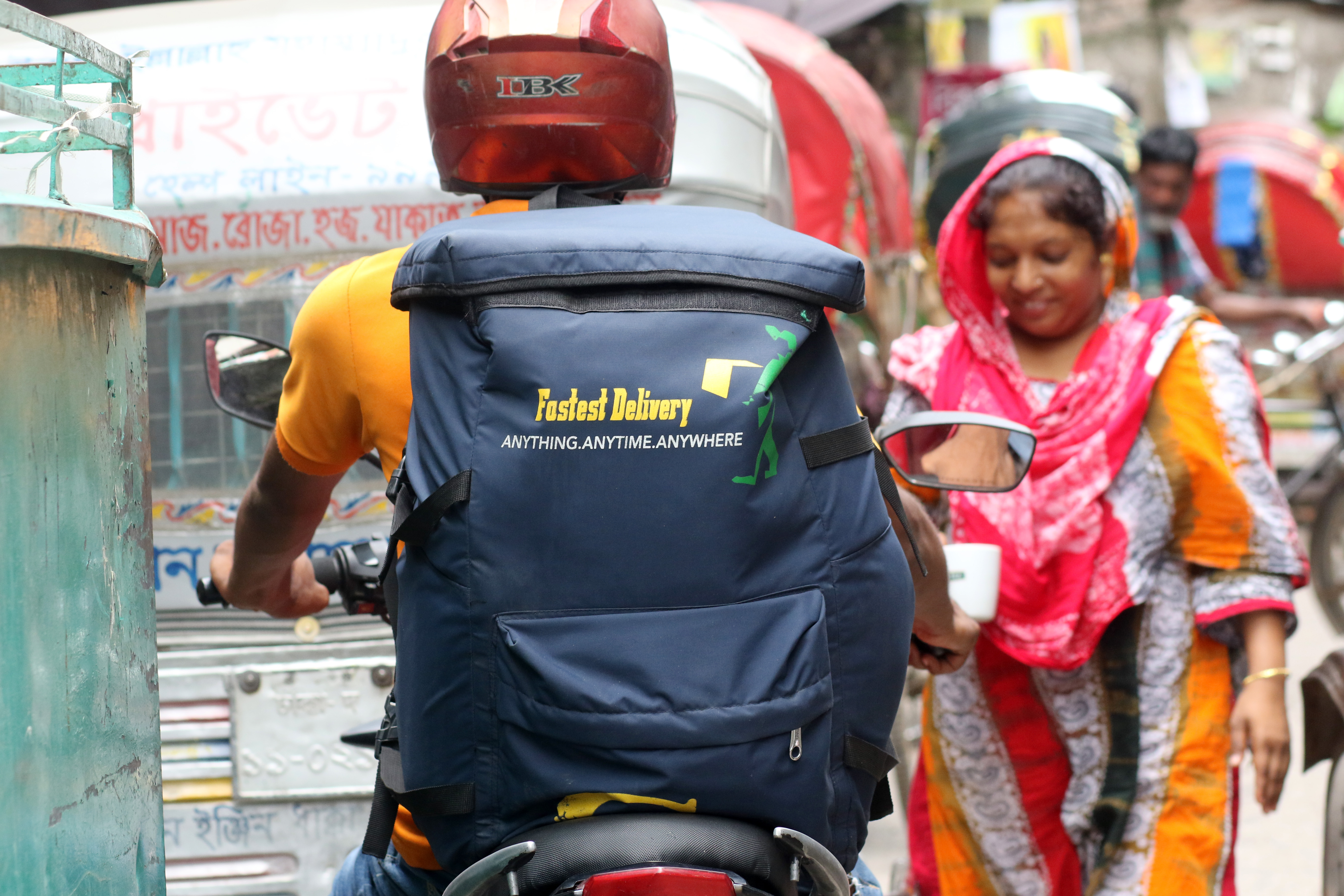
The rise of food delivery services has reshaped urban life. But behind every seamless delivery is labour balancing flexibility with uncertainty. How this balance is addressed through meaningful legal and social frameworks will determine whether this growth becomes sustainable not just for platforms and consumers, but for the workers who make it possible.
Musrat Hossain Mithila works at the Slow Reads, The Daily Star. She can be reached at mmusrat30@gmail.com.
Send your articles for Slow Reads to slowreads@thedailystar.net. Check out our submission guidelines for details.
Why Rana Plaza survivors are still protesting
Unseen struggles of ATM security guards in Bangladesh

The app treats me like a number: The uncertain lives of Dhaka’s ride-hailing drivers