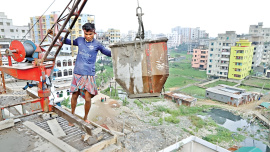
Beyond reform: Securing dignity for Bangladesh’s workers
On International Labour Day, I convey my sincere greetings to the Government, workers, and employers across Bangladesh.
This day provides an opportunity to recognize the achievements of the labour movement and to reflect on an evolving world of work. In this context, the mandate of the International Labour Organization (ILO) to promote social justice and advance decent work remains as relevant today, as it was when the organization was founded in 1919.

The challenges facing Bangladesh reflect those seen worldwide. Far too many workers still live in extreme poverty while levels of informal employment remain persistently high. New technology, including AI, demographic shifts, climate change and evolving forms of employment, are also reshaping labour markets at an unprecedented pace. These dynamics are compounded by geopolitical and macroeconomic uncertainty that constrain governments’ capacity to support workers and strengthen labour markets.

Effective social protection, livelihood support, and active labour market policies are essential to prevent vulnerable workers and households from falling into deeper insecurity, while enabling workers and enterprises to adapt and thrive in a rapidly changing world of work.
Against this backdrop, Bangladesh has registered meaningful progress through labour reforms and international cooperation, underscoring the centrality of decent work to sustainable development and demonstrating leadership in advancing international labour standards.
I express my profound appreciation for the historic milestone achieved in November 2025, when Bangladesh became the first country in Asia to ratify all fundamental ILO conventions, including the landmark Convention No. 190 on Violence and Harassment at Work.
Furthermore, we acknowledge the passage of the Bangladesh Labour (Amendment) Act 2026 on 9 April, which reinforces fundamental principles and rights at work while also establishing critical new institutions to enhance industrial relations.
Moving forward, the focus naturally shifts towards the operationalization of these landmark reforms. Further strengthening labour administration and industrial relations are foremost priorities ahead of us.
The ILO remains a committed partner in this journey, working with the Government, workers, and employers to advance shared prosperity and uphold the dignity of all workers in Bangladesh.
Gilbert F. Houngbo is the Director-General of International Labour Organization.
Send your articles for Slow Reads to slowreads@thedailystar.net. Check out our submission guidelines for details.
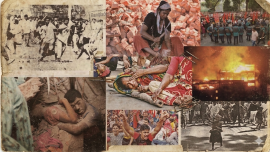
Interactive: Bangladesh Labour History · 1881 - 2026 / Fight for Justice
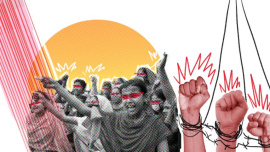
In conversation with Richard Wolff / Can workers seize the opportunity as Western capitalism declines?
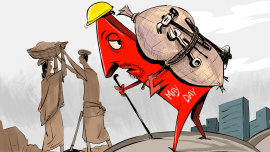
The expansion of wage labour and the message of May Day
A closer look at Bangladesh’s new labour law: Gains and gaps
Fixing a labour justice system that fails workers

Servants of an algorithm: May Day and the fight for the South Asian digital working class
Beyond reform: Securing dignity for Bangladesh’s workers