Clay toys lose ground as plastic dominates childhood

In homes and markets, clay toys were once the heartbeat of childhood in rural Bengal—simple, fragile, and full of life. Today, they sit unsold in quiet corners, overshadowed by bright plastic alternatives. This shift is not just changing markets; it is erasing a way of life.
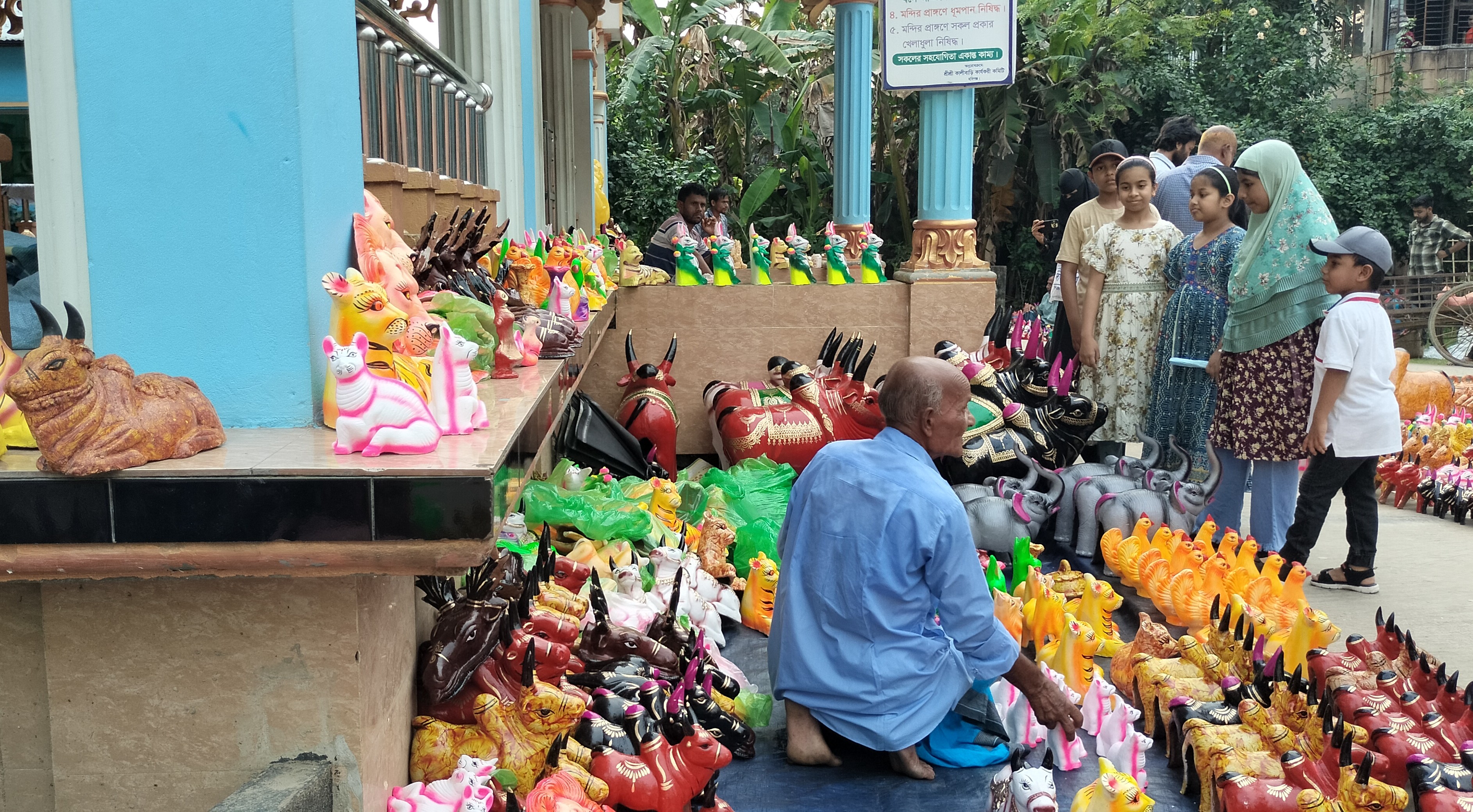
In the quiet lanes of Paulpara (Shondhani) in Sreemangal upazila of Moulvibazar, the rhythmic clinking of clay once marked the start of each day. Skilled hands shaped dolls, miniature kitchen sets, and figures of animals—cows, horses, and elephants—that filled village markets and children’s imaginations.
Today, that sound is fading.
“We grew up making clay toys,” said potter Sanjay Rudra Paul, his voice heavy with regret. “There was a time when these toys were in great demand. Children loved them. Now the markets are flooded with plastic toys—colourful, shiny, and easy to find. Children are losing interest in clay, and our livelihood is disappearing.”
He said that, for generations, pottery has been an integral part of rural Bengal’s cultural and economic life. But this centuries-old craft now faces an existential crisis, squeezed by the widespread availability of cheap plastic and melamine products.
Where potters’ wheels once spun endlessly, many now stand still. Small workshops under tin roofs have fallen silent, and artisans are increasingly abandoning the trade.
Rising production costs have only deepened the crisis. Clay, once readily available, now comes at a price. Fuel and paint costs have surged, yet potters cannot raise prices enough to compete with mass-produced plastic goods.
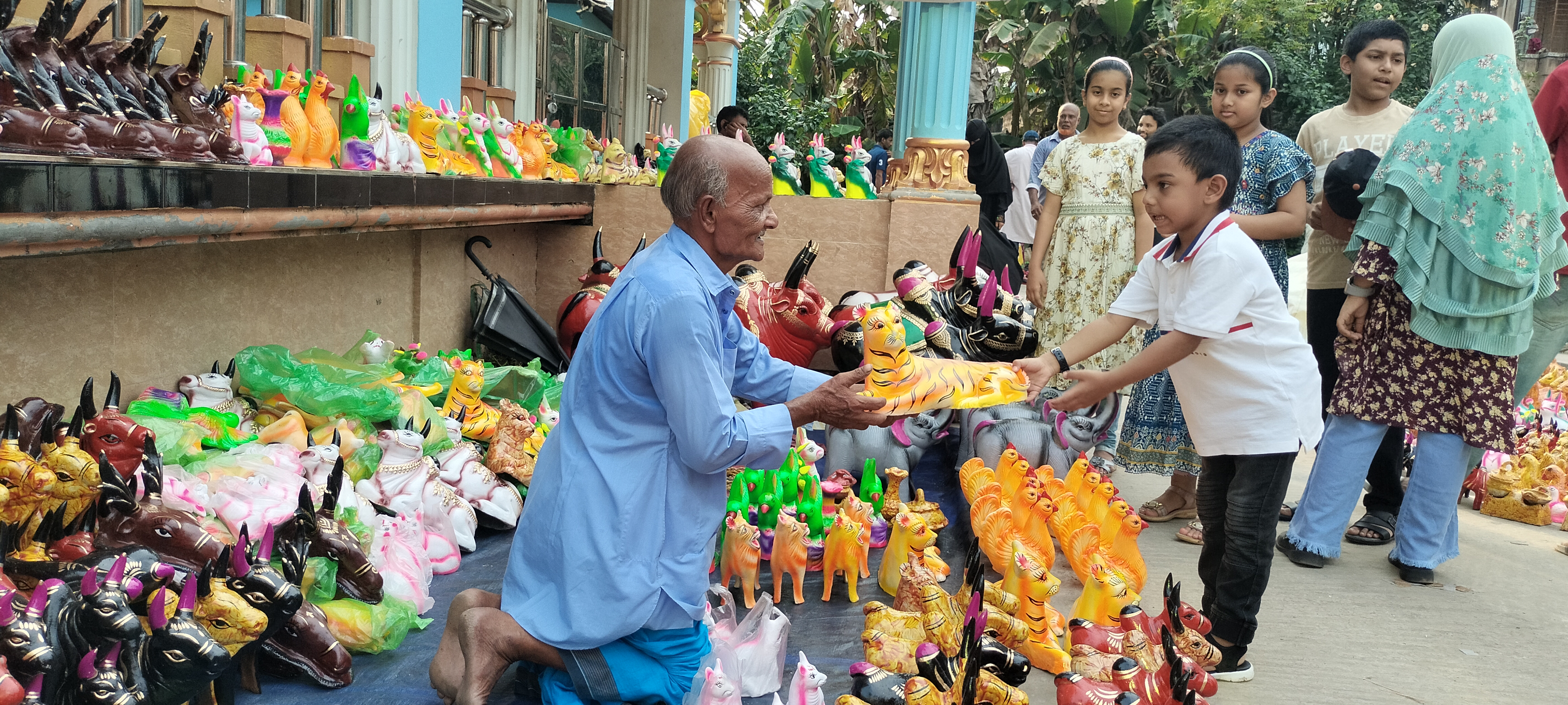
“I learned this craft from my grandparents,” said Sanjay. “My parents did the same work. Back then, even after working all day, sales were good. Now, despite the hard work, the products do not sell. It is difficult to support a family.”
Though he continues the family tradition, Sanjay sees little future in it. “I have encouraged my children to choose other professions so they can live better lives,” he said.
Other artisans share similar concerns. One potter, who runs a small shop in Sreemangal town, said the once-thriving market has nearly collapsed.
“There used to be many shops like mine across the town. Business was good. Now most have closed because they could not even pay the rent. I am barely surviving.”
Seasonal demand has also dwindled. “Before Pohela Boishakh, wholesalers would give advance payments,” he said. “Now only a few come, and even they take goods on credit.”
Consumers’ preferences have shifted as well.
Hosna Begum, a mother of two in Sreemangal town, pointed to the stark contrast between generations. “When we were young, clay toys were almost the only option. Now my children prefer plastic toys. They are more colourful, attractive, and durable.”
At a time when plastic pollution is a growing concern, the neglect of eco-friendly alternatives like clay is deeply ironic. Reviving this sector requires more than sympathy. Targeted policies, financial support, and market access are essential to sustain it.
Dipendra Bhattacharya, a retired high school teacher, said the decline of clay toys is more than a shift in children’s preferences; it signals the steady erosion of a centuries-old tradition. Once central to rural life and childhood, pottery is now struggling to survive against the dominance of cheap, mass-produced plastic.
Artisans face rising costs of raw materials and production, yet cannot compete in price or scale. With little institutional support, many are being forced to abandon the craft altogether. “This is not just an economic loss—it is a cultural one,” he said.
“At a time when plastic pollution is a growing concern, the neglect of eco-friendly alternatives like clay is deeply ironic. Reviving this sector requires more than sympathy. Targeted policies, financial support, and market access are essential to sustain it.”
“If action is not taken now, the potter’s wheel may soon stop—for good,” he added.
Tofazzal Sohel, executive member of the Bangladesh Poribesh Andolon (BAPA), said promoting pottery could help reduce plastic use.
“Pottery is environmentally friendly. To sustain this industry, the government must modernise it and create new markets. This is not just a profession—it is part of our cultural heritage,” he added.
Md Habibur Rahman, deputy director of the Moulvibazar District Social Service Office, said a survey of the Kamar and Kumar communities has already been conducted.
“We have submitted the findings to the higher authorities. If funding is allocated, we will take the necessary steps to support and sustain this traditional industry.”
Recently, this correspondent visited Kumarbari in Mansurpur village under Karmadha union in Kulaura upazila of Moulvibazar, where the rhythmic legacy of clay craftsmanship still survives—though quietly fading. On the ground, potters could be seen shaping earth into life: crafting traditional pots, curd containers, pitha-making kholas, fish-washing vessels, and delicate dolls. Their hands moved with inherited precision as they prepared clay, moulded it into shape, dried it under the open sky, and finally hardened it through fire—just as their ancestors had done for centuries.
Residents of Kumarpara, including Harendra Rudra Paul, Arun Rudra Paul, Apendra Rudra Paul, and Lipi Rani Paul, said their community becomes especially active ahead of the Baisakhi fair. During this period, they produce a wide range of clay items for sale, hoping to earn enough to support their families. Yet, despite their dedication, they are struggling to compete in a rapidly modernising world.
Seventy-five-year-old Harendra Rudra Paul said this centuries-old craft—believed to be more than 500 years old—is now under serious threat. The widespread use of plastic, melamine, and steel products has drastically reduced demand for traditional clay goods. What was once an essential part of everyday Bengali life is now considered outdated by many. As a result, only around 30 families remain engaged in the profession, and even they face mounting economic and social challenges.
Nila Rani Rudra Paul said many artisans, including herself, can no longer rely on pottery as a sustainable livelihood. Rising costs of raw materials, limited market access, and insufficient institutional support have made their work increasingly difficult. Consequently, the younger generation is moving away from this ancestral occupation, seeking more stable and profitable employment elsewhere. With each passing year, the continuity of this heritage becomes more fragile.
Mazharul Islam, assistant professor in the Department of History at Langla Modern Degree College, spoke about the cultural significance of pottery in Bengali identity. He said Bengalis have always shared a deep connection with the soil, and clay products symbolise that bond. Reviving the use of earthenware in daily life is not merely about preserving tradition—it is about reclaiming a cultural essence.
He stressed that both government and private organisations must come forward with financial support, training programmes, and promotional initiatives to help sustain the community.
Similarly, Helal Khan, assistant professor in the Department of Agriculture at Langla Degree College, highlighted the historical importance of potters as one of the earliest occupational groups in the region. However, in today’s age of industrial production and digital advancement, their role has diminished significantly. Without targeted intervention, this traditional profession may soon disappear entirely.
He urged the authorities to take immediate steps, including providing subsidies, creating market opportunities, and integrating pottery into tourism and cultural promotion efforts.
Saving this craft requires more than sympathy—it demands action. Introducing pottery into modern design markets, organising exhibitions, ensuring fair pricing, and incorporating clay products into everyday use could help revive interest. Most importantly, empowering artisans with training, access to credit, and proper recognition could restore dignity to their work.
“If no meaningful steps are taken now, this living tradition—shaped by generations of skilled hands—may soon become nothing more than a memory,” he added.
Sohel said that, for artisans like them, time is running out. Without immediate support and renewed public interest, the legacy of clay craftsmanship may soon be reduced to memory—replaced by the very plastic it once stood apart from.
As plastic products continue to dominate markets and lifestyles, the quiet disappearance of clay craftsmanship reflects not only the decline of a profession but marks the fading of a cultural memory rooted in Bengal’s soil, traditions, and everyday life. Whether the potter’s wheel continues to turn now depends on how much value society is willing to place on the hands that have shaped this heritage for generations.
Mintu Deshwara is a journalist at The Daily Star.
Send your articles for Slow Reads to slowreads@thedailystar.net. Check out our submission guidelines for details.

More than refugees: How Rohingya youth are reclaiming their story
Behind every cup / The mental toll on women tea workers
From Shyamnagar to Kurigram: Women work, but where is the income?

Waiting for April: The other side of migration in the Sundarbans

Where have Bangladesh’s hilsa gone?

Lead poisoning in Bangladesh: A crisis ignored for too long
Who recycles Bangladesh’s garment waste?

Bangladesh running out of options on Rohingya crisis: Is there a way out?

Construction of the Sugandha-Kalatoli beach road / A grave threat to Cox’s Bazar’s sand dunes