Gender, agency and the quality of growth: Lessons from the Bangladesh paradox

A few years ago, I became interested in the claims in the economic literature that gender equality promotes economic growth. They were mainly based on findings that focused on gender equality in education and employment, which appeared robust across countries and over time. However, they were largely based on macro-level data. They speculated but did not offer any empirical explanation for their finding. One of the few exceptions I found was a study by Stephan Klasen. Let me summarise my analysis of his findings and then discuss its relevance to the Bangladesh paradox.
Klasen suggested two causal pathways through which gender equality might translate into economic growth. The first, which I described as the ‘market-mediated’ pathway, was based on the idea that talent was randomly distributed between men and women in a population so that by equalising their access to productive resources and opportunities, a country would be making the most of its human capital. The second was what I called the ‘family-mediated’ pathway. It argued that, given women’s greater responsibility for the care of their families in much of the world, access to resources and opportunities that increased their bargaining power might help to shift the allocation of household resources towards what mattered to them, the health and education of their children, thereby increasing the productivity of the next generation of workers. This was an intergenerational effect that materialised over time as children grew up and joined the labour force.
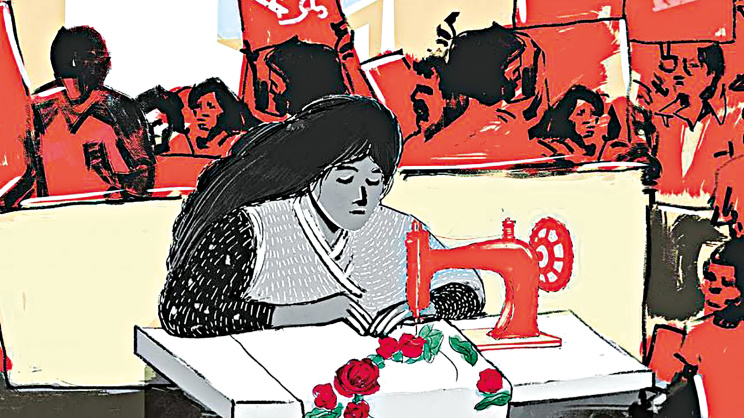
Klasen found that macro-level data supported a positive association between gender equality in employment and economic growth, but with some caveats. First, the effect was statistically significant for formal, rather than overall, employment. Of course, there are well-known problems with capturing women’s informal work activities, which might explain the weaker effect. Second, causality could run in the opposite direction. Higher growth rates might generate more employment for women. I pointed to a third caveat. Micro-level evidence showed that women earned less than men across sectors and at different levels of development, a product of the constraints on their productivity imposed by their unpaid domestic work responsibilities. There was little reason to expect that increasing women’s employment relative to men would support a market-mediated pathway to growth. The main circumstances under which this might happen were the ability to pay women lower wages than men, added to employers’ profits, as so often in global value chains.
Klasen controlled for possible reverse causality in his estimation of the relationship between gender equality in education and economic growth. Here, he found that the impact on economic growth was positive and significant across countries and education levels. He also provided evidence that the impact operated mainly through the family-mediated pathway. Improvements in women’s education in absolute terms as well as relative to that of men were strongly associated with declines in fertility rates and child mortality and with improvements in life expectancy, a measure of the overall health of the population.
Since these are important elements of human wellbeing, these findings suggested that improvements in women’s human capital and capabilities were important for the quality of growth and the wellbeing of populations, as well as for longer-term growth. And as I pointed out, there was a wide body of evidence at both macro and micro levels for the family-mediated pathway. Women’s education, as well as their employment, increased their bargaining power within the household and was associated with higher levels of investment in family wellbeing, including the health and education of children.
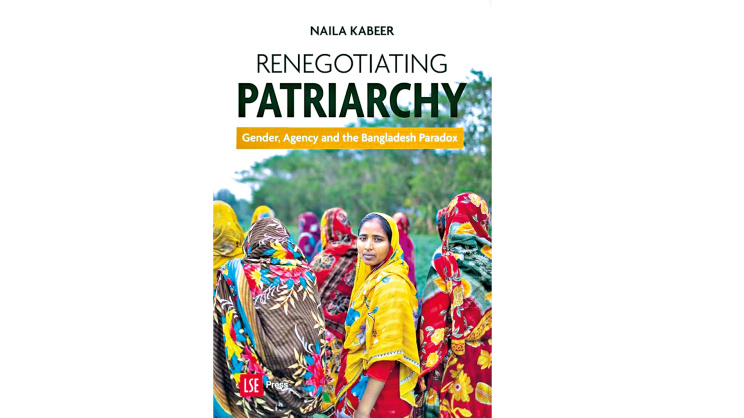
None of these studies is cited in my recently published book, ‘Renegotiating patriarchy: gender, agency and the Bangladesh paradox’ (LSE Press, London; UPL, Dhaka) because the book did not set out to make claims about gender equality and economic growth. Instead, it was concerned with why Bangladesh made such remarkable progress on social indicators despite the very low levels of growth and overpopulation that marked its early years – a phenomenon widely referred to as the Bangladesh paradox. But as I look back on what the book had to say and look forward to the uncertainty of the future, I can see that it provides both an interesting case study of how the causal pathways suggested in the gender and growth literature played out on the ground, as well as important lessons to carry forward.
The book draws on a wide variety of quantitative and qualitative studies to provide detailed evidence on how improvements in women’s access to education and employment in the post-independence years increased their agency within the household and how they used this agency to reduce their fertility rates and improve their children’s survival, health, nutrition and education as well as, very importantly, to reduce long-standing gender disparities in these indicators. This meant that for the first time in the country’s recorded history, daughters began to enjoy, if not full equality with sons, then at least a significant improvement in their life choices and life chances. While the decline in fertility rates is widely recognised as contributing to the rising rates of growth we began to see in the 1990s, these other changes can be seen as contributing to the quality of this growth in the short run, ensuring that it went some way towards improving human wellbeing, while adding to its pace in the longer run.
The book also explores what it was about the wider policy environment that allowed women to gain this greater agency. Family planning programmes were given prominence in the early years of independence because high rates of population growth were seen as the country’s number one problem. But these programmes recognised that women had a special stake in their success: as bearers of children, they paid with their health and their lives when they had no control over how many children they had. Accordingly, they were designed to circumvent prevailing restrictions on women’s mobility outside the home by offering them a range of contraceptives at their doorstep. This period also saw successful collaborations between the government and NGOs to target mothers within their homes and communities to promote measures that would bring down high rates of infant and child mortality.
The significance of education was recognised by successive governments. Attention to female education emerged as a response to international findings that female secondary education was associated with delayed age of marriage and reduced fertility levels. The Secondary School Stipend for girls was first piloted in 1982 and, in the light of its success, adopted at the national level in 1994, just after the launch of the Food for Education programme in 1993.
The importance of explicitly targeting programmes to girls in a society with a long tradition of favouring boys’ education is evident from evaluations of the two programmes. The evaluation of the non-targeted Food for Education programme found that its impact was mainly on the enrolment of boys in primary schools, with negligible impact on girls’ education. The exception to this finding was in female-headed households, perhaps because mothers were in a position to ensure that daughters were educated along with sons. The female secondary stipend programme, on the other hand, was associated with increasing the gross enrolment rates for girls to the extent that these rates had overtaken those of boys by 2005, although gender disparities in completion rates persisted.
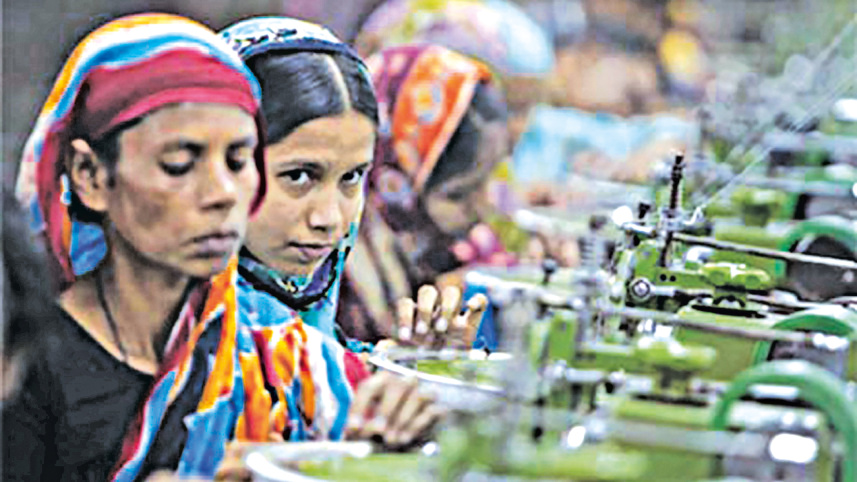
As far as women’s employment opportunities were concerned, we saw the gradual expansion of work opportunities - from the casualised, poorly paid waged employment that only the very poorest women were willing to take up to a broader set of opportunities that allowed educated women from better-off households to enter acceptable forms of wage employment (in the public sector, in garment factories and in community-based service provision in health, education and microfinance) as well as microfinance-funded self-employment within or near the home.
If the people of Bangladesh are to become co-creators of the country’s future rather than cheap labour to boost the profits of a few, the country needs to prioritise a gender-equitable knowledge economy that is built on the care and capabilities of its population.
The book was thus able to draw on a much richer body of evidence on the impacts of female employment and education in Bangladesh than was available in the macro-studies discussed earlier. It provided detailed quantitative evidence on the transformative impact of female education: delayed age of marriage, lower rates of fertility, weakening of son preference, better feeding practices, improved child survival, the education of daughters along with sons, greater voice in household decision-making and greater likelihood of formal employment.
This evidence did make one important point, that the impact of education will reflect the kind of education on offer. Evaluations from Bangladesh suggested that madrasa education, whatever else its advantages may be, did not promote egalitarian attitudes when it came to women and girls. Students from madrasa schools, both male and female, were more likely than students from government secondary schools to express unfavourable attitudes towards women’s intelligence and political abilities, to prioritise higher education for boys, to believe in the primacy of the male breadwinner and to want larger numbers of children. Education, in other words, provides knowledge and skills, but it also shapes beliefs and attitudes, particularly among the young.
Compared to education, there was far greater variation in the kinds of employment that women could access, so the findings on impacts were also more mixed. Nevertheless, the available evidence suggests a continuum of impacts of women’s employment on their voice and agency, stronger for women in income-generating employment than for the economically inactive and stronger for women in formal employment than in informal. The qualitative evidence suggested that women were motivated to seek paid work because they believed it would give them a great say in household affairs and greater priority to the goals they valued. Mothers invested in daughters as well as sons because they wanted their daughters to have better life chances than they had. Wives used their education and income to stand up to abusive husbands and oppressive in-laws. Daughters, through paid work, were able to exercise a greater say in their own futures, as well as using their incomes to support struggling fathers, becoming the ‘sons’ their parents never had.
I should add that while my book provides ground-level insights into the causal pathways between gender equality and the pace of growth put forward in the wider literature, its findings put greater emphasis on the impacts of equality on the quality of growth than is evident in the wider literature.
Bangladesh is now emerging from two years of turmoil: democracy has been restored, but there has been some erosion of past gains, and the future holds new challenges, with climate change looming particularly large. We would do well to bear in mind two key lessons from the Bangladesh paradox that may help us navigate this uncertain future: the importance of gender equality and the importance of investment in human resources. If the people of Bangladesh are to become co-creators of the country’s future rather than cheap labour to boost the profits of a few, the country needs to prioritise a gender-equitable knowledge economy that is built on the care and capabilities of its population.
Investment in broad-based social services (care of children and the elderly, health and education) and carefully designed social protection strategies would provide the foundations of such an economy. It promises a range of practical and strategic dividends. For one, the care sector is less carbon-intensive than other sectors that the country currently relies on. Second, investment in this sector would transform the unpaid private responsibility for unpaid care and domestic work that falls disproportionately on women’s shoulders into a collective public responsibility, borne by society and accessible to all. This would allow women to participate in crafting the future of the country along with men. And third, it would generate jobs for women, given their traditional association with this work, but with pay and improved conditions, it has the potential to also draw in more men.
If investments in health represent investments in the physical capabilities of a population, investments in education relate to a more evolving notion of capabilities. These are the capabilities that, at the individual level, allow people to cope, adapt and flourish in an era of unpredictable change and that, at the societal level, make for productive workers, good parents and responsible citizens. But for this potential to be realised, the vision that shapes educational provision will be critical.
It will have to be ambitious, with attention to quality starting from the primary level and the acquisition of basic learning skills and continuing into higher education and lifelong learning. It will have to be interdisciplinary to allow the wisdom of different disciplines to be pooled. Climate scientists need to understand the social impacts of the solutions they propose; social scientists need to understand the impact of human behaviour on the environment. It will have to go beyond material needs to address people’s need for art and culture, for connection with the natural world around them and for spiritual wellbeing. And it will have to be inclusive, nourishing the abilities and talents of all members of a society, regardless of gender, religion, ethnicity and other forms of inequality.
Naila Kabeer is an Emeritus Professor at the London School of Economics.
Send your articles for Slow Reads to slowreads@thedailystar.net. Check out our submission guidelines for details.

More than refugees: How Rohingya youth are reclaiming their story
Behind every cup / The mental toll on women tea workers
From Shyamnagar to Kurigram: Women work, but where is the income?
Waiting for April: The other side of migration in the Sundarbans
Where have Bangladesh’s hilsa gone?

Lead poisoning in Bangladesh: A crisis ignored for too long
Who recycles Bangladesh’s garment waste?
Bangladesh running out of options on Rohingya crisis: Is there a way out?

Construction of the Sugandha-Kalatoli beach road / A grave threat to Cox’s Bazar’s sand dunes