The last echo of Kui

In the tea garden villages of Sylhet division, a language is breathing its last.
The Kondo community, one of the smallest indigenous groups in Bangladesh, is facing the near extinction of its ancestral language, Kui. Recent studies suggest that less than one percent of the community can speak the language fluently.
According to local accounts, only four elderly individuals still retain the ability to converse in Kui. With their passing, the language may disappear entirely from Bangladesh.
The international linguistic organisation SIL International has identified Kui among the country’s most endangered languages. In a recent survey of four indigenous languages, SIL found that all are at risk, but Kui is among the most critically threatened.
According to the Society for Environment and Human Development (SEHD), most Kondo families in Moulvibazar, Habiganj and Sylhet districts are descendants of labourers brought from present-day Odisha and Jharkhand by British colonial authorities around 150 years ago to work in tea plantations.
In 2016, SEHD documented 539 Kondo households across 30 tea estates in Sylhet division.
At Kalighat Tea Garden in Sreemangal upazila of Moulvibazar, 67-year-old Shyamoli Kondo says opportunities to speak Kui are almost nonexistent.
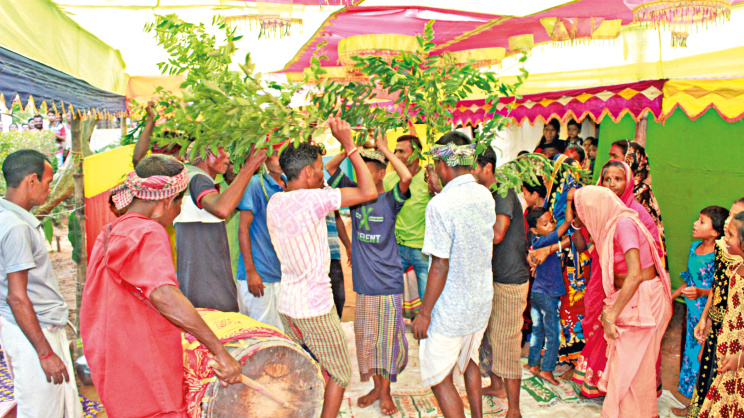
“I only speak a few words of the Kui language when I meet my elder brother,” she says. “Outside that, we have to speak Oriya, Jangli (a mixed dialect), or Bengali. Many people do not even recognise our language anymore.”
She dreams of returning to Jharkhand. “There, I could speak freely in my own language. Here, once you leave the village, Kui disappears.”
SIL research shows that 76 percent of the Kondo community identify Oriya as their mother tongue, though only 42 percent actively use it. While 11 percent claim Kui as their mother tongue, fewer than one percent can actually speak it. The language now survives mainly among elderly speakers in a few tea gardens of Moulvibazar.
Within the community, Oriya is commonly used, while Bengali dominates communication with other groups.
Pankaj Kondo, 50, vice president of the Bangladesh Cha Sramik Union, calls the situation an identity crisis.
“Only four elderly people, including my uncle and aunt, still know Kui,” he says. “Even they now mostly speak Bengali or regional dialects. The younger generation does not speak the language. I barely know a few words that I learned from my grandmother.”
He recalls how his grandmother once gathered children in the evenings to tell stories of Kondo heroics, myths, riddles, harvest festivals and folk traditions.
“That has stopped,” he says quietly.
For many young Kondo people, the cultural disconnect is already complete.
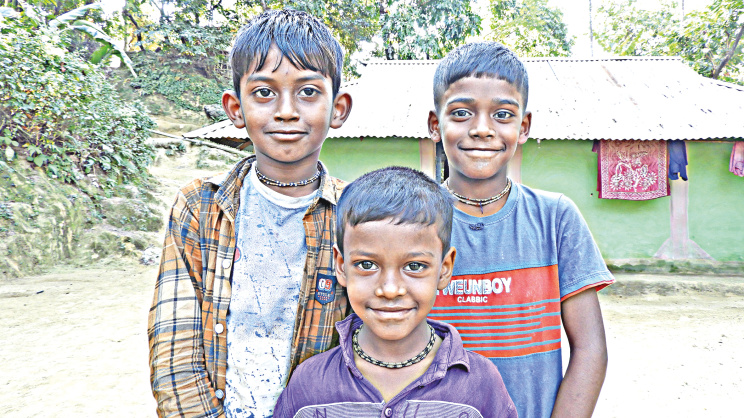
Sukhen Kondo, 26, a degree student, says he does not clearly know what distinguishes Kondo culture. “We speak the same mixed language at home and outside. I do not even know if we have a separate language anymore.”
As the language fades, so too do traditional customs, oral histories and lifestyle practices. Community leaders fear that ethnic identity itself is weakening.
Researcher Porimol Baraik points out that Article 30 of the UN Convention on the Rights of the Child — to which Bangladesh is a signatory — guarantees minority communities the right to use their own language. The International Mother Language Institute Act (2010) also emphasises preserving and documenting ethnic languages.
Yet implementation remains limited.
Cornelius Tudu, Country Director of SIL International Bangladesh, says the assessment used the internationally recognised Fishman Criteria, formally known as the Graded Intergenerational Disruption Scale (GIDS), which measures language vitality across eight levels.
“When a language falls beyond Level 6, it indicates severe disruption in intergenerational transmission,” he explains. “In such cases, children are no longer learning the language at home.”
According to SIL’s findings, Kui has crossed that threshold.
Anthropologist AFM Zakaria, professor at Shahjalal University of Science and Technology, says the decline follows a familiar pattern.
“It begins with bilingualism, then gradual language shift,” he says. “A dominant language like Bengali becomes associated with education, employment and social mobility. Minority languages are confined to private spaces, then to the elderly, and eventually to memory.”
He warns that documentation alone will not save Kui.
“Recording vocabulary can preserve data, but not a living language. Revitalisation requires community will, institutional support and meaningful opportunities for children to learn and use the language.”
Each language, he adds, carries unique ecological knowledge, oral literature and collective memory. When a language dies, humanity loses an irreplaceable worldview.
Samar M. Soren, Indigenous Language Technology Specialist, Head of the Language Resource Hub (LRH), and Global Taskforce Member of the International Decade of Indigenous Languages (IDIL) at UNESCO, said the Konda language of the Dravidian language family is critically endangered in Bangladesh.
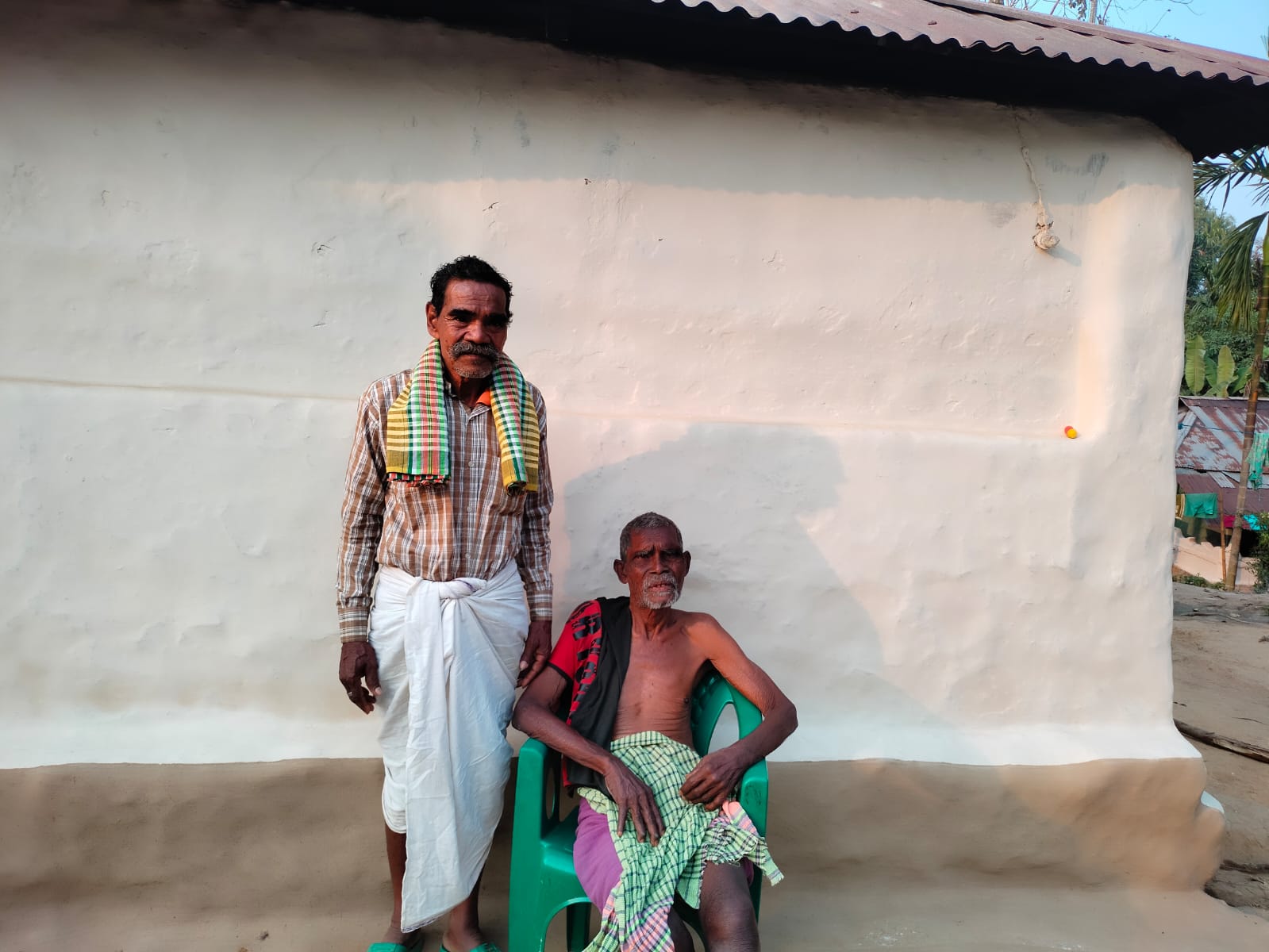
“This language is going extinct before our eyes in Bangladesh. According to recent field reports, only two fluent speakers remain in Sreemangal — one over 100 years old and his nephew, Ashwini Konda, 78.”
Ashwini can still speak Kui, though his elderly uncle is now ill and unable to converse.
In a moment of regret, Ashwini reportedly said, “Grandfather, forgive me. I could not teach my children the Kondo language.”
That regret echoes far beyond one family. It signals the possible end of a language that once carried the history, identity and memory of a people.
Unless urgent steps are taken through community-based initiatives, mother-tongue education and institutional recognition, Kui may vanish within a generation.
And when the last fluent speaker falls silent, revival may no longer be possible.
Mintu Deshwara is a journalist at The Daily Star.
Send your articles for Slow Reads to slowreads@thedailystar.net. Check out our submission guidelines for details.

More than refugees: How Rohingya youth are reclaiming their story
Behind every cup / The mental toll on women tea workers
From Shyamnagar to Kurigram: Women work, but where is the income?
Waiting for April: The other side of migration in the Sundarbans
Where have Bangladesh’s hilsa gone?

Lead poisoning in Bangladesh: A crisis ignored for too long
Who recycles Bangladesh’s garment waste?
Bangladesh running out of options on Rohingya crisis: Is there a way out?

Construction of the Sugandha-Kalatoli beach road / A grave threat to Cox’s Bazar’s sand dunes