Doha diary: A historian amid the Iran war

(Renowned historian and author, Rila Mukherjee, was scheduled to fly from the USA to India by Qatar Airways [QA] on February 25, 2026. Her route—Shreveport–Dallas Fort Worth–Doha–Kolkata—was expected to bring her to Kolkata on the night of February 26 or in the early hours of February 27. However, as of March 8, she was still stranded in Doha. Qatar’s skies were closed due to the US-Israeli attack on Iran. QA’s commercial flights were suspended. At the time of writing, evacuation flights to India were scheduled to start soon. She reached home on 12 March.)
Today is 8 March. I am now camping out in Doha for the ninth day since 28 February. The Qatar airspace is shut and padlocked. The authorities have thrown away the key. Limited numbers of passengers are being flown to Europe and the Americas on evacuation flights (they are called ‘relief flights’) organised by QA, and relief flights to Africa and Asia will start from tomorrow. But for the time being, I am effectively marooned in Doha.
Doha is one of the largest airplane hubs in the world, and a cosmopolitan group of transit passengers has been put up by QA in the 4-star The Royal Riviera Hotel. The hotel is situated on Doha’s Corniche. It is an ageing hotel; not terribly posh, and the plumbing is a bit iffy. But it is well located, with comfortable rooms, and it is a clean and friendly hotel. I feel safe here. Its staff is composed of Asians (from Bangladesh, the Philippines, Sri Lanka, Nepal), North Africans (Algerians and Moroccans mostly) and some West Asians. All of them are helpful despite the pressures they are facing. They deal gracefully with the diverse demands and complaints of the passengers.
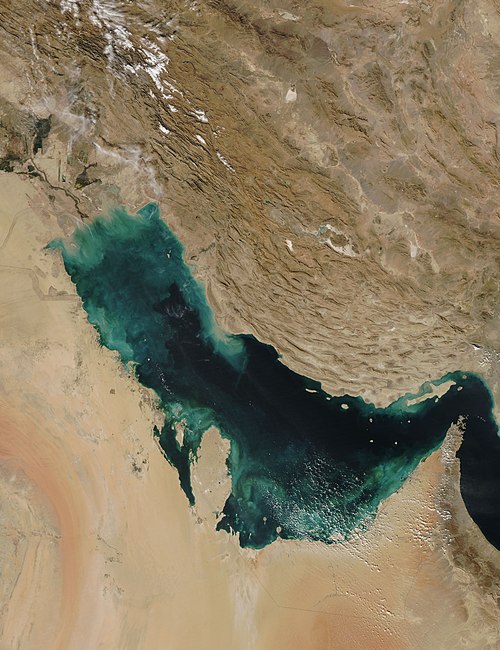
My room faces the Corniche and I can see the Persian Gulf from my window. As a maritime historian, this makes me very happy.
This country and its national airline are looking after us very well and, really, I have no complaints. QA’s representatives visit the hotel twice daily. There is no information forthcoming on my evacuation to Kolkata, and the greater part of passenger bags are still to arrive at the hotel. My South African neighbour says one of their bags has not been delivered; perhaps it is lost.
We are largely dependent on the clothes we have on our backs and those we had in our carry-on. Most of us are washing and drying them overnight. We have to use the hair dryer if they are still not dry.
My bags came in today, i.e., 8 March.
There are some elderly travellers. Many of them say that their medicines are running out. Mine will last another week.
Will I be able to get out by then?
We are told that a limited air corridor may open today; alternatively, we may be evacuated by the land route through Saudi Arabia to Riyadh (this would take around seven hours), where a leased QA aircraft may take us to India. But we have to make our own arrangements for the Saudi e-visa and overland travel. This seems a risky enterprise. And whether this potential leased aircraft would fly me direct to Kolkata is not known. There is no clarity to date.
***
But if I was scheduled to arrive in Kolkata on 27 February (and the war broke out a day later, on 28 February), how is it that I am still in Doha
Ah, thereby hangs a tale!
It is a cautionary tale on buying air tickets with multiple connections, and what ensues when the first connection does not take off as per schedule.
***
I had spent nine weeks in Shreveport with my son and daughter-in-law and was scheduled to leave on 25 February. Unfortunately, my flight from Shreveport to Dallas Fort Worth (DFW) by QA’s codeshare partner American Airlines (AA) did not take off. We were told that the incoming flight had nose gear problems and therefore could not land. Ultimately it made an emergency landing. Fire engines, firefighters, EMTs and ambulances were standing by. Luckily, there was no fireball and there were no casualties. The vice-chair of my daughter-in-law’s department was on that flight; I bumped into him in the terminal as he deplaned, and he said that the landing had been really scary.
There were no more AA flights to DFW that day. Roo and Stephanie came back to the airport and took me home. I spent a restless night. I hate flying at the best of times.
I was put on the same AA flight the next day, on 26 February, but when I reached DFW I was told that my connection flight to Doha was full. Apparently, the AA staff at Shreveport Regional Airport knew there were no seats on that flight; nevertheless they sent me on to DFW hoping I would ‘sort out’ the matter with AA’s customer care there. The only ‘sorting out’ that AA did at DFW was to put me on a later QA flight to Doha on the same day, that is, late evening on 26 February. It was a smaller aircraft (not the Airbus 350 on which I was ticketed), the flight was cramped and some of my co-passengers were not very well behaved. One lady kept on drinking; she skipped the meal service and was quite abusive. Another one, African American, told me that as an ‘American’ she was superior to Asians. Right, I thought, we all know how you as a Black person got there!!!
In all my years of travelling I have never encountered such blatant racism.
When we reached Doha very late on the night of 27 February (almost 24 hours later due to the time difference with DFW), I had missed that evening’s flight to Kolkata!
No problem, QA’s customer care said, we’ll talk with AA as it is their problem. This took a while, so I went off to buy myself a snack at Brioche Dorée in the airport’s food court.
By then it was early morning on 28 February.
Readers, note the date!
***
AA agreed to comp me a room for the remainder of the night at The Royal Riviera Hotel. I was granted a 48-hour emergency visa by Qatar Immigration and I was shifted to the hotel on 28 February at 2 AM. QA’s ground staff helped me throughout. The room was comfortable, the bed looked inviting, and I went to sleep, confident that my Kolkata flight would take off as scheduled at 18.45 hours on that day itself (that is, 28 February). At that point, I was going to reach only 24 hours behind my original schedule.
I informed Kolkata and asked my driver to collect me from the airport accordingly.
***
On 28 February, I was woken around 8 AM by a strange sound from my cell phone. It was a very loud, continuous screech. I don’t have international roaming and I wondered who was calling me and what was happening. I saw a ‘Security Alert’ on my screen but the text was in Arabic. I started hearing thuds and bangs. Another alert, still in Arabic, came in.
What was going on? I was mystified.
I was now getting alerts in English. It said the US and Israel had jointly attacked Iran. US bases and embassies and consulates across the Gulf were vulnerable. Qatar was in this critical area. Sirens were going off. I started watching Al Jazeera and Richard Engel on NBC.
This was Day 1.
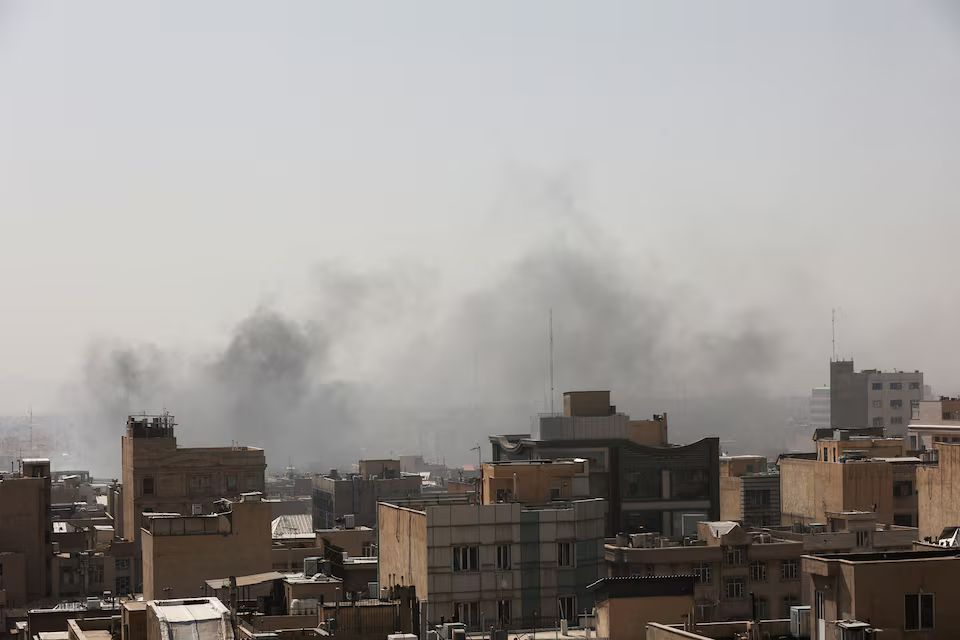
By Day 2, the Gulf was not just lying in a war zone; it had been converted into a theatre of war. Doha was undergoing regular drone strikes and missile attacks.
Day 3 was relatively quiet. Apparently, Qatar and Iran had a phone conversation, and Qatar urged Iran to stop the strikes. But our temporary visas were extended by Qatar. This was an indication that the phone call was not conclusive. This war was not going to end anytime soon.
The Qatar–Iran conversation does not seem to have yielded the desired result. There is no relief from Iranian attacks. These now form the backdrop to our daily life at The Royal Riviera. Drone attacks and missile strikes re-started from Day 4. None of them target the downtown area; they target only the US base and industrial areas in Qatar. Most of the drones and missiles are successfully intercepted; the few that are not cause localised fires. The attacks usually happen around breakfast and lunch, and sometimes they occur very late at night or in the early morning hours. This means we are always in a state of extreme alert. It is jarring on the nerves. We can neither eat properly nor rest. We are getting stressed out.
But I must also mention that the attacks and interceptions sound more like Diwali patakas than the very loud explosions that one expects.
***
Days 4 till 9 (that is, till date) have seen this regional war extending from land to sea: from the Hormuz Strait to the Indian Ocean. This is now becoming very serious. Critical choke points like this strait have become a curse. Ports across the Gulf are lying idle; almost no cargo is getting through. But we have had no alerts today. Does this mean that Iran will not strike Qatar for the time being? Is this a temporary reprieve?
Will relief flights be able to take off?
***
Some bags arrived at the hotel on Day 5. Mine were not among them.
By Days 6 and 7 we have more or less settled into what is turning out to be our semi-permanent home. The hotel is no longer very ‘royal’; it has taken on the character of a London bedsit. Or a council housing estate in one of the UK’s inner cities! Children play noisy games in the corridors, an oddly comforting sound among the explosions, security alerts and sirens that go on regularly.
I see an enormous solidarity among the travellers, both on my floor and when we meet up at meal times. I have a very nice South African couple next door who check on me each morning, always asking how I am faring (‘please don’t hesitate to knock if you face any difficulties’). They have even offered to take me out to buy clothes (this was before my bags arrived). Elegant MENA (Middle East North Africa) people greet me each day at breakfast, a young Pakistani financial analyst from Toronto shares his insights with me at the breakfast table, and a British couple advise me to carry my passport with me at all times (especially when I leave my room in case of an attack and subsequent fire). They kindly offered to buy me my medicines, although they are at least a decade older than me. A young school teacher from Geneva shares my table at dinner. I have not seen her lately; perhaps she has already been repatriated on one of the relief flights to Europe which started operating from Day 7. The British couple and the South Africans are still here; the Pakistani man left for Toronto early this morning. He was given only two hours’ notice and he phoned my room to say goodbye at 1.15 AM this morning.
***
What does my daily schedule look like?
It is like what I imagine a day at boarding school would be. Because it is Ramadan, the hotel starts the breakfast buffet from 3 AM, lunch is from 12 noon, and dinner is over by 7.30. The food served (although mild in taste and quasi-institutional as regards the daily menu, which does not rotate much in terms of items), is nevertheless amazingly varied as regards the cuisine: Arabic, Turkish, Italian, Spanish and South Asian (the last is not good at all). A lot of lemon is used in the preparations, but practically no onions. This may be due to the fact that there was an onion shortage; onions came in from India only on Day 5. There are loads of different kinds of salads, some bland European cheeses and diverse types of hummus. In addition, there is feta cheese, stuffed vine leaves, green and black olives, veg and non-veg samosas and spring rolls, koftas, and baba ghanoush or baingan bharta. Good cappuccinos and lattes. Flaky croissants and brioches, pastries and amazing Arabian/Persian/Yemeni sweets. A decadent baked (and often caramelised) bread pudding called Umm Ali is served at dinner. Obviously, the Qatari supermarkets are still well-stocked with FMCG. The Indian-origin Lulu supermarket chain has flown in a whole lot of perishable and non-perishable food items.
Strangely, no fresh fruit!
***
Gas prices have shot up.
I have given up watching the death and destruction on TV, and watch Looney Tunes, Anthony Bourdain, Fawlty Towers and Mr Bean instead. Priyam Paul, my editor at The Daily Star, has sent me some e-books which help to pass the time.
When I am not reading, or watching sitcoms, cartoons and travel and food documentaries, I reflect on what brought us to this war. I see the Persian Gulf from my room; it is still a brilliant blue. But it is also desolate since the Hormuz Strait was closed off. I see no cargo ships or container vessels; there are no cruise ships or tankers. For a maritime historian like me, this is not the Persian Gulf I know. After all, it has been a crossroads since recorded history! My India in the Indian Ocean World (2022) documents this history of two thousand years at the very least. Now, mobility is severely constrained.
We are living now in a world of fragmented geopolitics, of accelerated climate degradation, and of critical demographic shifts. The world is undergoing these changes along with increasingly disaffected groups of peoples, perhaps terrorists, some of them. We are seeing the rise of AI which, to my mind, is linked, along with the toxicity of social media, with the increasing authoritarianism that we see worldwide. It horrifies me when I see a young nation declare it will bring ‘civilisation’ to Iran. It disregards the fact that Iran-as-Persia predates Arab culture and is one of the world’s oldest culture areas. Not just the glory of Shi’ite Safavid Persia (1501–1736), which political theorists and analysts invoke when describing this civilisational space and whose heritage modern Iran draws on: think of the period from c. 550 BCE to 651 CE (Muslim conquest and start of Islamisation by the Rashidun Caliphate), when four mighty Persian empires ruled a large portion of the then-known world: Achaemenid, Seleucid, Parthian and Sassanian. Persia challenged Egypt, Greece and Rome, and then it faced up to the Ottoman and Russian empires. This memory of resistance of 2500 years will not be easily erased.
However, the total disregard of international law and the collapse of the rules-based order will usher in a new regional order in West Asia. This will impact on the Gulf states. Once-biblical Lebanon is almost destroyed by a rampant Israel. Syria has closed its borders. As a rogue USA intimidates Persia and trains its eye on the Caucasus and Azerbaijan, it also destabilises Iraq. Iranian Kurds based in Iraq have been reactivated. How will this impact on the Turkish Kurds? Turkey, a NATO country, is already feeling threatened.
The relatively young post-WW1 statelets in the Gulf will lose out in the violent reshuffle in the greater region. The Dubai story was already over. And Oman had lost its sheen even earlier. Financial and service centres will shift eastward—to Singapore or perhaps to KL. As will global airline hubs. The Gulf states will see their importance in location, business and finance diminish. They will have to reconsider their dependence on the USA which has now become a double-edged sword. Iran will endure, but perhaps in a new form. But it will not be erased from the map of the world.
Rila Mukherjee is a historian and author of several books.
Send your articles for Slow Reads to slowreads@thedailystar.net. Check out our submission guidelines for detail
Inherited Memories / One railwayman's line-box, three eras of history

The strange grief of seeing our parents age

After the PhD: The loneliness nobody talks about
The Palestine lesson from Spain's World Cup victory

The memories hidden inside my grandmother's tureen
What Bangladesh lost with the Baibari Ghar

Why does the bride always leave? Rethinking South Asian marriage

The saree I could not give away

What the World Cup means for women in Bangladesh