The memories hidden inside my grandmother's tureen

[Editor's Note: This article is published as part of Inherited Memories, a series by Slow Reads in which we invited our readers to share personal essays and reported stories about family objects and the lives and memories connected to them. We continue to welcome submissions from our readers and the Slow Reads community. Details of the submission guidelines can be found at the end of this essay.]
Memory is fickle. It edits, softens, fills in the gaps. You cannot fully trust it. In my memory, my grandmother’s tureen was never empty. It always had something warm, fragrant, and ready to be shared. Perhaps that’s not literally true, but it captures something truer: going to Nannu’s house always meant there would be food.
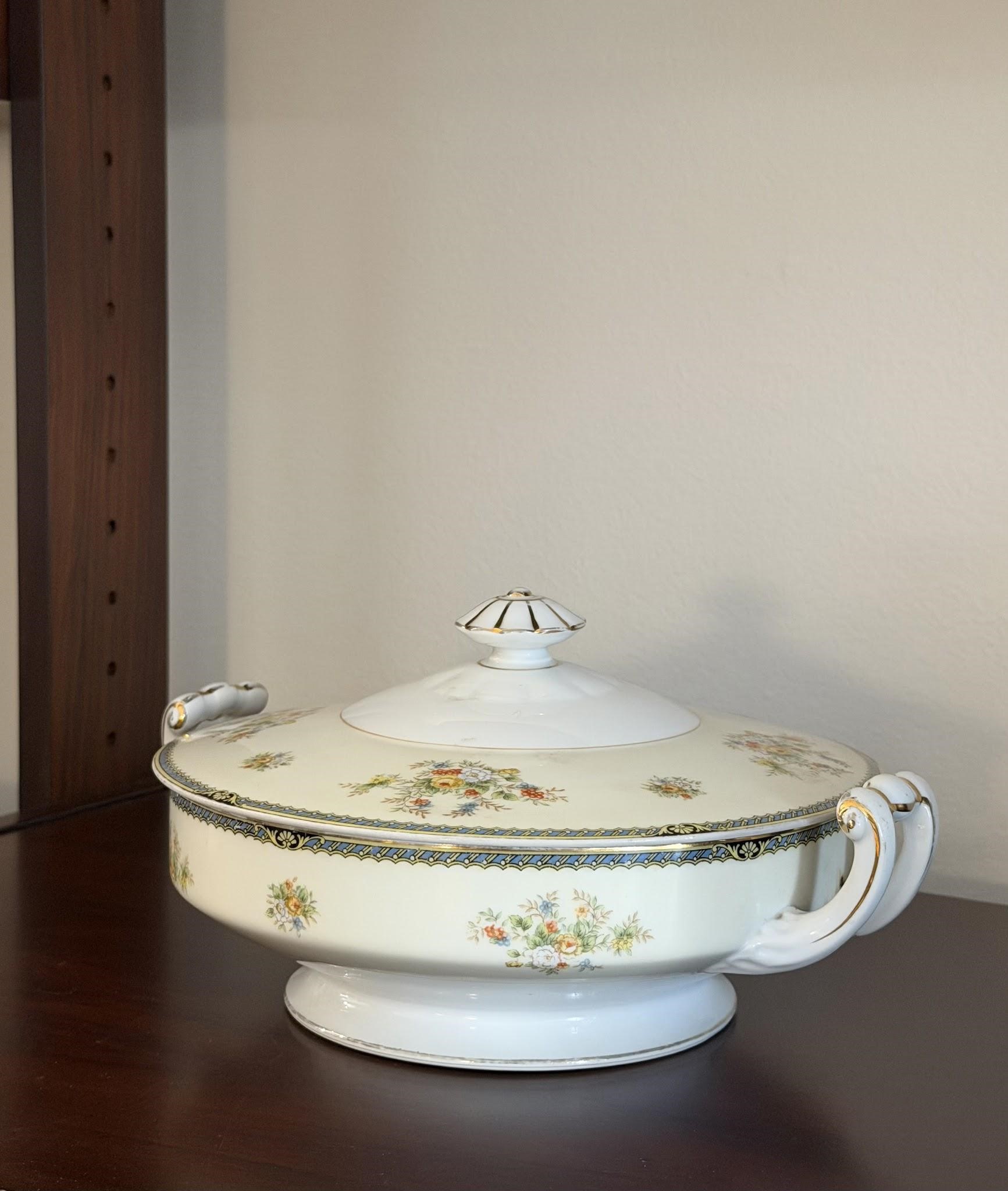
The tureen belonged to a larger Noritake set she owned. Set against a pale greenish-yellow background, delicate sprays of cream, orange and blue flowers bloom across the porcelain, framed by blue and gold trim. Its rounded body sits low and wide, with curved handles on both sides and a softly sloping lid crowned by a small knob.
On a recent trip home, I asked my mother if I could take it with me. Together, we wrapped it in layers of old newspaper and bubble wrap until it was secure enough for a transatlantic flight, yet compact enough for my carry-on. It felt far too precious to entrust to baggage handlers.
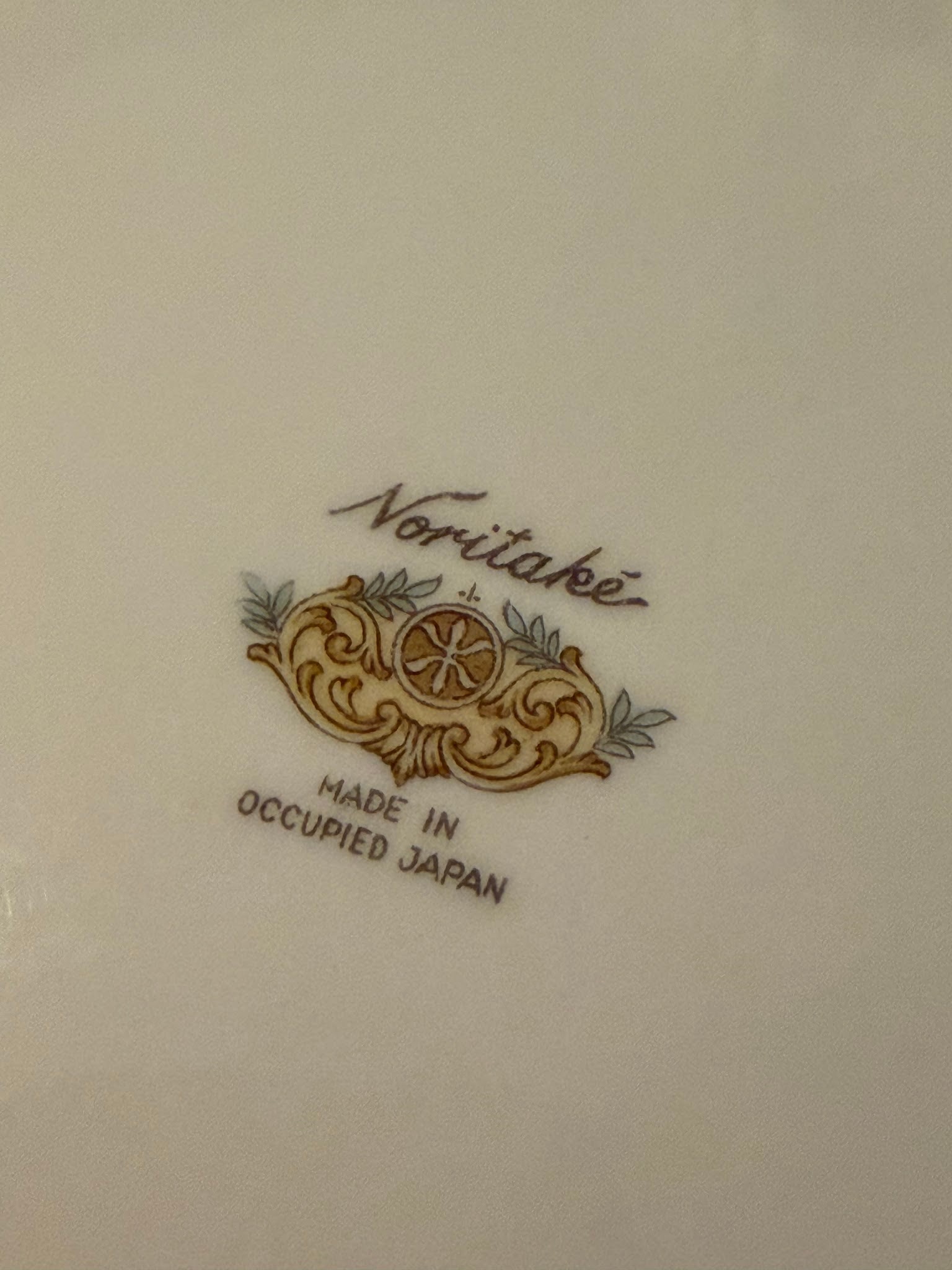
As we packed it, I turned it over and noticed the stamp underneath: Noritake, Made in Occupied Japan.
My grandmother is no longer here. What remains are her stories. I know how deeply she was loved by my grandfather, and how, decades later, she would tell us stories about him while giggling as though she were a young bride again. Seeing that stamp, I couldn't help but imagine a newly married Nannu acquiring her first Noritake set. I don't know exactly how it came into her home, but I know precisely where it lived when it wasn't in use: inside the black dinner wagon with glass doors.
I also know, from stories told over long family dinners, that my grandparents' home was looted during the 1971 Liberation War of Bangladesh. Much of their silver and fine china disappeared. To think that this tureen was acquired long before the ‘71 war, survived the looting, and made its way into my hands decades later feels extraordinary.
The gold edging on its handles has begun to fade, rubbed away by years of careful hands lifting and serving. Everything else about the tureen seems frozen in time, waiting patiently for the next meal.
Holding it brings me back to Eid mornings at Nannu's house. The television would be playing Romjaner Oi Rojar Sheshe just a few decibels too loudly. The mantel would be lined with Eid cards she had received. I would go downstairs to see her, convinced I was early. But before I reached her door, I could already smell the food laid out on the table. She would be ready before anyone arrived, freshly showered and dressed in her crisp, white, starched saree.
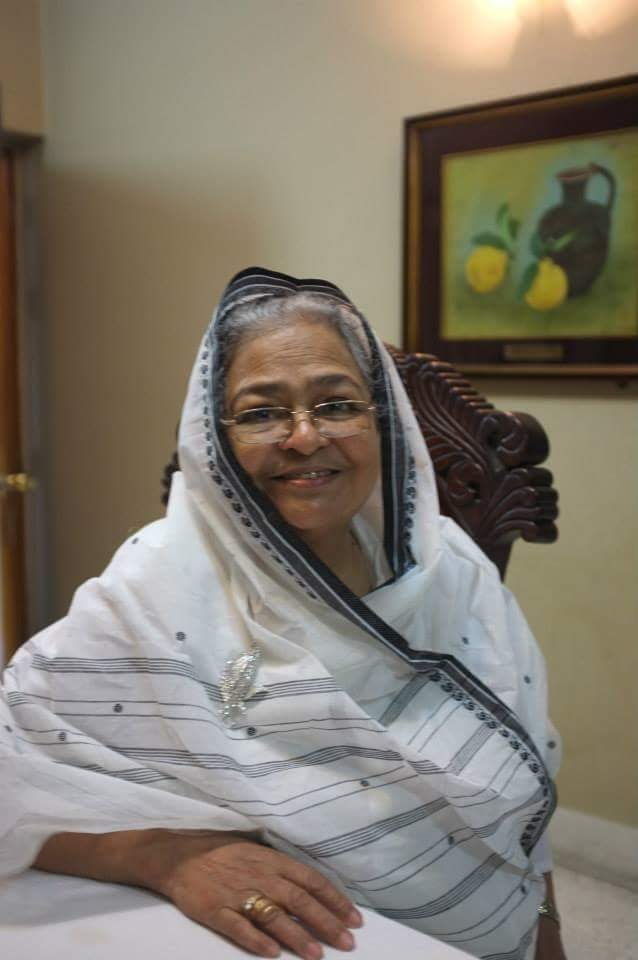
My brother once told me he always pictures Nannu grinning from ear to ear. I do too. But when I think of her on Eid, she feels even more alive. She was the matriarch, and her home was one of the essential stops on everyone's holiday rounds. Family flowed through her doors from morning until evening, and she greeted each person with the same radiant smile, as though they were the first guests to arrive.

Her domer shemai would be waiting, the recipe she had once shared in a newspaper in the 90s. She was an author whose writing didn’t usually venture into the kitchen, making this published recipe a rare glimpse of the cook we knew at home. I can still picture her slicing pistachios with effortless precision to put the final touches on the shemai. She was deft with a knife, able to peel a fruit in one continuous spiral, never breaking the ribbon of skin. It was a quiet, practiced movement, honed over decades spent cooking the same beloved dishes.
Sometimes the tureen held her booter halwa, its dark brown surface speckled with slices of white almonds. The halwa and the shemai are etched into my memory because no one else made them quite like she did. Hers demanded patience, hours more bhuna over the stove than most people would tolerate, until both took on their deep, rich colour and unmistakable flavour. They were dishes that asked for time, and she always gave it.
If it wasn’t piled high with shemai or halwa, the tureen usually held something with broth. Its depth allowed it to hold the shimmering jhol from her rezala (shurwa as she would call it) or the gelatinous stock of the paaya she made.
In rezalas, I never saw her use the usual half-moon slices of bereshta. For her, rezala always called for onion rings instead. Preferring the spicier variety of rezala, she would laugh as she lifted the tureen's lid and say, "If you're not wiping your nose after eating my rezala, I haven't made it properly."
The tureen didn't just reveal what she had cooked; it often came with one of her stories or jokes. When it held halwa, she repeated an old rule of thumb: “if you throw halwa against the wall behind the stove, it should contain enough ghee to stick to the wall.”
Sometimes, she would watch, unimpressed, as I served myself paaya from the tureen. She would take my plate, lift a nola -- the word we use in Chittagong for paaya -- and give it a little shake to make sure some of the bone marrow slipped into my serving. Then she would say “Khete jaanao ekta shekhar baepar”, reminding me of her philosophy that knowing how to eat and relish a meal was just as important as knowing how to cook.
Now the tureen sits in my home, thousands of miles from hers. Somehow, even now, it doesn’t feel empty. It carries the memory of a woman whose way of loving was to always have something to serve, whose table was always ready for one more person, and whose ever-smiling face comes back to me every time I look at it.
Sadia Sehrish Islam, originally from Chittagong and now based in New York City, hosts a variety of gatherings, including curated food tours.
Send your articles for Slow Reads to slowreads@thedailystar.net. Check out our submission guidelines for details.

End of reading? A post-literate society in the making
Can I still be the daughter they need?
What death teaches us about life

How to help children fall in love with reading

Why Christopher Nolan's The Odyssey disappoints in its portrayal of women

10,000 steps a day: Health myth or medical fact?
Why Dhaka University should rethink its rules for female students
Inherited Memories / One railwayman's line-box, three eras of history

The strange grief of seeing our parents age