When work and leisure fail, does protest fill the void?
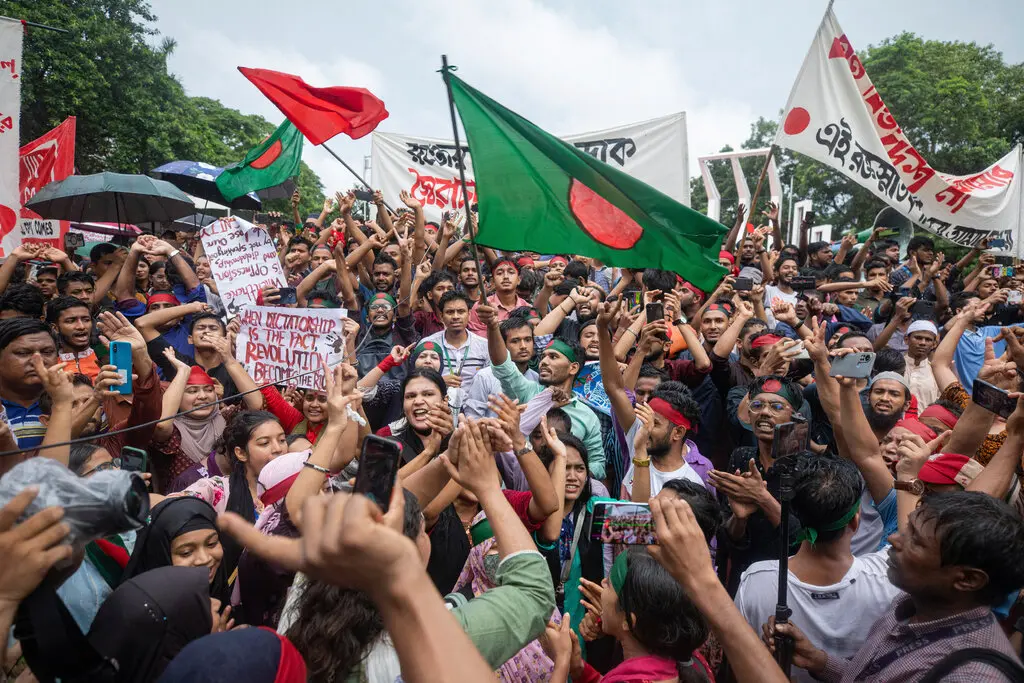
Have you ever stood at the site of a protest, where strangers gather not for celebration but to demand dignity? It is easy to see protest as disruption, as noise interrupting everyday life. But from within, it feels different. It feels purposeful. It feels, paradoxically, like relief.
When dignified work is persistently denied, people begin to find greater value, or utility, in activities outside work. But when even leisure fails to restore or provide meaning, the familiar distinction between work and leisure begins to erode. In that moment of breakdown, the street turns into a site not just of resistance but of collective belonging.
To understand this shift, we need three simple ideas from economics. Utility is a way of describing what people value. If someone prefers playing cricket over studying, we say the utility of playing cricket is higher than that of studying.
The experience of protest is not comfort, safety or joy in the ordinary sense. It is the pleasure of agency of being seen, heard and counted. Paradoxically, it becomes a more satisfying use of time than work itself.
A trade-off is the act of choosing between alternatives, where gaining one thing requires giving up another. We trade time with family for work in order to earn an income, or give up rest to meet deadlines.
Opportunity cost is what is foregone in making that choice. Two hours spent at play are also two hours not spent studying, working, or doing anything else.
Standard economics tells a simple story: individuals face a trade-off between work and leisure. More work means more income; “All play and no work” implies less income and a lower standard of living. Workers therefore seek higher wages for a better standard of living; employers seek to pay less in order to retain higher profit. This tug of war is able to contain the contradictions of a society but only to a certain extent.
When wages stagnate, when working conditions deteriorate, and one's sense of being is reduced to routine survival, something shifts within a person. It is in this moment that the protest site emerges as an alternative social space. Not because protest is leisure, but because it reorganises time, purpose, and collective experience in ways that neither work nor leisure any longer can. The street becomes a space where individuals recover agency, recognition, and belonging, elements once expected from work or from restorative leisure. Protest is not an escape from the work-leisure trade off. It is a response to its failure. It is a space where meaning is actively reconstructed when both labour and leisure have been emptied of it.
Through collective sloganeering, graffiti, posters and revolutionary songs, protest becomes a unique form of communal leisure that is creative yet unstable. In economic terms, the monotonous life reduces the "opportunity cost of not working" and increases the "utility of solidarity".
The experience of protest is not comfort, safety or joy in the ordinary sense. It is the pleasure of agency of being seen, heard and counted. Paradoxically, it becomes a more satisfying use of time than work itself. For many it becomes a temporary escape from loneliness. And for other, a rare opportunity to practice empathy, while everyday life offers only mundane survival. Through collective sloganeering, graffiti, posters and revolutionary songs, protest becomes a unique form of communal leisure that is creative yet unstable. In economic terms, the monotonous life reduces the "opportunity cost of not working" and increases the "utility of solidarity".
Students often raise their voices first. Students constitute a peculiar section of the population. They are educated enough to recognise injustice but not yet fully locked into rigid labour markets. They are in possession of the most crucial resource in the political economy of dissent i.e. disposable time. The “opportunity cost of resistance” is the lowest for them. As movement grows into an ecosystem of belonging, they are soon joined by those with little to lose. Which includes underemployed youth, workers stuck in menial jobs, garment workers facing stagnant wages, ride sharing drivers surviving on razor thin margins and army of informal labourers - trapped in jobs that neither sustain nor satisfy. What begins as a student movement becomes a broader ecosystem of shared frustration and shared hope. This is why proposals to “ban student politics” as periodically suggested for institutions like BUET or elsewhere, fundamentally misunderstand the political economy of dissent. Limiting student politics does not ensure stability. It only reduces the democratic space where disaffection can be channeled. When institutions cut off avenues for structural political engagement, unrest does not disappear. It merely re-emerges in more chaotic forms.
Similar dynamics appeared in 1969, when economic development failed to generate meaningful opportunities. By 1990, frustration with unemployment and institutional decay fuelled mass mobilisation. In each case, when economic structures failed to provide dignity, collective action emerged as an alternative. More recently, the 2024 uprising followed a similar logic.
Bangladesh’s history reflects this pattern, though it is often told only in political or cultural terms. The Language Movement of 1952 was not only about identity. Language policy also shapes access to employment. The imposition of Urdu threatened to exclude Bengali speakers from key sectors, deepening economic inequality. What appeared as a cultural struggle was closely tied to material concerns about livelihood. Similar dynamics appeared in 1969, when economic development failed to generate meaningful opportunities. By 1990, frustration with unemployment and institutional decay fuelled mass mobilisation. In each case, when economic structures failed to provide dignity, collective action emerged as an alternative. More recently, the 2024 uprising followed a similar logic. It began with students rallying around the quota versus merit debate, but the slogan resonated because it reflected a broader crisis. For many young Bangladeshis, the labour market had become uncertain, where qualifications did not guarantee mobility. Patronage and corruption overshadowed merit, and work lost its promise.
From this perspective, uprisings are not anomalies. They are outcomes of a system in which the balance between work and leisure has broken down. A society remains stable only as long as work provides dignity and leisure provides restoration. When both fail, people search for alternatives.
The street becomes that alternative.
The lesson is not that protest should be romanticised, nor that unrest is desirable. It is that the conditions producing it are neither accidental nor mysterious. The causes are not invisible, but they are often misunderstood. Economic growth does not guarantee meaningful lives, and employment does not ensure dignity. When these deeper aspects erode, dissatisfaction builds beneath the surface. Eventually, that dissatisfaction finds expression. When it does, it takes the form of collective action that is disruptive but rational. When the “utility of solidarity” exceeds “the utility derived from meagre wage”, resistance becomes the preferred choice. They are rooted in how societies organise work, distribute opportunity, and define dignity. If work cannot sustain meaning, and leisure cannot restore it, people will create new spaces where both can be reclaimed.
Sudeepto Das is a PhD student at the South Asian University, New Delhi.
Send your articles for Slow Reads to slowreads@thedailystar.net. Check out our submission guidelines for details.

End of reading? A post-literate society in the making
Can I still be the daughter they need?

What death teaches us about life

How to help children fall in love with reading

Why Christopher Nolan's The Odyssey disappoints in its portrayal of women

10,000 steps a day: Health myth or medical fact?
Why Dhaka University should rethink its rules for female students

Inherited Memories / One railwayman's line-box, three eras of history

The strange grief of seeing our parents age