


Stalled growth, steep climb amid pipeline paralysis

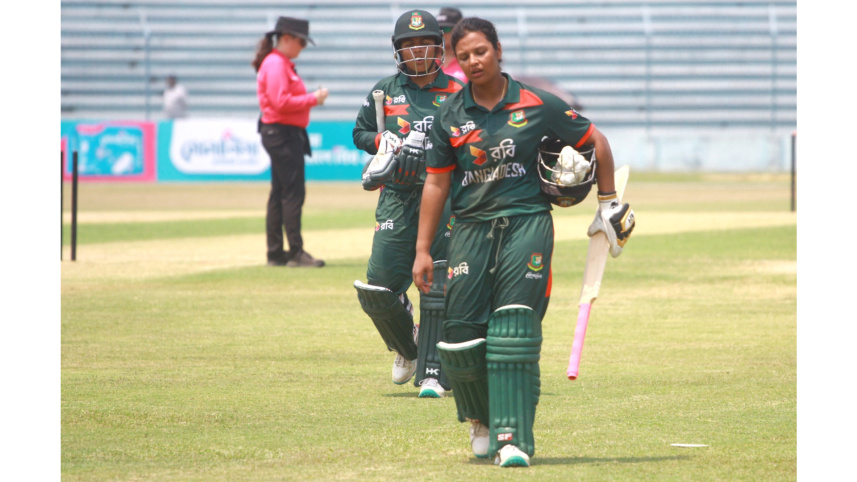
Bangladesh women’s cricket remains trapped in a cycle of stagnation, with a fragile talent pipeline failing to produce adequate replacements. This lack of depth, resulting in the selectors rotating a core group of only 20–22 players, has hampered international performance.
The recall of Sarmin Sultana exemplifies this issue. After a six-and-a-half-year hiatus, she scored just 42 runs in the just-concluded three-match WODI series against Sri Lanka.

However, the 32-year-old was retained for the T20 squad -- replacing out-of-form opener Farzana Haque Pinky -- despite having gone through a lean patch, including modest returns in the Asia Cup Rising Stars tournament (93 runs in five matches), the Emerging team’s series against South Africa (40 in three), and the National Cricket League (126 runs in seven innings for Rajshahi).
Chief selector Sazzad Ahmed Shipon admitted that, currently, only Sharmin Akter Supta, Nigar Sultana Joty, and Sobhana Mostary are producing mentionable international performances. He explained that Sarmin was picked for her "better strike rate”.
“We are trying to change the style of play and bring in new players. That’s why Sarmin was included in ODIs... We expected more from her, but that hasn’t happened yet. Let’s see if things improve in T20s,” Shipon told The Daily Star after Bangladesh’s seven-wicket defeat to Sri Lanka in yesterday’s series-deciding third WODI in Rajshahi, admitting that finalising the squad for June-July’s T20 World Cup in England and Wales remains a challenging task.
“The stress is about making the right selection at the right moment. The squad has to be submitted early, which makes things complicated,” he said.
The pace-bowling department is another area of concern, with limited options beyond Marufa Akter and Fariha Islam Trisna. “It would be wrong to say it’s not bothering us," Shipon added.
“We are currently playing one pacer. We still have to decide how many pacers to take and how many to play in England conditions.”
Batting coach Nasiruddin Faruque attributes this stagnation to structural failures. With the Women’s Dhaka Premier Division Cricket League delayed -- due to the disputes between the previous board and clubs -- and the Women’s Bangladesh Premier League postponed until July, players lack the sustained competitive exposure needed to develop. The last domestic competition -- the Women’s National Cricket League T20 -- was held in November last year.
“In the Premier League, out of nine teams, only three or four are competitive. When bowlers are spread across teams, each side ends up with only one or two quality bowlers, which reduces overall standards,” Faruque said.
He emphasised that batting development requires sustained exposure to competitive matches and quality wickets. “Producing a batter is a lengthy process. Players need to play many matches and develop the habit of scoring runs.
"If someone comes in 50–60 percent ready, you can develop them further. But if they come in at 10 percent, progress becomes very difficult,” he explained.
Faruque noted that while the Tigresses are experiencing “slow progress”, they continue to lag behind rivals like India and Sri Lanka, who benefit from stronger domestic and school-level structures.
For now, Bangladesh women’s cricket remains caught between limited resources and growing expectations. Ultimately, sustainable success cannot be manufactured through temporary fixes. Unless the domestic structure is prioritised and revitalised, Bangladesh may find themselves perpetually playing catch-up.
 For all latest news, follow The Daily Star's Google News channel.
Comments