


Dempo and the structural Goan gospel
At the stroke of the millennium, India forward Bruno Coutinho broke millions of Bangladeshi hearts by opening the scoring in the maiden 1999 SAFF Cup final at Goa’s Fatorda Stadium. Just seven years ago, it was defender Adil Khan denying Bangladesh a historic victory over India with an 88th-minute equaliser in a FIFA World Cup qualifying fixture in Kolkata.
The connection? Both Coutinho and Adil hail from Goa -- the sun-soaked coastal state currently hosting the SAFF Women’s Championship, and a historical breeding ground that has gifted players like Climax Lawrence, Clifford Miranda, Brahmanand Sankhwalkar, Neville D’Souza, Menino Figueiredo, Liston Colaco, Rowllin Borges, Mahesh Gawli, Denzil Franco, Mandar Rao Dessai and numerous others who have worn the Indian jersey.

Goa's football roots stretch back to Portuguese colonial rule, which lasted until 1961, and its influence was not limited to architecture and religion. To understand how this tiny region stitched football into its social fabric and sustained such a player pipeline, one must leave the tourist beaches behind.
Waking up early yesterday, this correspondent embarked on a 50-kilometre journey from the team hotel in Margao to Old Goa, navigating the oppressive heat and humidity that seemed to nullify the Arabian Sea breeze.
The destination was Dempo Sports Club, established in 1967. What lies there provides a stark, sobering contrast to how professional football clubs operate back home in Bangladesh.
The hidden oasis of Old Goa
The initial reception at the gates was strict; a club employee initially refused access to the inner sanctum. However, after a quick coordination with local journalist Rahul Chandawarkar, Dempo’s general secretary, Lector Mascarenhas, graciously opened the doors.
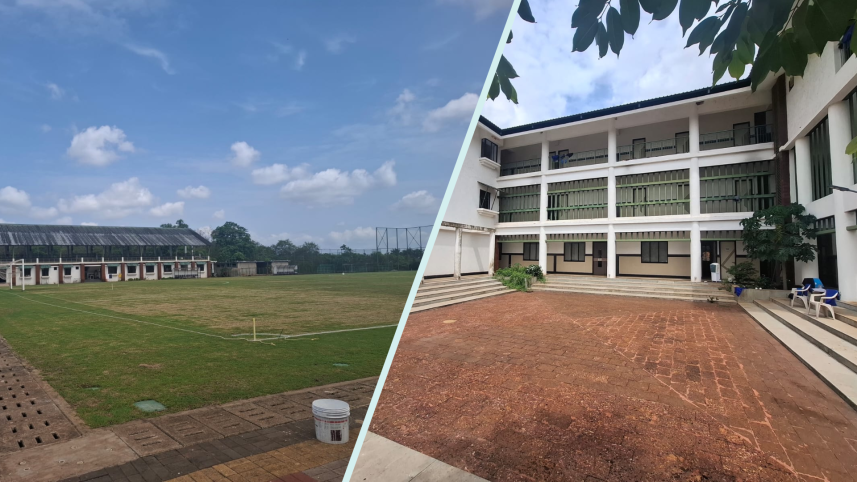
The entrance to the Dempo Residential Football Academy does not immediately announce itself as one of India's most respected football institutions. Beyond a stone-studded pathway stand a three-storey administrative-cum-residential building, lush green pitches and another ground under construction. Under the scorching sun, curators continue their work while academy players move through their routines.
Inside the club offices, former India internationals Adil Khan and Climax Lawrence could be seen attending an AFC 'A' diploma coaching course organised by the club.
Despite having made history in 2008 by becoming the first Indian club to reach the AFC Cup semifinals and boasting nearly 70 domestic silverwares, Dempo are no longer in their golden era, devolving into a mid-table side in the I-League.
“Goa football is not the same as before,” Lector Mascarenhas told The Daily Star, reflecting honestly on the shifting tides of Indian football.
“From the 1970s, 1980s, and into the 21st century, the top clubs -- Dempo, Salgaocar, Churchill Brothers, Sporting Clube de Goa -- were very popular.
“Dempo won five [top-tier] league titles, which no other club has done. Dempo will complete 60 years next year; it’s a legacy club of Goa,” he added.
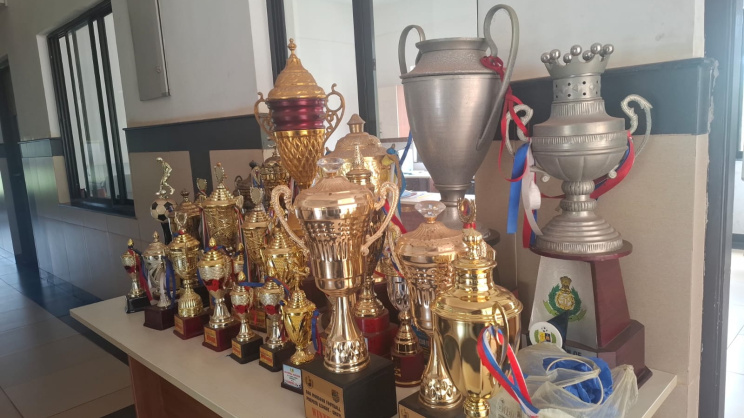
That legacy is now fuelled by structural continuity rather than just big-money senior signings. Dempo runs a fully functioning pyramid of five distinct age-group teams: U-14, U-16, U-18, U-20, and U-21.
The blueprint Bangladesh needs
Back in Bangladesh where professional clubs like Abahani, Mohammedan Sporting Club and Bashundhara Kings often list youth development on paper, Dempo -- the second oldest club in Goa -- operates in a completely different dimension.
“Around 150 boys train daily at the academy under highly qualified coaches,” Lector explained. “We start from under-14 and go all the way up. We have a team playing in the Goa Football Professional League, and then the senior team. This pathway is in place from age 14 onwards. The talented boys end up in our academy.”
Every single age group is backed by certified assistant coaches, managers, physios, training facilities, and a full-fledged gym. “But our residential programme is catered to under-16 to under-18 boys," Lector added, highlighting the club’s long-term vision.
This patience stems directly from the top. Club chairman Srinivas Dempo, who also heads the massive Dempo Group that finances the entire operation, views the club as a social vehicle for the region. According to Lector, the chairman possesses a distinct “passion and vision to develop Goan players, giving them opportunities through our academy, established in 2017.”
While Bangladesh football continues searching for sustainable development models, the answer may not lie in grand promises. It may lie along a quiet road in Old Goa, where one club continues to invest in what comes next.
 For all latest news, follow The Daily Star's Google News channel.
Comments