


Experts call for long-term plan to revive Bangladesh football
As FIFA World Cup fever grips Bangladesh, some of the country's most respected football figures have urged stakeholders to use the renewed public interest to revive the nation's football through long-term planning, improved infrastructure and collective responsibility.
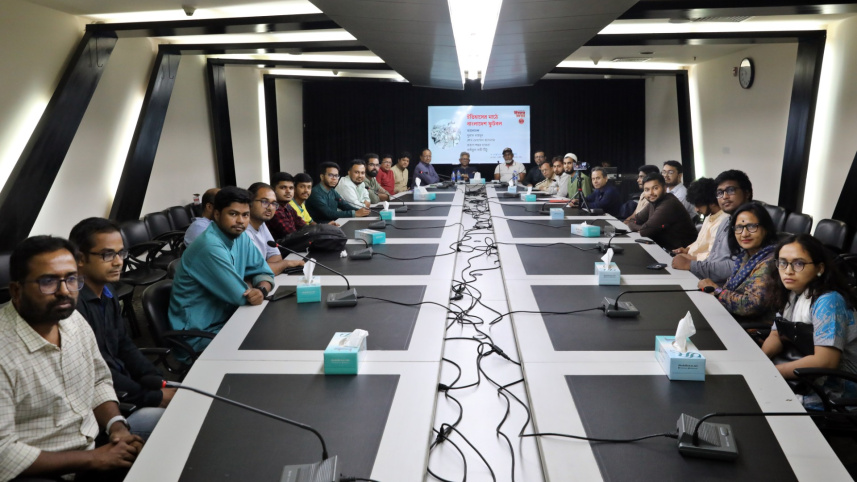
The call came during the 20th episode of The Daily Star's Itihas Adda, titled "Bangladesh's Football in the Field of History", held at The Daily Star Centre in Dhaka on Saturday.

Legendary multi-sport athlete Pratap Shankar Hazra, former national football captain Sheikh Mohammad Aslam, Bangladesh Football Federation technical director Saiful Bari Titu and veteran sports journalist Dulal Mahmud took part in the discussion, moderated by The Daily Star's Emran Mahfuz.
Opening the session, former Krira Jagat editor Dulal Mahmud reflected on Bangladesh's rich football heritage. He noted that the Dhaka Sports Association was established in 1895, just two years after the Argentine Football Association, while the Dhaka Football League began in 1915.
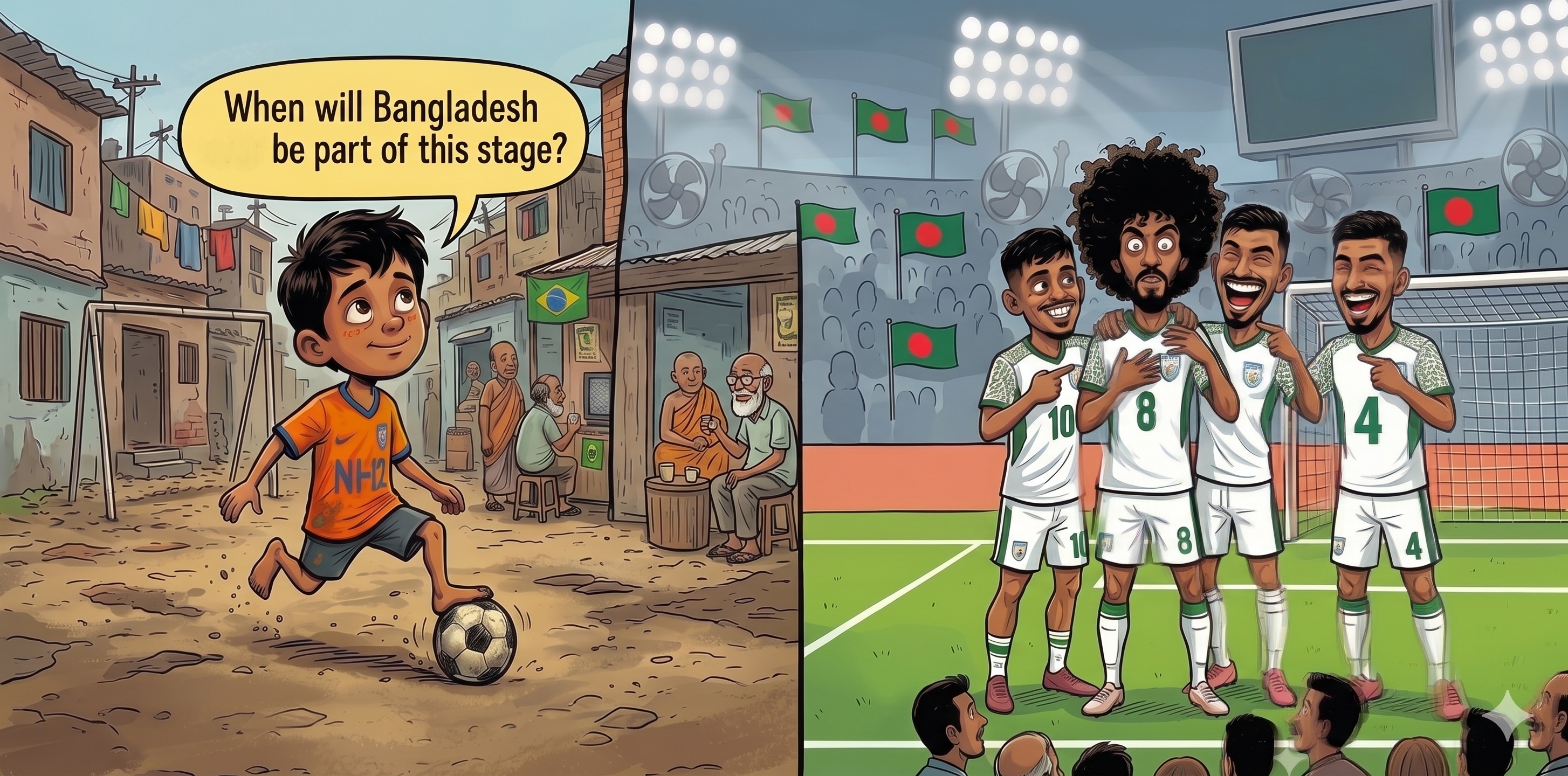
"I feel sad that countries with far smaller populations, like Curacao or Haiti, are playing in the World Cup while we are not, despite having such a rich football tradition," Mahmud said.
He also recalled how English club Islington Corinthians toured the subcontinent in 1937, losing only once -- to a Dhaka Sporting Association side. "We had a glorious footballing past, but we failed to build on it," he added.
Hazra, who represented Pakistan in football before becoming a distinguished hockey player, said the biggest obstacle today was the lack of playing fields.
"How will children take up sport if they don't have grounds to play on? Out of around 350 schools in Dhaka, only a handful have proper playgrounds. Without playgrounds, there can be no sporting development," he said.
Hazra also highlighted how many talented footballers and organisers from this part of Bengal migrated to Kolkata before Partition, while players from East Pakistan received limited opportunities during the Pakistani era.
Aslam attributed much of his own success to the guidance of his father and coach, Abdur Rahim.
"He corrected my movement and kept me training after everyone else had left. Those lessons shaped me as a striker," Aslam said.
He also lamented the decline of traditional clubs and district football.
"Clubs like Victoria, Wari, Dilkusha and Fakirerpool produced generations of footballers. We need a proper plan to revive those clubs and bring district football back to life. This World Cup excitement should be used to reconnect young people with our own football."
BFF technical director Titu stressed that rebuilding football required sustained commitment rather than quick fixes.
"Development is a daily process. Everyone must contribute from their own position," he said. "We need to decentralise football beyond Dhaka, improve coach education and invest more in grassroots development."
Pointing to Malaysia's government-backed football structure, Titu urged greater state support for infrastructure and youth development.
"We still have enormous passion for football. What we need now is quality coaching, better facilities and long-term investment to turn that passion into progress," he said.
 For all latest news, follow The Daily Star's Google News channel.
Comments